
Andy Burnham Fury Over ‘Gaslighting’ Brits as He Blames Brexit for Small Boats Crisis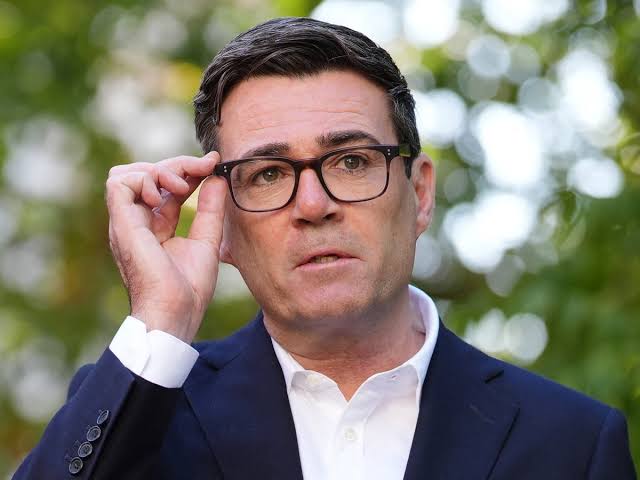
Prime Minister Andy Burnham has faced a furious political backlash after arguing that Brexit has made it harder for Britain to tackle the Channel small-boats crisis.
Speaking in a series of broadcast interviews ahead of Labour’s conference, Burnham pointed to what he described as a “loss of collaboration with neighbours” following Britain’s departure from the European Union.
His comments came during a particularly difficult week for the government. More than 700 people crossed the Channel in a single day, two boats reached British shores without being intercepted and two men died within 48 hours while attempting the dangerous journey.
Critics immediately challenged Burnham’s explanation, arguing that responsibility for Britain’s current border-control policy rests with the government in office rather than with decisions made several years ago.
The dispute has therefore reopened one of Britain’s most persistent political arguments: how much of the small-boats problem is connected to Brexit, and how much reflects the actions of people-smuggling gangs, French enforcement, British policy and wider migration pressures.\
Burnham’s Brexit argument
Burnham was asked why small boats were still crossing the Channel despite the government’s efforts to stop them.
His response focused partly on the UK’s changed relationship with European neighbours.
“I do point to the loss of collaboration with neighbours that came with Brexit,” Burnham said in an interview with BBC South East. He argued that Britain previously had a more cooperative system with European countries and no longer had exactly the same level of collaboration.
However, Burnham did not present Brexit as an excuse for failing to reduce crossings.
He said he would continue working with Home Secretary Shabana Mahmood to tackle the problem and insisted that the government’s objective remained reducing crossings as far as possible.
He also refused to set a deadline for stopping the boats completely.
That distinction is important. Burnham’s argument was that Brexit had made cooperation more difficult, not that Brexit made action impossible.
He also maintained that the government had already made progress.
The latest numbers
The immediate political pressure came from a sharp increase in arrivals during September.
On September 23, Home Office figures recorded 781 people arriving in Britain in ten small boats. It was the highest number recorded on a single day in 2026, surpassing the previous annual record of 752 people on July 29.
By September 24, the provisional total for the year had reached 18,565 arrivals.
That figure, however, needs context.
The Home Office total was 42 per cent lower than the 32,188 people recorded at the same point in 2025 and 26 per cent below the corresponding 2024 figure of 25,165.
This produces two competing narratives.
The government can point to the substantial year-on-year reduction and argue that its policies are having an effect.
Opposition parties can point to the continuing thousands of arrivals and particularly large individual crossings as evidence that the problem remains unresolved.
Both sets of figures describe different aspects of the same situation.
Critics accuse Burnham of shifting blame
The strongest criticism came from Conservative politicians and Reform UK.
Shadow Home Secretary Chris Philp accused Burnham of “gaslighting” the public and argued that Brexit was being used to explain away the government’s difficulties.
Nigel Farage also criticised the prime minister, arguing that the UK had previously operated arrangements under which people could be returned to European countries.
Their broader argument is that Britain left the European Union partly in order to gain greater control over its borders, and that governments should therefore be judged on how they use the powers available after Brexit.
Those criticisms are political arguments rather than independent findings about causation.
The question of exactly how Brexit has affected migration cooperation is more complicated.
What changed after Brexit?
The UK’s departure from the EU changed its legal and institutional relationship with European migration systems.
One of the most frequently discussed differences concerns the Dublin Regulation.
While Britain was an EU member, the Dublin system provided a framework for determining which member state was responsible for examining certain asylum claims and allowed participating states to request transfers under specific circumstances.
The UK ceased participating in the Dublin system after the end of the Brexit transition period.
However, the existence of the Dublin arrangements did not mean that Britain could simply return every person who crossed the Channel.
Returns depended on the legal conditions being satisfied and on another participating country agreeing to accept the individual.
This is one reason the debate cannot be reduced to the claim that Brexit either “caused” or “did not cause” the small-boats crisis.
The Channel crossings also developed rapidly during the later Brexit period, with organised criminal networks increasingly using small inflatable boats to transport migrants from northern France.
The role of people-smuggling gangs
Burnham has repeatedly emphasised the criminal organisations behind the crossings.
He said smugglers were changing their tactics and using different routes and vessels when enforcement measures changed.
One recent example involved a boat carrying 51 migrants that reportedly spent more than 30 hours at sea after departing from an area of Normandy farther west than the usual launch locations.
Burnham argued that the change showed why enforcement agencies needed to adapt continuously.
“We will be relentless in chasing them down,” he said, while arguing that the government’s measures were forcing criminal gangs to alter their behaviour.
The government has also highlighted cooperation with France as a central part of its strategy.
Britain and France have already expanded cooperation
In April, Home Secretary Shabana Mahmood agreed a three-year agreement with France worth £662 million.
The partnership involves French enforcement operations along the coast and additional cooperation designed to disrupt people-smuggling networks.
When Burnham met French President Emmanuel Macron in September, migration and Channel crossings were among the central issues discussed.
The British government said at the time that the UK-France partnership involved nearly 1,050 French officers and that additional French teams were being deployed to deal with launches from western beaches and larger “mega dinghies”.
This makes Burnham’s argument about European cooperation particularly significant.
His government is simultaneously arguing that Brexit reduced some forms of cooperation while attempting to build new bilateral arrangements with France outside the former EU framework.
The “one in, one out” arrangement
Another part of the debate concerns the bilateral returns arrangement between Britain and France.
Under the scheme, certain people who cross the Channel irregularly can be returned to France, while eligible asylum seekers are transferred legally to Britain.
The agreement was designed as an alternative form of cooperation after the UK left the EU’s previous migration arrangements.
The numbers involved remain much smaller than the overall number of Channel crossings.
Figures reported in September showed that between August 2025 and June 2026, 1,087 people had been returned to France under the arrangement while 1,117 were transferred to Britain.
During the same period, almost 28,000 people arrived in Britain by small boat.
Those figures help explain why critics argue that the agreement has not yet fundamentally changed the scale of the problem.
Deaths increase the pressure
The political argument has also been intensified by deaths in the Channel.
Two men died within 48 hours during attempts to reach Britain from the French coast in September.
French prosecutors opened investigations into the deaths, highlighting the continuing human risks associated with the crossings. Reports have suggested that at least 21 people have died on the Channel route during 2026.
The deaths have placed pressure on both governments to prevent people from making the journey in the first place.
For Britain, this means disrupting smuggling networks and strengthening border enforcement.
For France, it means preventing dangerous launches while also managing the risks involved in intervening when people are already in the water.
Burnham refuses to promise a deadline
One of the most notable elements of Burnham’s interviews was his refusal to set a date by which the boats would be stopped.
Previous governments have made pledges about ending small-boat crossings, but the numbers have continued to fluctuate.
Burnham said his government wanted to see no crossings but would not give a specific deadline or make a promise that could not be guaranteed.
Instead, he said he and Mahmood would continue working against the criminal organisations involved until the numbers were brought down.
That approach contrasts with political demands from Reform UK and the Conservatives for more immediate and comprehensive measures.
A wider Brexit argument
The row is ultimately part of a much larger debate about the consequences of Brexit.
Supporters of Brexit have long argued that leaving the EU gave Britain greater control over immigration and its borders.
Critics argue that leaving European structures also reduced some forms of cooperation that had previously helped Britain manage migration and asylum cases.
The current Channel situation contains elements of both arguments.
Britain has greater freedom to establish its own immigration policies, but it must also negotiate separately with European countries over issues that were previously handled within common EU frameworks.
At the same time, the rise of organised small-boat crossings cannot be attributed to one institutional change alone.
Smuggling networks, conditions in countries of origin, asylum policy, French coastal enforcement, British enforcement and changes in migration routes all contribute to the situation.
What the latest evidence shows
The immediate evidence does not establish that Brexit alone is responsible for the Channel crisis.
Nor does it establish that Brexit has had no effect on Britain’s ability to cooperate with European neighbours.
What is clear is that the UK’s relationship with the EU changed after Brexit, including the framework governing asylum and migration cooperation.
It is also clear that the British and French governments are now relying heavily on bilateral agreements to address the crossings.
Meanwhile, the latest figures show both significant progress compared with 2025 and continued large-scale arrivals.
The September 23 figure of 781 arrivals illustrates the volatility of the problem, while the year-to-date figure being 42 per cent below the same point last year provides a different measure of progress.
The political battle continues
Burnham’s comments have therefore opened another chapter in Britain’s long-running migration debate.
His critics see the Brexit explanation as an attempt to shift attention away from the government’s responsibility for current border policy.
Burnham’s position is that the loss of some previous European cooperation has made the task harder, while insisting that his government must continue working with France and other partners to reduce crossings.
The evidence points to a more complicated picture than either side’s political rhetoric suggests.
Brexit changed the UK’s institutional relationship with Europe. People-smuggling gangs have adapted their methods. France and Britain have created new bilateral mechanisms. And despite a substantial year-on-year fall, thousands of people continue to make the dangerous journey.
For Burnham, the challenge is now to demonstrate that the government’s new approach can continue reducing arrivals while strengthening cooperation with France.
For his critics, the question is whether the government is doing enough with the powers Britain already possesses.
And for those attempting the crossing, the stakes remain far more immediate: the Channel continues to be a dangerous route where a political dispute over Brexit translates into a very real question of life, death and border control.