

Andy Burnham Creates Brand New Government Role as UK Is Devastated by Wildfires
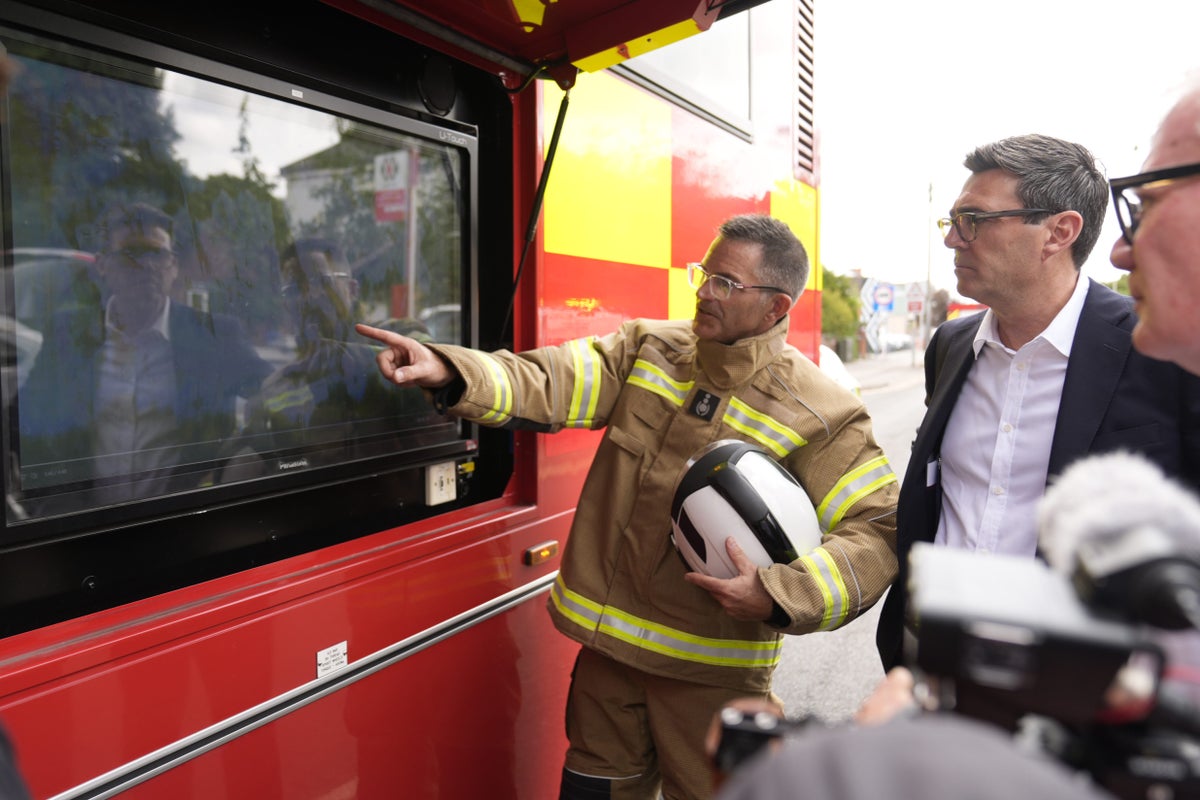
Britain is facing a summer unlike any other, with record-breaking wildfires, severe drought and extreme heat putting unprecedented pressure on emergency services. Now Prime Minister Andy Burnham has responded by creating a brand-new government role dedicated to the growing threat from wildfires.

It is a dramatic move — and one that raises an uncomfortable question.
Why did Britain need a new fire minister only after the country had already been engulfed in flames?
Burnham has insisted that the government must learn from the devastation of the past few weeks. More than 1,000 wildfires have now been recorded in England and Wales this year, surpassing the previous annual record of 1,017 fires set in 2025. Firefighters have been dealing with major incidents across the country, while military personnel have been called in to assist.
The scale of the crisis is difficult to ignore.
A major wildfire near Blaenavon in South Wales has burned for more than three weeks across thousands of hectares of peatland. Other fires have destroyed homes, forced evacuations and threatened farmland and communities. At one point, dozens of fires were burning simultaneously, with several classified as major incidents requiring military support.
Burnham has described Britain as a “tinderbox”.
And he is right.
The question is whether creating another government job is enough to deal with it.
The new role is part of a wider package of measures announced by the prime minister. Burnham has promised a summit with fire and rescue services at the end of the summer to examine whether they are properly resourced for a future in which extreme wildfire events may become increasingly common.
The government has also issued emergency warnings to millions of people across England and Wales, while Burnham has urged retailers to stop selling disposable barbecues because of the risk they pose during exceptionally dry conditions.
Those measures are understandable.
But they also expose the central weakness of the government’s response.
Britain did not suddenly discover wildfires this summer.
The country has been warned for years that climate change would increase the frequency and severity of extreme weather. The Met Office has repeatedly highlighted the risks associated with rising temperatures and changing rainfall patterns. Yet the political system continues to behave as though every new disaster is an unexpected emergency.
That is the problem Burnham now faces.
A government can create a fire minister.
It can hold a summit.
It can issue an emergency alert.
But none of those things changes the underlying conditions that are making Britain increasingly vulnerable.
This year’s crisis is being driven by a combination of prolonged heat and exceptionally dry conditions. Britain has experienced its fifth heatwave of 2026, while July was the driest in around 190 years. Around 45 million people are living in areas affected by drought, with millions facing restrictions on water use.
The consequences go far beyond burning countryside.
Farmers are struggling with dry conditions. Reservoir levels are falling. Rivers are reaching exceptionally low levels. Water companies are under pressure. The NHS is dealing with heat-related illness, while transport networks and infrastructure are also being affected.
This is not simply a fire-service problem.
It is a national resilience problem.
That distinction matters.
If Burnham treats wildfires primarily as an issue for firefighters, he risks fighting tomorrow’s fires with yesterday’s strategy.
Britain needs more than additional firefighting capacity. It needs better land management, stronger emergency planning, improved water resilience and a serious national strategy for adapting to extreme weather.
The creation of a dedicated fire minister could be useful if it becomes the beginning of that strategy.
But it could also become symbolic politics — a new title attached to an old problem.
That is where Burnham’s credibility is at stake.
The prime minister came into office promising a faster, more interventionist government. He wants to present himself as a leader who acts rather than merely talks. His response to the wildfire crisis therefore has to demonstrate that difference.
Simply creating a new ministerial position will not be enough.
The public will want to know what that minister is actually going to do.
Will fire services receive more permanent funding?
Will Britain invest in specialist wildfire equipment?
Will emergency services have access to more helicopters and water-bombing aircraft?
Will councils receive money to manage high-risk landscapes?
Will national standards be introduced for wildfire preparedness?
And perhaps most importantly, will the government address the climate and environmental conditions that are making these fires more likely?
These are much harder questions than whether people should use disposable barbecues.
The barbecue issue is politically attractive because it offers a simple explanation and a simple action. If a dry landscape is effectively covered in tinder, telling people not to light disposable barbecues is sensible.
But it cannot become a substitute for long-term planning.
Nor can it obscure the government’s broader climate dilemma.
Burnham has already faced criticism over his approach to climate policy. Environmental campaigners have questioned whether his government is sufficiently ambitious on emissions while it considers the future of major North Sea oil and gas projects.
That contradiction could become increasingly uncomfortable.
On one hand, Burnham is standing in front of burnt-out homes warning that Britain cannot accept extreme wildfires as “the new normal”. On the other, his government faces pressure over whether it will approve new fossil-fuel developments.
The politics of this are extraordinarily difficult.
Burnham can argue that Britain still needs reliable energy and that a pragmatic transition cannot happen overnight.
His critics will respond that approving new fossil-fuel projects while climate-related disasters intensify sends the wrong signal.
The wildfire crisis gives that argument a powerful visual dimension.
Voters do not need a scientific report to understand what a landscape transformed into ash looks like.
They can see it.
They can see firefighters working for days and weeks. They can see smoke covering communities. They can see residents leaving their homes. They can see soldiers being deployed to help exhausted emergency crews.
And they can ask a very simple question:
Is this the kind of summer Britain should expect in the future?
If the answer is yes, then government policy has to change accordingly.
That means preparing for a world in which wildfire seasons are longer, droughts are more severe and extreme heat places greater pressure on infrastructure.
The government cannot wait for another crisis before acting.
The tragedy is that some of the necessary changes are not particularly glamorous.
Investing in reservoirs is not glamorous.
Improving firebreaks is not glamorous.
Training firefighters for prolonged wildfire operations is not glamorous.
Managing forests and peatlands is not glamorous.
Upgrading emergency communications is not glamorous.
But these are precisely the things that determine whether a crisis becomes manageable or catastrophic.
The emergency alert issued to millions of people illustrates the same problem. The government defended the decision as entirely appropriate, pointing to the number of fires and major incidents being dealt with by emergency services. Critics argued that the warning was excessive because there was not an immediate threat to every person who received it.
The disagreement is revealing.
In a genuine national emergency, governments must sometimes risk being criticised for overreacting rather than being accused of underreacting.
But emergency warnings only retain public credibility if they are used carefully.
If people receive too many alerts, they may eventually stop paying attention.
Burnham therefore needs to strike a difficult balance between warning the public and maintaining trust.
The same applies to the new fire minister.
The role could become a powerful symbol of a government preparing Britain for the future.
Or it could become another political headline that fades once the flames do.
The difference will be measured in investment and outcomes.
Britain’s firefighters deserve enormous credit. They have been working in dangerous conditions, often for prolonged periods, while dealing with fires that can behave very differently from conventional urban incidents. In South Wales, firefighters and soldiers have faced deeply embedded peat fires that can continue burning underground and reignite even after appearing to be extinguished.
The government cannot expect bravery to compensate for inadequate preparation.
Nor can local fire services be expected to carry the financial burden of a national climate problem.
If wildfire risk is becoming a permanent feature of Britain’s summers, then funding arrangements must reflect that reality.
Burnham has an opportunity to make this crisis a turning point.
He could use the new ministerial role to create a national wildfire strategy, bring together fire services, councils, environmental agencies and scientists, and establish clear long-term targets for preparedness.
He could ensure that the lessons from 2026 are not forgotten when temperatures fall and the headlines move elsewhere.
That would be real leadership.
But if the new role produces little more than another minister, another committee and another series of announcements, critics will have every reason to accuse Burnham of treating a structural crisis as a communications problem.
And Britain cannot afford that.
The fires have already delivered the warning.
The drought has delivered another.
The heatwaves have delivered another.
The question now is whether Westminster is listening.
Andy Burnham has created a brand-new government role because Britain is facing a brand-new level of danger.
That is potentially a very good thing.
But the title itself will not protect a single home.
It will not save a forest.
It will not put out a wildfire.
And it certainly will not stop climate change.
Only sustained action can do that.
Burnham has promised to build a government that moves faster and thinks differently.
Now the fires are testing that promise.
The new fire minister is a start. The real test is what happens next.