

Andy Burnham Arrives in Kyiv to Share Long-Range Missile Blueprints with Ukraine
British Prime Minister Andy Burnham has arrived in Kyiv on his first overseas visit since taking office, using the trip to demonstrate the United Kingdom’s continued commitment to Ukraine and announce a major new defence initiative. On Ukraine’s 35th Independence Day, Burnham is expected to confirm that Britain will allow classified information about British components used in the long-range Scalp missile to be shared, helping Ukraine and France establish production and assembly lines inside Ukraine.
The announcement represents a significant development in Britain’s military support for Ukraine. Rather than simply providing a limited stock of finished weapons, the new policy is designed to help Kyiv develop greater domestic capacity to produce long-range missiles. The Scalp is the French-produced counterpart of Britain’s Storm Shadow, and the two weapons use shared French and British technology. By allowing defence company MBDA to release information about British-made components, London is removing an important obstacle to local production.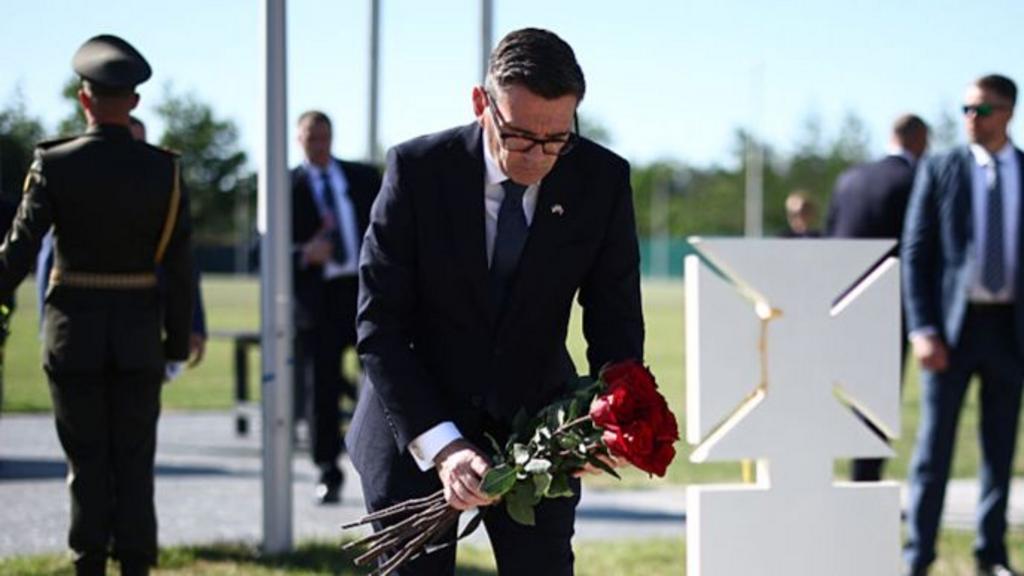
Burnham’s decision comes at a critical stage of the war. Ukraine has increasingly relied on long-range weapons and drones to strike military infrastructure, logistics facilities, oil refineries and other targets far behind the front line. At the same time, Western countries have supplied Kyiv with substantial quantities of advanced weapons, creating concerns about the availability of some systems in their own stockpiles. The British government has therefore increasingly emphasised the development of new technologies and greater Ukrainian self-sufficiency.
The significance of the new arrangement is that Ukraine would eventually be able to manufacture the missiles closer to the battlefield rather than depending entirely on deliveries from European partners. France and Ukraine had already agreed to establish local assembly lines, making the British decision to release information about shared components an important step towards turning that agreement into a functioning industrial programme.
Burnham’s visit also carries considerable diplomatic symbolism. He travelled to Kyiv on Ukraine’s Independence Day, choosing the country as the destination for his first international trip as Prime Minister. The timing sends a clear message that Ukraine will remain a major priority for his government. Burnham is also chairing a meeting of the “Coalition of the Willing”, a group of countries supporting Ukraine, and is scheduled to meet Ukrainian President Volodymyr Zelenskyy.
The Prime Minister has repeatedly stressed that Britain regards Ukraine’s security as closely connected to its own. His government has pledged to maintain British support for Kyiv for as long as necessary. Since Russia launched its full-scale invasion in 2022, Britain has provided more than £25 billion in military and civilian assistance, making it one of Ukraine’s most important European supporters.
The decision also represents continuity with the approach of Burnham’s predecessor. Britain was among the first Western countries to provide Ukraine with long-range cruise missiles, with Storm Shadow deliveries beginning in 2023. Those weapons have subsequently played an important role in Ukraine’s ability to strike targets at considerable distances. The new production agreement therefore builds on an existing relationship rather than representing an entirely new direction in British policy.
However, the announcement is likely to increase tensions between London and Moscow. Russia has already condemned Britain’s military assistance to Ukraine and warned that further British involvement could have consequences. Kremlin spokesman Dmitry Peskov described the missile initiative as an escalation and accused Britain of adding fuel to the conflict. Moscow has also threatened to identify and destroy Ukrainian facilities involved in missile production.
These threats illustrate the difficult balance facing Burnham. Supporting Ukraine strengthens Kyiv’s ability to defend itself, but it can also deepen Britain’s involvement in the conflict and increase the risk of confrontation with Russia. The British government argues that Ukraine has the right to defend its territory and that helping it become more self-sufficient is preferable to allowing Russia to dictate the terms of European security.
For Ukraine, domestic production could offer several advantages. Manufacturing weapons within the country could reduce dependence on foreign deliveries, which can be affected by political decisions, production limitations and changing military priorities. It could also create a stronger Ukrainian defence industry and allow the country to develop greater control over the supply of sophisticated weapons.
At the same time, establishing missile-production facilities in a country at war carries obvious risks. Russia has repeatedly targeted Ukrainian military and industrial infrastructure. Any factory producing long-range missiles could become a high-value target. Consequently, Ukraine and its European partners will have to consider not only production capacity but also security, dispersal, supply chains and the protection of skilled workers.
The programme also highlights the changing nature of modern warfare. The conflict in Ukraine has demonstrated the importance of drones, precision weapons, air defence systems and long-range strike capabilities. Traditional military stockpiles can be rapidly depleted during a prolonged conflict. Developing the ability to manufacture weapons domestically can therefore become as strategically important as receiving weapons from allies.
For Britain, the initiative offers another advantage: it allows London to support Ukraine without relying solely on the transfer of weapons from existing British stockpiles. Defence Minister Luke Pollard has acknowledged that Britain has “exhausted the kit” it is currently gifting to Ukraine, making new technologies and production arrangements increasingly important. The government has also highlighted programmes involving low-cost cruise missiles, ballistic missiles, air defence and counter-drone systems.
Burnham’s visit is therefore about much more than handing over technical information. It represents an attempt to establish a longer-term defence partnership between Britain, France and Ukraine. Instead of treating military assistance simply as the transfer of equipment, the three countries are moving towards cooperation in production, technology and industrial capacity.
The political message is equally important. By travelling to Kyiv on Independence Day, Burnham is demonstrating that Britain does not intend to reduce its involvement in Ukraine under the new government. His predecessor had already established Britain as one of Kyiv’s strongest European allies, and Burnham appears determined to maintain that position.
His rhetoric has been particularly forceful. During the visit, Burnham compared Ukraine’s resistance to Russia with Britain’s own struggle against Nazi Germany during the Second World War. He has presented the conflict as a broader struggle over European security, democracy and national sovereignty.
Nevertheless, there are questions about how far Britain should become involved in Ukraine’s ability to conduct long-range strikes. Russia has accused Britain of effectively becoming a participant in the war, while British officials maintain that supporting Ukraine’s right to defend itself is consistent with international principles. The disagreement reflects a much wider argument over where the boundary lies between providing defensive assistance and becoming directly involved in military operations.
The missile-production plan may also affect future peace negotiations. Britain and its allies continue to speak about achieving a just and lasting peace, but strengthening Ukraine’s military capabilities could alter the balance of power in any eventual negotiations. From the British perspective, giving Ukraine stronger capabilities may provide Kyiv with greater leverage. From Moscow’s perspective, however, the policy is likely to be viewed as another sign that Western countries are prolonging the conflict.
Ultimately, Burnham’s Kyiv visit is a defining moment in his early foreign policy. His decision to make Ukraine his first international destination signals that the relationship will be central to his premiership. The missile blueprint agreement demonstrates that Britain’s support is moving beyond the delivery of existing weapons towards long-term cooperation in defence manufacturing and technology.
The immediate impact of the announcement will depend on how quickly Ukraine and France can establish production facilities and how effectively they can protect them. But the strategic significance is already clear. Ukraine is being given the opportunity to become less dependent on foreign missile supplies, while Britain is strengthening its role as one of the country’s principal European military partners.
In conclusion, Andy Burnham’s arrival in Kyiv marks a major statement of British support for Ukraine. By allowing classified information on British components of the Scalp missile to be released, his government is helping create the conditions for Ukraine to produce sophisticated long-range weapons domestically.
The decision carries considerable benefits but also serious risks. It could strengthen Ukraine’s defence industry, reduce pressure on Western stockpiles and provide Kyiv with greater strategic independence. At the same time, it is likely to intensify tensions with Russia and expose Ukrainian production facilities to further attacks. Burnham has nevertheless made his position clear: Britain intends to remain firmly alongside Ukraine. His first foreign visit as Prime Minister therefore sends a powerful message that, despite the dangers, London is prepared to deepen its support for Kyiv and play a leading role in shaping Europe’s response to the continuing war.