
A passionate public declaration has reignited a national debate over Andy Burnham’s political identity, highlighting how regional leadership and personal branding continue to shape modern public life across the United Kingdom.
Few phrases capture public emotion quite like a spontaneous declaration of affection. When someone recently declared, “I love, love, love, love you, Andy Burnham,” the message immediately stood out.
The emphasis was not just in the words chosen, but in the intense feeling behind them. In contemporary British politics, such unreserved public enthusiasm is rarely directed at traditional institutions.
Instead, it is increasingly directed at individual leaders. Andy Burnham has spent years cultivating a distinct public profile as the Mayor of Greater Manchester.
His ability to draw such intense personal reactions speaks volumes about how voters connect with political figures today. Politics in the UK is no longer just about party lines or parliamentary votes.
It has increasingly become a contest of personality, visibility, and direct public engagement.
What Drives the Strong Public Response to Andy Burnham?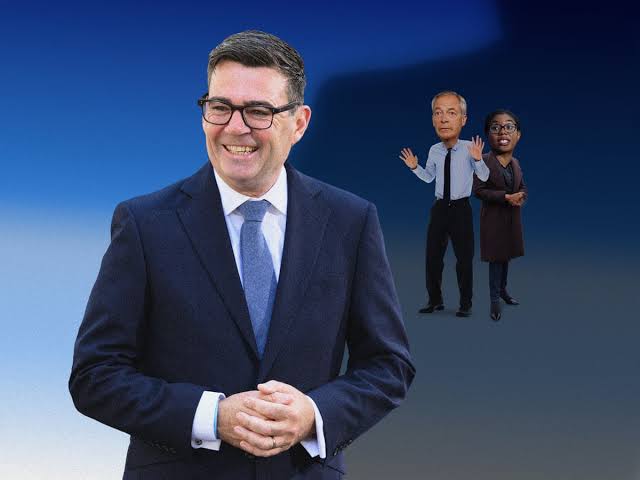
Andy Burnham occupies a unique position in British public life. He is simultaneously a local regional leader and a national political figure whose voice carries weight far beyond Greater Manchester.
For many supporters, his appeal lies in his vocal advocacy for the north of England. He has consistently championed regional devolution, arguing that decisions affecting local communities should be made closer to the people who live there.
This stance has positioned him as a counterweight to the traditional Westminster-centric style of governance. His supporters view his direct communication style as authentic and refreshing.
When he challenges national policies on transport, housing, or public services, many voters see a leader willing to fight for their interests. That perceived willingness to stand up against the political establishment has helped build a deeply loyal following.
Yet, this same high-profile approach regularly draws sharp criticism. Political opponents argue that his populist style sometimes substitutes grandstanding for practical policy outcomes.
They suggest that his frequent interventions in national debates are designed more for political positioning than administrative problem-solving. This polarization is precisely why a simple, emotional public declaration can spark a much wider national discussion.
The Rise of Personality-Driven Politics in the UK
The modern political landscape relies heavily on how leaders present themselves across digital media, television interviews, and public appearances. Voters watch closely, react instantly, and form deep emotional connections with politicians they feel represent their values.
This shift has changed the nature of political loyalty. People do not just evaluate a politician’s manifesto; they form opinions on their character, empathy, and relatability.
Andy Burnham has proven particularly adept at navigating this environment. His frequent presence in the media spotlight ensures he remains a central character in ongoing discussions about the direction of the Labour Party and the future of public services.
When emotional moments or viral clips surface, they quickly transcend local news to become national talking points. They remind observers that modern political support is often intensely personal.
For one voter, Burnham represents a visionary regional leader reshaping British governance. For another, he may symbolize the friction between local ambitions and national party strategies.
Regional Devolution and the Battle for Political Influence
To understand Burnham’s enduring prominence, one must examine the broader evolution of British regional politics. For decades, power was concentrated tightly within Westminster and Whitehall.
The introduction of powerful regional mayors changed that dynamic. Greater Manchester became a test case for devolution, giving local leaders real authority over transport networks, housing development, and skills training.
Burnham utilized this platform to build an independent political identity. By positioning himself as a passionate defender of northern communities, he carved out a role that transcends standard local government responsibilities.
This institutional positioning explains why his successes and failures are watched so closely across the entire country. When regional transport networks face disruptions or local housing crises escalate, the political pressure lands directly on his office.
Conversely, when regional initiatives succeed, he receives the public credit. This high-stakes environment ensures that his public standing remains a barometer for the broader success of devolution in England.
What Critics and Supporters Say About His Record
Supporters often point to Burnham’s tangible efforts to integrate public transport systems, address homelessness, and amplify working-class voices on the national stage as proof of effective leadership. They argue his tenure has given Greater Manchester a powerful voice that cannot easily be ignored by national decision-makers.
Critics, however, urge caution against elevating personality over administrative scrutiny. They argue that persistent local challenges, including housing shortages and economic disparities within the region, require rigorous evaluation rather than uncritical praise.
This tension highlights a fundamental challenge in modern democracies: balancing public affection for a charismatic leader with an objective assessment of their policy outcomes. As political debate grows more digitized and fast-paced, separating a politician’s public persona from their actual governance record becomes increasingly difficult.
What Happens Next in the National Conversation
The ongoing fascination with Andy Burnham’s political trajectory shows no signs of slowing down. Whether he chooses to remain a dominant force in regional governance or eventually seeks a return to national parliamentary politics, his influence on the current political debate is secure.
For the public, figures like Burnham serve as focal points for wider frustrations and hopes regarding how the country is governed. The viral enthusiasm captured in a simple fourfold declaration of affection highlights a deeper truth about contemporary politics.
Voters are searching for leaders who make them feel seen, heard, and represented in rooms where important decisions are made. Whether that public affection translates into lasting structural change or remains a testament to the power of modern political branding, Andy Burnham will continue to command the attention of the nation.
How do you think powerful regional leaders like Andy Burnham should balance local community advocacy with national political responsibilities?
Andy Burnham and the Power of Personality in British Politics
British politics has always been shaped by more than policies, manifestos and parliamentary arithmetic. Behind every election campaign and leadership contest lies another powerful force: personality.
In the case of Andy Burnham, personality has become an especially important part of his political identity.
The current Prime Minister has spent more than two decades in British politics, serving as an MP, cabinet minister and mayor of Greater Manchester before returning to Westminster and becoming Labour leader. His journey has been unusual, but perhaps the most striking part of it has been the transformation of his public image.
Today, Burnham is widely associated with warmth, optimism, regional pride and an ability to communicate directly with voters. Analysts have contrasted this style with the more restrained and technocratic image associated with his predecessor, Keir Starmer.
But personality alone cannot govern a country.
The real question is whether Burnham’s personal political appeal can be converted into effective government when he faces the difficult choices that come with occupying Downing Street.
From Westminster Politician to “King of the North”
Burnham’s political career began long before his rise to national leadership.
He was first elected to Parliament in 2001 and subsequently held several government positions, including Chief Secretary to the Treasury, Culture Secretary and Health Secretary.
Yet his national career did not initially make him one of Britain’s most distinctive political personalities.
That changed dramatically after he left Westminster and became Mayor of Greater Manchester in 2017.
During almost a decade as mayor, Burnham developed a political identity closely associated with northern England.
He became known as the “King of the North”, a label that reflected both his regional advocacy and his increasingly personal connection with voters outside Westminster. The Guardian described his time as mayor as a political reinvention, arguing that he became a stronger communicator and developed an image of being an outsider despite his long Westminster career.
This transformation was important.
Instead of being viewed primarily as another Westminster politician, Burnham increasingly presented himself as someone who understood the frustrations of communities that felt distant from London.
His clothing changed.
His communication style changed.
And, perhaps most importantly, the way he talked to voters changed.
The Politics of Connection
Modern politicians communicate through an enormous number of channels.
Television interviews remain important, but politicians can now speak directly to voters through social media, videos, podcasts and online campaigns.
Burnham has embraced that environment.
During his campaign to return to Parliament in 2026, he frequently used direct-to-camera videos and informal messaging. The Guardian noted the contrast between his campaign style and the more traditional presentation associated with Starmer.
This does not necessarily mean that voters agree with everything Burnham says.
It means that his political communication is designed to feel personal.
That distinction is important.
A politician can disagree with a voter while still making that voter feel heard.
Burnham’s appeal has often involved precisely that sense of recognition.
He has spoken repeatedly about people in former industrial communities who feel that Westminster has neglected them.
The language is deliberately emotional.
Instead of beginning with statistics or administrative reforms, Burnham often begins with people.
That allows complicated political questions to be framed through everyday experiences.
Hope as a Political Message
One of Burnham’s most important themes has been hope.
His supporters have emphasised optimism as a central part of his political style, and his government has adopted the phrase “Hope Again” as a theme for Labour’s conference. The Times reported that Burnham’s approach is designed to project optimism at a time when the government faces difficult economic conditions.
This is more than a slogan.
Hope can be politically powerful because voters do not experience politics purely as a series of policy documents.
They also want to know what politicians believe the country could become.
Burnham has attempted to provide that narrative.
He has argued that Britain is capable of changing direction and that communities outside Westminster can receive greater power and resources.
The emotional element of that message is important.
But it also creates a challenge.
The more a politician raises expectations, the more pressure there is to deliver.
The Makerfield Moment
Burnham’s return to Westminster demonstrated how powerful his personal political brand had become.
He won the Makerfield by-election in June 2026 with 55 per cent of the vote, compared with 35 per cent for Reform UK, according to reporting by The Guardian. The result almost doubled the majority previously achieved by his predecessor.
The victory was important not only because Burnham returned to Parliament.
It also demonstrated that he could turn personal popularity into electoral mobilisation.
His campaign emphasised regional identity, dissatisfaction with Westminster and the promise of political change.
The result gave him the parliamentary platform necessary for his next political move.
Within weeks, Burnham had become Labour leader and then Prime Minister.
His rise was therefore exceptionally rapid.
The Contrast With Technocratic Politics
Burnham’s style has often been compared with a more technocratic approach to politics.
Technocratic politicians tend to emphasise competence, detailed policy design, institutions and evidence.
Those qualities are important in government.
But they do not always generate emotional excitement.
Burnham’s political identity is built differently.
He frequently uses stories, humour, direct language and regional symbolism.
The difference is visible even in his public appearances.
The Guardian noted his preference for informal clothing, including dark T-shirts and jackets, contrasting with the formal suits traditionally associated with Westminster.
Clothing may seem superficial, but political communication often operates through symbols.
A suit can communicate authority and tradition.
A T-shirt and jacket can communicate informality and accessibility.
Neither is inherently better.
What matters is whether the image is credible to the audience.
For Burnham, the informal style has become part of his political identity.
Personality Has Limits
Yet personality has limits.
A charismatic politician can attract attention, create emotional connections and motivate supporters.
But governing requires difficult decisions.
A Prime Minister must deal with budgets, inflation, taxation, defence, welfare, immigration, public services, international relations and countless administrative problems.
These issues cannot be solved through communication alone.
This is one of the questions now facing Burnham.
The London School of Economics has noted that Burnham may be a more charismatic communicator than Starmer, but argues that the challenges confronting his government extend beyond personality. The analysis highlights the importance of political judgment and the ability to turn communication into effective policy.
That distinction could define Burnham’s premiership.
It is relatively easy to explain why change is necessary.
It is much harder to implement that change.
The Northern Identity
Another important element of Burnham’s personality is his relationship with northern England.
His political identity is strongly associated with Manchester and the wider north.
As mayor, he championed regional devolution and public transport reform. The government’s official biography credits him with bringing Greater Manchester’s bus network back under public control and overseeing a period of regional growth.
His supporters argue that this experience gives him a different perspective from politicians who have spent their entire careers in Westminster.
Burnham himself has repeatedly argued that too much power remains concentrated in London.
His proposed political reforms include transferring more decision-making authority to regions.
This means that his personality and his policy agenda are closely connected.
He is not simply saying that Britain needs different policies.
He is saying that Britain needs a different political relationship between London and the regions.
The Risk of Personalisation
There is, however, another side to personality-driven politics.
When a political movement becomes strongly associated with one individual, that person can become the centre of every political argument.
Success becomes personal.
Failure becomes personal.
A government may therefore become vulnerable if its leader’s public image changes.
This is not unique to Burnham.
Modern politics across the democratic world has become increasingly personalised.
Political parties frequently rely on leaders to communicate their identity, dominate media coverage and motivate supporters.
The danger is that policy debates can become secondary to personalities.
Instead of asking whether a policy works, voters and commentators may focus on whether they like the person proposing it.
That is one reason Burnham’s political transformation deserves careful examination.
His ability to connect with people is an important political asset, but it should not replace scrutiny of what his government actually does.
Personality and Democratic Politics
There is nothing inherently unusual about voters responding to personality.
Politics is ultimately about people making decisions about other people.
Trust matters.
Communication matters.
Empathy matters.
Leadership style matters.
A politician who cannot explain a policy in understandable language may struggle to build public support even if the policy itself is technically sound.
Burnham appears to understand this instinctively.
His political style is built around the idea that people need to feel that government understands their lives.
That approach has helped distinguish him from other politicians.
The challenge now is ensuring that the emotional connection does not become an end in itself.
Can Burnham’s Personality Survive Power?
The most interesting test of Burnham’s political personality will come from government.
Opposition politicians can promise change.
Mayors can focus on regional issues.
Campaigners can emphasise hope.
Prime ministers must make choices.
Those choices inevitably create winners and losers.
Taxes must be raised or spending reduced.
Projects must be prioritised.
International commitments must be balanced against domestic demands.
And promises made during campaigns must eventually encounter the constraints of government finances.
Burnham’s optimistic style may help him communicate those choices.
But it cannot remove them.
That is why the coming years will reveal whether his transformation from regional mayor to national leader represents merely a change in political presentation or something deeper.
A New Kind of Political Leadership?
Andy Burnham’s career illustrates the growing power of personality in British politics.
His transformation from Westminster politician to Greater Manchester mayor gave him a distinctive public identity.
His return to Parliament demonstrated the electoral power of that identity.
His leadership campaign placed communication, regional pride and hope at the centre of his political message.
And his arrival in Downing Street has created expectations that he can bring those qualities into national government.
The evidence already shows that many observers regard his communication style as one of his major strengths. Ipsos polling in September 2026 found increased public favourability towards Burnham compared with July, while its earlier research found that respondents were more likely to describe him as likeable and in touch with ordinary people than Starmer. These are measurements of public attitudes, not evidence by themselves of governing performance.
That distinction will matter.
Personality can open the door to political power.
It can create trust, attention and emotional connection.
But once the door is open, governing requires something more.
It requires decisions.
It requires administration.
It requires compromise.
And ultimately, it requires results.
Burnham’s greatest political challenge may therefore be to prove that the qualities that made him successful as a communicator can survive the much harsher realities of national government.
His story demonstrates that personality can transform a political career.
Whether it can transform a country is a far more complicated question.