
Leftie Labour MP Says Her ‘Stomach Churned’ When She Saw English Flags Being Waved
A Labour MP has sparked a heated debate over patriotism and national identity after revealing that she felt deeply uncomfortable watching fellow party members wave England flags at the Labour Party Conference.
Rachael Maskell, the Labour MP for York Central, made the controversial remarks while discussing the place of national symbols in modern British politics. She said that seeing members display St George’s Cross had made her stomach churn, adding that she believed the flags did not represent the Labour Party.
Her comments quickly became part of a wider argument about whether displaying the English flag should be considered an ordinary expression of national pride or whether national symbols have become too closely connected with political movements and arguments about immigration.
The controversy is particularly sensitive because Labour leader Sir Keir Starmer had encouraged party members to embrace national flags during his conference speech in Liverpool. His message was intended to demonstrate that Labour was comfortable expressing patriotism and that national identity should not be left to political opponents.
Members responded by displaying the English St George’s Cross, the Scottish Saltire and the Welsh Red Dragon.
For Maskell, however, the sight was uncomfortable. Speaking at a university event, she suggested that the party needed a break from flags and questioned whether such displays reflected Labour’s political traditions.
She also criticised the prominent Union Jack flags positioned behind Starmer during his speech, arguing that this imagery did not represent the Labour Party as she understood it.
Her remarks were especially striking because they came from a sitting Labour MP rather than an opposition politician. They exposed a disagreement within the party about how national identity should be represented and whether patriotism should play a more prominent role in Labour’s public image.
The reaction has raised an important question: why has something as familiar as the English flag become such a divisive political subject?
A Remark That Divided Option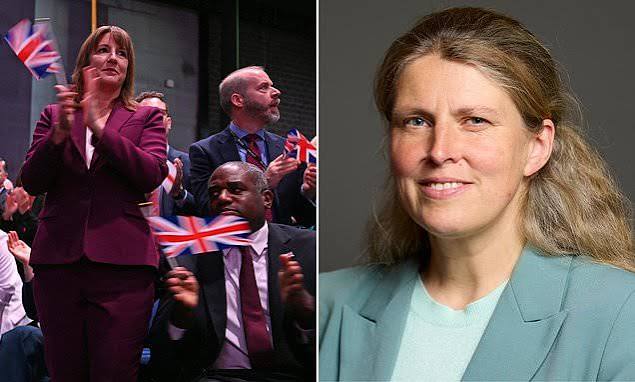
Maskell’s comments were widely discussed because the St George’s Cross is not simply a political emblem. It is England’s national flag and is displayed by millions of people during sporting competitions, national celebrations and community events.
For many people, waving the flag is an uncomplicated expression of pride in their country. It can represent family history, cultural traditions, sporting support or a sense of belonging.
They argue that displaying the English flag should not automatically be associated with a particular political ideology. Someone can be proud of England without supporting any political party or holding extreme views.
Critics of Maskell’s remarks therefore questioned why an ordinary display of national identity should provoke such a strong reaction.
Others, however, may understand her concerns differently. National symbols can acquire political associations depending on the circumstances in which they are used. Some groups have used flags as part of demonstrations involving controversial messages about immigration, national identity and belonging.
For people who are concerned about the political use of national symbols, the surrounding context can be just as important as the flag itself.
This distinction is central to understanding the disagreement. The English flag does not have one universally accepted political meaning, and people can interpret the same display in very different ways.
Starmer’s Attempt to Reclaim Patriotism
The controversy also highlights the political strategy behind Starmer’s decision to encourage Labour members to fly national flags.
For years, Labour has faced questions about whether it understands the importance of patriotism to voters across England, Scotland and Wales.
Some supporters believe the party has historically allowed political opponents to dominate conversations about national identity. They argue that working-class voters can be proud of their country while also supporting public services, workers’ rights and social equality.
From this perspective, displaying the national flag is not a move towards nationalism. It is an attempt to show that patriotism belongs to everyone, regardless of political beliefs.
Starmer’s conference message reflected that approach. By encouraging members to display national flags, he sought to present Labour as a party that could embrace the country’s identity rather than appear uncomfortable with it.
The reaction from Maskell demonstrated that this approach does not necessarily enjoy unanimous support within the party.
Her comments revealed a difference between those who see national symbols as an important part of Labour’s political communication and those who remain sceptical about the symbolism associated with them.
Why the English Flag Has Become So Sensitive
The St George’s Cross has a long history and is one of the most recognisable symbols associated with England.
It is regularly displayed during major sporting tournaments, particularly when the national football team competes internationally. Streets, homes, pubs and public spaces can become covered in red and white flags during major competitions.
In these circumstances, the symbol is generally understood as an expression of support for England.
However, the flag has also appeared at political demonstrations and campaigns, where its meaning may be influenced by the messages surrounding it.
The Operation Raise the Colours campaign brought renewed attention to the display of British and English flags in public spaces. Supporters described the campaign as an expression of patriotism and national pride, while critics raised concerns about the political messages associated with some displays.
The campaign became particularly prominent after disputes involving councils removing flags from public locations.
Those disagreements demonstrated how quickly a national symbol can become a source of political confrontation.
Supporters of public flag displays argued that people should be free to celebrate their national identity without being treated with suspicion. Critics questioned whether certain demonstrations were being used to promote a narrower interpretation of national belonging.
The wider debate has continued to influence how politicians discuss patriotism.
Maskell’s Position and the Question of Unity
Maskell later explained that she wanted to build unity rather than division, referring to racist incidents in York.
That clarification provides important context for her remarks.
Her comments were not simply a statement about the appearance of a flag. They reflected concerns about how national symbols can be interpreted during periods of political and social tension.
For people who share her concerns, taking a break from flag displays might create an opportunity to discuss national identity without allowing the conversation to become dominated by political symbolism.
However, critics may argue that this approach risks treating ordinary expressions of English identity as suspicious.
They may also point out that the vast majority of people who display the St George’s Cross are not necessarily making a political statement about immigration or race.
Both arguments illustrate the difficulty of separating national identity from the political debates that increasingly surround it.
A flag can represent pride and belonging to one person while reminding another of political movements or historical experiences they find uncomfortable.
That does not mean every interpretation is equally representative of everyone who displays the symbol. It does mean that politicians need to be careful when making generalisations about national identity.
A Challenge for Labour’s Identity
The disagreement is part of a much larger challenge facing Labour.
The party wants to appeal to voters who value national pride and believe that politicians should be more confident about expressing British and English identity.
At the same time, Labour wants to maintain its commitment to equality and oppose discrimination against minority communities.
These objectives are not necessarily incompatible. A political party can support national traditions while also defending the rights of people from different backgrounds.
However, communicating that position can be difficult when national symbols become connected to wider arguments about immigration, integration and political identity.
Labour’s leadership has increasingly sought to demonstrate that the party is patriotic. Starmer’s conference speech was an example of that approach.
But the reaction from Maskell suggests that some Labour politicians remain uncomfortable with the way national symbolism is being used.
This disagreement could become more significant as Labour attempts to respond to growing political competition over questions of national identity.
The Political Opportunity for Reform UK
The controversy also provides an opportunity for parties that have made patriotism and national sovereignty central to their political message.
Reform UK, led by Nigel Farage, has repeatedly placed national identity and immigration near the centre of its campaigning.
When a Labour politician expresses discomfort with the display of England’s national flag, opponents can use the remarks to question whether the governing party understands the concerns of voters who regard the flag as an important part of their identity.
For Reform, such disputes fit into a broader argument that established political parties have become disconnected from ordinary public attitudes towards patriotism.
However, it is important to distinguish political criticism from the actual position of the Labour Party as a whole. Maskell’s remarks were her own comments, and they should not automatically be treated as an official Labour policy.
The party leadership’s encouragement of national flag displays at its conference demonstrates that there are different views within Labour about how patriotism should be expressed.
Can Patriotism and Progressive Politics Coexist?
Perhaps the biggest question raised by the row is whether patriotism can comfortably coexist with left-wing politics.
For many people, the answer is yes.
They believe that being proud of England does not require hostility towards other countries or communities. A person can celebrate English history, culture and traditions while supporting equality, multiculturalism and international cooperation.
Others remain cautious because national identity has sometimes been used by political movements to create divisions between people considered insiders and outsiders.
Their concern is that patriotic language can become exclusionary when it is connected to claims that certain communities do not belong.
The challenge is to recognise that these concerns can exist without assuming that every person displaying a national flag shares the same political motivations.
A St George’s Cross outside a family home is not automatically a political statement. Equally, a flag displayed at a political demonstration may carry additional meaning depending on the slogans and organisations involved.
Context matters, and judging people solely by the presence of a national symbol risks creating unnecessary division.
England’s Place in the United Kingdom
The debate also reflects the complicated position of English identity within the United Kingdom.
Scotland, Wales and Northern Ireland each have distinctive national identities and symbols. England’s identity has sometimes received less direct attention in national political discussions because England makes up the largest part of the UK.
In recent years, however, English identity has become increasingly prominent.
Some people believe England’s traditions and national symbols deserve greater recognition. Others worry that a stronger emphasis on English nationalism could create tensions within the wider United Kingdom.
The St George’s Cross has therefore become more than a sporting symbol. It can represent cultural heritage, national pride, political identity or, in some circumstances, a particular vision of England’s future.
That complexity helps explain why a relatively short remark from a Labour MP has attracted so much attention.
A Debate That Is Unlikely to Disappear
The disagreement over Maskell’s comments reflects a wider political argument that is unlikely to disappear soon.
Questions about immigration, national identity, patriotism and community relations remain central to British politics. Political parties are increasingly aware that voters want clear answers about what it means to belong to the country and how national traditions should be recognised.
For some people, the answer begins with allowing the English flag to be displayed without suspicion or political judgement.
For others, the priority is ensuring that national symbols are not used to encourage hostility towards people from different backgrounds.
The challenge for politicians is to address both concerns without turning every display of a flag into another confrontation.
Maskell’s remarks have exposed a disagreement within Labour, particularly between those who want the party to embrace national symbols more confidently and those who believe it should be more cautious about their political meaning.
Ultimately, the St George’s Cross belongs to the people of England, not to any individual political party. People should be able to display it as an expression of national pride, while political organisations should be judged by the messages and actions that accompany their use of national symbols.
The controversy is a reminder that patriotism remains an important and sometimes divisive subject in Britain. As Labour continues to define its identity, the question of how confidently it embraces England’s national symbols is likely to remain part of the political conversation.