

Nigel Farage has put pressure on Sir Keir Starmer to release an update on Labour’s membership figures.
Labour insiders had told The New Statesman that declining membership figures have already fallen below Reform UK’s 260,000 total.
Sir Keir has witnessed a steady drop since taking over from Jeremy Corbyn in March 2020, dropping from 550,000 to just 309,000.
The latest official figures have put Labour’s total at just over 333,000, some 70,000 ahead of Reform UK, which according to a ticker on the party’s website, currently stands at around 260,000.
However, speculation that the figure might have dropped further prompted Mr Farage to put pressure on the Prime Minister. The Reform UK leader asked: “Why won’t Labour release their membership figures to the public?”
Meanwhile, a well-placed Labour source reassured GB News that Reform still trails on paid-up members.
“We’re definitely still ahead of Reform,” they told The People’s Channel.
A Labour Party spokesman also insisted that the party is not prepared to change its rules to release the data, instead insisting the public will become aware at the next scheduled date.
Reform UK is calling for the membership figures to be released
PA
According to official figures, Labour remains the party with the highest membership, with Reform UK in second.
The Green Party of England and Wales leapfrogged the Conservatives to become the third largest party on 130,000 members with Kemi Badenoch’s party on 123,000 members, according to the most recent figures posted in July.
Liberal Democrat membership has fallen from just under 118,000 in 2020 to 60,000, despite the party’s best ever General Election results last year.
A spokesman from Sir Ed Davey’s party said “in actual elections, more and more people are backing the Liberal Democrats”.
The Liberal Democrats has seen a fall in membership
PA
Green Party membership has increased by 80 per cent since Zack Polanski won a landslide leadership election in early September.
One Green insider told The New Statesman the party has had more people join since Mr Polanski was elected than the Lib Dems have total members.
Mr Polanski said: “More than 126,000 people have now joined the Green movement, showing that British politics is changing and support for old-style parties built on privilege and power is shrinking.
“Increasing numbers of people are walking away from the politics of austerity, inequality and division and choosing a new kind of politics that offers a bold, hopeful vision of prosperity, equality and unity.
“Our membership boom reflects growing public frustration with the political status quo and a hunger for genuine alternatives.”
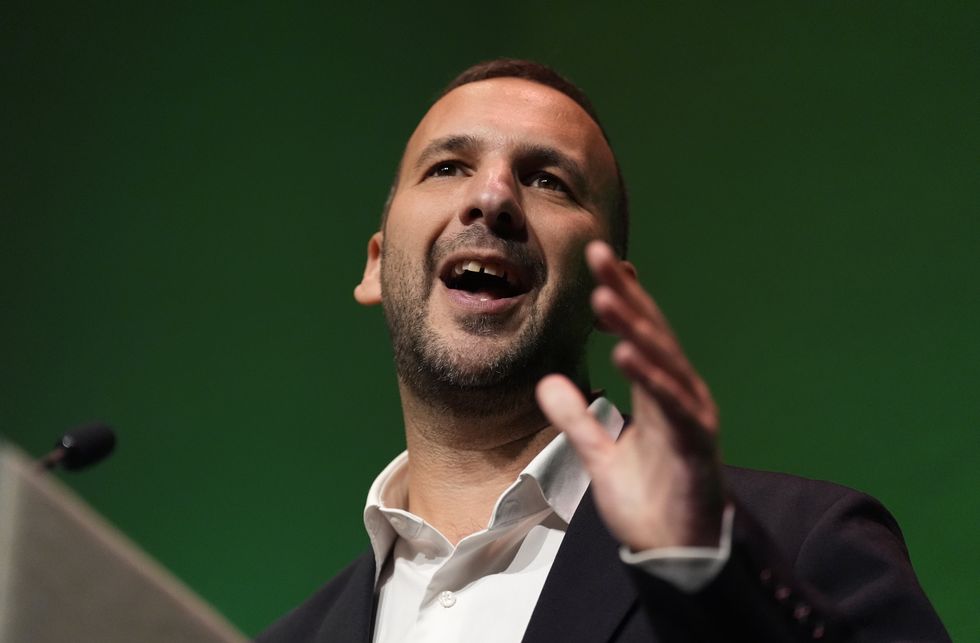
Green Party membership has skyrocketed since the election of Zack Polanski
PA
Meanwhile, Your Party was plunged into chaos amid a row between its two co-founders, Jeremy Corbyn and Zarah Sultana.
Ms Sultana, the Coventry South MP, said she will call off legal action announced as part of a bitter feud over a botched membership launch.
She previously said people felt “demoralised” after the row over her push for members to sign up to the currently untitled party, which was disowned as an “unauthorised email” by Mr Corbyn.
Ms Sultana said she took the step because she had been “sidelined” and “effectively frozen out” by Mr Corbyn and fellow independent MPs Ayoub Khan, Adnan Hussain, Iqbal Mohammed and Shockat Adam.
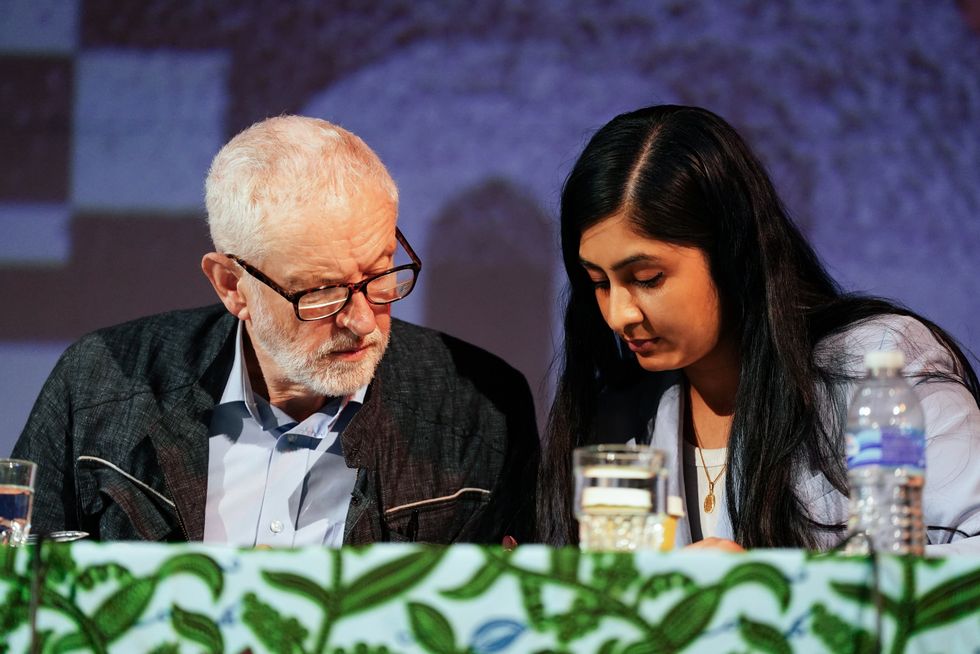
Your Party co-leaders Jeremy Corbyn and Zarah Sultana appear to have reconciled
PA
As part of figures published in August, both Labour and the Conservatives recorded deficits after the most expensive general election in British history last year.
Labour recorded a loss of £3.8million after spending £94.5million over the course of the year.
Labour general secretary Hollie Ridley and treasurer Mike Payne said last year’s loss reflected “the need to respond at pace to shifting circumstances in the general election campaign”.
The Conservatives meanwhile spent £52million and lost £1.9million. The Liberal Democrats and Reform UK recorded surpluses of £1.1million and £1.5million respectively, and the Greens enjoyed a £232,457 surplus.
Nigel Farage Demands Keir Starmer Releases Membership Figures After Reform Surge
Reform UK leader Nigel Farage has challenged Prime Minister Keir Starmer to reveal the latest Labour Party membership figures following a dramatic surge in support for his own party. The growing political rivalry has created another headache for the Labour government, with reports suggesting that Reform UK has overtaken Labour to become Britain’s largest political party by membership. Farage has described the development as a major milestone, arguing that the traditional dominance of Labour and the Conservatives is coming to an end. Meanwhile, Labour is facing uncomfortable questions about why thousands of members appear to have abandoned the party since its general election victory in July 2024.
First of all, the reported growth of Reform UK represents a significant development in British politics. For decades, the country’s political landscape was dominated by two major parties: Labour and the Conservatives. Although smaller parties such as the Liberal Democrats, the Scottish National Party and the Greens have enjoyed periods of electoral success, neither Labour nor the Conservatives has faced such a serious challenge to their traditional position from a relatively new political movement.
Under Nigel Farage’s leadership, Reform UK has increasingly attracted voters who feel disappointed with established political institutions. The party has focused its campaigns on immigration, taxation, national identity and dissatisfaction with government performance.
Its message appears to have resonated with sections of the electorate who believe that successive governments have failed to address Britain’s most pressing problems. The party has also benefited from growing frustration among former Conservative voters who feel that previous administrations did not deliver on promises concerning immigration control and economic reform.
According to figures reported in December 2025, Reform UK had 268,631 paid-up members, while Labour’s membership had reportedly fallen below 250,000. The figures suggested that Farage’s party had overtaken Labour in membership numbers, representing a major symbolic victory for Reform. <Cite refs={[“turn715551search0″,”turn715551news13”]}/>
Farage welcomed the development and argued that Reform UK had become the largest political party in Britain.
He suggested that the political establishment could no longer assume that Labour and the Conservatives would dominate British politics indefinitely. For the Reform leader, the membership figures represented evidence that voters were increasingly prepared to support an alternative political movement.
However, Farage also demanded greater transparency from Keir Starmer. He challenged the Prime Minister to publish Labour’s latest membership figures so that the public could understand the extent of the party’s decline.
The demand has placed Labour in an uncomfortable position. Political membership numbers are often used as an indication of a party’s organisational strength, enthusiasm among supporters and ability to mobilise activists ahead of elections.
Although membership figures do not necessarily determine election results, a significant decline can create difficulties for a political organisation. Fewer members may mean reduced campaign activity, lower membership income and weaker connections with local communities.
Labour’s response has been that its membership figures are published through its annual reporting process rather than updated publicly throughout the year. A party spokesperson stated that Labour did not provide a continuous commentary on its membership numbers. <Cite refs={[“turn715551search0”]}/>
Nevertheless, this response has not prevented criticism from political opponents.
Reform UK believes that the public deserves a clearer picture of Labour’s current position, particularly when reports suggest that the governing party has lost a substantial number of members.
The reported decline is especially significant because Labour secured a landslide victory in the July 2024 general election. At that time, the party entered government with considerable expectations and promised to deliver economic stability, improve public services and rebuild confidence in British politics.
However, the period following the election has proved challenging.
Rachel Reeves’s economic policies have attracted criticism over taxation and public spending, while concerns about the cost of living continue to affect households across the country. The government’s approach to immigration has also generated disagreements, with some Labour supporters believing that the party has not gone far enough in addressing irregular migration.
Other members have expressed dissatisfaction with changes to traditional Labour policies, particularly those concerning welfare, workers’ rights and public services.
These disagreements have contributed to concerns about the party’s relationship with its grassroots supporters.
Another important factor is the legacy of former Labour leader Jeremy Corbyn. During his leadership, Labour membership expanded dramatically, reaching more than 600,000 at its peak. Many of those members were attracted by his political programme and promises of major economic and social reforms.
Following Corbyn’s departure and Starmer’s move towards a more centrist political position, some members became increasingly dissatisfied with the party’s direction.
The latest membership figures suggest that Labour has struggled to retain the enthusiasm that previously made it one of Europe’s largest political movements.
Meanwhile, Reform UK has attempted to build a stronger organisational structure across Britain. Its growing membership provides the party with additional opportunities to recruit volunteers, establish local branches and organise election campaigns.
This could prove particularly important as the party seeks to translate its national popularity into success at local and parliamentary elections.
Farage has repeatedly argued that Britain needs a political alternative capable of challenging what he describes as an ineffective political establishment. His supporters believe Reform offers a different approach to immigration, public spending and national sovereignty.
However, becoming the largest party by membership does not automatically guarantee electoral success. Reform must still demonstrate that it has the policies, experience and organisational capacity required to govern a country as complicated as Britain.
The party also faces questions about the quality of its candidates, internal discipline and the financial implications of its policy proposals.
Furthermore, membership numbers should not be confused with public support. Someone who pays to join a political party is not necessarily representative of every voter who supports that party at an election. Many people vote for a political movement without becoming formal members.
Nevertheless, the figures provide an important indication of the changing balance between Britain’s political organisations.
The Conservative Party is also facing significant challenges. After its defeat in 2024, it has struggled to rebuild public confidence and establish a convincing alternative to Labour. Reform UK has benefited from attracting voters who previously supported the Conservatives, creating additional pressure on the party’s leadership.
The Green Party and Liberal Democrats have also sought to attract voters dissatisfied with the main political parties. This suggests that Britain’s political system could become increasingly fragmented, with several parties competing for influence.
For Starmer, the growing popularity of Reform UK represents a serious political warning. The Prime Minister must demonstrate that Labour can deliver the improvements promised during the election campaign while reconnecting with supporters who feel disappointed.
Publishing clear and accurate membership information could help address questions about the party’s organisational position. More importantly, Labour needs to understand why members are leaving and what changes might persuade them to return.
The government must also focus on practical issues affecting ordinary people. Improving NHS waiting times, creating affordable housing, supporting economic growth and controlling public expenditure will be essential if Labour wants to restore confidence.
At the same time, Farage must prove that Reform UK can offer more than criticism of the government. Growing membership creates expectations, and supporters will increasingly demand detailed policies and credible solutions to Britain’s economic and social problems.
Ultimately, the competition between Labour and Reform UK is becoming about more than membership statistics. It reflects a wider struggle over political identity, public trust and the future direction of Britain.
In conclusion, Nigel Farage’s demand for Keir Starmer to release Labour’s latest membership figures has highlighted the growing political strength of Reform UK and the difficulties facing the governing party. Reports that Reform had reached 268,631 paid-up members while Labour had fallen below 250,000 represented a significant symbolic victory for Farage. Although membership figures alone cannot determine the outcome of future elections, they demonstrate important changes within Britain’s political landscape. Starmer must address growing dissatisfaction among Labour supporters, while Farage must prove that his party can transform its expanding membership into effective political leadership. The coming years could therefore mark a major turning point in British politics, as the traditional two-party system faces one of its strongest challenges in modern history.