

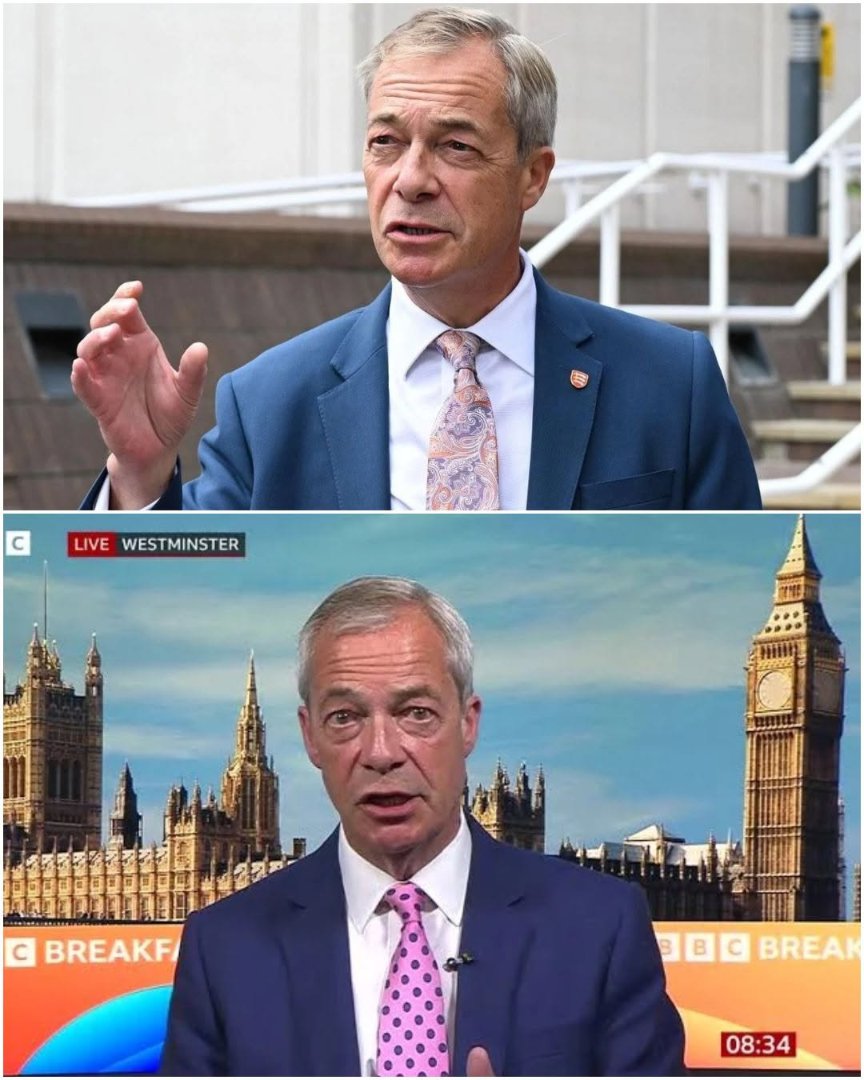
Nigel Farage’s Reform UK is advising some of its own councillors to avoid making major changes during their first 100 days in office, despite the party leader promising to overhaul the British government at unprecedented speed if he becomes prime minister.
Internal guidance obtained by The Independent tells Reform councillors responsible for adult social care to concentrate on understanding how local services operate, building relationships with officials and asking questions before attempting substantial reforms.
Advertisement

The document presents a striking contrast with Farage’s national campaign, which has been built around a promise to deliver sweeping political changes within the first 100 days of a Reform government.
Advertisement
At the party’s conference in September, Farage said he would declare a national emergency, cancel parliamentary recesses and potentially keep MPs working around the clock to pass legislation.
He also promised to remove civil servants who resisted his government’s agenda.
But the leaked advice to Reform’s elected representatives adopts a considerably more cautious approach, warning that rushing into major decisions before understanding the responsibilities involved could undermine their effectiveness.
The document, titled Leading Adult Social Care: A Practical Guide for Reform UK Cabinet Members, was written by Diane Morton, chair of Reform’s adult social care network.
Morton previously served as the cabinet member responsible for adult social care and public health at Kent County Council.
Dated August 2026, the guidance was produced just weeks before Farage outlined his first 100 days programme at Reform’s Birmingham conference on 4 September.
Advertisement
It advises newly appointed councillors with responsibility for adult social care to spend their initial months familiarising themselves with services rather than attempting immediate structural changes.
“Don’t rush into big changes,” the document states.
Advertisement
Councillors are encouraged to understand the financial and operational pressures facing their departments, meet the people responsible for delivering services and develop working relationships with experienced local government officers.
The guidance also recommends that councillors listen more than they speak and resist the temptation to arrive with ready-made solutions before establishing what problems actually need addressing.
Far from depicting council officials as obstacles to political reform, it emphasises the importance of developing trust and maintaining productive working relationships.
Advertisement
The practical advice is hardly controversial in itself.
Adult social care is one of the most expensive and complicated responsibilities facing local authorities, involving the support of older people, disabled adults and residents with complex care needs.
Decisions can affect vulnerable people’s safety, their independence and the financial stability of councils already struggling to meet growing demand.
Advertisement
Understanding those responsibilities before introducing substantial reforms could reasonably be regarded as good management.
What makes the document politically significant is how sharply its approach differs from the message Reform is selling nationally.
At Reform’s September conference, Farage made his proposed first 100 days in government the centrepiece of the party’s electoral pitch.
The party leader promised an administration that would immediately begin implementing major changes to public spending, immigration policy and the machinery of government.
He said a Reform government would declare a national emergency and cancel parliamentary recesses to ensure its programme could pass through Parliament as quickly as possible.
Farage even suggested that MPs could be required to sit for extended periods, potentially through the night, if that was necessary to push legislation through.
The proposals formed part of his argument that Britain had become trapped by political institutions incapable of delivering meaningful change.
Advertisement
Reform also introduced the idea of individual pledges for senior ministers, who would be expected to meet specific targets within their first 100 days or face dismissal.
Farage described the arrangements as a way of ensuring that ministers were personally accountable for delivering their promises.
One of the most ambitious commitments came from Robert Jenrick, the party’s Treasury spokesman, who pledged to identify £100 billion in spending reductions and offered to resign if he failed to deliver the promised tax changes.
Advertisement
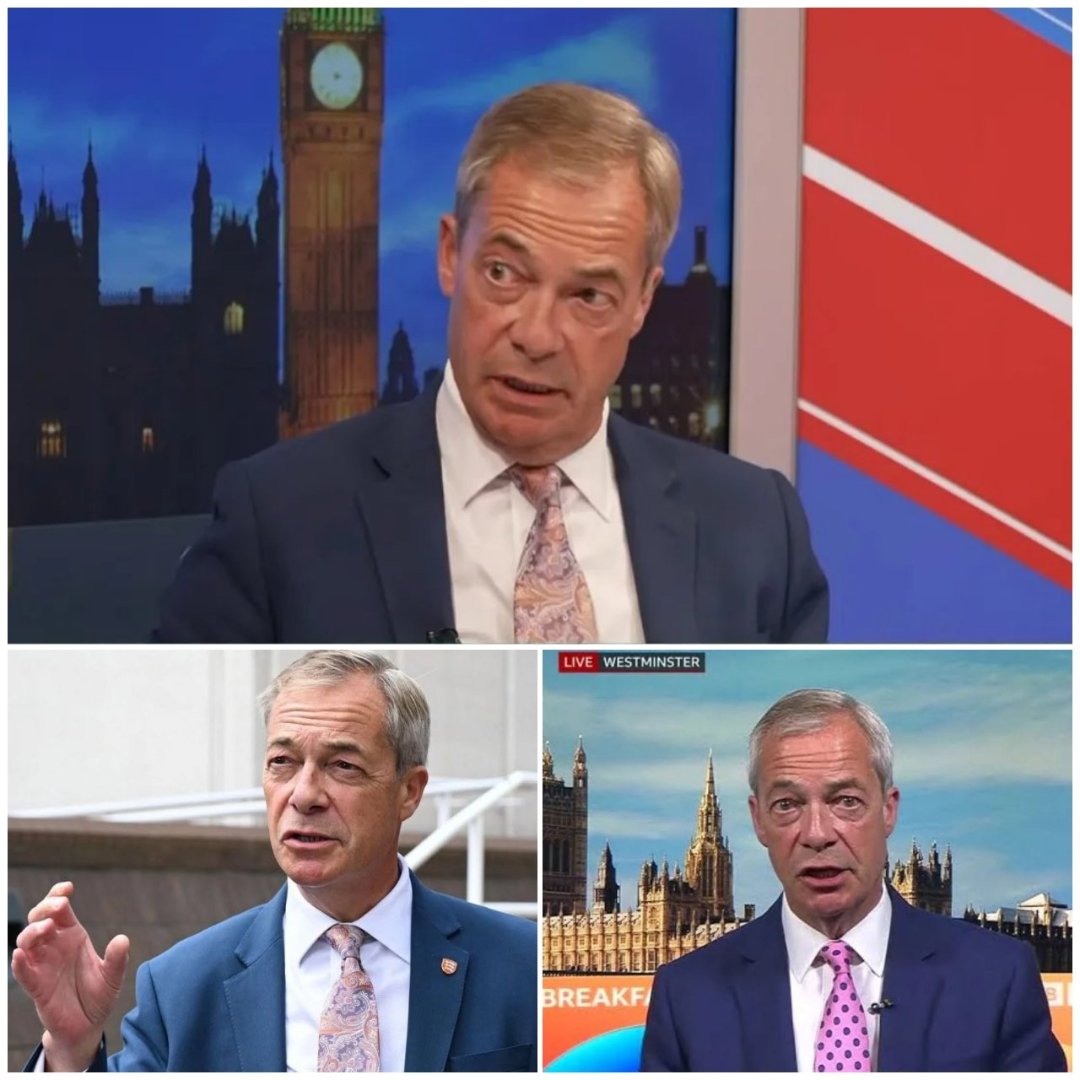
Those commitments would involve extraordinarily complex decisions about public finances, government departments and the provision of services.
Yet Reform’s own guidance for councillors responsible for adult social care suggests that the first priority when assuming responsibility for a major public service should be understanding how it works.
Advertisement
The most obvious contradiction concerns Reform’s attitude towards public officials.
At local government level, the leaked document encourages councillors to establish relationships with experienced officers and recognise the value of their knowledge.
The advice reflects a basic reality of council administration: elected politicians set priorities, but professional officers provide operational expertise and ensure that decisions comply with legal and financial obligations.
Advertisement
In central government, however, Farage has adopted a much more confrontational approach.
He has promised that civil servants who obstruct Reform’s programme would be removed and replaced with people recruited from outside government, including business.
The distinction raises questions about whether Farage regards the expertise of public servants as an essential part of effective administration or an obstacle to the changes he wants to deliver.
Advertisement
There are differences between taking responsibility for adult social care at a council and assuming control of a national government.
A newly appointed council cabinet member may have different powers, responsibilities and opportunities for reform from a prime minister or senior government minister.
But both roles involve complex public services, statutory obligations, financial constraints and officials whose knowledge can be essential to delivering political commitments.
Advertisement
Reform’s local guidance appears to recognise those practical limitations more openly than the party’s national rhetoric.
The leaked document also arrives amid questions about Reform’s performance in local government.
The party secured a major breakthrough in the May 2025 local elections, winning control of several councils and presenting its new administrations as an opportunity to demonstrate how it would govern nationally.
Advertisement
Farage and his allies promised to eliminate wasteful spending, challenge established council practices and make rapid improvements to local services.
Some Reform-led councils subsequently announced savings programmes, environmental policy reversals and changes to council administration.
Kent County Council, one of the party’s most prominent local authorities, claimed millions of pounds in savings during its first 100 days, although opposition councillors disputed aspects of those figures.
Advertisement
Reform has also experienced internal difficulties as some elected representatives have left the party or criticised decisions taken by its local leadership.
In May, The Independent reported that 68 councillors had departed Reform over the preceding year, through resignations, defections and other circumstances.
Former Durham councillor Nick Brown complained that the party had failed to deliver the transformation promised to voters.
Brown said he had expected meaningful changes after Reform took control locally, but believed councillors were increasingly expected to follow instructions from the party leadership rather than act independently.
His criticisms are not proof that Reform’s wider local government programme has failed, particularly as councils inherited existing budgets, contracts and legal obligations.
They do, however, illustrate the difficulty of reconciling ambitious political promises with the practical responsibilities of running public services.
The dispute over Reform’s internal guidance follows another difficult week for the party.
An ITV undercover investigation recently exposed racist and extremist remarks made by some Reform members, councillors and prospective candidates.
Several people featured in the investigation were subsequently suspended or resigned, while the revelations renewed questions about candidate vetting and the party’s internal culture.
The programme also captured individuals discussing how they presented themselves to voters and the extent to which their intentions should be disclosed before an election.
That material has added to concerns about the gap between Reform’s public campaigning and the conduct of some people operating within the party.
However, the leaked adult social care guidance should be distinguished from those controversies.
Its central recommendation is that newly elected councillors exercise caution when taking responsibility for vulnerable people’s care.
There is no evidence that this particular document was intended to conceal policy plans from voters or encourage councillors to avoid fulfilling election promises.
Instead, it illustrates a tension between the practical advice given to people already in office and the language used by party leaders seeking to win national power.
Reform has rejected suggestions that the leaked guidance undermines its national programme.
A party spokesperson said its commitment to major changes during the first 100 days of a Reform government remained in place.
The spokesperson also insisted that councillors who had made specific commitments to their local electorates would be expected to deliver them.
Reform argues that the party provides guidance and support to help elected representatives fulfil their responsibilities effectively.
That response leaves an important distinction between the two approaches.
The guidance encourages social care cabinet members to understand services before changing them, but it does not explicitly instruct councillors to abandon manifesto commitments or delay every decision for three months.
Farage’s national proposals, meanwhile, concern a much wider range of powers and policies than those available to individual local government cabinet members.
The question is whether the caution recommended for local public services would also be appropriate when pursuing more sweeping changes across Whitehall.
Farage has made speed and disruption central to his argument that Reform offers something fundamentally different from the Conservatives and Labour.
His proposed first 100 days are intended to demonstrate that a government willing to confront established institutions could deliver changes that other parties have failed to achieve.
But the party’s own guidance for adult social care suggests that governing requires a different set of skills from campaigning.
It asks councillors to develop knowledge, understand budgets, build trust and work constructively with the people already responsible for delivering services.
Those are principles that would be familiar to politicians across local government, regardless of party affiliation.
They also invite an awkward comparison with Farage’s promise to move rapidly against civil servants considered resistant to his programme.
Reform maintains that its national commitments will be delivered and that councillors are expected to honour the promises they make to voters.
Yet the August document gives those responsible for adult social care a markedly different instruction from the urgency demanded at the party’s September conference.
Before attempting major changes, Reform’s own guidance tells them to spend their first 100 days learning how the system works.
Farage Has Been Crystal Clear About How Quickly He Wants to Move If He Reaches Downing Street
Nigel Farage has made no secret of his ambitions for Britain or the speed at which he intends to pursue them if he becomes Prime Minister. The Reform UK leader has repeatedly promised that his government would waste no time implementing its political programme, insisting that the first 100 days in Downing Street would mark the beginning of a dramatic transformation of the country. His message is clear: Britain cannot afford another government that spends months making promises while delaying meaningful action.
Speaking at Reform UK’s conference in Birmingham in September 2026, Farage outlined an ambitious programme for his proposed first 100 days in office. Rather than gradually introducing policies over several years, he wants his ministers to deliver immediate and measurable results. He has promised to declare a national emergency on his first day as Prime Minister, recall Parliament and push through legislation designed to implement the party’s principal commitments. His approach represents a striking departure from the more cautious language traditionally associated with the early months of a new administration.
One of Farage’s central priorities is immigration. He has repeatedly criticised successive Conservative and Labour governments for failing to control irregular migration across the English Channel. Under Reform UK’s proposals, the Royal Navy would be deployed to prevent unauthorised small boats from reaching British shores. The party says people attempting to enter Britain illegally would be detained and returned, although the practical and legal arrangements for such a policy remain subjects of considerable debate.
Immigration has become one of the most contentious political issues in Britain. Many communities are concerned about pressure on public services, housing availability and the management of asylum accommodation. Reform UK argues that stricter border controls are essential to restoring public confidence in the immigration system. However, critics question whether the proposed measures could be implemented within 100 days, particularly given international obligations, maritime law and the need for cooperation with France.
Farage has also promised to address the cost-of-living crisis. Reform UK has proposed reducing household energy bills by approximately £250 a year, partly through changes to environmental levies and energy policy. The party argues that families should not have to struggle with expensive electricity and heating while the Government pursues costly environmental objectives.
For millions of households, energy prices remain an important financial concern. Pensioners, low-income families and people living in poorly insulated homes are particularly vulnerable to increases in heating costs. Consequently, a reduction in energy bills could have significant implications for household finances. Nevertheless, questions remain about the precise costs of Reform’s proposals, their funding arrangements and whether the promised savings could be delivered without creating additional financial pressures elsewhere.
Taxation is another major part of Farage’s programme. Reform UK has proposed increasing the personal income tax allowance to £15,000, meaning that more workers would be able to earn before paying income tax. The party argues that this would encourage employment, increase disposable incomes and help ordinary families cope with financial pressures.
However, such a substantial tax reduction would have consequences for government revenue. The Treasury would need to identify credible savings or alternative sources of income to compensate for the money lost through lower taxation. Reform has presented spending reductions and other revenue measures as part of its financial strategy, but independent scrutiny of the assumptions behind these plans remains essential. Lower taxes may benefit households, but they must be considered alongside the funding requirements of public services.
The National Health Service is another area where Reform has promised change. Britain continues to experience serious challenges involving waiting lists, staffing shortages and pressure on hospitals. Farage has argued that the country needs a more effective healthcare system, with greater emphasis on domestic medical training and improving the availability of skilled professionals.
Reform UK has indicated that it wants to increase the number of doctors and nurses trained in Britain rather than relying excessively on international recruitment. While expanding domestic training could strengthen the NHS over time, universities and medical institutions require substantial resources and several years to train qualified professionals. Therefore, improvements in healthcare capacity cannot realistically depend on political announcements alone. Effective planning, investment and cooperation with healthcare workers will be necessary.
Perhaps the most striking aspect of Farage’s proposed governing style is his attitude towards ministers and public officials. He has introduced what he calls ‘jeopardy pledges’, requiring senior ministers to make specific commitments for their first 100 days in office. If they fail to deliver, they would be expected to resign or face dismissal.
This approach is intended to demonstrate accountability. Farage argues that politicians should be judged on measurable achievements rather than political speeches and election promises. Supporters may see this as an attempt to restore public confidence in government by making ministers personally responsible for their performance.
However, governing a modern country is considerably more complicated than meeting a series of short-term targets. Some policies depend on negotiations with foreign governments, parliamentary procedures, judicial decisions and the cooperation of public institutions. Unexpected economic or international developments may also prevent ministers from achieving their original objectives. A rigid 100-day deadline could therefore create pressure to prioritise speed over careful examination of the consequences.
Farage has gone further by suggesting that Parliament could be required to sit for extended periods, potentially six days a week, to pass the legislation needed for his programme. He has also indicated that he would consider major changes to the House of Lords if it obstructed his proposals. In addition, he has warned that civil servants who attempted to obstruct the government’s agenda could be removed and replaced by individuals from outside the traditional Whitehall establishment.
These statements have raised important questions about the relationship between political leadership and Britain’s constitutional institutions. A Prime Minister has considerable executive authority, but that authority is not unlimited. Parliament must consider and approve legislation, while courts retain an important role in interpreting the law and protecting legal rights. The House of Lords also participates in examining and revising legislation.
Even a government with a strong electoral mandate cannot simply ignore these constitutional arrangements. Parliamentary procedures, legal obligations and institutional checks exist to ensure that political power is exercised within established rules. Consequently, the speed promised by Farage may encounter practical and constitutional obstacles that cannot be removed simply by declaring a national emergency.
There is also an apparent contrast between Reform UK’s national ambitions and the advice given to some of its local councillors. In October 2026, reports emerged that internal guidance for Reform councillors encouraged them to avoid major changes during their first 100 days and instead concentrate on understanding local services, building relationships and learning how councils operate. This appears different from Farage’s promise of rapid national transformation. A Reform spokesperson, however, maintained that the party remained committed to delivering its national programme.
The difference raises a broader question about political management. Effective leadership requires both determination and preparation. Moving too slowly can frustrate voters who expect change, but moving too quickly without understanding existing institutions can create administrative problems. The challenge for any incoming government is to find an appropriate balance between urgency and responsible decision-making.
Economic credibility will also be central to the success of Farage’s proposals. Britain faces significant pressures involving public debt, productivity, infrastructure and the financing of public services. Any incoming administration would have to demonstrate that its policies are financially sustainable. Promising lower taxes, cheaper energy, stronger public services and tighter border controls simultaneously may appeal to voters, but delivering all these objectives requires detailed financial planning.
Furthermore, Britain operates within an interconnected international economy. Decisions concerning immigration, trade, energy and foreign relations can have consequences beyond the country’s borders. A government seeking rapid changes must therefore consider the potential responses of international partners, businesses and financial markets.
Ultimately, Farage’s proposed first 100 days would represent a significant test of his political programme. His supporters would expect visible action on immigration, taxation, energy prices and public services. Critics would closely examine whether his promises could be delivered legally, economically and administratively. Both sides would have legitimate reasons to scrutinise the government’s performance.
What is particularly clear is that Farage wants to present himself as a leader prepared to challenge established political practices and accelerate the process of government reform. Whether his programme could be implemented within the promised timetable is a separate question, one that would depend on parliamentary support, available resources and the practical realities of governing.
Britain does not simply need political promises; it needs policies that produce measurable improvements in people’s lives. Reducing household expenses, improving healthcare, managing immigration and strengthening economic opportunities are important objectives. However, success should ultimately be measured by lasting results rather than the number of announcements made during the first three months in office.
If Nigel Farage reaches Downing Street, the first 100 days could become one of the most closely scrutinised periods in modern British political history. His determination to move quickly is unmistakable. The real test, however, will be whether speed can be translated into effective, lawful and sustainable change for the country.