
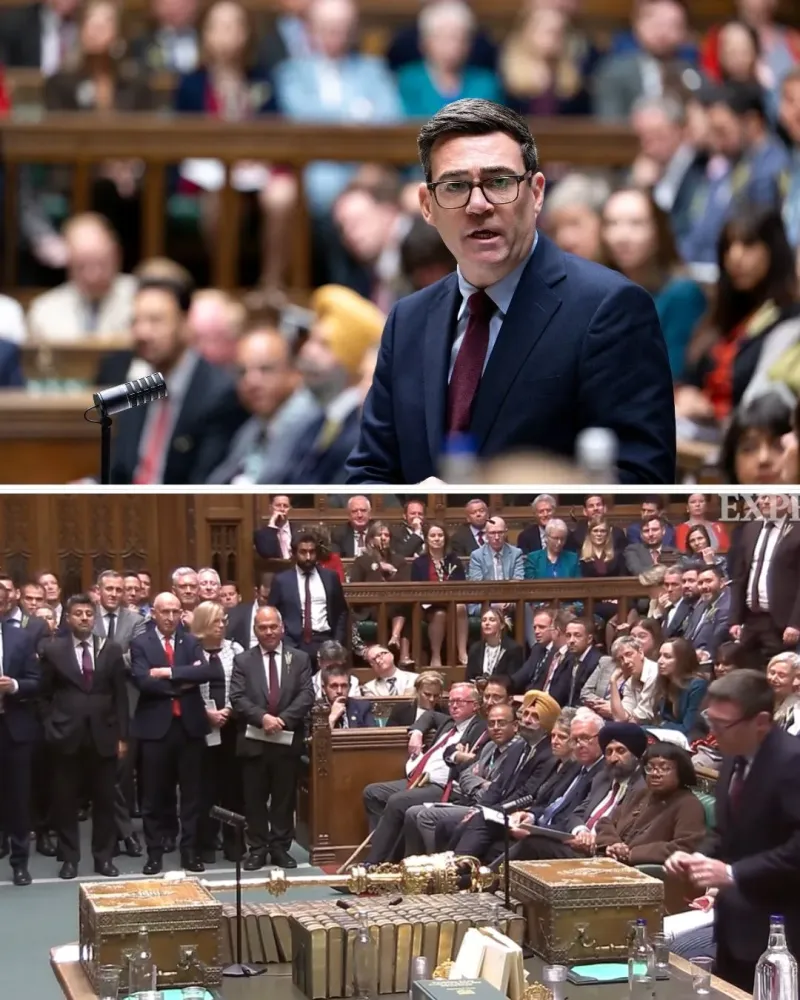
The controversy erupted when Burnham was challenged on the government’s timeline for defense spending and current military readiness. “Yes, we do everything to support our national security, but it can’t come at the expense of social security,” Burnham told the Commons. “Having strong national security also depends upon having resilience in our communities. This side of the house will not be forced to choose between the two, and we will set out a plan to get to 3.5% [of GDP on defense] by 2035 at the spending review.”

For critics, the timeline—and the explicit tethering of defense budgets to welfare spending—signals a dangerous vulnerability. The UK armed forces are currently facing acute personnel shortages, with the regular army reportedly shrinking to 71,000 troops, its smallest size in over two centuries.
Adding to the tension are reports that the Ministry of Defence is planning mobilization drills that could extend the call-up age for veterans to 65 to bolster strategic reserves.
Opposition figures were quick to condemn the Prime Minister’s remarks. Richard Tice of the Reform Party characterized Burnham’s stance as a “surrender” of national defense. “He’s surrendering our national security, our national defense, in favor of social security,” Tice stated, accusing the government of prioritizing domestic welfare over the physical safety of the realm amidst rising international threats.

Critics have pointed to multiple geopolitical stressors testing British resolve, including warnings from defense officials regarding a potential confrontation with Russia, renewed rhetoric from Argentina regarding the Falkland Islands, and a highly controversial £35 billion taxpayer-funded financial package attached to the surrender of sovereignty over the Chagos Islands.
In an attempt to pivot the debate during PMQs, Burnham vigorously defended his government’s international record, framing his recent foreign policy maneuvers as true global leadership.
Specifically addressing the Israeli-Palestinian conflict, Burnham argued that leadership requires action against injustice and intimidation, rather than just rhetoric.
“Britain has to stand for fairness against injustice, where people are being bullied out of their homes,” Burnham declared, pledging that his government will “always stand with the underdog.”
However, this pivot has done little to quell the outrage from defense hawks and opposition benches. Less than two months into his tenure, Burnham is facing accusations that his administration is appeasing its left-wing base and prioritizing welfare budgets at the direct expense of a robust, immediately deployable military. As the government prepares for its upcoming spending review, the intense scrutiny over exactly how Labour plans to fund both its domestic social agenda and its military obligations shows no signs of abating.
THE UK IS FACING TERRIFYING GLOBAL THREATS, BUT PM ANDY BURNHAM JUST DROPPED A BOMBSHELL THAT LEFT PARLIAMENT STUNNED!
Britain is facing an increasingly uncertain international situation, with growing security concerns, Russian aggression, tensions in the Middle East and the threat of hostile interference in democratic institutions. Against this difficult background, Prime Minister Andy Burnham has delivered a major statement to Parliament, setting out his government’s response to the dangers facing the United Kingdom.
His message was clear: Britain must prepare for a more dangerous world, strengthen its international partnerships and refuse to allow hostile powers to undermine its security.
The statement has placed national defence, international cooperation and Britain’s future relationship with Europe firmly at the centre of Westminster’s political debate.
But it was his warnings about Russia, hybrid warfare and threats to British military installations that attracted particular attention.
1. Andy Burnham Issues a Serious Warning About Britain’s Security
Speaking in the House of Commons on 12 October 2026, Burnham addressed international developments following his attendance at the United Nations General Assembly.
He described a world facing serious instability and insisted that Britain must remain a reliable partner for its allies.
The Prime Minister reaffirmed the government’s support for Ukraine following intensified Russian attacks on civilian infrastructure.
He warned that the conflict was not simply a distant European problem but a matter with direct consequences for British and European security.
Burnham also confirmed that the government had announced additional funding to help Ukraine withstand another winter of Russian bombardment.
His message was that Britain would continue supporting Ukraine rather than allowing military pressure to undermine its independence.
2. Russia’s Growing Threat Raises Alarm
One of the most serious elements of Burnham’s statement concerned Russia’s alleged campaign of hybrid attacks and sabotage across Europe.
Hybrid warfare involves activities that extend beyond conventional military operations.
These can include cyberattacks, sabotage, disinformation campaigns and attempts to destabilise democratic institutions.
Burnham argued that Britain and its European allies needed to work more closely to identify and prevent these threats.
He referred to a new partnership agreed with German Chancellor Friedrich Merz to strengthen cooperation against hostile activities.
The announcement demonstrates how the government intends to make international security cooperation a central part of its foreign policy.
For British authorities, the challenge is identifying potential threats while protecting critical infrastructure and maintaining public confidence.
3. RAF Incidents Raise Further Security Questions
Perhaps the most concerning part of the parliamentary statement involved incidents at RAF Fairford and RAF Molesworth.
Burnham thanked police and military personnel for their response and confirmed that the government considered the incidents serious.
He also referred to an assessment that an incident at RAF Fairford was highly likely to have been coordinated in Iran and almost certainly directed by Iran’s Islamic Revolutionary Guard Corps.
The allegation represents a significant security concern.
The Prime Minister said Britain would not tolerate hostile threats on its territory and promised further action against networks allegedly being used by Iran.
He also indicated that additional sanctions would be introduced to restrict the ability of Iran and the IRGC to threaten British interests.
The government will face continuing pressure to explain the security implications and demonstrate that appropriate protective measures are in place.
4. Britain Strengthens Its Support for Ukraine
Ukraine remains another major priority for the government.
Burnham confirmed that Britain would continue providing support as Russian attacks intensified.
He also discussed an energy ceasefire proposal involving the United States and Ukraine.
The objective was to reduce attacks on energy infrastructure and help restore stability to international energy markets.
The Prime Minister stressed that Britain would remain committed to Ukraine’s defence.
He also reaffirmed the importance of NATO, describing the alliance as defensive while making clear that Britain would meet its commitments.
This position reflects the government’s argument that national security depends on cooperation with allies and maintaining credible defensive capabilities.
5. The Middle East Creates Another Major Challenge
Burnham also addressed the situation in the Middle East.
During discussions with US President Donald Trump, he raised regional security concerns and confirmed Britain’s support for defensive operations involving Saudi Arabia.
The government had deployed air defence assistance and a Voyager aircraft to provide air-to-air refuelling support.
Burnham said the aircraft had already completed 14 operational missions.
He also condemned attacks on King Khalid International Airport and reaffirmed Britain’s commitment to supporting Saudi Arabia against Houthi attacks.
The developments demonstrate how Britain’s international responsibilities extend well beyond Europe.
The government must balance regional security commitments with diplomatic efforts to prevent further escalation.
6. A New National Centre to Fight Disinformation
Another significant announcement concerned the establishment of a National Centre for Information Defence.
Burnham said the centre would address threats to Britain’s information environment, following recommendations from the Foreign Affairs Select Committee.
The issue has become increasingly important as hostile actors use social media, fake websites and manipulated information to influence public debate.
The government has argued that foreign interference can undermine confidence in democratic institutions and create divisions within society.
Burnham’s announcement suggests that the government intends to strengthen its ability to identify and respond to coordinated disinformation campaigns.
However, the centre’s effectiveness will depend on its independence, transparency and ability to protect legitimate freedom of expression.
7. Brexit Returns to the Centre of Britain’s Security Debate
Burnham’s wider international approach has also reignited arguments about Britain’s relationship with the European Union.
He has argued that closer cooperation with European partners is increasingly important because of shared security and economic challenges.
The Prime Minister believes Brexit weakened some of Britain’s opportunities for cooperation and that the country should examine how its relationship with Europe can be improved.
This position has attracted criticism from Conservative and Reform UK politicians, who argue that Britain must protect the sovereignty and independence secured through Brexit.
The disagreement demonstrates that Britain’s relationship with Europe remains politically sensitive.
However, the growing security challenges facing the continent mean that cooperation between European countries is likely to remain an important issue.
8. What Does This Mean for Ordinary British People?
Although international security may appear distant from everyday life, the consequences can be significant.
Military instability can affect energy prices, international trade and the cost of essential goods.
Cyberattacks and hostile interference can also threaten businesses, public services and critical infrastructure.
The government therefore faces the difficult task of protecting national security without placing unnecessary financial pressure on households.
Burnham’s announcements suggest that defence, intelligence cooperation and international partnerships will remain important government priorities.
But the public will expect ministers to explain how these commitments will be funded and what practical protection they will provide.
CONCLUSION: BRITAIN FACES A DANGEROUS WORLD AND BURNHAM HAS SET OUT HIS RESPONSE
Andy Burnham’s parliamentary statement has highlighted the seriousness of the international challenges facing Britain.
From Russian aggression and alleged Iranian-linked security threats to instability in the Middle East and foreign disinformation, the government faces multiple security challenges.
His announcements on Ukraine, NATO cooperation, sanctions and information defence demonstrate the range of measures being pursued.
However, major questions remain about how effectively these policies will protect Britain and whether the government can maintain public confidence while responding to an increasingly complicated international situation.
The message from Westminster is clear: Britain cannot afford to ignore the changing security environment. The challenge now is turning political promises into effective protection for the country and its people.