
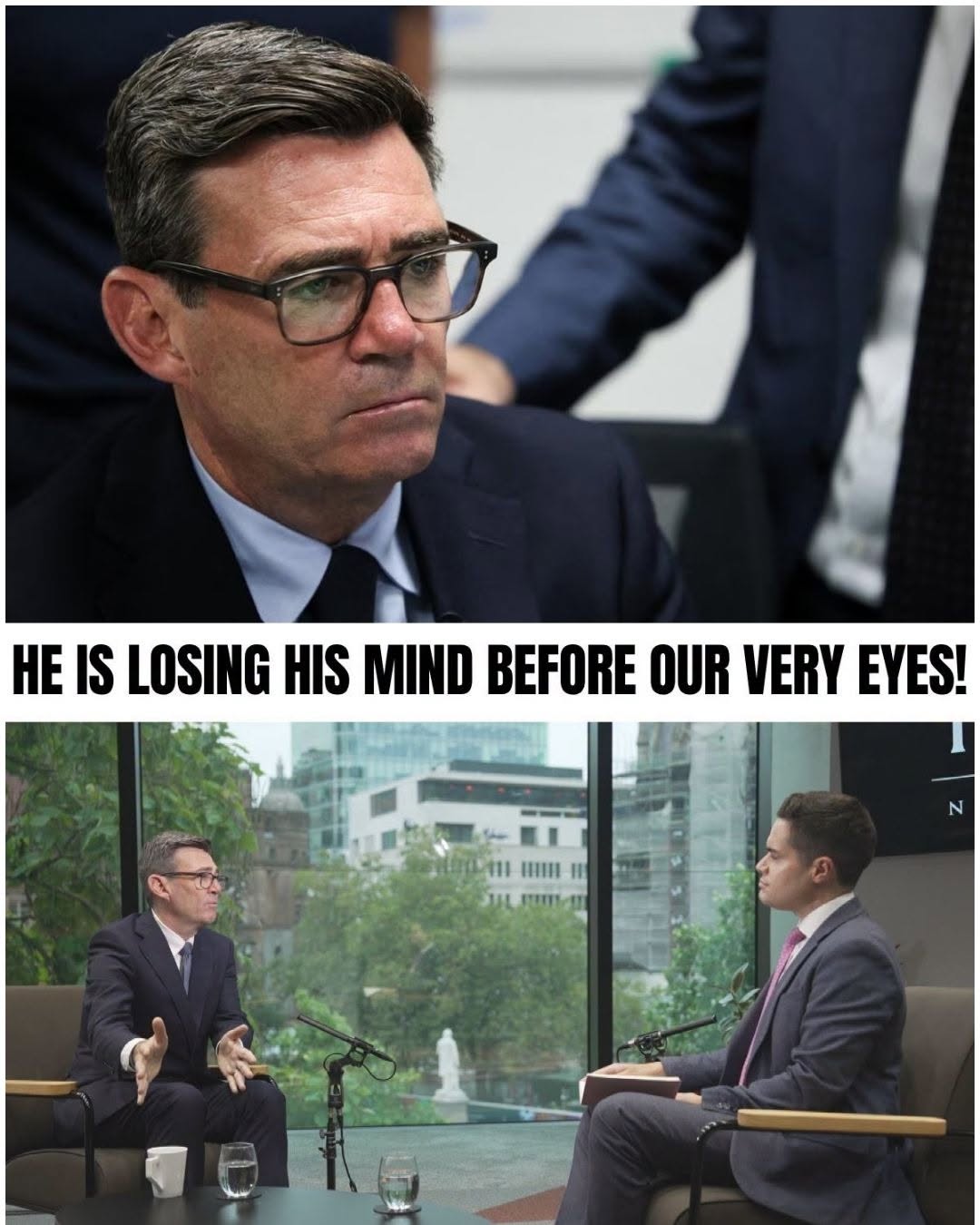
Andy Burnham Condemns Masked Anti-Migrant Protests as Channel Crossings Keep Immigration Debate Intense
Prime Minister Andy Burnham has sharply criticised a series of masked anti-immigration demonstrations in southern England, describing attempts to intimidate local communities as “not the British way” while acknowledging that public concern over immigration remains legitimate.
His comments come amid renewed political pressure over Channel crossings and the continued use of temporary accommodation for asylum seekers — two issues that have become increasingly intertwined with protests in coastal towns.
Speaking to ITV News Meridian on September 25, Burnham addressed demonstrations that had taken place in Dover, Portsmouth, Gosport and Basingstoke. Some participants had dressed in black, covered their faces and gathered around ports or other locations linked to migrant arrivals.
Burnham drew a distinction between opposition to government immigration policy and behaviour that he said crossed into intimidation.
Asked specifically about masked protesters, he said he condemned the tactic because he believed it was intended to create fear. He added that people should be able to live in their communities without feeling threatened by groups arriving to cause unrest or provocation.
“I recognise the concern that many people in the public have around immigration,” Burnham told ITV, before arguing that attacking police officers or intimidating members of the public represented “a different agenda.”
The remarks are significant because immigration remains one of the most politically sensitive issues facing the government.
Official Home Office figures show why.
On September 23, 781 people arrived in the UK after crossing the English Channel in 10 small boats. There were another 526 recorded arrivals on September 27. The government cautions that the daily figures are provisional and may later be revised.
The 781 arrivals therefore support the claim that more than 780 people crossed in a single day, although that figure should be considered alongside the wider pattern: crossings fluctuate considerably depending on weather, enforcement activity and the operations of smuggling networks.
For example, the Home Office recorded no arrivals on September 25 or September 26. On September 21 there were 150 arrivals, followed by 154 the next day.
That volatility illustrates the difficulty of drawing conclusions from one particularly high day.
Protests and the Argument Over Public Order
Recent protests have increased tensions around the issue.
ITV reported that six people were arrested after protesters gathered at a marina in Gosport. Some demonstrators wore black clothing and face coverings and chanted “send them back.” Earlier in September, masked protesters had also blocked road access to the port of Dover.
Supporters of anti-immigration demonstrations argue that conventional political channels have failed to address public frustration over irregular migration and that protests are therefore an expression of legitimate anger.
Critics respond that opposition to immigration policy does not justify threatening behaviour, disruption or confrontations with police.
Burnham’s comments attempted to separate those two issues.
Rather than condemning everyone concerned about immigration, he explicitly acknowledged that such concern exists among members of the public. His criticism was directed at what he characterised as intimidation and provocation.
That distinction is important in assessing some of the more dramatic descriptions circulating online. Claims that Burnham was simply dismissing all anti-migration protesters, or that he had characterised everyone concerned about immigration in the same way, go beyond what he actually said in the ITV interview.
Similarly, broader assertions about the “real agenda” of every person attending the protests cannot be established from the evidence currently available. Different demonstrators may have different motivations, ranging from opposition to asylum policy to broader nationalist politics.
Government Points to Falling Hotel Numbers
At the same time, ministers have been emphasising another set of figures: the substantial reduction in asylum seekers housed in hotels.
Home Office data showed that 16,021 asylum seekers were temporarily accommodated in hotels at the end of June 2026, compared with 32,041 a year earlier — a year-on-year reduction of approximately 50%.
The number was also significantly below the September 2023 peak of 56,018.
The government has pledged to end the use of asylum hotels during this Parliament. In September, the Home Office told Parliament that fewer than 160 hotels remained in use, down from 213 in July 2024.
Independent fact-checking organisation Full Fact has described that commitment as still “in progress.” It noted that while the hotel population had fallen significantly, asylum seekers were also increasingly being accommodated in other forms of housing, including privately managed properties.
That qualification matters.
Closing asylum hotels does not necessarily mean the government no longer has to provide accommodation. People who would previously have been placed in hotels can instead be housed in dispersal accommodation, houses of multiple occupation or other facilities while their asylum claims are considered.
Indeed, Home Office figures reported by the Independent showed that the number living in dispersal accommodation rose from 66,234 in June 2025 to 69,038 in June 2026.
The hotel reduction is therefore measurable progress toward one government commitment, but it does not in itself resolve the broader question of asylum accommodation.
Two Different Measures of the Immigration System
The political dispute increasingly revolves around which statistics should receive the most attention.
Government ministers can point to falling asylum applications, a reduced asylum backlog, fewer people living in hotels and lower overall asylum expenditure.
In the year to June 2026, 85,891 people applied for asylum, down 21% from 108,585 in the previous 12-month period. The number waiting for an initial asylum decision also fell substantially.
But critics continue to focus heavily on Channel arrivals because boats remain a highly visible symbol of irregular migration.
These measurements are not mutually exclusive.
It is possible for the number of people in asylum hotels to fall while hundreds of people continue crossing the Channel on particular days. Hotel usage reflects accommodation policy, processing rates and the overall asylum caseload; daily small-boat figures measure a much narrower phenomenon.
Burnham’s government is therefore confronting two political challenges simultaneously: demonstrating greater control over the asylum system while responding to public anger about irregular crossings.
The Political Argument Is Likely to Continue
Another source of disagreement concerns whether protests are primarily driven by genuine local anxiety or by groups attempting to exploit immigration for political purposes.
Burnham has suggested that some recent activity goes beyond ordinary political protest. Opponents of the government dispute that broader interpretation and argue that ministers risk avoiding legitimate questions about border enforcement by concentrating attention on the conduct of demonstrators.
There is currently insufficient evidence to assign a single motivation to everyone involved in these protests.
What can be established is that the protests have included disruptive incidents, arrests and masked participants; that the government continues to face significant numbers of Channel arrivals; and that the number of asylum seekers living in hotels has fallen markedly.
Those facts produce a more complicated picture than either side’s political messaging might suggest.
Burnham’s “not the British way” comment was not a declaration that concern over immigration itself was unacceptable. His stated argument was that intimidation, attacks on police and behaviour intended to frighten communities should be distinguished from peaceful criticism of immigration policy.
Meanwhile, the latest statistics provide ammunition to both sides of the debate.
A single day with 781 Channel arrivals demonstrates that small-boat crossings remain a serious operational and political challenge.
Yet the roughly 50% year-on-year reduction in asylum seekers living in hotels is also supported by official figures.
The central debate is therefore unlikely to disappear simply because one indicator improves.
For the government, the test will be whether declining hotel use and other changes to the asylum system can eventually be accompanied by a sustained reduction in dangerous Channel crossings.
For communities affected by both migrant arrivals and demonstrations, meanwhile, the immediate challenge is maintaining public order while preserving the right to peaceful political protest.
And amid increasingly heated rhetoric from all sides, distinguishing documented facts from political interpretation may prove just as important as the arguments themselves.
SHOCKING: Andy Burnham SLAMS Anti-Migrant Protests as “NOT the British Way”!
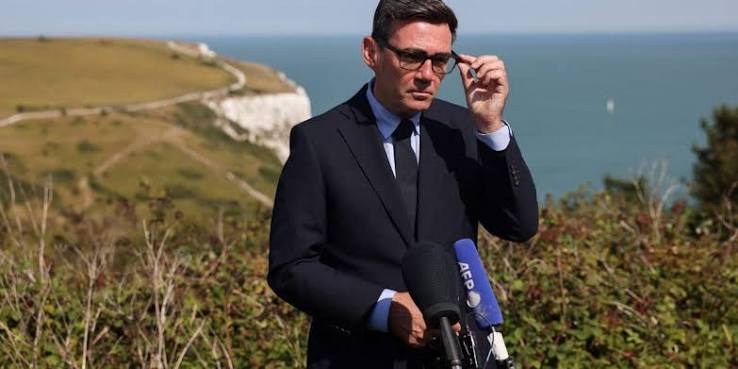
British Prime Minister Andy Burnham has condemned a series of anti-migrant demonstrations in southern England, declaring that masked protests designed to intimidate local communities are “not the British way”. His remarks have intensified a national debate over immigration, public safety, freedom of expression and the right to protest.
Speaking to ITV Meridian on 25 September 2026, Burnham responded to demonstrations in Dover, Portsmouth, Gosport and Basingstoke. Some protesters had worn black clothing and face coverings, while crowds gathered around ports and locations connected with the arrival and processing of people crossing the English Channel.
Burnham acknowledged that many people had genuine concerns about immigration. However, he argued that intimidating members of the public or confronting police officers was fundamentally different from peacefully expressing disagreement with government policy.
The comments have placed the government at the centre of an increasingly difficult question: how can Britain address public frustration over irregular migration while protecting the right to peaceful protest and preventing intimidation on its streets?
Burnham draws a line between protest and intimidation
Burnham’s central argument was that concern about immigration should not be used to justify behaviour that makes residents feel threatened in their own communities.
In his ITV interview, he said he condemned protesters who covered their faces because, in his view, the tactic was designed to intimidate. He also stressed that people should be able to go about their daily lives without fear of unrest or provocation.
The distinction is important. Opposition to immigration policy is not, by itself, evidence of unlawful behaviour. People in a democracy can campaign for stricter border controls, criticise asylum arrangements and demand changes from elected representatives.
At the same time, the right to protest does not provide unrestricted permission to obstruct emergency services, threaten individuals, damage property or assault police officers. Where such conduct is alleged, the circumstances and evidence must be examined by the appropriate authorities.
Burnham’s intervention was therefore aimed not simply at the political message of the demonstrations, but at the methods used by some participants.
His language was direct, reflecting the government’s concern that confrontations around ports and migrant processing arrangements could escalate into wider public disorder.
Dover and Portsmouth become focal points
The controversy developed after demonstrations in several southern English towns during September.
In Dover, groups of masked protesters blocked access routes near the port, drawing attention to the movement of people arriving across the Channel. In Portsmouth, a separate confrontation followed the arrival of people by boat, with demonstrators attempting to stop vehicles transporting them for processing.
Reports of damage to official vehicles and injuries to police officers added to concerns about public order. Authorities also faced the challenge of keeping roads accessible and ensuring that emergency personnel could carry out their duties.
The events attracted national attention partly because they involved a highly visible issue. The English Channel crossings have become a symbol of wider disagreements about immigration enforcement, asylum policy and the government’s ability to control Britain’s borders.
For some demonstrators, gathering near ports was intended to put pressure on the authorities and show opposition to current arrangements. Critics argued that attempts to block access and confront officials risked turning political protest into intimidation.
These competing interpretations have made it harder to separate public anger about policy from questions about individual conduct.
Patriot Platform comes under scrutiny
The demonstrations also brought attention to Patriot Platform, a movement associated with activist Danny Tommo, whose real name is Daniel Thomas.
The group gained visibility through demonstrations and online broadcasts focused on opposition to migrant arrivals. Its activities have attracted both supporters who say they want tougher action on irregular migration and critics who question its confrontational tactics.
The movement’s use of coordinated appearances, dark clothing and face coverings has become part of the wider discussion about whether some protests are intended primarily to communicate a political message or to create an atmosphere of intimidation.
However, appearances alone do not establish whether an individual has committed an offence. Each person’s actions must be considered on the available evidence, and peaceful participants should not automatically be treated as responsible for misconduct by others.
The government faces a similar challenge in its response. It must distinguish between lawful demonstrations and behaviour that breaches the law, while ensuring that police decisions are based on evidence rather than assumptions about political beliefs.
The issue is particularly sensitive because the right to demonstrate remains an important part of British democratic life, including for people who strongly disagree with government policy.
The government faces pressure from both sides
Burnham’s remarks have not ended the political argument. Instead, they have highlighted the competing demands facing ministers as they attempt to respond to public concern about Channel crossings.
Critics of the government’s approach argue that repeated arrivals by small boats undermine confidence in border enforcement. They want faster decisions on asylum claims, more effective action against people-smuggling networks and clearer consequences for those who have no legal right to remain in Britain.
Supporters of tougher enforcement say that unless the government demonstrates control over the border, frustration will continue to grow in coastal communities and beyond.
The government, meanwhile, has argued that disorder cannot be allowed to become an accepted feature of political campaigning. Its position is that public concerns must be addressed through policy and democratic debate, rather than through attempts to intimidate residents or interfere with official operations.
The disagreement became more pronounced after Reform UK’s home affairs spokesman, Zia Yusuf, accused Burnham of contributing to disorder through his handling of the issue. The government rejected the wider suggestion that peaceful protest should be confused with unlawful conduct, maintaining that demonstrations must remain within the law.
This exchange illustrates how immigration has become both a policy challenge and a contest over political responsibility. One side emphasises border enforcement and the frustration felt by residents; the other stresses public order and the protection of communities from intimidation.
What about freedom of speech?
The controversy also raises questions about the boundaries of freedom of expression in Britain.
Peaceful protest allows citizens to challenge government decisions, draw attention to perceived injustices and demand political change. That right applies to people across the political spectrum, including those whose views may be unpopular or controversial.
But freedom of expression does not automatically protect every action carried out during a demonstration. Threats, violence, criminal damage and certain forms of obstruction may lead to police investigations or prosecution, depending on the facts and the applicable law.
Face coverings also require careful consideration. Wearing one does not, by itself, prove that someone intends to intimidate others or has committed an offence. The circumstances surrounding a demonstration, the conduct of participants and any evidence of unlawful activity are all relevant.
The challenge for police is to respond proportionately. They must protect people from violence and serious disruption while respecting lawful assembly and expression.
For politicians, the responsibility is equally significant. Strong language can communicate the seriousness of a situation, but leaders must avoid treating every person who opposes their policies as a threat to public order.
The same standard should apply to protest organisers, who must recognise that political objectives do not remove their responsibilities towards the public.
Immigration remains the underlying issue
The demonstrations cannot be understood without considering the wider debate about small-boat arrivals and the asylum system.
The government faces pressure to prevent dangerous crossings, disrupt smuggling operations and process asylum claims efficiently. Local communities may also have questions about accommodation, public services and the long-term effects of national immigration policy.
These concerns require practical answers. Enforcement measures must be assessed by their results, including whether they reduce dangerous journeys, disrupt criminal networks and ensure that asylum decisions are made lawfully and without unnecessary delay.
Burnham himself acknowledged that public concern about immigration exists. His argument was that such concern should not be used to excuse intimidation or attacks on police.
That distinction leaves room for debate over the effectiveness of government policy without making disorder an acceptable response.
The government will ultimately be judged not only by its handling of demonstrations but also by whether its immigration policies deliver measurable results. If people believe the underlying problems remain unresolved, public pressure is likely to continue. Conversely, effective administration and transparent communication could help reduce uncertainty and frustration.
What happens next?
The coming months will test the government’s ability to manage two connected challenges: responding to irregular migration and maintaining public order during demonstrations.
Police investigations into alleged offences will need to proceed according to the evidence. Protest organisers will face continued scrutiny over how their events are conducted, while political parties will seek to convince voters that their approach offers a credible response to public concerns.
Burnham’s declaration that intimidation is “not the British way” has made his position clear. It does not, however, settle the wider debate about immigration, border security or the appropriate limits of protest.
Those questions require more than slogans. They demand effective policy, consistent enforcement of the law and a willingness to distinguish between peaceful dissent and conduct that threatens others.
For residents, the immediate priority is the ability to live safely without being caught in confrontations between demonstrators and authorities. For protesters, the challenge is to express their views lawfully and make their arguments heard without putting others at risk. For the government, the task is to demonstrate that border enforcement and democratic freedoms can be protected together.
The controversy surrounding Burnham’s comments therefore reflects a broader test for British public life. Can a deeply divided debate over immigration remain within democratic boundaries, even when emotions run high?
The answer will depend on the actions of political leaders, protest organisers, police and the public. What remains clear is that legitimate disagreement must be distinguished from intimidation, and that claims about unlawful conduct must be assessed through evidence and due process rather than political rhetoric alone.