

Reform Storms to Double By-Election Triumph as Labour Suffers Catastrophic Defeat
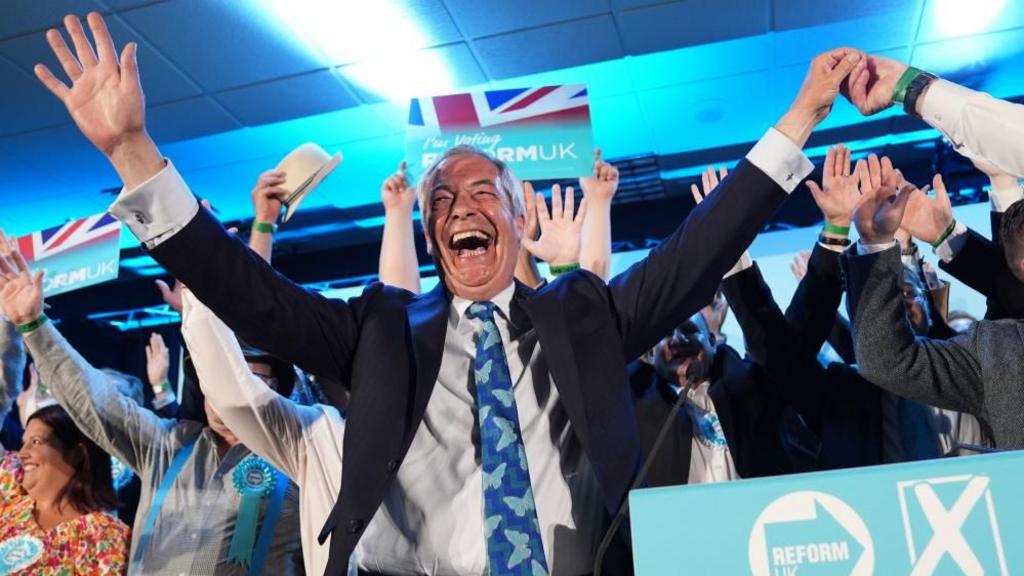
Reform UK has continued to make gains in local by-elections, securing two victories in September as the party seeks to build a stronger presence across Britain.
The latest results have generated renewed discussion about the changing balance of British politics, particularly in areas where Labour and the Conservatives have traditionally competed for support.
On September 11, Reform UK announced victories in two council by-elections: Eckington in Derbyshire and Hutton & Locking in North Somerset. The party said the results demonstrated growing support for Reform in places where it had previously secured little or no vote share.
However, describing the results as a national political realignment requires caution. Local by-elections involve individual wards, often with relatively small electorates, and their results cannot automatically be translated into predictions about future parliamentary elections.
Nevertheless, the results provide another snapshot of the changing political landscape.
Two Local Victories
In Eckington, Reform candidate Jamie Hodgson won a seat on North East Derbyshire District Council.
According to Reform’s published figures, the party received about 40 per cent of the vote, compared with 28 per cent for Labour. Reform had not previously secured a significant share in the ward at the preceding contest.
The second result came in Hutton & Locking, where William Jones won a seat on North Somerset Council.
Reform recorded approximately 38 per cent, while the Conservative share fell to around 15 per cent. Again, Reform had previously recorded no significant vote share in the ward, according to the party’s account of the result.
For Reform, the importance of the two contests goes beyond the individual council seats.
The party has been attempting to translate its growing national profile into an organisational presence at local level. Council elections and by-elections provide opportunities to establish local activists, councillors and political infrastructure.
The September results therefore form part of a wider pattern of local electoral activity.
A Series of Local Gains
The two September victories were not isolated.
Just days later, Reform won another council by-election in East Markham, on Bassetlaw District Council in Nottinghamshire.
The Reform candidate, Matthew Evans, received 436 votes, representing almost half of the ballots cast. The Conservatives received 250 votes, while Labour received 151 and the Greens 42. Reform said the result represented a 44-point swing from the Conservatives compared with the previous contest.
The result attracted particular attention because East Markham lies within Robert Jenrick’s Newark constituency.
Reform leader Nigel Farage described the victory in highly political terms, while Jenrick himself acknowledged the size of the swing towards Reform. Those comments were political reactions to the result rather than independent assessments of its wider significance.
Taken together, these results demonstrate that Reform is competing seriously in a growing number of local contests.
They do not, however, establish that Labour has been displaced everywhere.
Labour’s Position Is More Complicated
The phrase “catastrophic defeat” is a political description rather than an objective measurement.
Labour has certainly experienced substantial electoral setbacks in several by-elections since the 2024 general election.
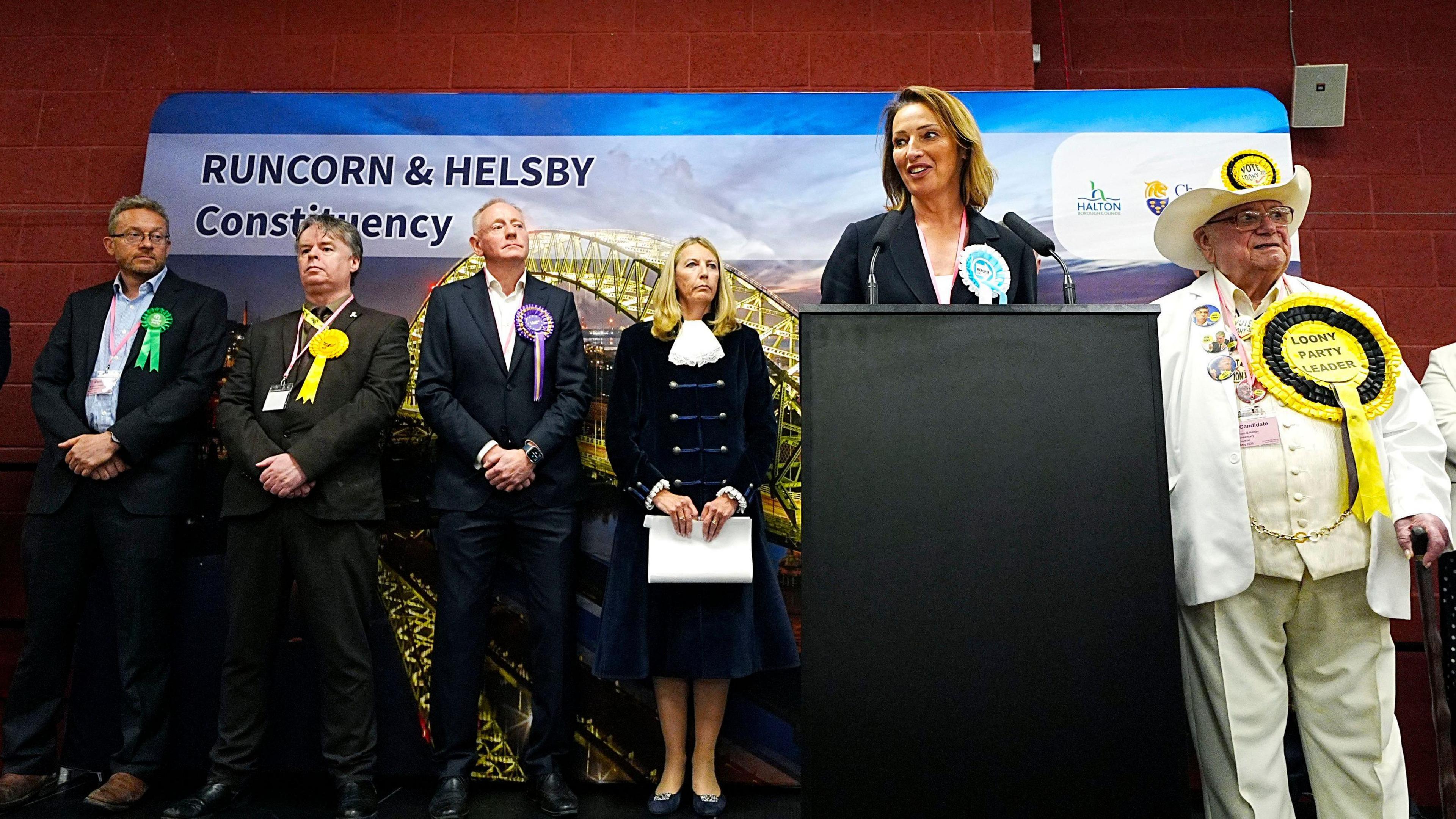
The most notable examples include Runcorn and Helsby, where Reform won a parliamentary by-election in May 2025, and Gorton and Denton, where the Green Party defeated Labour in February 2026.
But Labour has also won a parliamentary by-election during the same period.
In Makerfield in June 2026, Andy Burnham won the seat for Labour. According to the Institute for Government, Labour increased its vote share by approximately 10 percentage points compared with the party’s performance at the 2024 general election.
That result is important when considering claims of an uninterrupted Labour collapse.
The electoral picture is therefore mixed. Labour has lost some constituencies and council seats, while retaining or gaining others.
Reform’s Parliamentary Record
The distinction between local and parliamentary elections is especially important.
The UK Parliament’s official record shows that since the 2024 general election, Reform UK has won Runcorn and Helsby and retained Clacton in the August 2026 by-election.
In Clacton, Nigel Farage returned to the House of Commons after winning the by-election. The Institute for Government records his share at 63 per cent, although the contest had unusual circumstances because several major Westminster parties did not contest the seat.
Meanwhile, Labour won Makerfield, the Greens won Gorton and Denton, and the Conservatives gained Aberdeen South.
These results illustrate how fragmented the current political environment has become.
Rather than a simple two-party contest, British elections increasingly involve Labour, Reform UK, the Conservatives, the Greens, Liberal Democrats, national parties and independents depending on the location.
Reform and the Local Political Map
The significance of Reform’s local gains becomes clearer when viewed alongside its broader performance in local government.
Earlier in 2026, YouGov analysis of the West Midlands local elections found Reform in contention to lead the vote in all 13 council areas covered by its model. The organisation projected Reform to have the highest vote share in 11 of the 13 councils, although the analysis also stressed that many contests were close and did not project council seat totals.
That analysis was conducted before the May local elections and therefore should not be treated as a current prediction.
Nevertheless, it illustrates the scale of the political shift that was already being examined before the latest by-election results.
Reform has been particularly successful at attracting support in some areas that previously leaned heavily towards the Conservatives, while also attempting to build support in traditional Labour communities.
This creates a difficult strategic environment for both established parties.
Why By-Elections Matter
By-elections are often watched closely because they can provide early indications of changes in political sentiment.
But they have limitations.
Turnout can be much lower than in a general election. Local candidates can have an unusually strong or weak personal profile. Campaign organisation can have an outsized effect. And individual wards can have demographic or political characteristics that make them unrepresentative of the wider country.
A party can therefore win a by-election without that result necessarily predicting its performance at a general election.
The same principle applies to Labour.
A poor result in one ward may indicate local dissatisfaction, but it does not automatically demonstrate that the party has lost support nationally.
For that reason, the September Reform victories are best understood as individual electoral results within a wider political trend rather than definitive evidence of an imminent national transformation.
The National Polling Picture
National polling also presents a more complicated picture.
A YouGov poll conducted on September 20 and 21, 2026, put Labour on 23 per cent, with the Conservatives and Reform UK both on 21 per cent. The Greens were on 14 per cent and the Liberal Democrats on 12 per cent.
The figures show a competitive three-party contest at the top rather than a straightforward Reform surge.
They also demonstrate why individual by-election results need to be interpreted alongside broader evidence.
Reform’s local victories may strengthen the party’s organisational position, but national support remains subject to change.
What Happens Next?
The next major parliamentary contest already scheduled is the Holborn and St Pancras by-election on October 8, following Keir Starmer’s resignation as an MP. The official parliamentary record confirms the date and vacancy.
That contest is likely to attract significant attention because of Starmer’s former status as Labour leader and prime minister, although the result will depend on the candidates, campaign, turnout and local political circumstances.
For Reform, the challenge is turning individual local successes into a durable national organisation.
For Labour, the challenge is defending existing support while competing against several parties rather than simply one traditional rival.
For the Conservatives, the emergence of Reform creates another layer of competition in constituencies where Conservative support was once comparatively secure.
And for voters, the growing number of competitive parties means that local and national contests can produce increasingly different outcomes.
A Changing Political Landscape
The latest double by-election victories give Reform UK another opportunity to claim momentum.
The results in Eckington and Hutton & Locking, followed by the East Markham victory, show that Reform is capable of winning council seats in different parts of England.
But the wider evidence does not support a simple story of one party sweeping everything before it.
Labour has suffered significant defeats, but it has also won important contests such as Makerfield. The Conservatives have lost some ground to Reform while also gaining Aberdeen South. The Greens have demonstrated that they can defeat Labour in parliamentary contests such as Gorton and Denton.
British politics is therefore becoming more competitive and fragmented.
The latest Reform victories are another important piece of that story, but they are not, by themselves, proof of a national electoral verdict.
What they do show is that the political competition taking place in Westminster is increasingly being mirrored at council level.
And as more local contests take place, the question will be whether these individual victories remain isolated results—or become part of a sustained pattern across Britain’s electoral map.