

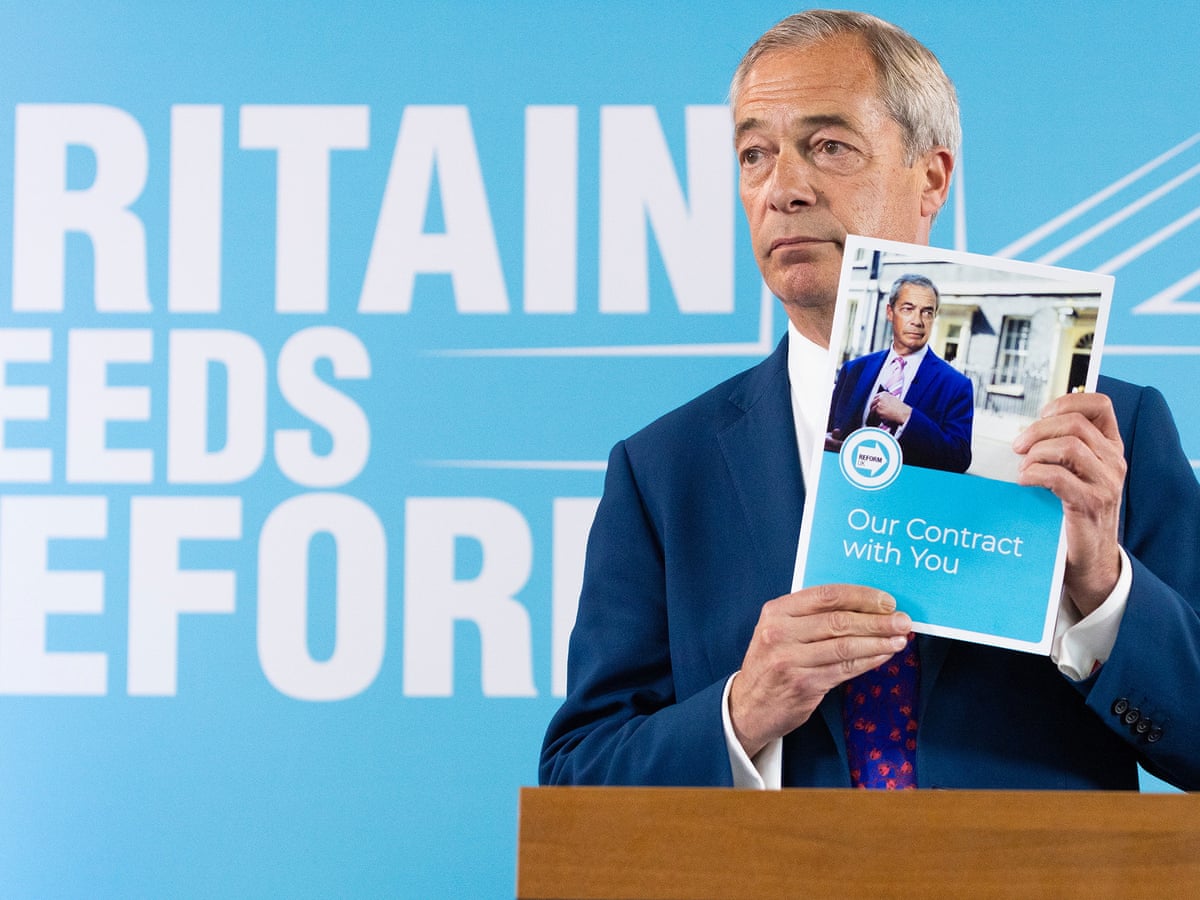
Nigel Farage has announced that Reform UK will keep the state pension triple lock if it wins the next general election.
The Reform leader and Treasury spokesman Robert Jenrick confirmed the policy guaranteeing increases in line with inflation, earnings or 2.5% would stay in place paid for by benefit cuts.
Mr Farage told a press conference: “When I said the jury’s out on the triple lock and what we would decide to do on this and with many other issues too, if I could just interpret that into simple English, what I meant was the jury’s out. Not that I’d made my mind up either way.
“And we have discussed it, and we have debated it, and we’ve decided it’s going to stay.”
Nigel Farage Makes Bombshell Pension Pledge at Reform Press Conference
Nigel Farage has made a significant pledge on pensions as Reform UK attempts to strengthen its economic offer and appeal to millions of older voters across Britain.
At a Reform UK press conference in April 2026, Farage confirmed that his party would retain the state pension triple lock if it came to power. The announcement marked a change from his previous position, when he had questioned whether the policy could remain affordable over the long term.
The triple lock is one of the most important protections attached to the UK state pension. Under the current system, the state pension rises each year by whichever is highest of average earnings growth, inflation or 2.5 per cent. The policy was introduced in 2011 and has become a central feature of Britain’s pension system.
Farage’s announcement therefore carries considerable political significance.
For years, Reform has positioned itself as a party prepared to challenge established assumptions about government spending and welfare. The question of whether it would retain the triple lock had consequently become an important part of the debate surrounding its economic programme.
Earlier in 2026, Farage had expressed concerns about the affordability of the pension guarantee. At one stage, he said the issue remained open for discussion, while Reform figures considered whether the policy could be maintained given the pressure on public finances.
The decision to retain it represents a different approach.
Farage now argues that pensioners should continue to receive the protection provided by the triple lock, while the cost would be addressed through reductions elsewhere in government spending.
Reform has said that it would seek to fund the commitment through what it describes as major reductions in the benefits bill. At the April press conference, the party said it intended to make substantial reductions in government waste and welfare spending.
That combination is at the heart of the Reform proposal.
Rather than presenting pension reform as a choice between protecting pensioners and controlling public spending, the party is arguing that both objectives can be pursued simultaneously by reducing expenditure in other areas.
Robert Jenrick, Reform’s Treasury spokesman, has played a prominent role in explaining the financial argument.
At the press conference, Jenrick said Reform would cut “tens and tens of billions” of pounds of government waste and use savings to support its wider economic programme. The party has also presented welfare reform as a major source of potential savings.
The proposal comes at a time when pensions are becoming increasingly important in Britain’s public-finance debate.
The cost of maintaining the triple lock is substantial because pension increases are linked to whichever of three measures produces the highest annual increase. When wages or inflation rise rapidly, the state pension can therefore increase significantly.
According to figures reported in the debate around Reform’s policy, the annual cost of the triple lock could reach approximately £15.5 billion by 2030.
For supporters of the policy, however, the triple lock provides an important degree of security.
Pensioners face rising costs just as other households do, including food, energy, housing and other essential expenses. Maintaining the guarantee therefore provides a degree of protection against periods of high inflation or strong wage growth.
For Reform, the political calculation is also significant.
Older voters represent an important part of Britain’s electorate, and pension policy can influence how they assess political parties.
A promise to retain the triple lock allows Reform to reassure pensioners that the party does not intend to reduce the value of the state pension as part of its spending reforms.
At the same time, the party can continue to present itself as committed to reducing welfare spending elsewhere.
This creates a clear distinction between state pensions and other benefits within Reform’s economic argument.
The party has increasingly framed its welfare policy around the idea that government should provide greater incentives to work while protecting pensioners who have spent their working lives contributing to the system.
Jenrick has argued that Reform would prioritise workers and seek to reduce what the party regards as excessive welfare expenditure. That approach forms part of a broader attempt to present Reform as economically disciplined while still offering tax and pension commitments.
However, the policy also raises questions about how the savings would actually be achieved.
Cutting tens of billions of pounds from government spending is a substantial undertaking. Reform has proposed reductions in welfare spending, changes to public-sector administration and cuts to what it regards as government waste.
The crucial question is whether those savings could realistically be delivered without affecting other groups or public services.
This is particularly important because the party’s pension pledge does not exist in isolation.
Reform has simultaneously proposed raising the income-tax personal allowance to £15,000. The party estimates that the measure would cost £17.7 billion in its first year and around £21 billion by the fifth year. It has suggested that the cost would be funded partly through substantial reductions in public spending, including welfare expenditure.
The combination of tax cuts, pension protection and spending reductions therefore forms a central part of Reform’s economic strategy.
The party wants to demonstrate that it can protect certain groups while making substantial changes elsewhere in government spending.
Whether voters accept those calculations will depend on how credible they consider the proposed savings.
The pension announcement is also significant because it demonstrates how Reform’s economic policies have evolved.
At the 2024 general election, the party promoted a much larger package of proposed tax reductions. By late 2025, Farage had acknowledged that the country’s financial position made large-scale tax cuts more difficult to deliver and argued that Reform needed to avoid over-promising.
The newer approach places greater emphasis on fiscal restraint.
At its 2026 conference, Reform described itself as the party of fiscal responsibility and stressed the need for difficult spending decisions. The party has attempted to provide more detailed costings for several of its policies, although questions remain about whether all of the proposed savings can be achieved on the scale claimed.
That debate will be particularly important if Reform seeks to persuade voters that it is ready to govern nationally.
Opponents are likely to scrutinise the party’s spending calculations closely, particularly because maintaining the triple lock while reducing welfare expenditure involves difficult choices.
For pensioners, however, the headline message is straightforward.
The triple lock would remain.
That commitment could become an important part of Reform’s wider pitch to older voters, particularly those concerned about the future purchasing power of their pensions.
It also gives Farage an opportunity to challenge the perception that Reform’s economic programme is primarily focused on cutting public expenditure.
The party can instead argue that its approach is selective: protect the state pension while seeking reductions in other areas.
But there is another issue that could become increasingly important: taxation of pension income.
At Reform’s 2026 conference, Robert Jenrick argued that the frozen income-tax personal allowance was increasingly affecting pensioners as pension payments rise. The party has therefore connected its proposed £15,000 personal allowance with concerns about pensioners being drawn into paying income tax.
This provides Reform with another way of presenting its economic programme to older voters.
Rather than focusing only on the size of the state pension, the party can point to the amount pensioners actually keep after taxation.
The wider political debate is likely to continue.
The triple lock has supporters across British politics, but it has also faced criticism from those who argue that it places increasing pressure on government finances.
For Reform, the decision to retain it means accepting that pressure while promising to find savings elsewhere.
That makes the credibility of its spending plans crucial.
Farage’s announcement therefore represents more than a single pension promise.
It illustrates the broader direction Reform UK is attempting to take: combine lower taxes and tighter government spending with protections for groups it considers especially important.
The party’s leadership believes that reducing waste and welfare expenditure can create enough fiscal space to maintain the pension triple lock while pursuing other economic priorities.
Whether the numbers ultimately add up will be one of the central questions facing Reform as it seeks to present itself as a potential governing party.
For now, the political message is clear.
Farage has chosen to commit Reform UK to maintaining one of Britain’s most politically sensitive pension guarantees.
The announcement marks a significant change from his earlier uncertainty over the policy and places pension security firmly within Reform’s economic offer.
For millions of pensioners, the promise will be closely watched.
For the wider political system, the more important question may be how Reform intends to pay for it.
The answer will depend on whether the party can turn its proposed welfare reductions and spending cuts into measurable savings without creating new pressures elsewhere.
That debate is likely to remain central to Britain’s economic and political conversation as the next general election approaches.