

MI5 Warning Ignites Westminster Battle Over UK Defence, Welfare and National Security
Britain’s security environment has grown more complex than during the 9/11 era, forcing Prime Minister Andy Burnham’s government into a high-stakes clash over military spending, welfare cuts and critical infrastructure resilience.
A stark warning from MI5 Director-General Sir Ken McCallum that Britain faces its most complex security landscape in decades has reignited a fierce political battle in Westminster.
The debate centers on a profound dilemma: how much Britain must spend on defence, and whether the government should cut welfare to pay for it.
McCallum’s intervention, timed to coincide with the 25th anniversary of the September 11 attacks, painted an unsettling picture of modern threats.
He warned that Britain now confronts a dangerous convergence of persistent terrorist ambitions alongside aggressive hostile-state activities.
What Happened: The “Worst of Both Worlds”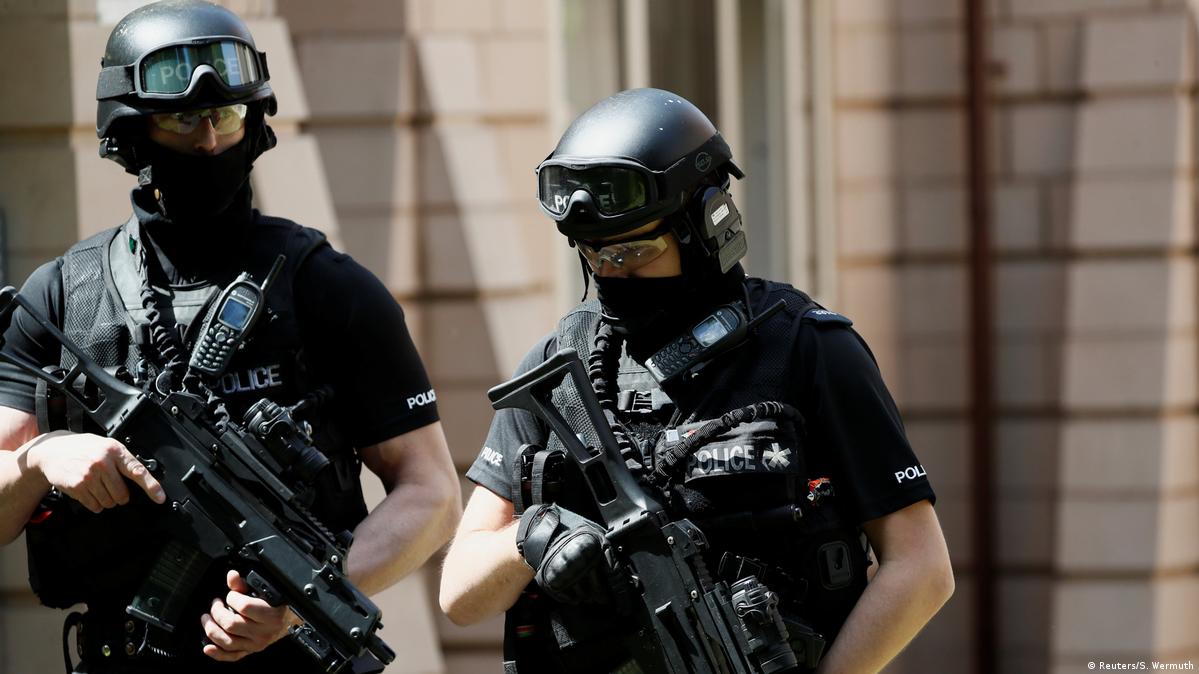
The traditional terrorist threat has not disappeared.
At the same time, Britain faces expanding operations from hostile states involving cyberattacks, sabotage, covert interference and proxy networks.
McCallum described this dual pressure as the “worst of both worlds.”
Mass-casualty terrorist plots continue to target open societies even as strategic threats from capable nation-states become more prominent.
This warning has collided directly with an increasingly heated political dispute in Parliament.
Opposition critics argue that Prime Minister Andy Burnham’s government is moving too slowly to boost military budgets in a dangerous international climate.
Why It Matters: The Clash Over Defence and Social Security
The political argument has sharpened around a difficult choice between military investment and public spending.
Critics argue that Britain cannot realistically describe the global environment as increasingly perilous while treating large areas of public expenditure as untouchable.
The dispute has zeroed in heavily on welfare.
Opponents ask why the government should resist welfare reductions if national security genuinely requires accelerated military funding.
Burnham’s position is that national security should not be strengthened by undermining social security and the wider fabric of society.
This stance has infuriated defence advocates who maintain that protecting the nation is the primary duty of government.
The Numbers Behind the Budget Debate
The financial debate involves substantial figures that require careful context.
According to the Office for Budget Responsibility, total welfare spending is forecast to reach approximately £352.8 billion in 2026–27, equivalent to 11.2% of GDP.
That broad total encompasses state pensions, Universal Credit, disability benefits, child benefit and other social-security programs.
Critics demanding major reductions must address where cuts would fall, given that pensions and health payments represent the largest shares of the budget.
Meanwhile, government spending on defence is also rising.
The Ministry of Defence budget is projected to reach £79.1 billion by 2029–30, delivering substantial additional investment over baseline plans.
Core NATO-qualifying defence expenditure is expected to reach 2.7% of GDP from 2027–28, with a commitment to hit 3% in the next Parliament.
Under agreements made at the 2025 NATO summit in The Hague, Britain and its allies have committed to reach at least 3.5% of GDP on core defence by 2035.
Why 2035 Still Worries Defence Critics
For military advocates, 2035 remains a dangerously distant horizon.
Modern military capability cannot be manufactured overnight.
Warships take years to construct, and specialist personnel require extensive training.
A nation that waits for a crisis to unfold before building its arsenal risks discovering that money alone cannot buy lost time.
NATO has repeatedly emphasized that its long-term goals require a credible incremental path rather than dramatic late surges in spending.
The Broader Threat: Protecting Critical Infrastructure
McCallum’s warning extends well beyond traditional troop numbers and weapon systems.
Modern national security relies heavily on civilian infrastructure that most citizens rarely notice until it fails.
Electricity grids, water supplies, data networks, telecommunications, cloud platforms and transport systems are prime targets for hostile disruption.
A sophisticated cyberattack targeting these sectors could cause widespread chaos without a single shot being fired.
That vulnerability explains why modern security strategies increasingly emphasize civil preparedness and resilience alongside conventional armed forces.
What Happens Next
As the debate continues in Westminster, the government faces mounting pressure to clarify its long-term financial priorities.
Lawmakers must determine how quickly military capabilities must expand, how to fund necessary security enhancements, and how to protect critical national infrastructure against sophisticated state-backed interference.
How do you think the government should balance increased military spending with the protection of public welfare services?
MI5 Warning Sparks UK Westminster Battle Over Defence and Welfare
A fresh security warning has intensified one of the most difficult political arguments facing Westminster: how far should Britain increase defence spending when the government is already under pressure over welfare, public services and the wider state of the economy?
The debate has become increasingly urgent as ministers face growing pressure from NATO to provide a credible timetable for higher military spending.
At the same time, divisions within Labour are becoming more visible over how those additional billions should be found.
The argument is not simply about defence.
It is about the competing meanings of national security, economic stability and social security — and whether a government can strengthen one without weakening another.
MI5 currently lists the UK’s national terrorism threat level as SEVERE, meaning an attack is considered highly likely. The agency stresses that threat levels are based on intelligence assessments and are kept under regular review.
That warning provides an important backdrop to the political debate.
But Westminster’s argument has moved beyond terrorism alone.
The government is increasingly discussing a much wider security environment involving military threats, critical infrastructure, cyber risks and Britain’s ability to maintain credible defence capabilities.
NATO Pressure Builds
The latest pressure came from NATO Secretary General Mark Rutte, who has called on Britain to demonstrate a “credible path” towards higher annual defence spending.
Rutte has warned that Britain cannot simply wait until 2034 and dramatically increase defence expenditure in a single step.
Instead, he wants to see gradual annual increases leading towards the NATO target of 3.5 per cent of GDP on defence by 2035.
The additional spending involved could eventually amount to almost £30 billion more per year compared with current projections.
The intervention came shortly after Rutte met Prime Minister Andy Burnham and senior members of the government.
It puts additional pressure on ministers ahead of the next major spending review.
The government’s current plans would take defence spending to around 2.7 per cent of GDP by 2028-29, meaning further decisions will be required if Britain is to reach the longer-term NATO target.
The question facing Westminster is therefore becoming increasingly specific.
Where will the money come from?
Defence Versus Welfare?
One of the most sensitive possibilities is welfare spending.
Britain’s welfare bill has increased substantially in recent years, while the government is simultaneously dealing with rising pension costs and debt-interest payments.
Recent parliamentary exchanges have therefore focused on whether welfare reductions could contribute towards the additional resources required for defence.
In the House of Lords on 17 September, Treasury minister Lord Pitt-Watson said the government was committed to controlling the welfare bill but rejected the idea that defence and welfare represented an unavoidable choice between two competing priorities.
He argued that the government could pursue both national defence and social protection rather than presenting them as mutually exclusive objectives.
That position reflects one of the central arguments inside Labour.
The government wants to strengthen Britain’s military capabilities.
But Labour also has a longstanding political commitment to public services and social protection.
Finding a way to reconcile those objectives could become one of the defining economic questions of the current Parliament.
Streeting Makes the Case for More Defence
Defence Secretary Wes Streeting has been particularly outspoken in arguing that Britain needs to take the security environment seriously.
In remarks reported by The Times, Streeting appealed to Labour MPs to support increased defence spending and argued that investment in British defence companies could itself be consistent with Labour’s traditional emphasis on employment and industrial development.
Streeting has pointed to his own experience visiting Ukraine and argued that stronger deterrence is necessary to reduce the risk of future conflict.
His message to Labour is significant because the party contains MPs who place greater emphasis on domestic spending priorities.
The disagreement is therefore not necessarily about whether Britain needs defence at all.
The more difficult question is how much Britain should spend and what sacrifices, if any, should accompany that decision.
Burnham’s Warning About Social Security
Prime Minister Andy Burnham has also attempted to frame the issue differently.
He has said that national security should not come at the expense of social security.
That position suggests that the government does not want the public debate to become a straightforward contest between military spending and welfare payments.
The government argues that national resilience depends on more than tanks, aircraft and naval vessels.
Strong public services, economic stability, energy security and social cohesion can also contribute to national security.
The Prime Minister made a similar argument when announcing the government’s Defence Investment Plan in June.
He rejected the idea that increased defence spending should simply be funded through additional borrowing or major reductions in frontline public services.
Instead, the government announced that additional defence investment would largely come through reallocating capital spending across government departments.
A Huge New Defence Commitment
The scale of the government’s defence programme is already considerable.
Under the Defence Investment Plan announced in June, the government said it would increase planned defence investment by a further £15 billion.
It said total defence spending over the following four years would approach £300 billion.
Annual defence spending is projected to rise from £54 billion before the government’s programme to almost £80 billion by 2029.
The government described this as a real-terms increase of 27 per cent, taking defence spending from 2.3 per cent of GDP in 2024 to 2.7 per cent and putting Britain on a trajectory towards 3 per cent in the following Parliament.
The government has also linked the investment to Britain’s wider commitment to spend 5 per cent of GDP on defence and broader security.
Under the current Defence Investment Plan, ministers say Britain will reach 4.2 per cent under that wider commitment.
These are enormous sums.
And they inevitably raise questions about opportunity costs.
What Could Be Cut?
One of the government’s stated approaches has been to protect day-to-day spending on frontline services such as health and education while finding savings elsewhere.
The Defence Investment Plan says departments will contribute by reallocating capital budgets, with one penny in every pound of capital spending being redirected.
The government has acknowledged that this means some projects will not proceed as originally planned.
It specifically referred to certain road and energy projects that, while considered important, were not regarded as immediately vital to national security.
This approach is politically significant.
Instead of announcing a direct reduction in welfare payments to fund defence, ministers are attempting to shift resources within government investment programmes.
However, the scale of future NATO commitments means that the question may return.
If defence spending continues to rise beyond the current plans, simply reallocating capital budgets may not be enough.
Why Welfare Has Become Central
Welfare is one of the largest areas of government expenditure.
The challenge is particularly complicated because the welfare budget includes support for millions of people with very different circumstances.
Some receive benefits because they are unemployed.
Others depend on disability payments, housing support or pensions.
As a result, broad calls to “cut welfare” conceal a much more complicated set of policy decisions.
A reduction in one benefit can affect people very differently from a reduction in another.
This is why Labour ministers have been reluctant to present welfare reform as simply a source of money for defence.
Lord Pitt-Watson made that distinction explicitly in Parliament, saying the government wanted to reduce welfare costs without “arbitrarily punishing” people who depend on support.
The Security Argument
Those demanding higher defence spending point to a changing international environment.
NATO has described the current security environment as exceptionally challenging, while Russia’s terrorism is different from conventional military conflict, the agency’s assessment demonstrates that Britain’s security challenges extend beyond traditional battlefield threats war against Ukraine has demonstrated the possibility of large-scale conventional conflict in Europe.
There are also concerns about cyberattacks, attacks on critical infrastructure, terrorism and competition between major powers.
MI5’s current threat assessment adds another dimension.
Although terrorism is different from conventional military conflict, the agency’s assessment demonstrates that Britain’s security challenges extend beyond traditional battlefield threats.
Supporters of higher defence spending argue that Britain must therefore prepare before a crisis rather than attempt to rebuild military capacity after one has already begun.
That requires long-term investment in equipment, personnel, ammunition, technology and industrial capacity.
Labour’s Internal Challenge
For Labour, the political challenge is particularly delicate.
The party wants to present itself as economically responsible and serious about national defence.
But it also has a political tradition of protecting public services and supporting social welfare.
Streeting’s appeal to Labour MPs demonstrates how ministers are attempting to connect defence investment with traditional Labour priorities.
Investment in domestic defence companies, they argue, can support skilled employment and manufacturing while strengthening national security.
This is an attempt to move the debate away from the simple question of “guns versus butter”.
The government wants defence spending to be seen partly as industrial policy.
However, the central financial problem remains.
Money allocated to one priority cannot automatically be spent somewhere else.
The Coming Spending Review
The next major test will be the government’s spending review.
NATO’s Rutte has explicitly linked Britain’s future credibility to the existence of a clear pathway towards higher defence spending.
The exact timetable for reaching 3 per cent of GDP is expected to be set through the spending review process.
That means Westminster will soon face decisions that cannot be postponed indefinitely.
Ministers will have to determine how quickly defence spending should rise, which programmes receive priority and how the additional cost should be financed.
They will also need to explain those choices to the public.
A Debate About Britain’s Priorities
The emerging Westminster battle is therefore about much more than the defence budget.
It is about Britain’s definition of security.
Is national security primarily about military capability?
Or does it also depend on functioning hospitals, schools, infrastructure, economic stability and social cohesion?
The government is attempting to argue that these objectives are connected.
A country that cannot defend itself is vulnerable.
But a country with weakened public services and severe social divisions can also become less resilient.
That is why Burnham’s warning that national security should not come at the expense of social security is so important to the wider debate.
At the same time, NATO’s demand for a credible path towards higher defence spending means ministers cannot simply avoid the issue.
What Happens Next?
The coming months are likely to bring increasingly detailed arguments about money.
Defence chiefs will want clarity over future budgets so they can plan procurement and military readiness.
Treasury officials will be concerned about fiscal sustainability.
Labour MPs will debate the balance between defence and domestic priorities.
Opposition parties will seek to exploit any disagreement within government.
And voters will ultimately have to assess the consequences of whichever choices ministers make.
For now, the government insists that Britain can strengthen its defence without abandoning social security.
Its current plan attempts to achieve that through increased investment, changes to capital spending and greater efficiency.
But NATO’s longer-term requirements suggest that the financial debate is far from over.
The MI5 warning, meanwhile, adds urgency to an already complicated political discussion.
Britain is confronting a security environment that demands preparation, while simultaneously facing pressure over welfare, public services and the cost of government.
The central Westminster question is therefore becoming unavoidable:
How much should Britain spend to protect itself — and how should that security be paid for?
The answer will shape not only the armed forces, but also the future direction of Britain’s public finances and the political choices facing the Burnham government.
:::