

Andy Burnham Just Slapped State Pensioners in the Face – He’s Done a Rachel Reeves
Andy Burnham built his political reputation on standing up for ordinary people. For years, he has presented himself as the Labour politician who understands the pressures facing working families, older people and communities that believe Westminster has forgotten them.
But power changes the test.
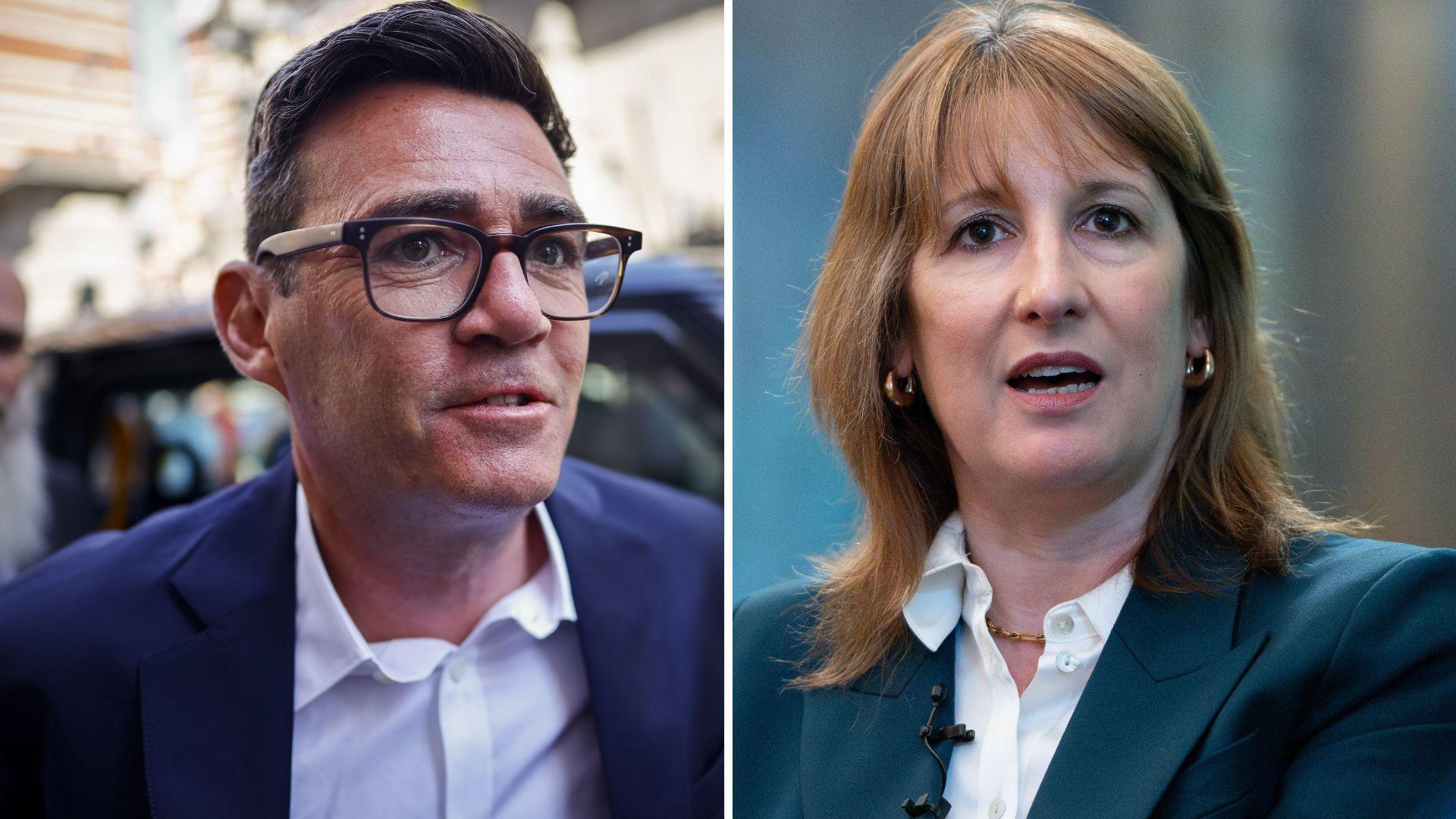
When you are in opposition or running a city, it is relatively easy to promise that people will be protected. When you are responsible for national finances, however, those promises collide with budgets, competing priorities and difficult choices.
That is why Burnham’s treatment of state pensioners has created such a bitter political question: has the man who once claimed to speak for ordinary people now become another Labour politician asking them to tighten their belts?
Critics certainly think so. And the comparison with Rachel Reeves is difficult to ignore.
Reeves became the target of pensioner anger after the Labour government restricted the Winter Fuel Payment in 2024. The policy meant that, rather than receiving the payment broadly across the pensioner population, eligibility in England and Wales was largely restricted to people receiving Pension Credit or certain other benefits. The House of Commons Library estimated that the number of pensioners receiving the payment would fall from around 10.8 million to approximately 1.5 million.
The government argued that the decision was necessary because of the state of the public finances.
That argument may have made sense on a spreadsheet.
For pensioners sitting at home worrying about their heating bills, however, it was a very different story.
The controversy became one of the defining political headaches of Labour’s early period in government. Eventually, the policy was changed again. From winter 2025/26, all people above State Pension age became eligible for the Winter Fuel Payment, although those with annual incomes above £35,000 would have the payment recovered through the tax system.
The lesson should have been obvious: pensioner policy is politically explosive.
Yet Burnham now finds himself facing a similar accusation — that when confronted with the cost of supporting older people, Labour once again reaches for the same answer.
The Waspi women are at the heart of this controversy.
Women born in the 1950s were affected by increases to the State Pension age. Campaigners have argued for years that many women were not properly informed about the changes and consequently suffered financial hardship because they were unable to plan adequately for a later retirement.
In June 2026, Burnham ruled out compensation for the Waspi women, while saying he remained open to other forms of support.
For campaigners, that was a devastating message.
After years of campaigning, demonstrations and political pressure, they were looking for recognition that what happened had caused genuine hardship. Instead, they were confronted with another argument about what the government could afford.
And that is precisely where the Reeves comparison bites.
The issue is not that Burnham and Reeves have identical policies. They do not.
The issue is the philosophy behind the decisions.
Again and again, pensioners are told that politicians understand their concerns. Again and again, they are told that difficult decisions have to be made. And again and again, when those decisions involve substantial amounts of public money, the answer appears to be that the bill is simply too large.
That can leave older people asking a brutally simple question: when does political sympathy actually become action?
There is a perfectly legitimate argument against unlimited compensation.
Governments cannot simply write cheques whenever a group has experienced a policy failure. Taxpayers ultimately fund those payments. There must be evidence, fairness and a clear justification for spending billions of pounds.
Burnham is entitled to make that argument.
But politicians also have to understand the difference between financial responsibility and political responsibility.
A government that constantly says “we cannot afford it” may eventually discover that voters no longer believe that it shares their priorities.
For pensioners, the stakes are particularly high.
The State Pension is not perceived in the same way as an ordinary benefit. People have spent decades paying taxes and National Insurance and arranging their working lives around the expectation of financial security in retirement. For millions, the State Pension is not a luxury. It is the foundation of their household finances.
That makes uncertainty especially frightening.
A pensioner cannot simply decide to work another decade if a policy suddenly changes. Someone already in retirement cannot easily increase their income to compensate for a lost payment. Older households often have less flexibility than younger workers.
That is why relatively modest changes to pensioner income can have an outsized emotional impact.
It is also why Burnham should be extremely careful about allowing his government to acquire the reputation that Labour is prepared to balance the books on the backs of older people.
The Winter Fuel controversy showed how quickly that perception can spread.
The subsequent restoration of wider eligibility demonstrated that the original policy had become politically unsustainable. The government announced that millions more pensioners would once again receive the payment, while higher-income pensioners would have it recovered through the tax system.
That U-turn should have been a warning.
Pension policy cannot be treated as a technical exercise detached from public confidence.
There is also a broader question about Labour’s identity.
For decades, Labour has claimed a special relationship with people who depend upon public services and social security. It has argued that government should provide protection when individuals cannot protect themselves.
That philosophy inevitably creates expectations.
If Labour wants to tell pensioners that it is the party of fairness, then fairness has to mean more than defending decisions once they have been made. It must mean listening when policies cause hardship and being prepared to correct mistakes.
That does not mean every demand should be accepted.
It means the burden of proof should not always fall on the pensioner.
Burnham therefore faces a difficult political balancing act. He has to demonstrate that refusing compensation is not simply another example of a government deciding that older people are an easy group to disappoint.
That perception would be particularly damaging because pensioners vote.
They also remember.
The political consequences of pension decisions can last much longer than a parliamentary news cycle. A pensioner who believes that a government took money away, dismissed their concerns or failed to acknowledge their difficulties may remember that experience the next time they stand at a ballot box.
This is where the phrase “he’s done a Rachel Reeves” becomes more than a personal insult.
It describes a growing fear among critics that Labour politicians who once campaigned against austerity are discovering the political convenience of fiscal restraint once they are in charge.
There is an obvious irony here.
Burnham’s appeal was built partly on his willingness to challenge the establishment. He became known as a politician prepared to speak loudly about inequality and the struggles of people outside Westminster.
But now he occupies a position where he cannot simply criticise difficult decisions.
He has to make them.
And pensioners are watching.
They will not necessarily be persuaded by speeches about fiscal discipline if they believe that the government could have chosen differently. They will want to know why their needs were placed behind other priorities, whether the government has properly recognised the harm caused and what practical help will actually be available.
This is the uncomfortable truth Burnham now faces: being compassionate in opposition is easy. Being compassionate while balancing a national budget is much harder.
But that is precisely what leadership is supposed to be.
The question is not whether Burnham can explain why a policy is difficult.
The question is whether he can explain why the burden of that difficulty should fall on pensioners.
If he cannot, then the accusation will stick.
And if Labour allows older voters to conclude that the party has forgotten them, it could pay a heavy political price.
Andy Burnham may have spent years building a reputation as a champion of ordinary people. But as Prime Minister, his reputation will ultimately be judged not by the speeches he made before taking power, but by the choices he makes after taking it.
For pensioners, those choices are deeply personal.
They are about heating a home, paying bills, planning a retirement and having confidence that promises made over a lifetime still mean something.
So perhaps the real warning is not that Burnham has become Rachel Reeves.
It is that Labour risks becoming indistinguishable from the very politics it once promised to replace.
And for state pensioners who already feel squeezed, that is not merely disappointing.
It feels like a slap in the face.