


Andy Burnham Is a “B-List TikToker” Giving Migrants a “Free Pass” Into Britain, Claims Esther McVey
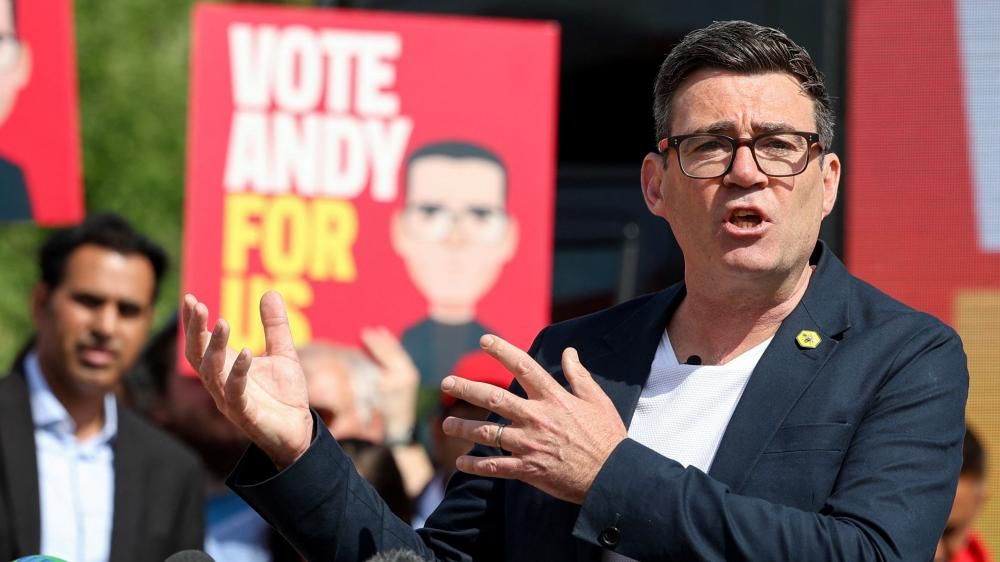
Andy Burnham has come under a fresh barrage of criticism from the Conservatives and Reform UK over his approach to immigration, with critics accusing the new Prime Minister of putting political presentation ahead of border control.
The attack was particularly personal. Conservative MP Esther McVey reportedly branded Burnham a “B-list TikToker giving migrants a free pass to the UK”, a deliberately provocative description designed to question both his leadership style and his immigration policies.
The language reflects the increasingly aggressive political battle over immigration following Burnham’s arrival in Downing Street.
For Reform UK leader Nigel Farage, the issue is straightforward: the Government must demonstrate that illegal migration is being reduced rather than merely promise that it will be.
For Labour, however, the challenge is more complicated. Burnham has inherited a system under enormous pressure and must balance border enforcement, asylum processing, international obligations and the political demands of voters who want tighter immigration controls.
A new Prime Minister under immediate pressure
Burnham entered Downing Street promising a major change in the way Britain is governed.
His supporters portrayed him as a more energetic and politically confident leader than Keir Starmer, with a stronger emphasis on regional government, public services and the cost of living.
But immigration quickly emerged as one of the biggest tests of his premiership.
Within days of Burnham taking office, Reform UK began arguing that the new government represented a softer approach to illegal migration.
Farage claimed that there had “never been a better time to be an illegal migrant”, while accusing Burnham of pursuing what he called “Open Borders”.
That rhetoric is central to Reform’s political strategy.
The party wants voters to believe that Labour has failed to establish effective control of Britain’s borders.
Burnham therefore faces an immediate political dilemma: if he adopts tougher policies, he risks criticism from parts of the Labour movement; if he fails to demonstrate a reduction in illegal arrivals, Reform has an easy opportunity to attack him.
Why the “TikToker” attack matters
Calling the Prime Minister a “B-list TikToker” is more than an insult.
It is an attempt to define Burnham’s political persona.
The criticism suggests that Burnham is more interested in social-media-friendly announcements and personal publicity than the difficult work of governing.
That is particularly damaging because Burnham has deliberately adopted a highly visible political style.
He has promoted policies designed to produce immediate, easily understood benefits for households and has sought to make himself a highly recognisable figure outside Westminster.
Supporters see that as communication with ordinary voters.
Opponents see it as political theatre.
The immigration debate therefore provides a perfect setting for the criticism.
A short video announcing a new policy can generate millions of views.
But voters ultimately want to know whether the policy actually works.
The Channel remains the crucial battleground
The English Channel has become one of the defining symbols of Britain’s immigration debate.
Small boats carrying migrants from northern France have repeatedly crossed the Channel, despite successive governments promising to stop the crossings.
The issue is politically potent because every arrival creates an immediate visual representation of a wider problem.
Reform has repeatedly used images of small boats to argue that the political establishment has lost control of Britain’s borders.
The party therefore has a clear incentive to make every new arrival a political story.
Burnham’s Government will need to demonstrate that its approach can produce measurable results.
If crossings increase, Farage will argue that Labour has failed.
If crossings fall, the Government will claim that its policies are beginning to work.
That makes the next few months particularly important.
Labour cannot simply ignore the issue
One of the biggest mistakes Labour could make would be to assume that immigration is only a Reform issue.
Polling has repeatedly demonstrated that immigration remains an important concern for British voters.
Many voters who support Labour still want the Government to control illegal migration.
That means Burnham cannot simply respond to Reform by dismissing its arguments.
He has to address the underlying public concern.
That requires more than speeches.
The Government needs an effective asylum-processing system, faster decisions, stronger enforcement against criminal gangs involved in people-smuggling and workable arrangements for people whose asylum claims are rejected.
At the same time, ministers have to comply with domestic and international law.
That is a difficult combination.
The Government’s prison crisis makes the argument harder
Immigration is also becoming linked to another major problem facing Burnham: Britain’s overcrowded prisons.
The Government has already been forced to consider controversial early-release arrangements because of a shortage of prison places.
That has created political arguments over how offenders should be treated and whether the justice system has sufficient capacity.
For critics, the combination of immigration pressure and prison overcrowding reinforces a narrative of government weakness.
They argue that ministers have failed to plan for the consequences of their policies.
Labour’s response is that the problems have accumulated over many years and cannot be solved overnight.
That may be true.
But once a party is in government, voters generally expect it to take responsibility for the problems it inherits.
Reform sees a major opportunity
For Nigel Farage, Burnham’s arrival has created both a threat and an opportunity.
The threat is that Burnham could successfully win back voters who had moved from Labour to Reform.
The opportunity is that any failure by the new Prime Minister could strengthen Reform’s argument that Britain’s political establishment cannot solve the country’s problems.
The early polling picture has already shown how quickly British politics can move.
Labour made substantial gains following Burnham’s arrival, with reports suggesting that the party had even moved ahead of Reform in some national polling.
That makes immigration particularly important.
If Burnham can demonstrate progress, he could consolidate Labour’s recovery.
If he cannot, Reform could argue that its earlier electoral success was not a temporary protest but the beginning of a much larger political realignment.
The danger of overpromising
Burnham’s political style has another potential weakness.
The more promises a government makes, the more opportunities there are for opponents to identify failures.
A Prime Minister can promise to reduce illegal migration.
But the Government cannot necessarily control every factor influencing Channel crossings.
Weather conditions, international events, criminal-smuggling networks and developments in France can all affect the number of arrivals.
That does not mean the Government is powerless.
It means that measuring success requires looking at the entire system rather than focusing on individual days.
Burnham will need to resist the temptation to promise instant results.
Otherwise, every new arrival can be portrayed as evidence that he has failed.
A much tougher political environment
The personal attacks against Burnham demonstrate how quickly the political atmosphere has changed.
When he entered Downing Street, much of the attention focused on his popularity and his ability to revive Labour’s fortunes.
Now his opponents are looking for weaknesses.
The “B-list TikToker” accusation is part of that transition.
It is an attempt to move the public conversation away from Burnham’s personality and towards questions of competence.
Can he control the border?
Can he deal with illegal migration?
Can he maintain public confidence?
Can he manage the prison crisis?
Can he deliver economic growth?
These are much harder questions than whether voters like him.
The Prime Minister’s response will be crucial
Burnham does not necessarily need to respond directly to every personal attack.
Indeed, engaging too aggressively with insults could allow his opponents to dictate the political agenda.
His strongest response would be practical results.
If illegal Channel crossings fall, the Government will have a powerful answer.
If asylum decisions become faster, that will strengthen its case.
If failed asylum seekers can be returned efficiently where legally possible, ministers can point to measurable progress.
And if criminal gangs involved in smuggling are successfully disrupted, Labour can argue that it is tackling the problem at its source.
In other words, Burnham needs to turn the immigration debate from a battle over rhetoric into a discussion about outcomes.
The political stakes are enormous
Immigration could ultimately determine whether Burnham’s early political recovery becomes permanent.
Labour’s challenge is especially difficult because the party needs to retain voters in traditionally Labour communities while also appealing to more liberal urban constituencies.
Those groups do not always agree on immigration.
Reform, meanwhile, has built its identity around precisely this divide.
The party wants to persuade voters that Labour cannot be trusted to enforce the country’s borders.
Burnham therefore has to prevent immigration from becoming a symbol of wider dissatisfaction with his Government.
Conclusion
The description of Andy Burnham as a “B-list TikToker giving migrants a free pass to the UK” is deliberately inflammatory, and it should be understood as political rhetoric rather than an established description of government policy.
But beneath the insult lies a serious political challenge.
Immigration is one of the most difficult issues facing the new Labour Government.
Reform UK has made it central to its campaign against Burnham, while Conservative politicians are also searching for evidence that Labour cannot control the country’s borders.
Burnham’s response will ultimately be judged not by how effectively he answers insults on social media, but by whether his Government can produce tangible improvements.
Can it reduce dangerous Channel crossings?
Can it speed up asylum decisions?
Can it return people who have no legal right to remain?
Can it dismantle the criminal networks profiting from people-smuggling?
And can it do all of this while maintaining Britain’s legal and humanitarian obligations?
Those are the questions that will determine whether the “free pass” accusation becomes a powerful political narrative or simply another colourful Westminster insult.
For now, one thing is certain: Burnham’s honeymoon is over when it comes to immigration.
The new Prime Minister is no longer being judged simply on his ability to generate excitement.
He is being judged on whether he can deliver control.
And Reform UK will be watching every boat that reaches Britain’s shores.
Leave a Reply
You must be logged in to post a comment.