


Nigel Farage Announces Huge Tax Break for Hard-Working Brits
Nigel Farage has unveiled a major tax pledge aimed squarely at Britain’s hard-working population, promising to make overtime income tax-free for millions of workers under a new “Hard Work Bonus”.
The Reform UK leader has presented the proposal as a direct attempt to change one of the biggest frustrations facing working people: the feeling that taking on extra hours does not always translate into a worthwhile increase in take-home pay.
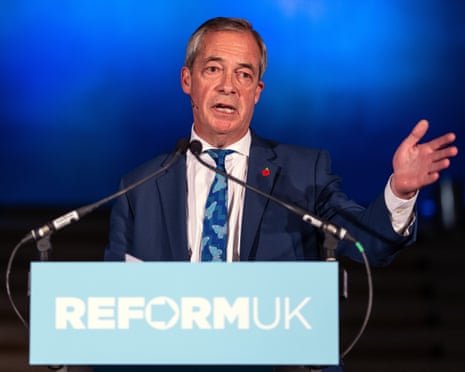
Under the policy, workers earning less than £75,000 a year would receive a new, uncapped personal allowance covering overtime worked beyond 40 hours a week. Reform says this would potentially benefit around 90 per cent of the workforce.
The announcement is politically significant because Farage is attempting to reposition Reform not simply as an anti-establishment party, but as a political movement representing working people.
And the message is deliberately simple:
If you work harder, you should keep more of what you earn.
Farage’s “Hard Work Bonus”
The central idea behind the policy is straightforward.
At present, additional earnings from overtime are generally subject to income tax and, depending on circumstances, National Insurance.
Reform wants to remove income tax from overtime worked after the 40-hour threshold for eligible workers.
The party estimates that around 3.2 million workers currently receive overtime pay and argues that removing income tax on qualifying overtime would make additional work substantially more financially attractive. Reform has estimated the annual cost of the proposal at approximately £5 billion.
Farage has described the measure as part of a wider attempt to restore the idea that work should be financially rewarding.
That is a message designed to resonate particularly strongly with workers who regularly take extra shifts, work weekends or accept additional hours to support their families.
A direct challenge to Labour
The proposal also represents a direct political attack on Labour.
Farage has repeatedly argued that Labour has become a party more interested in taxation and welfare than in rewarding employment.
In a recent statement, he claimed that hard-working people were increasingly frustrated because additional work was not producing enough financial reward, while ordinary families were being pushed into higher tax bands.
This is central to Reform’s attempt to win support in traditional Labour constituencies.
For decades, political parties on the left could rely on substantial support from working-class communities.
Farage believes that relationship has changed.
His argument is that many workers who once instinctively voted Labour now feel that the party no longer represents their economic interests.
Why overtime is such a powerful political issue
Overtime has a particular emotional appeal because it represents effort.
Someone who works an additional evening, takes a Saturday shift or stays late at work is making a very visible personal sacrifice.
The question voters ask is simple:
How much of that extra money do I actually get to keep?
Under Reform’s proposal, the answer would become more favourable.
The party argues that removing income tax on qualifying overtime would increase the financial reward for additional work and encourage people to work more hours.
For a basic-rate taxpayer, the Tax Policy Centre estimates that the net reward from an additional pound of overtime could rise substantially under the proposal.
That is the strongest argument in favour of the policy.
If people are financially rewarded for working additional hours, some may choose to do so.
But there is a major question over the cost
The proposal has already attracted criticism from tax specialists.
The Tax Policy Centre argues that Reform’s £5 billion estimate may significantly underestimate the eventual cost.
Its analysis puts the potential cost at around £14 billion a year, partly because employers and workers could have incentives to reclassify ordinary working hours as overtime.
That is an important issue.
Tax systems depend heavily on definitions.
If overtime receives a major tax advantage, businesses could potentially restructure contracts and working patterns around the 40-hour threshold.
A policy designed to reward genuine additional work could therefore create incentives for employers and employees to label existing work differently.
The £75,000 threshold
Another controversial element is the £75,000 earnings limit.
Workers below that threshold could qualify, while those earning above it would not receive the same benefit.
Reform says the threshold would allow the policy to focus on the vast majority of workers rather than higher earners.
But critics could argue that the system creates a cliff edge.
Imagine two workers performing exactly the same overtime.
One earns £74,999.
The other earns £75,001.
Under the proposed structure, their tax treatment could potentially be very different.
That raises questions about fairness and complexity.
Reform says the policy will be funded
The party has also been clear that it does not want the measure to be presented simply as an unfunded tax giveaway.
Reform says the £5 billion cost would be funded through savings elsewhere, including welfare reductions and cuts to what it regards as wasteful public spending.
That fits with the party’s broader economic philosophy.
Rather than increasing borrowing to pay for tax reductions, Reform argues that the state should spend less and allow workers to keep more of their earnings.
This is one of the defining differences between Reform’s economic message and Labour’s approach.
Reform’s broader tax agenda
The overtime announcement is not an isolated policy.
Reform has also proposed reducing employer National Insurance contributions for British workers from 15 per cent back to 13.8 per cent, while retaining a higher rate for foreign workers and introducing an Employers’ Migrant Labour Levy. The party says this would cost approximately £11.2 billion but would be funded through the proposed levy.
The party has additionally proposed raising the VAT registration threshold for small businesses from £90,000 to £150,000, arguing that the current threshold creates a damaging cliff edge for tradespeople and other small firms.
Taken together, these proposals reveal the direction Reform is trying to take.
The party wants to lower the tax burden associated with employment and entrepreneurship while reducing spending elsewhere.
The “party of workers” strategy
Farage has increasingly used the language traditionally associated with Labour.
He now repeatedly describes Reform as the “party of workers”.
That is a deliberate political strategy.
Rather than fighting Labour exclusively over immigration or Brexit, Reform wants to compete on wages, taxes, employment and household finances.
This could be particularly important in former Labour strongholds.
Farage has argued that voters in areas such as the North East, North West, Yorkshire and the West Midlands are increasingly receptive to Reform because they feel that the traditional political system no longer rewards people who work hard.
The overtime proposal fits perfectly into that message.
The psychology behind the policy
Tax policy is not only about mathematics.
It is also about perception.
A worker may not understand every detail of the income-tax system.
But they understand what happens when they work an extra shift and look at their payslip.
If Reform can convince millions of workers that it is the party trying to ensure that extra effort produces a bigger reward, it can create a powerful political connection.
That may be almost as important as the actual value of the tax saving.
The danger of unintended consequences
However, tax policy rarely works exactly as politicians intend.
The biggest concern is that businesses and workers may alter behaviour in ways that reduce the effectiveness of the policy.
If employers restructure contracts so that more existing hours qualify as overtime, the Government could lose significantly more revenue without generating equivalent additional work.
The Tax Policy Centre has specifically warned about this possibility.
There could also be administrative complications.
Employers would need to determine which hours count as qualifying overtime.
HMRC would need systems to ensure that people were not claiming relief improperly.
And workers with multiple jobs could create further complications.
Would it actually make Britain more productive?
This is perhaps the biggest economic question.
Reform argues that making overtime more financially attractive would encourage additional work and increase productivity.
There is some economic logic behind that.
If the reward for working an additional hour rises, some people will indeed choose to work more.
But the response is unlikely to be enormous.
The Tax Policy Centre estimates that the increase in additional output could be relatively modest compared with the cost of the tax relief.
That means the policy could be effective as a targeted tax cut without necessarily transforming Britain’s productivity problem.
There is also a fairness debate
Supporters say it is only fair that people who work longer hours should keep more of their money.
Critics could respond that the policy benefits people who already have access to overtime.
Someone working a fixed 37.5-hour contract may receive nothing.
Someone whose employer offers regular overtime could receive a substantial benefit.
That means the policy could favour workers in particular industries and occupations.
The question is therefore whether the Government should reward additional hours specifically, or simply reduce taxes for workers more generally.
A simpler alternative?
The Tax Policy Centre argues that there are potentially more efficient ways of cutting taxes.
Instead of creating a special tax regime for overtime, the Government could reduce income tax or National Insurance rates more broadly.
That would avoid the need to determine whether particular hours count as overtime.
It would also reduce the incentive to restructure employment contracts.
But it would cost more if the same tax reduction were offered universally.
That is the trade-off.
Farage’s political calculation
For Farage, the beauty of the proposal is its simplicity.
He does not need voters to understand every detail of fiscal policy.
He needs them to understand one sentence:
No income tax on overtime.
That is an extremely powerful slogan.
It can appear on campaign leaflets.
It can be repeated in speeches.
It can be discussed on television.
And it can be understood immediately.
This is precisely the type of policy that works well for a populist political movement.
It also contrasts sharply with Labour
Farage can now present the political choice in very simple terms.
Labour:
Tax more.
Reform:
Let workers keep more.
Of course, the reality is much more complicated.
Government spending must be financed.
Tax cuts have costs.
And public services require money.
But political campaigns rarely operate at the level of a Treasury spreadsheet.
They operate through narratives.
And Reform’s narrative is increasingly becoming:
The state takes too much from people who work.
The credibility problem
There is nevertheless a significant challenge for Farage.
Reform’s tax policies need to be credible.
The party previously proposed much larger tax cuts but later acknowledged that the UK’s fiscal position made enormous immediate reductions unrealistic.
The Chartered Institute of Taxation reported in 2025 that Farage had abandoned Reform’s earlier £90 billion tax-cut commitment, saying that large tax cuts were not realistic given Britain’s debt and public finances.
That history means voters and economists are likely to scrutinise the funding calculations closely.
The question is not simply whether Reform wants lower taxes.
It is:
Can Reform deliver them without creating a larger deficit or damaging public services?
Farage’s personal finances add another layer
There is an additional political irony.
Farage has built much of his political identity around speaking for ordinary working people, but his own income has attracted considerable scrutiny.
He has earned millions from media work, appearances and commercial activities since becoming an MP, according to analysis reported by The Guardian.
ITV reported in June that Farage declared a £270,000 payment for promoting gold bullion, based on an estimated four hours of work per month over three months.
These issues do not automatically invalidate his tax proposals.
But they provide political opponents with ammunition.
They can ask whether a politician with substantial outside earnings really understands the financial pressures facing someone working overtime to pay a mortgage or household bills.
The £5 million controversy
Farage also faces continuing scrutiny over a £5 million gift from cryptocurrency businessman Christopher Harborne.
The parliamentary standards investigation has been active again following Farage’s return to Parliament, while the Conservatives have separately called for HMRC to examine whether the payment should have been taxed. Farage has denied wrongdoing and maintained that the money was a personal gift.
Again, this is separate from the overtime policy itself.
But politically, it creates an awkward contrast.
Farage is asking workers to trust Reform’s promises on tax while his own financial affairs remain under intense scrutiny.
The policy could nevertheless prove popular
Despite those criticisms, the overtime proposal has obvious electoral appeal.
Britain has millions of workers who regularly work additional hours.
Many families are struggling with housing costs, food bills and other expenses.
A tax-free overtime allowance could therefore provide a tangible benefit to some households.
Even a relatively modest increase in take-home pay can matter to a worker who is already carefully managing monthly finances.
The biggest winners
The policy would probably be most attractive to workers who:
- regularly work beyond 40 hours;
- are paid overtime rather than receiving a fixed salary;
- earn below £75,000;
- have employers willing to offer additional hours;
- and would otherwise pay income tax on that additional income.
That could include workers in manufacturing, logistics, hospitality, healthcare, construction and other sectors.
But the actual benefit would vary significantly between individuals.
The biggest losers — or non-beneficiaries
People who work fewer than 40 hours would not directly benefit.
Neither would workers earning above the £75,000 threshold under the proposed design.
And employees whose employers do not offer overtime would receive no special benefit.
That is why describing the measure as a tax cut for “hard-working Brits” is politically effective but economically imprecise.
Many people who work extremely hard would not necessarily qualify.
The real test will be implementation
If Reform ever enters government, the difficult part would be writing the legislation.
Officials would have to establish precisely what counts as overtime.
Would contracted hours above 40 count?
What about unpaid overtime?
What about workers with multiple employers?
What about annualised-hours contracts?
What happens to people whose weekly hours fluctuate?
How would self-employed workers be treated?
These details could determine whether the policy becomes a useful tax incentive or an administrative headache.
Reform’s wider argument about work
There is nevertheless a deeper philosophical argument behind the proposal.
Farage wants Britain to move towards a culture in which employment is financially more attractive than welfare.
He has repeatedly argued that people should be encouraged to work and that the tax system should reward employment.
The Hard Work Bonus is therefore part of a much bigger economic philosophy.
It is not simply about overtime.
It is about changing the relationship between work, taxation and welfare.
A major political gamble
That strategy could work.
If Reform manages to convince working-class voters that Labour taxes employment while Reform rewards it, the party could make further gains in traditional Labour territory.
But the strategy also carries risks.
Tax cuts that are not fully funded could increase borrowing.
Poorly designed reliefs can create loopholes.
And reducing government revenue without reducing spending can create pressure on public services.
Reform therefore has to prove that its numbers work.
The verdict
Nigel Farage’s overtime tax pledge is one of Reform UK’s clearest attempts yet to turn its political message towards the everyday financial concerns of working people.
The proposal is simple: workers earning below £75,000 would pay no income tax on qualifying overtime above a 40-hour working week. Reform says the policy could benefit around 90 per cent of workers and cost roughly £5 billion a year.
That is a powerful political proposition.
It speaks directly to people who believe that extra work should produce extra reward.
But the economic questions are equally significant.
Independent analysis has suggested the real cost could be considerably higher, potentially around £14 billion, while warning that the policy could encourage the reclassification of ordinary hours as overtime.
So the crucial question is not whether “no tax on overtime” sounds attractive.
It clearly does.
The real question is whether Reform can design the policy so that it rewards genuinely additional work, avoids major loopholes and is properly funded.
If Farage can demonstrate that, the Hard Work Bonus could become a powerful electoral weapon.
If he cannot, critics will dismiss it as another attractive slogan attached to an uncertain economic calculation.
For now, however, the political message is unmistakable.
After years of telling voters that Britain needs radical change, Nigel Farage is betting that one of the most effective ways to win over working people is to make them feel that, at last, working longer will actually leave more money in their pockets.
Leave a Reply
You must be logged in to post a comment.