

Andy Burnham Rocks Stock Markets With Huge £1.6bn Blunder
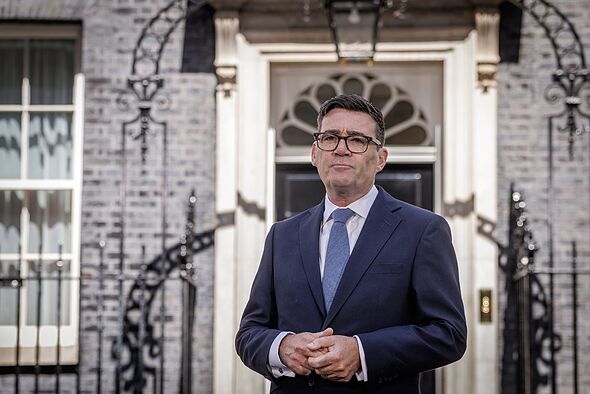
Andy Burnham has barely settled into Downing Street, yet his government is already facing an uncomfortable warning from Britain’s investors.
More than £1.6 billion was pulled from equity funds in July as uncertainty over the new government’s economic direction and potential tax rises rattled investors. It was one of the largest monthly outflows recorded since last year’s Budget turmoil, with UK-focused funds suffering particularly heavy withdrawals.
For Burnham, the headline is deeply embarrassing.
The Prime Minister has spent his first weeks in office promising a more ambitious Britain: more homes, stronger public services, greater defence spending, cheaper living costs and a bigger role for government in the economy.
But financial markets are sending a very different message.
They are asking one simple question:
How is Burnham going to pay for it?
That question could become the defining economic challenge of his premiership.
The £1.6 billion figure should not be exaggerated. Investors did not collectively lose £1.6 billion because of Burnham, and the stock market did not suddenly collapse by that amount. The figure represents net withdrawals from equity funds during July.
But it is still significant.
UK-focused funds accounted for roughly £948 million of the outflows, according to Calastone data, while total equity-fund withdrawals reached about £1.61 billion.
That suggests investors are becoming increasingly cautious about Britain’s economic prospects.
And when investors become cautious, governments should pay attention.
Burnham’s problem is not simply that investors dislike Labour.
Markets do not have political loyalties.
They care about returns, risk, taxation, borrowing costs, economic growth and the credibility of government policy.
If investors believe a government is likely to raise taxes substantially, increase borrowing or introduce policies that weaken incentives to invest, they will adjust their portfolios.
That is exactly what appears to be happening.
Economists have warned that Burnham could need as much as £25 billion in additional taxation to fund his spending commitments, depending on how much he ultimately chooses to spend. Capital Economics has estimated that government spending could increase by £30 billion to £40 billion, putting considerable pressure on the Treasury.
Those are enormous numbers.
And they come at a particularly difficult time.
Britain already carries a huge public debt burden.
Interest costs are substantial.
Economic growth remains weak.
The tax burden is already historically high.
And the government has promised to spend more.
That is a combination financial markets rarely ignore.
Burnham has attempted to reassure investors by insisting that his government will obey its fiscal rules.
He has also ruled out increases in some of the most politically sensitive taxes, including income tax, VAT and national insurance.
But that leaves a difficult question.
If the government needs billions more, where will the money come from?
Capital gains tax is one possibility.
Pension tax relief is another.
There has also been speculation about new levies connected with defence or social care.
Each option carries political risks.
Higher capital gains taxes could discourage investment.
Changes to pension relief could upset savers.
A new social care levy could increase the tax burden on working people.
A defence levy could be unpopular at a time when households are already under pressure.
And replacing existing taxes with a land-value tax or other new mechanisms could create winners and losers on a massive scale.
The government therefore has a narrow path to walk.
Spend too little and Burnham disappoints his supporters.
Spend too much and investors become nervous.
Raise taxes and voters complain.
Borrow more and bond markets may react.
Cut existing programmes and ministers have to explain why their promises have been abandoned.
This is the trap Burnham has created for himself.
He has made ambitious promises at precisely the moment when Britain has very little fiscal room for manoeuvre.
His political strategy is based on optimism.
His economic inheritance demands caution.
That contradiction cannot continue indefinitely.
The stock market outflows should therefore be seen as an early warning rather than a catastrophe.
Markets can change direction quickly.
Investors may return if Burnham produces a credible growth strategy, a disciplined Budget and convincing evidence that his spending plans will be properly funded.
But the opposite is also true.
If uncertainty continues, businesses may postpone investment.
International investors may look elsewhere.
British savers may put more money into overseas assets.
And companies may become increasingly reluctant to expand in the UK.
That would be particularly damaging because Britain desperately needs investment.
The country needs new infrastructure.
It needs housebuilding.
It needs modern factories.
It needs technology investment.
It needs energy infrastructure.
It needs productivity-enhancing capital.
And it needs businesses willing to take risks.
Government cannot create all of that itself.
Private investment is essential.
That is why the reaction of investors matters so much.
A government can increase public spending, but it cannot simply command the private sector to invest.
It has to create the conditions in which investment becomes attractive.
That means stable taxes.
Predictable regulation.
Competitive energy costs.
A skilled workforce.
Reliable infrastructure.
And confidence that the government will not suddenly change the rules.
This is where Burnham’s critics have identified a potential weakness.
His political programme is heavily focused on redistribution and state intervention.
He wants councils to embark on a huge housebuilding programme.
He wants to expand social care.
He wants to increase defence spending towards 3.5 per cent of GDP by 2035.
He wants to reduce energy costs.
He wants to cap bus fares.
Individually, these policies can be defended.
Collectively, they create a very large financial commitment.
Recent estimates have suggested that the total cost of Burnham’s ambitions could eventually run into tens of billions of pounds, with some assessments putting the broader package above £60 billion.
That is why the Treasury will be under enormous pressure.
Burnham may have won the political argument inside Westminster.
But he has not yet won the economic argument.
Markets are harder to persuade.
They do not respond to applause at political conferences.
They respond to numbers.
They respond to credible forecasts.
They respond to fiscal discipline.
And they respond particularly quickly when they believe a government is underestimating its liabilities.
There is another problem.
Britain has already experienced what happens when markets lose confidence in fiscal policy.
The memory of the 2022 mini-Budget remains powerful.
That episode demonstrated that government announcements can trigger enormous movements in bond yields, currencies and financial markets when investors believe the numbers do not add up.
Burnham therefore cannot afford to treat market confidence as something that will automatically take care of itself.
It has to be actively protected.
That does not mean abandoning Labour’s programme.
It means demonstrating how the programme will be funded.
If Burnham wants to build hundreds of thousands of homes, he needs to show where the money will come from.
If he wants to expand social care, he needs to explain the long-term funding model.
If he wants to increase defence spending, he needs to identify sustainable revenue.
If he wants to reduce household energy bills, he needs to explain how that will affect government finances and energy investment.
And if he wants to reduce taxes in some areas, he must identify the corresponding savings or revenues elsewhere.
This is not an ideological argument.
It is arithmetic.
There is also a danger in blaming investors.
Some politicians may be tempted to portray the £1.6 billion outflow as evidence of greedy financiers attacking a Labour government.
That would be a mistake.
Investors are doing what investors are supposed to do.
They are assessing risk.
If they believe another market offers better returns with lower political uncertainty, they move money.
The solution is not to complain about the investors.
The solution is to make Britain a more attractive place to invest.
That requires growth.
And growth is arguably the missing piece of Burnham’s economic story.
The Prime Minister has talked extensively about what government will spend.
He has talked about what the state will provide.
But investors need to know how the economy itself will expand.
Where will productivity come from?
How will private-sector investment increase?
How will Britain become more competitive?
How will businesses be encouraged to hire and expand?
How will the tax base grow?
These questions matter because economic growth is ultimately the easiest way to make expensive public services more affordable.
A larger economy produces more tax revenue without necessarily requiring higher tax rates.
That is the virtuous cycle Burnham needs.
Without growth, his government risks becoming trapped in a cycle of higher taxes and higher spending.
And that could eventually become politically toxic.
The Prime Minister therefore faces a choice.
He can continue presenting himself primarily as the leader who will spend more to repair Britain’s social fabric.
Or he can develop a second identity: the Prime Minister who makes Britain a better place to invest, build and do business.
He needs both.
Britain cannot cut its way to prosperity.
But it cannot tax and spend its way to prosperity either.
The private sector must be part of the solution.
That means Burnham needs to reassure investors that Britain is open for business.
The £1.6 billion outflow is not proof that his economic strategy has failed.
It is far too early to make that judgement.
But it is evidence that investors are watching.
And they are nervous.
That should concern Downing Street.
Burnham has inherited an economy with little room for mistakes.
His spending promises have raised expectations.
His tax pledges have restricted his options.
His fiscal rules restrict borrowing.
And his political opponents are waiting for any sign that the numbers do not add up.
The October Budget will therefore be critical.
It will reveal whether Burnham can turn his optimistic political vision into a credible financial plan.
If he succeeds, investors could regain confidence.
If he fails, the £1.6 billion withdrawal may eventually look like the beginning rather than the end of the problem.
That is the real warning.
The stock market has not “destroyed” Burnham’s government.
But it has delivered a message.
Britain’s investors are not interested in promises alone.
They want a plan.
They want growth.
They want stability.
And above all, they want to know that the man running Downing Street understands the difference between wanting to spend money and actually having it.
Andy Burnham has promised to transform Britain.
Now the markets are asking him to show the receipt.
Because sooner or later, someone has to pay.
And if Burnham gets that calculation wrong, the consequences will not remain confined to Westminster.
They will be felt by businesses, savers, taxpayers and households across the country.
The £1.6 billion outflow may therefore be only an early tremor.
The real test comes when investors decide whether they trust Burnham’s Britain enough to put their money back in.