


Politics LIVE: Andy Burnham Sets Out His Plan to Replace Keir Starmer as Brexit Row Continue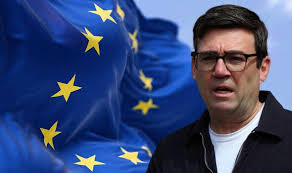
Andy Burnham’s return to Westminster was never going to be an ordinary political comeback.
From the moment the former Greater Manchester mayor entered the Makerfield by-election, the question hanging over his campaign was not simply whether he could win a parliamentary seat.
It was whether he could use that victory to reshape the Labour Party — and ultimately replace Keir Starmer.
Burnham made little attempt to hide the scale of his ambitions.
He argued that Labour needed to change and that the party had lost the trust of voters it once regarded as its natural supporters.
The message was deliberately broad, but the political implication was impossible to miss.
If Labour needed a new direction, then somebody would eventually have to lead it.
And Burnham clearly believed he had something to offer.
His Makerfield campaign consequently became much more than a local by-election.
It became the opening act of a national political battle.
Burnham had spent years building his reputation outside Westminster.
As Mayor of Greater Manchester, he became one of the most recognisable Labour politicians in Britain and developed a distinctive political identity based on devolution, public services and a stronger voice for regions outside London.
His supporters saw him as proof that Labour could reconnect with communities that had become increasingly sceptical of Westminster.
His critics saw a politician whose national ambitions had never disappeared.
Makerfield provided the opportunity to settle the first question.
Could Burnham get back into Parliament?
He answered it decisively.
Burnham won the by-election with about 55 per cent of the vote, defeating Reform UK’s Robert Kenyon by 9,231 votes. The result increased Labour’s vote share by more than nine percentage points compared with the 2024 general election.
The victory immediately changed the political atmosphere.
Burnham was no longer simply a mayor commenting on national politics.
He was an MP.
And he was an MP with a fresh electoral mandate.
That gave his criticism of Labour’s direction considerably more weight.
His victory speech was especially revealing.
Burnham described Labour’s position as a “final chance to change” and argued that the party needed to act.
It was the language of someone preparing for a much bigger political battle.
The Brexit question, however, remained one of the biggest obstacles.
Burnham had supported remaining in the European Union during the 2016 referendum.
Yet by the time he launched his Makerfield campaign, he was taking a very different approach.
He said he would not attempt to return Britain to the EU and argued that the country needed to stop endlessly reopening the Brexit argument.
Instead, he said Britain should focus on fixing its domestic problems and improving its relationship with Europe where practical.
That position immediately attracted criticism.
Opponents accused Burnham of trying to escape an issue on which he had previously taken a strong position.
The criticism was politically useful because Brexit remains one of the most divisive subjects in British politics.
But Burnham’s argument was more nuanced.
He was not claiming that Brexit had never happened.
He was arguing that Britain had moved into a different political era.
The question was no longer whether the country should vote Leave or Remain.
The question was what Britain should do next.
That distinction became central to his political message.
Burnham wanted to present himself as a politician focused on the future rather than endlessly fighting the battles of the past.
Whether voters accepted that argument was another matter.
For Reform UK, Brexit remained an opportunity.
The party could portray any closer relationship with Europe as a potential attempt to reverse Brexit by another route.
Burnham therefore had to tread carefully.
Too much emphasis on European cooperation could alienate Leave voters.
Too little could frustrate those who wanted a much closer relationship with the EU.
His answer was to put domestic politics first.
That fitted neatly with the wider political identity he had developed in Greater Manchester.
Burnham’s argument has consistently been that Britain needs to address the problems people encounter in their daily lives.
Transport.
Housing.
Energy bills.
Public services.
Economic opportunity.
Regional inequality.
Those issues, he argued, matter more to many voters than Westminster’s endless arguments about political personalities.
It was a powerful message.
It also helped distinguish him from Starmer.
Starmer’s Labour had placed enormous emphasis on economic credibility, fiscal discipline and presenting itself as a serious government-in-waiting.
Burnham’s pitch was more emotionally rooted in the idea that Labour needed to reconnect with people who felt ignored.
The two approaches were not necessarily completely incompatible.
But politically they represented different instincts.
And that difference became increasingly difficult to ignore.
The Makerfield result strengthened Burnham’s position.
Starmer could not simply dismiss him as a politician speaking from outside Parliament.
Burnham now had a seat, a majority and a national platform.
The leadership question became unavoidable.
At first, Starmer insisted he would fight any leadership contest.
But events moved rapidly.
Within days, Starmer resigned as Prime Minister, opening the way for Burnham to take the Labour leadership and eventually become Prime Minister himself.
That development transformed what had initially looked like a political challenge into a change of government.
Burnham’s journey from Manchester mayor to Downing Street had been extraordinarily rapid.
But the real test was only beginning.
Replacing Starmer was one thing.
Proving that Burnham’s political philosophy could work nationally was another.
His supporters pointed to Greater Manchester as evidence that his approach could deliver.
Under his leadership, the region became associated with expanded devolution, public control of bus services and a distinctive regional political model.
The challenge now was scaling those ideas to the entire United Kingdom.
Running Greater Manchester is not the same as running Britain.
A Prime Minister must deal with defence, foreign policy, taxation, national debt, immigration, energy security and international negotiations.
The margin for political experimentation is far smaller.
Burnham’s promise of change therefore comes with a significant burden of expectation.
If voters believed his message during the Makerfield campaign, they will now expect results.
That is particularly important because Burnham has presented himself as the politician capable of challenging the rise of populist parties.
His digital strategy since entering Downing Street has already attempted to distinguish him from traditional Westminster politics, with a more informal and personal approach on social media. Reuters reported that his government has been using platforms such as TikTok, Instagram and X to challenge the dominance of populist political figures.
The strategy has generated attention.
But popularity is not the same as political success.
The real test will come when Burnham has to make difficult decisions.
Campaigning allows politicians to promise change.
Government forces them to decide exactly what that change costs.
There will be pressure over taxation.
There will be arguments over public spending.
There will be difficult decisions over welfare.
There will be pressure from business.
There will be demands from trade unions.
And there will be constant questions about whether Labour is delivering for the voters who gave Burnham his opportunity.
The Brexit question will not disappear either.
Britain’s relationship with the European Union continues to involve complicated negotiations over trade, movement and regulatory arrangements.
Burnham’s decision to avoid reopening the fundamental question of EU membership does not remove the practical challenges of Brexit.
Instead, it puts the emphasis on managing the relationship.
That may prove to be a politically sensible strategy.
It may also disappoint voters who wanted a much more dramatic change.
Either way, Burnham will now be judged on outcomes rather than rhetoric.
The irony is that the politician who spent years criticising Westminster has finally obtained the ultimate Westminster job.
That creates a fascinating political test.
Can the man who built his reputation as an outsider remain an outsider while sitting in Number 10?
Can he challenge the political establishment while leading it?
Can he maintain his personal connection with voters while dealing with the machinery of government?
Those contradictions will follow him throughout his premiership.
The Makerfield victory gave Burnham the platform he needed.
The leadership change gave him the power he wanted.
Now comes the difficult part.
He must govern.
For years, Burnham argued that Labour needed to listen more carefully to voters outside London.
Now those voters will be listening to him.
They will not be satisfied by speeches about change forever.
They will want cheaper bills.
Better services.
More secure jobs.
Improved transport.
A stronger economy.
And a government that appears to understand the pressures of everyday life.
That is the real challenge behind Burnham’s rise.
He successfully turned a by-election into a national political moment.
He successfully transformed a regional political reputation into a Westminster comeback.
And he ultimately succeeded in replacing Starmer.
But history will not judge him on how dramatically he arrived.
It will judge him on what he does with power.
The Brexit row may continue.
Opposition parties will continue to attack.
Labour MPs will continue to disagree.
And voters will continue to demand results.
For Andy Burnham, the political campaign is over.
The governing campaign has begun.
And this time, there is nowhere else to go.
The man who promised to change Labour now has to prove that he can change Britain.