
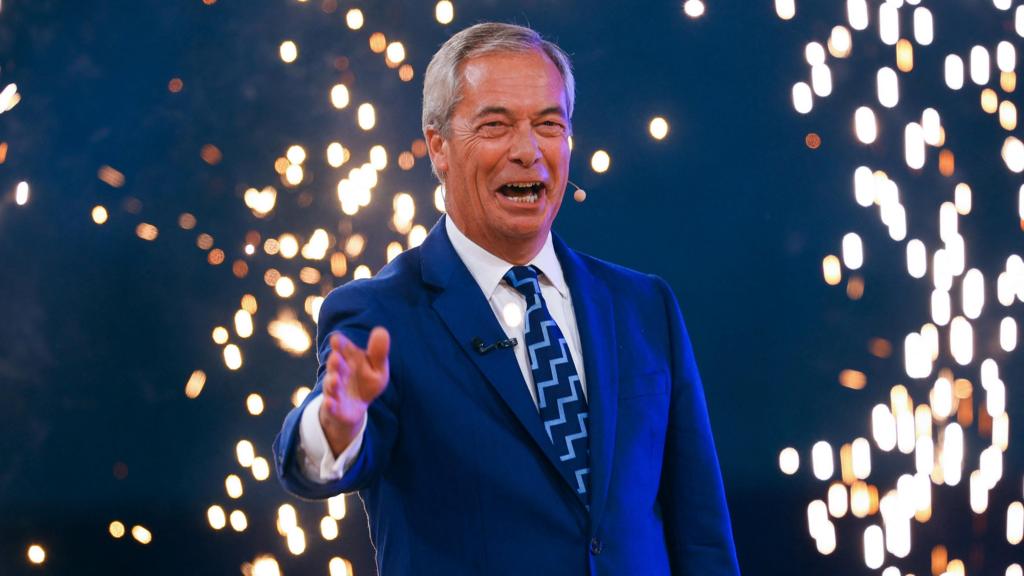
Farage says ‘be ready for an election in 2027’ with one key reason for a Labour meltdown
Farage says “be ready for an election in 2027” – the key reason behind a possible Labour meltdown
Nigel Farage’s warning that voters should “be ready for an election in 2027” has added fresh speculation to an already unpredictable political landscape in the United Kingdom. The statement reflects his belief that the current political situation could change dramatically before the next scheduled general election, with the Labour government potentially facing serious challenges from public dissatisfaction.
Since coming to power, Labour has faced the difficult task of turning campaign promises into practical results. Governing brings pressures that opposition parties often avoid: economic uncertainty, rising public expectations, difficult policy decisions and the need to balance competing interests. A government can gain support by promising change, but maintaining that support requires visible improvements in people’s daily lives.

The main reason suggested for a possible Labour meltdown is the gap between expectations and reality. Many voters who supported Labour did so because they wanted significant change after years of political frustration. If they feel that living standards, public services or economic conditions have not improved quickly enough, disappointment could grow. Political history shows that governments often struggle not because their opponents suddenly become stronger, but because their own supporters become less enthusiastic.
Farage has built his political message around the idea that traditional parties have failed to respond to public concerns. He argues that many voters are searching for an alternative because they feel ignored by the established political system. His strategy relies on attracting people who are dissatisfied with both Labour and the Conservatives, presenting his movement as a different choice.
However, predicting an election outcome years in advance is highly uncertain. Governments have significant time to recover public support, especially if economic conditions improve and policies begin to show results. A temporary decline in popularity does not automatically lead to electoral defeat. Political fortunes can change quickly depending on events, leadership decisions and the wider economic environment.
For Labour, the challenge will be convincing voters that its programme is delivering meaningful progress. Issues such as healthcare, housing, taxation, immigration and economic growth are likely to remain central to public debate. Failure to address these concerns could create opportunities for opposition parties, including Reform UK under Farage.
For Farage, the challenge is equally significant. Turning public frustration into long-term political success requires more than criticism of government failures. It requires a clear programme, credible candidates and confidence among voters that his party can manage the responsibilities of government.

The possibility of a 2027 election, whether early or simply a prediction of political turbulence, highlights a broader reality: public trust can change rapidly. Labour’s future will depend on whether it can demonstrate progress and maintain support among voters who expected major change. Meanwhile, Farage will attempt to convince the public that dissatisfaction with Labour and the Conservatives should translate into support for his movement.
Ultimately, the next few years will determine whether Farage’s prediction becomes a political turning point or simply another moment in Britain’s constantly changing political debate. The key battle will be over trust — which party can persuade voters that it understands their problems and has the ability to solve them.
A Different Perspective: Is a Labour Meltdown Really Farage’s Opportunity, or Just a Political Illusion?
When Nigel Farage says people should “be ready for an election in 2027,” many supporters of his movement see it as a sign that the Labour government could be heading towards a major collapse. However, there is another way to view the situation. A government losing public support does not automatically mean that its opponents will win, and dissatisfaction with Labour does not guarantee a breakthrough for Reform UK.
The biggest challenge facing Labour is the gap between expectations and reality. After years of political frustration, many voters supported Labour because they wanted major change. They expected improvements in the economy, public services and the overall direction of the country. But governing is very different from campaigning. Once a party takes power, it inherits complex problems that cannot be solved quickly.
This is where Nigel Farage sees his opportunity. His argument is that many voters feel disappointed by traditional politics and are looking for an alternative. He has built his political identity around challenging the established parties and claiming that Westminster has failed to listen to ordinary people.
However, the key question is whether public frustration can truly be transformed into political power. Criticising a government is much easier than proving that you can replace it. Voters may agree with concerns about immigration, the economy or public services, but they will also ask whether an alternative party has realistic solutions and the ability to govern.
Another challenge for Farage is that anger against Labour does not necessarily translate into votes for Reform UK. Some disappointed Labour voters may return to other parties, some Conservative supporters may try to rebuild their own party, and some people may simply become more sceptical of politics altogether. A divided opposition can sometimes prevent any single challenger from gaining enough momentum.
Labour also has time to recover. Governments often experience difficult periods early in their term, especially when expectations are extremely high. If economic conditions improve, public services show progress and voters begin to see practical results, Labour could rebuild support before the next general election.
For Farage, the challenge is moving beyond being a voice of protest and becoming a credible government-in-waiting. A successful political movement needs more than strong criticism; it needs detailed policies, experienced candidates and a convincing argument that it can manage the responsibilities of national leadership.
The debate around a possible 2027 election therefore reveals a deeper issue in British politics: voters are not only asking who has failed, but who can deliver something better. A Labour decline could create an opening, but an opening is not the same as a victory.
Ultimately, the future will depend on whether Labour can meet public expectations and whether Farage can convince voters that his movement represents a serious alternative rather than simply a reaction against the existing system. The next election will not be decided only by dissatisfaction — it will be decided by trust, credibility and the ability to offer practical solutions.