
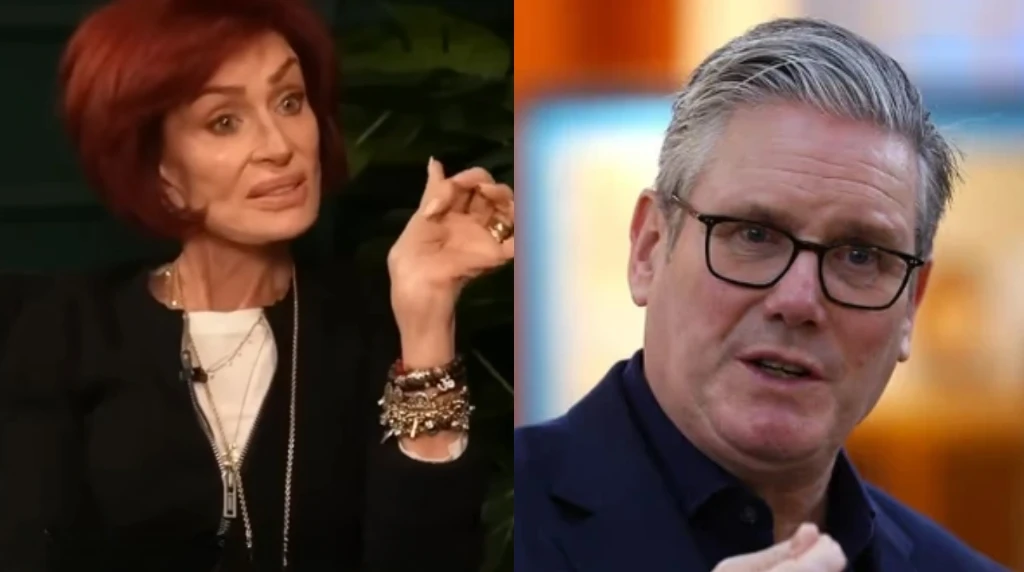
WAVE OF CRITICISM AGAINST UK PRIME MINISTER KEIR STARMER ESCALATES FOLLOWING SHARON OSBOURNE’S SCATHING ATTACK
Political pressure on UK Prime Minister Keir Starmer continues to mount as a wave of dissatisfaction spreads across the public and the entertainment industry. Most recently, prominent television personality Sharon Osbourne launched a direct attack against the Labour leader on a podcast, further fueling fierce debates over the credibility and leadership capabilities of the current administration.
Direct Criticism from a High-Profile Figure
In a newly released conversation (cited by the YouTube channel British Stand), Sharon Osbourne did not mince words when expressing her deep disappointment with Keir Starmer. She branded the Prime Minister as “weak” and a “flip-flopper,” asserting that the public “does not feel safe at all when this man speaks.”
One of the most notable highlights of Osbourne’s critique was the perceived disconnect between the Prime Minister and ordinary voters. She characterized Starmer as a typical member of the elite class who “only lives and breathes within urban environments,” thereby completely lacking a realistic understanding of the lives of citizens in rural areas or outside of major metropolitan cities.
Revisiting Political Controversies
Beyond attacking his leadership style, Osbourne’s discussion dug deep into the Prime Minister’s past career and recent scandals:
-
Past Legal Career: Osbourne recalled Starmer’s background as an immigration and human rights lawyer. She condemned his past legal representation of alleged extremists, noting instances where he countersued the government for compensation.
-
Clothing Donation Scandal: The revelation that Starmer accepted financial backing from Labour donors to purchase luxury clothing was brought up and ridiculed, raising serious questions regarding his integrity.
-
Controversial Appointments: The podcast participants also touched upon the government’s diplomatic appointments—specifically the role of British Ambassador to Washington—citing unverified allegations concerning individuals linked to the infamous billionaire Jeffrey Epstein.
The Broader Context: A Crisis of Public Confidence
The video clip of Sharon Osbourne’s remarks rapidly gained significant traction across various social media platforms. From a political perspective, this event is far more than just the personal opinion of an entertainment figure; it reflects a genuine media crisis enveloping Downing Street.
The fact that Prime Minister Keir Starmer is repeatedly facing open mockery from a wide range of public figures—spanning from comedians like Jimmy Carr to being booed at football stadiums—indicates that voter approval ratings have hit an alarming low. According to political observers, it is extraordinarily rare in British politics for a newly elected Prime Minister to face such widespread and vocal public fury so early in the furter
Political Reactions Reflect a Broader Debate
The comments attributed to Sharon Osbourne have generated significant discussion online, but political analysts caution against treating the views of any single public figure as representative of wider public opinion. While celebrity commentary can attract substantial media attention and influence public debate, broader assessments of political support are typically based on opinion polling, election results, and other measurable indicators.
The Prime Minister’s office has continued to defend the government’s record, pointing to its policy agenda on economic growth, public services, and national security. Ministers argue that criticism from commentators and public personalities is an expected feature of democratic politics and that the government’s performance should ultimately be judged by its policies and their outcomes rather than by viral social media clips or podcast discussions.
Opposition parties have continued to challenge the government on a range of issues, including the economy, immigration, healthcare, and public confidence in state institutions. At the same time, Labour supporters argue that many criticisms directed at the Prime Minister are politically motivated and should be considered alongside the broader context of partisan debate.
Political scientists note that public confidence in political leaders has become increasingly influenced by digital media, where interviews, short video clips, and commentary can spread rapidly across multiple platforms. While this has expanded opportunities for public engagement, it has also made it easier for isolated moments to dominate the news cycle, sometimes overshadowing longer-term policy discussions.
The controversy also highlights the growing role of celebrity voices in modern political discourse. Public figures from entertainment, sport, and business increasingly use podcasts and social media to express political opinions, often reaching audiences that traditional political programming does not. Their comments can stimulate debate, but they do not necessarily reflect consensus among voters.
Ultimately, the political significance of such criticism will depend less on individual media appearances than on broader public sentiment over time. Analysts suggest that issues such as economic performance, public services, living costs, and government delivery are likely to play a greater role in shaping electoral outcomes than isolated exchanges involving high-profile personalities.
As political debate continues, both supporters and critics of the government are expected to focus attention on upcoming parliamentary debates, policy announcements, and future polling. Those developments are likely to provide a more reliable indication of the government’s standing than any single viral interview or social media trend.