
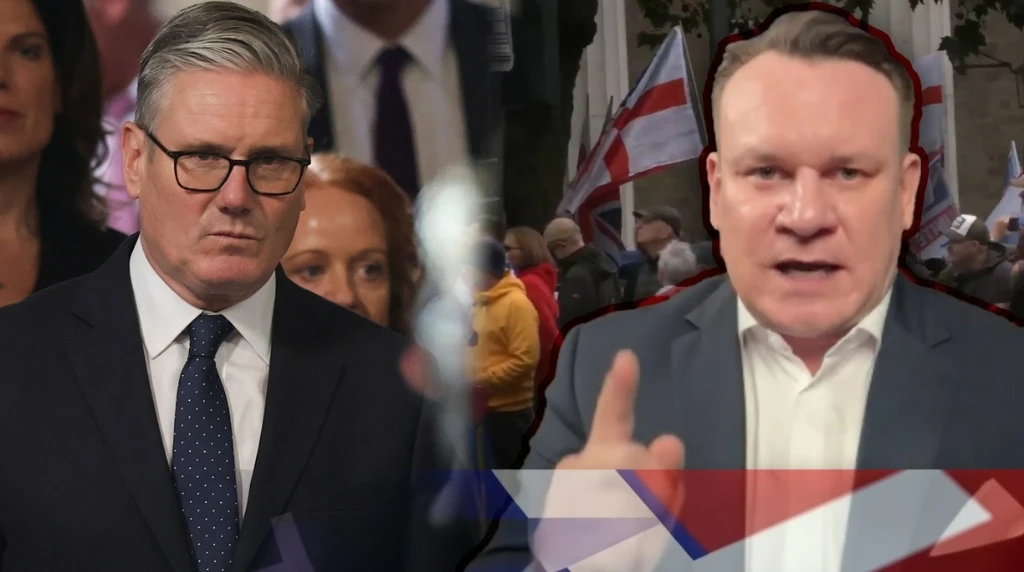
Polish Politician Threatens Legal Action
Speaking on GB News, Dominik Tarczyński expressed profound outrage over the UK government’s decision to deny him entry. He emphasized that he travels on a diplomatic passport and serves as the democratically elected representative of 211,000 European voters.
Context of the “Unite the Kingdom” Rally
The event Tarczyński intended to attend is the “Unite the Kingdom” rally, scheduled to take place on May 16 in London. According to information shared by a British Stand channel host, the event has been legally authorized by the Metropolitan Police.
Starmer’s government has drawn sharp criticism for allegedly applying a “double standard.” Critics point out that while right-wing European politicians—such as Tarczyński and a Belgian counterpart—are banned from entering on the grounds that their presence could “set communities back decades,” pro-Palestine marches, which some commentators argue pose higher security risks, continue to be permitted on the streets of London.
Dominik Tarczyński’s Stance on Migration
When questioned on whether the ban was linked to his well-known stance on Poland’s “zero illegal immigrants” policy, Tarczyński staunchly defended his track record. He rejected accusations of Islamophobia, framing his policies strictly around national security.
“Look at what is happening in London… We don’t have that problem in Poland. Zero, not one [illegal immigrant] comes to Poland. That is why we don’t have terrorist attacks,” Tarczyński argued. He urged the British public to “follow Poland’s example” to ensure a safe environment free from stabbings and shootings.
Political Fallout for Keir Starmer
The UK government’s move to block European representatives from attending a legally permitted event has ignited a fierce debate over free speech. Political commentators suggest that Starmer’s intervention was designed to disrupt the rally and protect his international standing amidst ongoing turmoil within the Labour Party. However, the ban may well backfire; banned speakers are still expected to address the crowd via video link, and the controversy has inadvertently boosted the event’s profile, potentially drawing in individuals who were previously undecided about attending.
Growing Debate Over Freedom of Speech and Democratic Values
The decision to prevent Dominik Tarczyński from entering the United Kingdom quickly became one of the most controversial political issues surrounding the “Unite the Kingdom” rally. Supporters of the Polish politician argued that denying entry to a democratically elected Member of the European Parliament raised serious questions about the UK’s commitment to freedom of expression and democratic debate. They maintained that political disagreements should be addressed through open discussion rather than by restricting participation.
Critics of the government’s decision claimed that allowing peaceful demonstrations while preventing certain invited speakers from attending created an impression of inconsistent standards. They argued that if an event had been approved by the Metropolitan Police and organizers agreed to comply with all legal requirements, invited guests should have been allowed to participate regardless of their political opinions. Some commentators warned that such actions could set a concerning precedent for future governments, potentially enabling authorities to exclude foreign politicians based primarily on ideological differences.
Others, however, defended the government’s actions. They argued that the Home Secretary has broad legal powers to refuse entry to foreign nationals when their presence is considered contrary to the public interest or when there are concerns about public order and community relations. Supporters of the decision insisted that governments must balance freedom of expression with their responsibility to protect public safety and prevent tensions from escalating. In their view, restricting entry to certain individuals did not necessarily amount to censorship, particularly if alternative means of communication—such as video addresses—remained available.
Reactions Across Europe
News of the travel ban spread rapidly across European media outlets, prompting reactions from politicians representing various political parties. Several conservative and nationalist politicians expressed solidarity with Tarczyński, arguing that the decision represented an attack on democratic representation. They emphasized that Members of the European Parliament are elected by millions of citizens and should not be prevented from attending political events in allied democratic countries without compelling reasons.
Some politicians questioned whether the United Kingdom, which has frequently presented itself as a defender of liberal democratic values, risked undermining its own international reputation through such measures. They argued that open societies are strengthened—not weakened—by allowing diverse and even controversial viewpoints to be heard in public debate.
Meanwhile, politicians from more centrist and progressive parties largely avoided directly criticizing the British government, instead emphasizing that each sovereign nation has the legal authority to determine who may enter its borders. They stressed that immigration decisions are ultimately matters of national security and public policy rather than diplomatic courtesy.
Public Opinion Divided
The controversy also generated significant discussion across social media platforms, television programs, and newspaper opinion pages. Public reaction appeared deeply divided.
Supporters of Tarczyński argued that excluding elected politicians because of their views only reinforces perceptions that mainstream governments are unwilling to engage with criticism on issues such as immigration, border security, and national identity. They claimed that many ordinary citizens feel increasingly frustrated with political elites and that attempts to silence dissenting voices often have the opposite effect by attracting greater public attention.
Others disagreed, arguing that governments have both the legal authority and moral responsibility to assess whether particular individuals could contribute to social tensions. They contended that political leaders should exercise caution when inviting speakers whose rhetoric may be viewed by some communities as inflammatory or divisive. According to this perspective, maintaining public order sometimes requires difficult decisions that inevitably attract criticism from one side or another.
Opinion polls conducted following the announcement suggested that the issue resonated beyond the immediate controversy. While some respondents supported stronger immigration controls and greater national sovereignty, others expressed concern that political discourse across Europe had become increasingly polarized, making constructive dialogue more difficult.
Security Preparations for the Rally
As the date of the “Unite the Kingdom” rally approached, organizers stated that they intended to cooperate fully with law enforcement authorities to ensure a peaceful event. Security arrangements were reportedly strengthened, with Metropolitan Police officers expected to monitor both the demonstration itself and any potential counter-protests.
Organizers repeatedly encouraged participants to remain peaceful and to comply with police instructions throughout the event. They argued that demonstrating responsibly would reinforce their message that political disagreement should be expressed through lawful democratic participation rather than violence or intimidation.
Authorities likewise emphasized that they would facilitate lawful protest while taking action against any criminal behavior, regardless of political affiliation. Police reminded the public that individuals engaging in violence, hate crimes, or disorder would face appropriate legal consequences.
The Wider Debate on Immigration
The dispute also reignited broader discussions surrounding immigration policy across Europe. Tarczyński has long advocated strict border controls and has frequently cited Poland’s migration policies as a model for other European countries. Supporters argue that tighter immigration enforcement contributes to public safety, national security, and social cohesion.
However, many migration experts caution that crime and terrorism are complex issues influenced by numerous social, economic, and geopolitical factors. They note that there is no simple causal relationship between immigration levels and public safety and that policy debates should rely on comprehensive evidence rather than isolated examples. Analysts also point out that different countries face distinct demographic, economic, and geographic circumstances, making direct comparisons difficult.
The discussion therefore extends far beyond one individual or one rally. Across Europe, governments continue to face difficult questions about how to balance humanitarian responsibilities, economic needs, border security, and social integration. Political parties from across the ideological spectrum have proposed differing approaches, reflecting the diversity of public opinion on the issue.
Implications for British Politics
The incident has also become a political challenge for Prime Minister Keir Starmer and his government. Opposition parties have seized upon the controversy to question Labour’s commitment to free speech and political pluralism, while Labour supporters argue that the government acted responsibly within its legal powers to safeguard public order.
Some political analysts believe that the controversy may have unintended consequences. Rather than diminishing interest in the rally, the decision to block several foreign speakers generated widespread media attention both inside and outside the United Kingdom. As a result, many people who had previously been unaware of the event became interested in learning more about it.
Organizers subsequently confirmed that speakers unable to travel to London would instead participate remotely through prerecorded or live video messages. This approach ensured that their views would still be presented to attendees despite the travel restrictions.
International Attention
Beyond Britain and Poland, the incident attracted attention from observers across Europe and North America. Political commentators debated whether democratic societies should place greater emphasis on protecting controversial speech or prioritizing measures designed to reduce potential social conflict.
Legal scholars also discussed the limits of executive power regarding immigration decisions. While governments generally possess broad discretion over border control, questions remain regarding transparency, proportionality, and consistency when such powers affect elected public officials invited to participate in lawful political events.
Diplomatic observers suggested that although the dispute was unlikely to cause lasting damage to UK-Poland relations, it nevertheless highlighted the increasingly complex intersection of immigration policy, domestic politics, international diplomacy, and freedom of expression.
Looking Ahead
As the rally proceeds and political reactions continue to unfold, the controversy surrounding Dominik Tarczyński’s travel ban is likely to remain part of the wider debate over democracy, national sovereignty, and political participation in Europe. Whether viewed as a justified security measure or an unnecessary restriction on political expression, the incident has intensified discussion about the boundaries of free speech, the responsibilities of governments, and the challenges democratic societies face when balancing competing rights and public interests.
In the coming weeks, further legal challenges, parliamentary debate, and public scrutiny may determine whether the government’s decision establishes a lasting precedent or remains an isolated episode in an increasingly polarized political landscape. Whatever the eventual outcome, the controversy has ensured that the issues raised by the “Unite the Kingdom” rally will continue to influence discussions about immigration, civil liberties, and democratic governance well beyond the event itself.