
Andy Burnham and Ed Miliband: The £13 Billion Foreign Aid Debate and the Question of Tax Rises
The debate over Britain’s foreign aid budget has once again become a major political issue, following reports that Prime Minister Andy Burnham and Foreign Secretary Ed Miliband support finding a route back towards spending 0.7 per cent of national income on international development. The proposal has immediately raised questions about how such an increase would be paid for, particularly at a time when the Government is already facing considerable pressure on public spending.
According to recent reports, returning to the 0.7 per cent target could eventually require approximately £13 billion more each year compared with the Government’s planned level of spending. The figure is significant, especially when public services are already competing for limited resources. However, it is important to note that there is no indication that the Government plans to spend the entire additional amount immediately. A gradual increase could take place over several years, depending on the country’s economic position.
The issue has nevertheless created an important political dilemma for Burnham’s government. If ministers want to increase international aid while protecting existing domestic spending commitments, they will need to find additional money somewhere. Economists generally identify three broad possibilities: higher taxes, reduced spending elsewhere, or increased borrowing.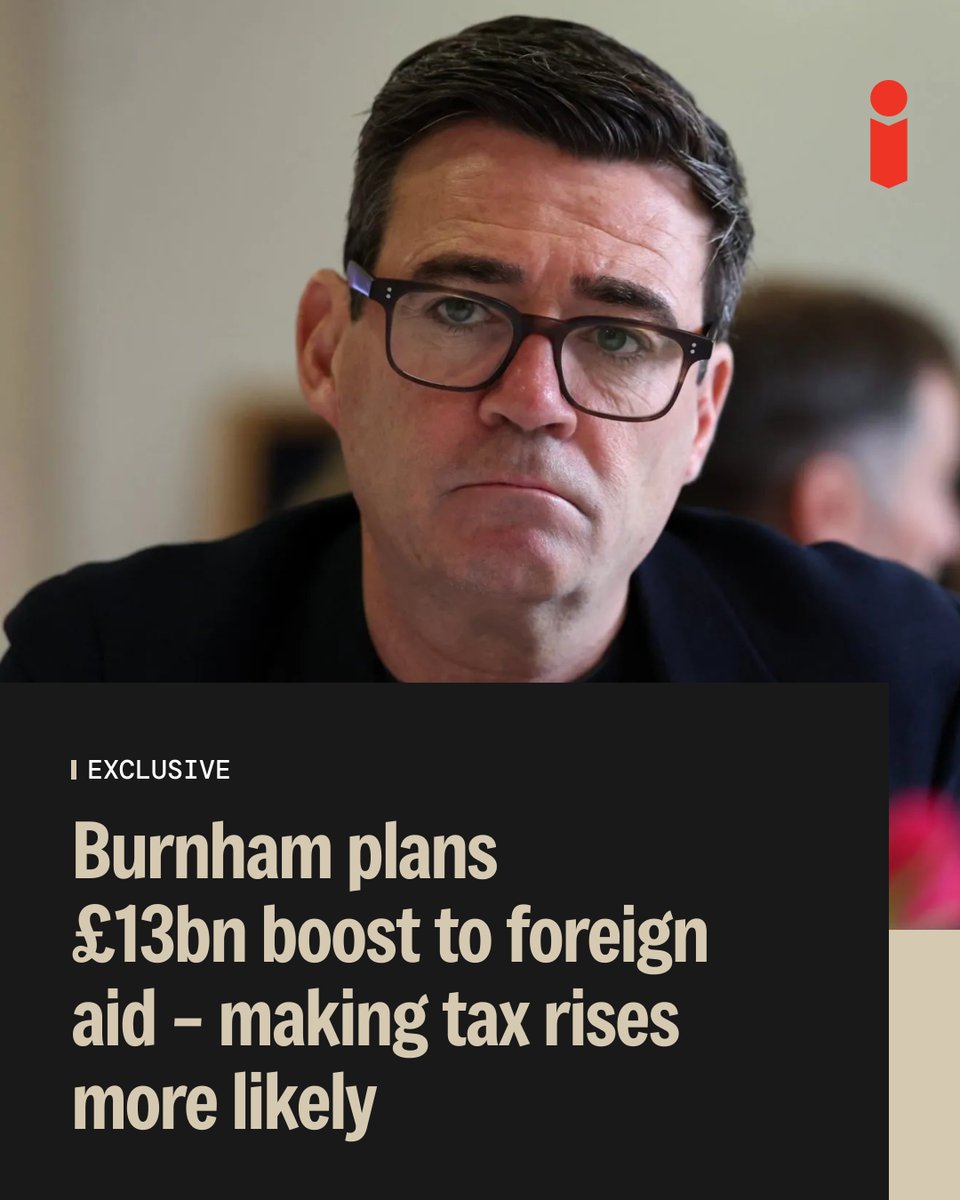
The Institute for Fiscal Studies has highlighted precisely this problem. Its analysis suggests that an increase in spending of this size cannot simply appear without consequences. If the Government chooses to spend more on foreign aid, it must either raise additional revenue, reduce expenditure in another area or borrow more money.
For many British taxpayers, the prospect of higher taxes is likely to be the most controversial aspect of the debate. Britain is already experiencing significant pressure on household finances, while the Government faces competing demands for money from the National Health Service, education, defence, social care and infrastructure.
This creates a fundamental political question: should Britain spend more helping poorer countries overseas when there are serious problems at home?
Supporters of foreign aid argue that the question should not be framed so simply. International aid can provide humanitarian assistance, healthcare, education, food security and development support in countries experiencing poverty or crisis. It can also serve Britain’s wider strategic interests by helping to promote stability and strengthening relationships with other countries.
From this perspective, foreign aid is not simply an act of generosity. A more stable and prosperous world can benefit Britain by reducing the conditions that contribute to conflict, displacement, disease and economic instability. Development programmes can also create stronger trading partners and diplomatic relationships.
Miliband has historically been a strong supporter of international development. His political approach places considerable emphasis on climate change, global development and international cooperation. Since becoming Foreign Secretary, he has indicated that Britain should work with international partners to tackle climate change, strengthen development partnerships and reform international institutions.
Burnham has also previously supported the 0.7 per cent international aid target. The proposal is therefore not necessarily a completely new political position for either politician. Rather, the current controversy concerns whether the Government should restore the target at a time when public finances remain under pressure.
Britain’s commitment to the 0.7 per cent target has changed significantly in recent years. Under the previous Conservative government, the target was reduced from 0.7 per cent to 0.5 per cent of gross national income. The Government subsequently announced plans for a further reduction to 0.3 per cent by 2027, with savings being used partly to support increased defence spending.
Labour had previously promised to restore spending to 0.7 per cent when economic circumstances permitted. The important phrase is therefore “when circumstances permit”. The central disagreement is not necessarily about whether foreign aid is valuable, but about when Britain can realistically afford to return to the higher target.
Critics argue that the country should prioritise domestic problems. Britain faces pressure on housing, healthcare, public transport and local government finances. The NHS in particular requires substantial investment, while many families continue to experience high living costs.
From this perspective, spending an additional £13 billion overseas may appear difficult to justify. Critics may argue that the Government should first ensure that British citizens have access to adequate healthcare, affordable housing and functioning public services.
Supporters respond that this creates a false choice. They argue that Britain can address domestic problems while maintaining an effective international development programme. The real issue, they say, is how the national budget is organised and which areas of spending provide the greatest long-term benefit.
There is also a wider economic argument. International development can sometimes reduce future costs by addressing problems before they become international crises. Investment in healthcare, education, agriculture and infrastructure can help countries become more stable and economically independent. In some circumstances, this may reduce the pressures that contribute to conflict or mass migration.
However, foreign aid is not automatically effective simply because money is spent. Questions about transparency, corruption, administration and whether projects actually achieve their intended objectives are legitimate. Governments have a responsibility to ensure that taxpayers’ money is spent responsibly, whether it is used domestically or overseas.
The £13 billion figure therefore needs careful interpretation. It represents an eventual difference between the planned lower aid level and the 0.7 per cent target under current economic projections. It does not mean that Burnham has announced an immediate £13 billion increase. Nor does it automatically mean that taxes will rise by £13 billion.
This distinction is important because political headlines can sometimes make complicated financial proposals appear more definite than they actually are. The available reporting indicates that Burnham and Miliband have privately supported finding a route back to the 0.7 per cent target, but no specific timetable for reaching it has been established.
The Government could therefore increase aid gradually. For example, it might increase the percentage over a number of years as economic growth improves. Such an approach would make the annual financial impact smaller and would allow ministers to review the country’s economic circumstances before each further increase.
Nevertheless, even a gradual programme would eventually require difficult decisions. If public spending remains under pressure, the Government may have to choose between competing priorities.
This is where the political consequences become particularly important. Burnham has presented himself as a politician focused on improving living standards and strengthening communities. His supporters may welcome his commitment to international development, while others could accuse the Government of prioritising overseas spending over domestic concerns.
The issue could also provide opportunities for opposition parties. Political movements that favour lower taxes and tighter immigration controls are likely to use the proposed aid increase as evidence that the Government’s priorities are wrong. They could argue that taxpayers should not face additional financial pressure to fund international programmes while British households are struggling.
On the other hand, supporters of international aid may argue that abandoning Britain’s global responsibilities would damage the country’s international reputation. Britain has historically played an important role in humanitarian assistance and international development. Reducing that role could weaken its influence in international organisations and relationships with developing countries.
The debate therefore reflects a broader question about Britain’s place in the world.
Should Britain concentrate primarily on domestic problems, or should it continue to play a major international role?
There is no simple answer. A government has responsibilities to its own citizens, but it also operates in an interconnected world. Problems such as climate change, pandemics, conflict and food insecurity do not stop at national borders.
The challenge for Burnham and Miliband will be to demonstrate that their international ambitions are compatible with responsible financial management. If they want to restore the 0.7 per cent target, they will need to explain clearly how they intend to pay for it and why the spending represents good value for taxpayers.
Transparency will therefore be essential. The Government should publish clear figures showing how much additional money would be required each year, which programmes would receive funding and what outcomes are expected. It should also explain how aid spending would interact with other priorities such as defence, healthcare and domestic development.
Ultimately, the controversy surrounding the proposed £13 billion increase is about more than foreign aid. It is about the choices governments must make when resources are limited.
Every pound spent by government has an opportunity cost. Spending more in one area means that money cannot simultaneously be spent somewhere else unless taxes or borrowing increase. That reality applies equally to foreign aid, the NHS, defence, housing and every other government programme.
The strongest argument for Burnham’s approach is that international development can produce humanitarian and strategic benefits that extend beyond Britain’s borders. The strongest criticism is that these benefits must be weighed against the immediate needs of people living in Britain.
The eventual decision will therefore test the Government’s priorities and its ability to balance compassion with fiscal responsibility.
For now, the £13 billion figure should be understood as an estimate of the eventual additional cost of restoring the 0.7 per cent target, rather than as an immediate spending commitment. There is also no confirmed announcement that taxes will rise specifically to finance the policy. What is clear is that any substantial increase in spending would have to be funded somehow.
The political argument is only beginning. Burnham and Miliband may believe that Britain has both a moral and strategic responsibility to increase international aid. Their critics will argue that the Government’s first responsibility should be to taxpayers and public services at home.
The final judgment will depend not only on the amount of money spent, but on whether that money produces meaningful results. If international aid saves lives, reduces instability and strengthens Britain’s global position, supporters will regard it as a worthwhile investment. If taxpayers see little evidence of success while facing higher taxes and declining services, opposition will inevitably grow.
The £13 billion question is therefore ultimately a question of priorities. Britain’s leaders must decide what kind of country they want to build, both at home and abroad, and then convince the public that their choices are financially sustainable.