

⚠️ SENSITIVE HISTORICAL CONTENT WARNING ⚠️
This post discusses the Nuremberg Trials, the death sentences that followed, and the U.S. Army executioner involved. It is shared solely for historical education and to document post-war legal outcomes. It does not glorify violence, promote hatred, or target any individual or group. These events are remembered to honor victims of Nazi crimes and to reinforce the importance of justice, human rights, and “Never Again.”
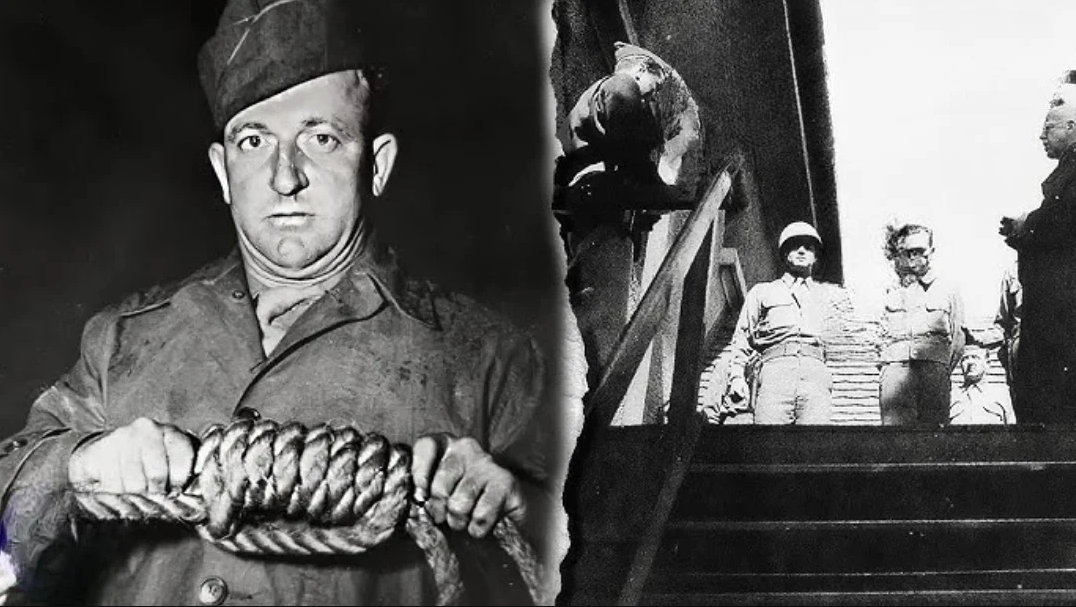
John C. Woods – The U.S. Army Executioner at Nuremberg (1946)
John Clarence Woods (1911–1950) was a U.S. Army master sergeant who served as an executioner and carried out the hangings of ten senior Nazi officials sentenced to death after the Nuremberg Trials.
Brief Background
Born in Wichita, Kansas, Woods experienced a difficult early life. He previously served in the U.S. Navy and later joined the U.S. Army during World War II. In 1944, he volunteered for duties as an Army executioner.
The Nuremberg Executions – 16 October 1946
The executions took place inside the prison gymnasium in Nuremberg. The ten individuals executed were:
Joachim von Ribbentrop · Wilhelm Keitel · Ernst Kaltenbrunner · Alfred Rosenberg · Hans Frank · Wilhelm Frick · Julius Streicher · Fritz Sauckel · Alfred Jodl · Arthur Seyss-Inquart
Some eyewitness reports and later historical discussions have questioned the technical quality of the procedures and whether they were carried out as intended. Interpretations vary: some writers attribute any problems to inexperience, while others suggest personal bias may have played a role. No single explanation is universally accepted.
After Nuremberg
After the Nuremberg executions, Woods continued working with the U.S. military. He died on 21 July 1950 in an electrical accident while repairing a light fixture on Eniwetok Atoll (Marshall Islands). Official records ruled the death accidental, though rumors have circulated over the years.
John C. Woods remains a debated figure in the history of post-war justice—often discussed both as part of the Nuremberg legacy and as a reminder of how contested the details of such events can become.
Sources often cited:
- Kingsbury Smith (International News Service reporter – eyewitness)
- U.S. National Archives – Nuremberg execution records
- Joseph E. Persico, Nuremberg: Infamy on Trial (1994)
- Richard Overy, Interrogations: The Nazi Elite in Allied Hands (2001)