

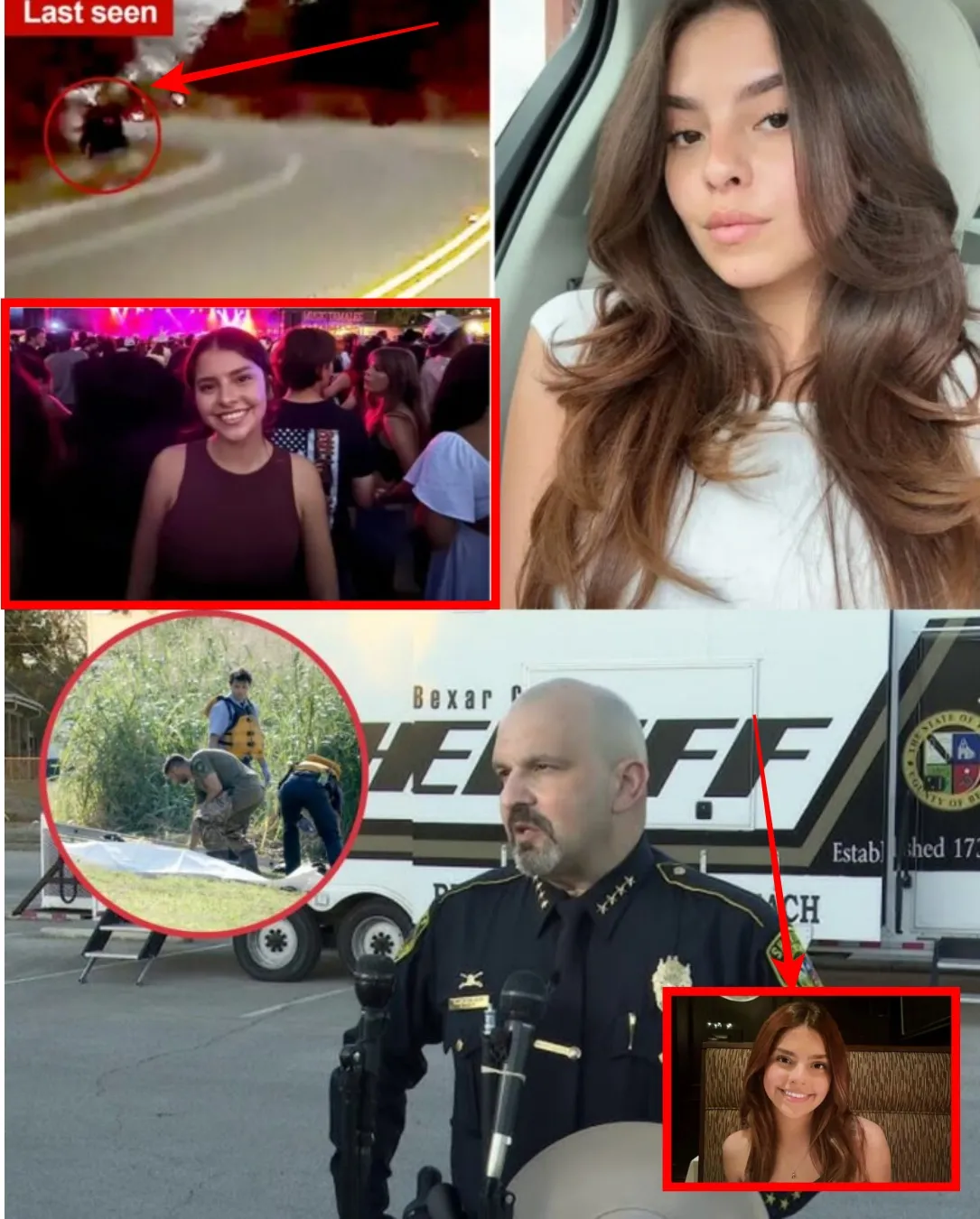
The early morning air in the San Antonio suburbs was crisp but quiet, carrying the faint scent of pine and dew across the sidewalks. For most residents, it was a normal Christmas Eve morning: lights twinkled in windows, children laughed inside homes, and neighbors exchanged greetings over fences and driveways. But for the Mendoza family, the day began with an unsettling void that would mark the start of a harrowing ordeal.
Camila Mendoza Olmos, 19, had stepped out of her family’s San Antonio-area home as part of her usual early morning routine, an activity that her mother, Nancy Mendoza, had come to expect. But unlike previous mornings, Camila never returned. Nancy noticed her daughter’s absence and immediately felt a pang of worry. It wasn’t long before the concern turned urgent, and she reached out to local authorities, reporting her daughter missing.
The initial search for Camila began in the immediate vicinity of the Mendoza home. Law enforcement officers canvassed the neighborhood, speaking with neighbors, checking vehicles, and reviewing the small paths and streets surrounding the property. Her cellphone was found in her bedroom, powered off, adding to the mystery. No signs of a struggle were immediately evident inside the home, and neighbors reported nothing unusual overnight.

Security footage offered the first clues in an otherwise opaque situation. A camera from a nearby home captured a figure resembling Camila, appearing to inspect her car for an unknown item. The brief clip ended abruptly, providing only a fleeting glimpse of her movements. Additional video footage, captured by a passerby’s dash camera, showed her walking along the side of a road, alone and seemingly untroubled, though the images were grainy and offered no explanation for her subsequent disappearance.
As hours turned into a tense day, police expanded their search radius, deploying officers and volunteers to cover parks, alleys, and wooded areas. Each sighting report, no matter how minor, was followed up meticulously. Yet, despite the growing concern, no trace of Camila could be located, and the community’s anxiety deepened.
The Bexar County Sheriff’s Office, under Sheriff Javier Salazar, coordinated with local agencies to implement a structured search plan. Teams of officers moved in a grid pattern, while volunteer organizations, families, and neighbors formed parallel search groups. The local media kept the story in the public eye, sharing photos and descriptions, urging anyone with information to come forward.
Nancy Mendoza and other family members became increasingly worried as hours passed. Alfonso Mendoza, Camila’s father, later described the frustration and fear of not knowing whether their daughter was lost, in danger, or had wandered off voluntarily. The family clung to hope but was haunted by every passing hour.
Sheriff Salazar emphasized the need to explore every possibility. He publicly stated that authorities were considering all avenues: the chance that Camila had left voluntarily, the possibility of self-harm, or the potential that someone else might have been involved. Investigators examined her social circles, recent interactions, and any incidents that might have influenced her actions.
Throughout the day, investigators followed up on all leads. They tracked potential sightings, cross-referenced phone activity, and examined online communications. Even minor details—messages, location check-ins, or interactions with acquaintances—were evaluated for potential significance. Yet the puzzle remained incomplete.
It was on a subsequent follow-up search, hours after the initial sweep, that a breakthrough occurred. Roughly 100 yards from the Mendoza home, authorities discovered Camila’s body, previously concealed by brush and foliage. The location had initially gone unnoticed due to the dense undergrowth, illustrating the challenges of searches in suburban yet semi-natural landscapes.
The discovery mobilized a significant response. Sheriff Salazar credited what he described as a “small army” of FBI agents, local police, and volunteers for the exhaustive search that ultimately led to finding Camila. The collaborative effort underscored the community’s dedication to solving the case and the persistence of law enforcement in leaving no stone unturned.
Once the body was recovered, the Bexar County Medical Examiner’s Office began a detailed examination. Camila’s identity was confirmed, and the initial medical analysis revealed that the cause of death was a gunshot wound to the head. After careful review, the manner of death was ruled as a suicide, a determination reached after evaluating the trajectory, surrounding evidence, and the circumstances of discovery.
Officials noted that Camila had previously exhibited signs of emotional distress, including depression and past “suicidal ideations,” as confirmed by Sheriff Salazar. Investigators acknowledged this history but remained committed to a thorough exploration of all possibilities, ensuring that the conclusion was based on evidence rather than assumption.
Family members, while devastated by the outcome, expressed the struggle of reconciling grief with unanswered questions. Alfonso Mendoza described his anguish, stating he was “devastated” but leaning on his faith to navigate the unimaginable loss. Nancy Mendoza spoke of the shock and the difficulty of processing both the sudden disappearance and the tragic confirmation.
Investigators continued to review the circumstances surrounding Camila’s last movements. Security camera footage, dashcam recordings, and neighborhood surveillance were examined frame by frame to establish her path and timeline. Each clue was cross-referenced against witness statements to create a coherent picture of her final hours.
Law enforcement emphasized that every aspect of the investigation had been documented meticulously. From the initial report to the recovery of the body, forensic teams ensured that evidence collection was methodical and thorough. Photographs, digital logs, and environmental assessments were cataloged for both clarity and future reference.
Despite the conclusion, authorities were careful to stress the importance of considering the broader context. Mental health challenges, the pressures of adolescence, and external influences were all part of the complex landscape that shaped Camila’s life and her choices. Specialists in adolescent psychology and crisis intervention were consulted to understand the dynamics at play.
Community response remained strong throughout the ordeal. Local support groups offered counseling for neighbors and peers, particularly those who had been close to Camila. Vigils and memorials were held, with candles, flowers, and personal messages left near her home, reflecting the collective mourning and the desire for closure.
Law enforcement continued to engage with the community, providing updates without compromising sensitive details. The emphasis was on transparency where possible, balanced against protecting the dignity of Camila and the emotional well-being of her family.
Investigators also revisited potential safety measures in the neighborhood, discussing lighting, surveillance, and community awareness to prevent future tragedies. While the case was now considered closed regarding foul play, the lessons learned prompted a renewed focus on adolescent mental health resources and family support.
Camila’s death highlighted the invisible struggles many young people face. Authorities and counselors underscored the importance of noticing signs of depression, providing timely intervention, and fostering open communication within families and schools.
The recovery of the body, the confirmation of identity, and the ruling of suicide provided factual closure, but the emotional wounds for family, friends, and the community would persist far longer. Each step of the investigation demonstrated a commitment to thoroughness, diligence, and care for those affected.
As the investigation concluded, the narrative of Camila Mendoza Olmos’ final hours became a somber reminder of the fragility of life and the importance of mental health awareness. Law enforcement, family, and community members continue to grapple with grief, while the public reflects on the tragedy and the lessons it imparts.
Even with the case formally closed, one lingering question remains: Could greater awareness or intervention have prevented this heartbreaking outcome? While the facts are now established, the human story behind the loss of Camila Mendoza Olmos leaves a haunting echo that reverberates far beyond her San Antonio home.