

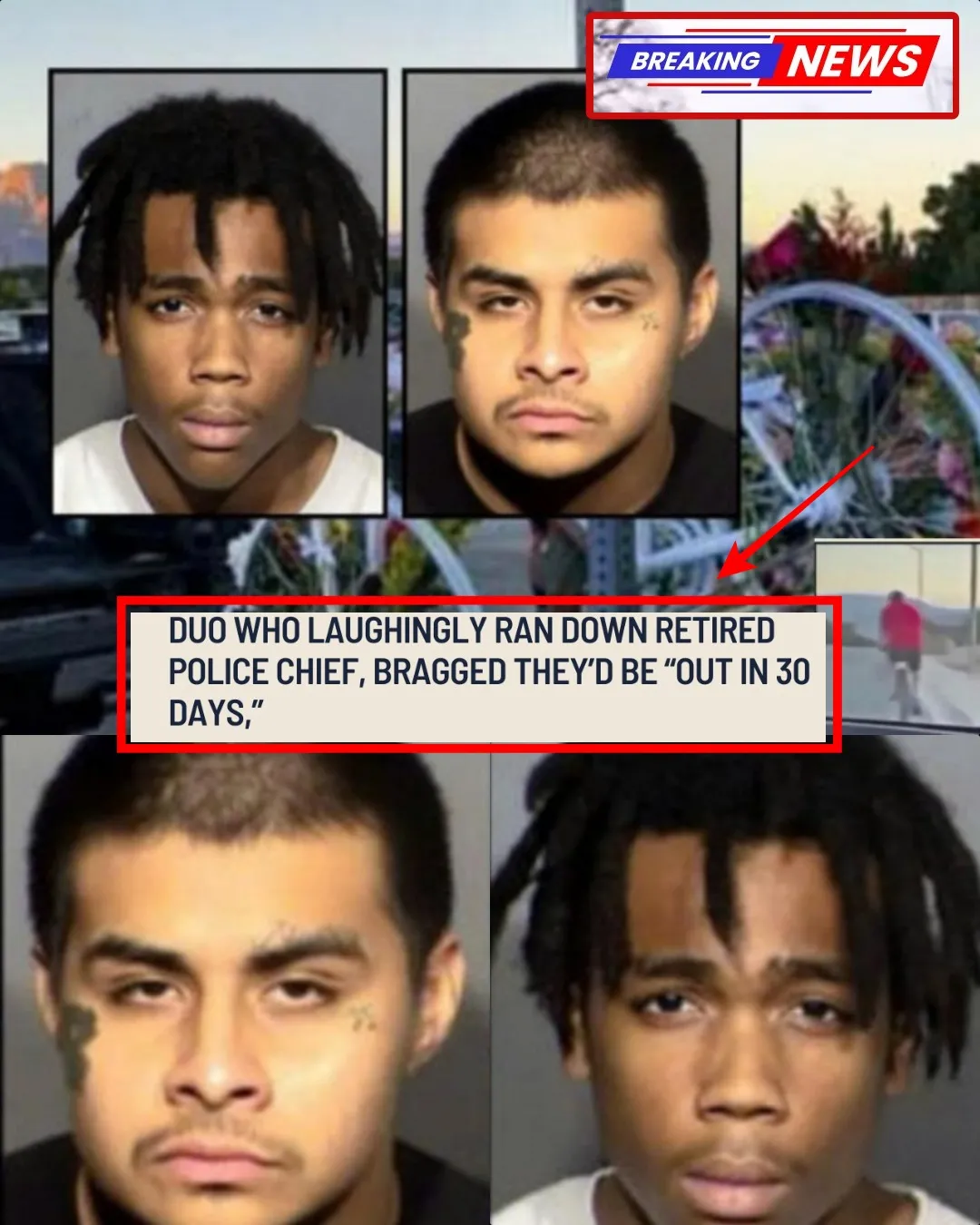
Andy Probst was 64 years old, a retired police chief, a husband, a friend, and a familiar figure in his neighborhood. Retirement had not slowed him down. He was known for staying active, often riding his bicycle through the northwest Las Vegas area, enjoying the routines of a life built on service, family, and stability. On the day he was killed in 2023, he was doing something ordinary—cycling along a roadway—unaware that he had been marked as a target by strangers who saw his presence as entertainment.
Jesus Ayala and Jzamir Keys were teenagers at the time of the crime, drifting through the city in stolen vehicles. Prosecutors later described their actions that day as a reckless and escalating crime spree. They were not acting out of desperation or fear, but out of thrill-seeking and bravado, chasing excitement without regard for the consequences or the people around them.
Earlier that day, the pair had stolen multiple cars. Surveillance footage and witness testimony would later show a pattern of dangerous driving and deliberate aggression. At one point, another cyclist was struck and injured. Rather than stopping or showing concern, the teens continued on, undeterred and emboldened by the absence of immediate consequences.
As the day went on, their behavior grew more brazen. Investigators believe the pair began actively looking for someone to hit. This was not a momentary lapse in judgment, but a decision that unfolded over time. When they spotted Andy Probst riding his bicycle, they saw not a human being, but an opportunity.
Probst was struck from behind with devastating force. The impact launched him nearly 100 feet from his bicycle. The violence of the collision left little chance for survival. Emergency responders arrived quickly, but the injuries were catastrophic. Andy Probst was pronounced dead, leaving behind a grieving family and a stunned community.
What elevated the case from tragic to horrifying was what came next. Video recovered by investigators showed Ayala and Keys laughing during the attack. The footage, filmed from inside the vehicle, captured not panic or regret, but amusement. Their voices, casual and mocking, revealed a complete absence of empathy in the moment they took a life.
The video spread rapidly once details became public, igniting widespread outrage. For many, it was not only the act itself, but the apparent enjoyment of it that was hardest to comprehend. The idea that a human death could be treated as a joke struck at the core of public trust and shared values.
When police tracked down and arrested the suspects, their behavior continued to shock. According to prosecutors, Jesus Ayala bragged during questioning that he expected little punishment. He reportedly said he believed he would receive a “slap on the wrist” and be released within 30 days. The statement suggested not only a lack of remorse, but a profound misunderstanding—or dismissal—of the seriousness of murder.
As the case moved through the court system, prosecutors laid out a detailed timeline of the day’s events. They emphasized that this was not an accident, nor a moment of panic. It was a deliberate act, preceded by hours of criminal behavior and followed by laughter and boasting.
The courtroom became a place of stark contrast. On one side sat the defendants, young, expressionless, and facing the consequences of choices made with chilling indifference. On the other side sat the family of Andy Probst, carrying visible grief, anger, and disbelief that a life could be taken so casually.
Probst’s widow addressed the court during sentencing, her words cutting through the legal language of the proceedings. She spoke of a future stolen—not just anniversaries and holidays, but quiet mornings, shared routines, and the comfort of growing old together. She described the sudden emptiness left behind, an absence that could never be filled.
Friends and former colleagues also spoke of Probst’s character. As a retired police chief, he had dedicated his career to public safety and community service. Even after retirement, he remained engaged, respected, and deeply valued by those who knew him. His death felt particularly cruel because it came after a lifetime of protecting others.
The judge did not mince words when delivering the sentence. Calling the crime “callous and egregious,” the court emphasized that the deliberate nature of the act demanded severe consequences. The laughter, the filming, and the lack of remorse weighed heavily in the decision.
Jesus Ayala was sentenced to 20 years to life in prison. Jzamir Keys received a sentence of 18 years to life. The terms ensure that both will spend decades behind bars before even being considered for release. The sentences reflected not only punishment, but a need to protect the public from individuals who demonstrated such extreme disregard for life.
Still, the sentencing did little to quiet the larger questions surrounding the case. How did two teenagers reach a point where killing a stranger felt entertaining? What influences, environments, or failures contributed to such a mindset? And what warning signs were missed along the way?
Community members expressed fear and frustration, not only about violent crime, but about what the case revealed regarding values and accountability. Many worried about a growing culture of desensitization, where online attention, shock value, and viral notoriety overshadow empathy and moral boundaries.
The case also reignited discussions about juvenile crime and adult consequences. While Ayala and Keys were young, the court made clear that age could not excuse intentional acts of lethal violence. The sentences underscored a message that deliberate cruelty carries irreversible consequences, regardless of youth.
For Las Vegas, the crime became a grim reminder that violence does not always come from desperation or rage. Sometimes, it comes from boredom, entitlement, and a belief that nothing truly matters. That realization unsettled residents as much as the crime itself.
In the months following the sentencing, memorials continued to honor Andy Probst’s life. Cyclists organized rides in his memory. Former colleagues shared stories of his leadership and kindness. These acts of remembrance stood in stark contrast to the senselessness of his death.
The legacy of the case is complex. On one level, it represents justice served through accountability and punishment. On another, it exposes fractures in how society addresses youth behavior, moral development, and the consequences of unchecked recklessness.
For the Probst family, life will never return to what it was. No sentence can restore what was lost. But the court’s decision affirmed that Andy’s life mattered, that his death was not meaningless, and that the cruelty inflicted upon him would not be minimized.
The case remains a warning—about what happens when empathy erodes, when violence is trivialized, and when individuals believe they are untouchable. It challenges communities to look beyond punishment and ask deeper questions about prevention, responsibility, and the values being passed on to the next generation.
In the end, the killing of Andreas “Andy” Probst is remembered not only as a tragic crime, but as a moment that forced an uncomfortable reckoning. It exposed the devastating consequences of treating human life as disposable, and it left a lasting mark on a city struggling to understand how such cruelty could unfold in plain sight.