

In the shadow of the Holocaust, where humanity’s darkest impulses were unleashed, figures like Gertrude Saurer emerge as chilling reminders of ordinary people transformed into instruments of terror. Known among survivors for her sadistic cruelty, Saurer served as a guard (Aufseherin) in the Nazi concentration camp system during World War II. She was one of many women who, under the banner of the SS, implemented the regime’s genocidal policies at Bergen-Belsen, a camp synonymous with unimaginable suffering. Convicted at the Belsen Trials in 1945 and sentenced to 10 years in prison, Saurer’s story reveals women’s complicity in the Nazi death machine. This article explores her background, wartime actions, trial, and legacy, offering buffs of dark history a compelling and detailed look at one of the least-known but deeply disturbing perpetrators.
Early life and path to the SS
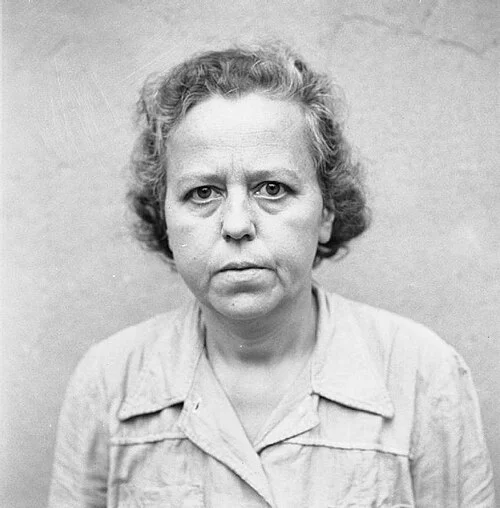
Little is documented about Gertrude Saurer’s early years, a trait common to many low-ranking SS members whose personal histories were overshadowed by their crimes. Born in early 20th-century Germany, Saurer likely came from a working-class background, like most guards recruited into the SS-Gefolge, the women’s auxiliary organization that supported the SS-Totenkopfverbände (Death’s Head Units). The Nazi regime’s expansion of the concentration camp system created a desperate need for guards, especially as men were diverted to the front.
In 1939, with the outbreak of war, women like Saurer were conscripted or volunteered for service. Training began at Ravensbrück, the main women’s concentration camp north of Berlin, where recruits were indoctrinated in Nazi ideology, anti-Semitic propaganda, and brutal repression tactics. Films like Jud Süß were screened to foment hatred, and guards were taught to view prisoners—Jews, Roma, political dissidents, and others—as subhuman. Saurer, like her peers, would have been convinced that her role was essential to the “racial purity” of the Reich. Historical estimates suggest that approximately 3,500 women served as Aufseherinnen in the camps, but Saurer’s path took her to Bergen-Belsen, where her reputation for violence quickly solidified.
Service at Bergen-Belsen: A Reign of Sadism
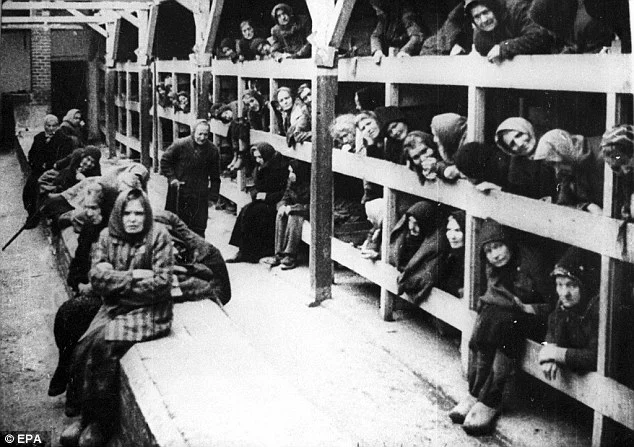
Bergen-Belsen, founded in 1940 as a prison camp, transformed into a nightmarish detention center for Jews and other “undesirables” by 1943. Under commanders like Josef Kramer, the camp swelled to tens of thousands of prisoners, causing widespread disease, starvation, and death. Saurer arrived as an Aufseherin in 1944, tasked with supervising the prisoners in labor detail, selecting them for the gas chambers (although Belsen had no gas chambers on-site, it facilitated transportation to the extermination camps), and enforcing daily SS discipline.
Survivor testimonies paint Saurer as a particularly ferocious guard, which earned her a place among the camp’s most feared overseers. She was known for using whips, boots, and fists to punish inmates for even the smallest infractions: slackness, perceived insolence, or even exhaustion from malnutrition. One account describes her beating women until they collapsed, laughing as she did so, embodying the sadism that permeated the female guard corps. Unlike some guards who claimed coercion, Saurer’s actions suggest a zest for her role; she participated in “selections,” deciding who should live or die based on arbitrary whims, and she is said to have stolen valuables from the dead, a common but egregious abuse.
As the war turned against Germany, conditions at Belsen deteriorated catastrophically. By early 1945, over 50,000 prisoners were crammed into squalor, with typhus and dysentery killing thousands each week. Saurer remained at her post, enforcing orders amid the chaos. When British forces liberated the camp on April 15, 1945, they found 13,000 unburied corpses and dying survivors. Saurer, along with other guards, was immediately arrested, and her uniform became a symbol of the horror unearthed.
The Belsen Trial: Justice and Reckoning
The Belsen Trials, held from September 1945 to November 1946 in Lüneburg, occupied Germany, were one of the first major postwar trials of Nazi personnel. Conducted by British military authorities, they indicted 45 defendants, including 16 women, for war crimes committed at Bergen-Belsen and its associated concentration camps. Saurer was among the female guards on trial, accused of crimes against humanity, including the mistreatment, torture, and murder of prisoners.
The proceedings were marked by harrowing testimonies from survivors. Witnesses recounted Saurer’s beatings, her role in forced labor that led to death, and her indifference to the starving and sick. Unlike high-profile defendants such as Irma Grese (nicknamed the “Hyena of Auschwitz” and hanged) or Elisabeth Volkenrath, Saurer was not a high-level overseer, but her direct involvement in the atrocities was undeniable. She denied the charges, claiming she was simply following orders—a defense shared by many—but evidence, including camp records and eyewitness accounts, proved otherwise.
On November 17, 1945, Saurer was found guilty and sentenced to 10 years in prison. This was a relatively severe sentence compared to some male guards who received lighter sentences, demonstrating the court’s outrage at female complicity. She served her sentence in a British prison, part of a broader effort to hold the SS accountable. The trial set a precedent for future Nuremberg trials, highlighting that even low-level officials were responsible for the Holocaust machine.
Life and historical legacy in the post-war period
Released around 1955 after serving her full sentence, Saurer faded into obscurity, much like many surviving guards who reintegrated into West German society thanks to denazification programs. There are no records of her second marriage or of any public remorse; she likely spent the rest of her days in quiet anonymity, dying toward the end of the 20th century. Her case highlights the unequal justice of the postwar era: while some, like Grese, faced execution, others escaped closer scrutiny due to lost evidence or Cold War priorities.
Saurer’s legacy endures as a shining example of how the Nazi system corrupted women, transforming them from civilians into executioners. Historians like Wendy Lower in Hitler’s Furies argue that female guards were not anomalies, but the product of indoctrination and opportunity, challenging postwar myths that viewed women as passive victims. Today, her story serves as a cautionary tale in Holocaust education, reminding us that evil thrives when ordinary people abdicate morality.
Gertrude Saurer’s 10-year prison sentence for her crimes at Bergen-Belsen was a small measure of justice for the thousands she tormented. Her story, intertwined with that of the women who perpetrated the Holocaust, forces us to confront uncomfortable truths: brutality knows no gender, and complicity can have many faces. As we delve deeper into these stories on platforms like Facebook, may it fuel our commitment to memory and vigilance, ensuring such darkness never returns. Share your thoughts: How do stories like Saurer’s change your view of war?