

When the concentration camps across Europe were liberated in the spring and summer of 1945, many journalists, doctors, and Allied soldiers thought they were witnessing a scene of joy. But what they saw before their eyes were not cries of victory—but bodies reduced to skin and bones, eyes too weary to shed tears, and trembling steps struggling to find meaning in life.
For most survivors, the day of freedom wasn’t marked by fireworks or flags. It opened with a profound silence, difficult to describe: the silence of those who have seen too much death, too much separation, to the point that even emotions had become alien.
For years, their bodies no longer belonged to them. They were forced to march through the snow, to stand in line until exhaustion during roll call, to work until they collapsed. Walking wasn’t a natural gesture—it was an instrument of domination. A day without being able to control one’s steps was a day when even one’s soul remained chained.
That’s why, when the camp’s metal gates finally opened, getting up and walking again wasn’t just a physical act. It was a gesture that sounded like a declaration: “I’m still here. I’m still human.”
The first step: when freedom is still far away
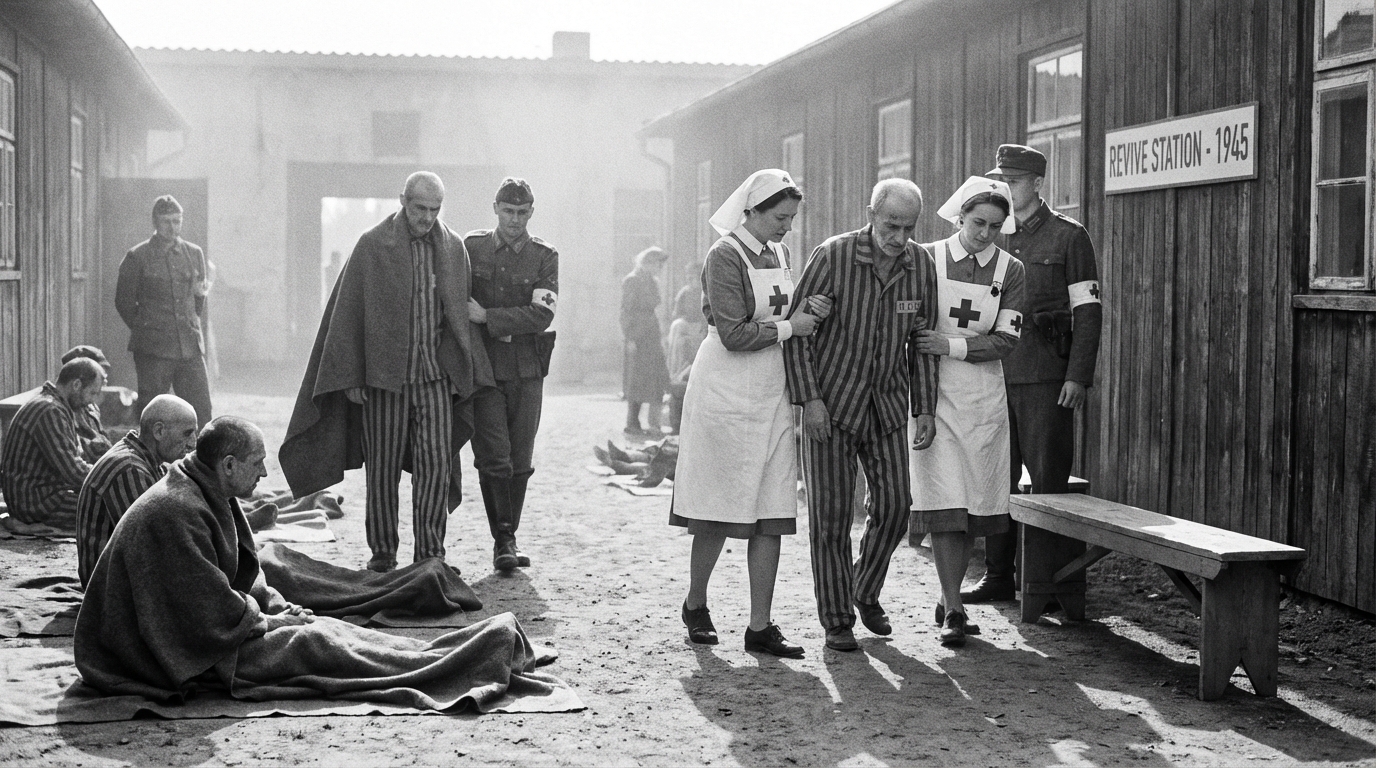
After liberation, military medical teams and the Red Cross began placing survivors in emergency recovery programs. Many were too weak to swallow solid food. Some could not stand, and some were unable to take even a single step without support.
For those who still had some strength, the doctors asked them to try walking a few meters a day—slowly, carefully, and sometimes only in the infirmary courtyard. To those observing from the outside, it might have seemed like a simple rehabilitation exercise. But for one survivor, it was the first time in years he could move without being shouted at, without the eyes of those watching, without a gun pointed at his back.
Those first few meters were a form of freedom that many had thought they would never touch again.
The body returns before the mind
The liberation of the body does not coincide with the liberation of those who live inside that body.
The survivors bore wounds that the medicine of the time couldn’t yet name. Many couldn’t sleep without hearing the footsteps of the night guards; they couldn’t eat unless they had to share their rations; they couldn’t believe they had the right to refuse an order. They had to relearn seemingly simple things:
-
eat when you are hungry
-
sleep when you are tired
-
speak when you want
-
to remain silent when you don’t want to explain
-
and, above all: live without fear

The steps of dignity
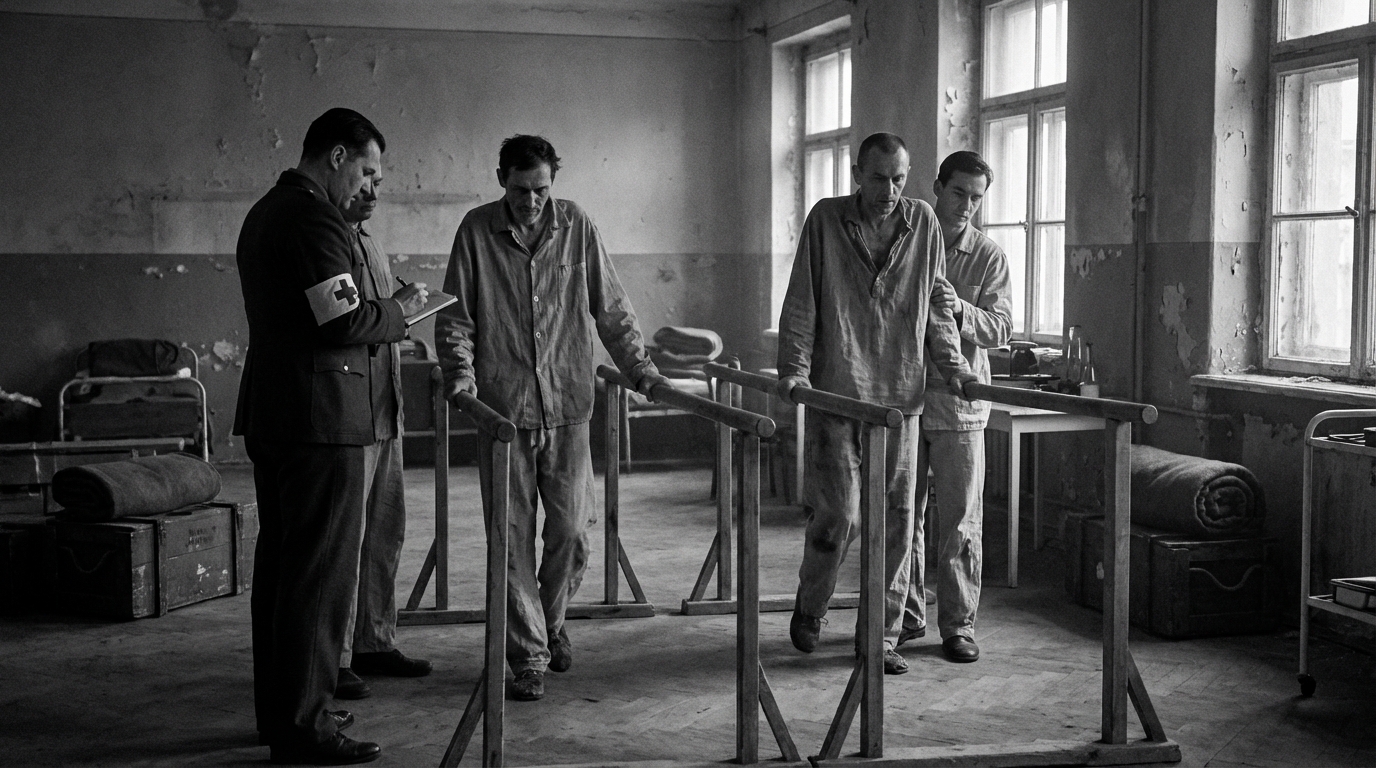
In small groups, those recovering leaned on each other, on a stick, a wall, or makeshift planks to practice walking. Some cried from pain, some from joy, and some didn’t cry at all—because they’d been too long without an emotion to name.
Yet, every step — even a few centimeters — carried with it a silent message:
“This body is mine.”
“No one has the right to command it anymore.”
Throughout history, freedom is often depicted through treaties, generals, and signatures on documents. But for those who lived in a concentration camp, freedom existed in smaller, more delicate, more human things: walking without being pushed.
Freedom doesn’t come in a single day
After the war, many historians described this path to survival as a three-tiered process:
-
Liberation of the Body — When the Camp Opens Its Gates
-
Liberation of the Spirit — When Fear Leaves the Body
-
Liberating Memory — When the Survivor Dares to Tell His Story
For many, the third level took decades. Some never spoke. Some spoke only as elders. Some had no one left to talk to.
And that’s why we’re telling our story today—not to reopen the wound, but to restore what that system had tried to steal: dignity and a name.
Conclusion
We share this story to remember that:
Rebirth is not a moment, but a journey.
And that journey begins with a small, trembling, but free step.
Even when a human being is at his most fragile, if he can still take a step forward, he has already won.