
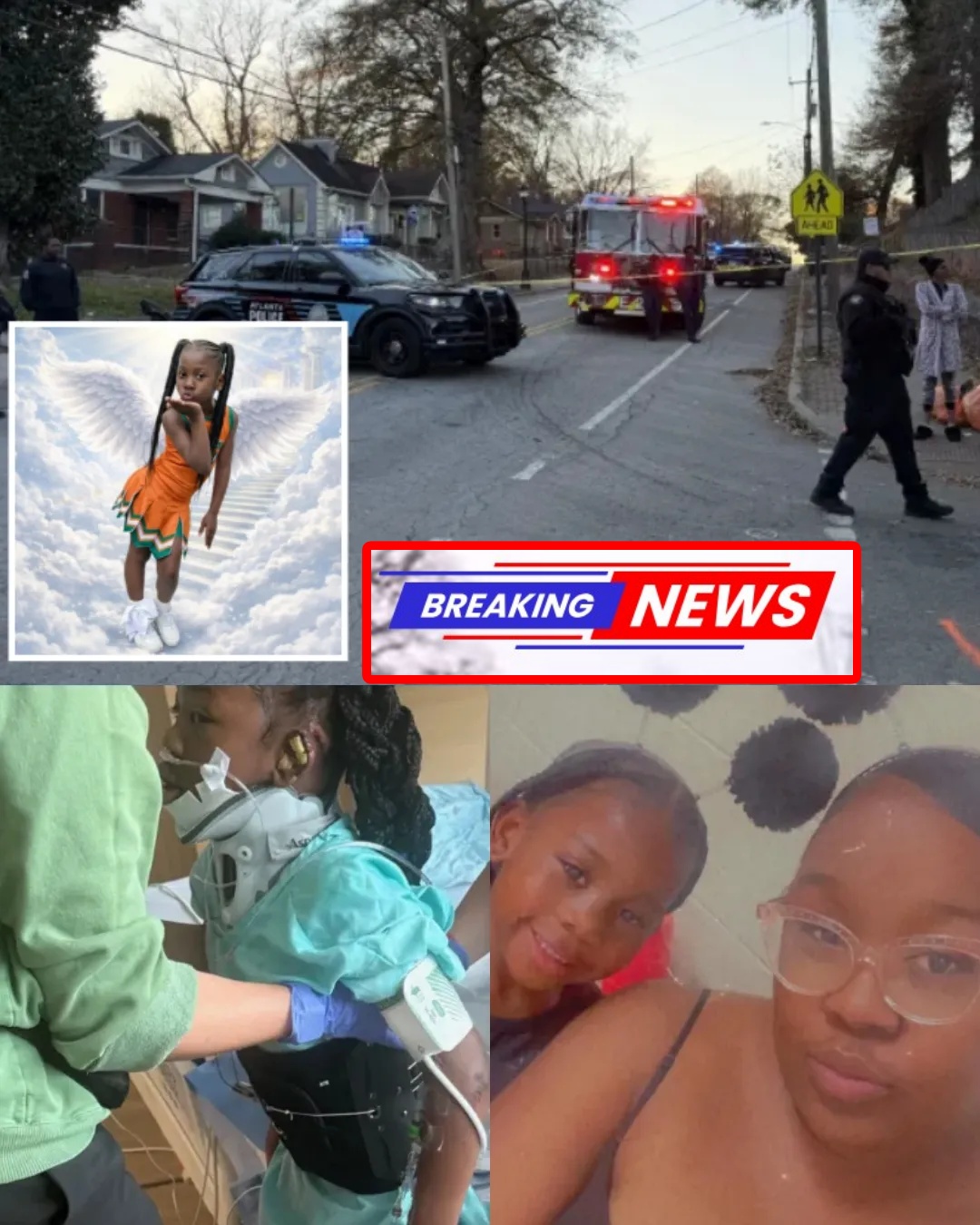
The streets of northwest Atlanta were calm that Friday afternoon, carrying the familiar rhythm of early December. School had just let out. Children drifted home with backpacks slung low, neighbors exchanged brief greetings, and the quiet hum of daily life settled comfortably over the neighborhood. It was the kind of ordinary moment that rarely registers as special—until it is gone.
For the Frazier family, that sense of normalcy ended in a single, devastating instant.
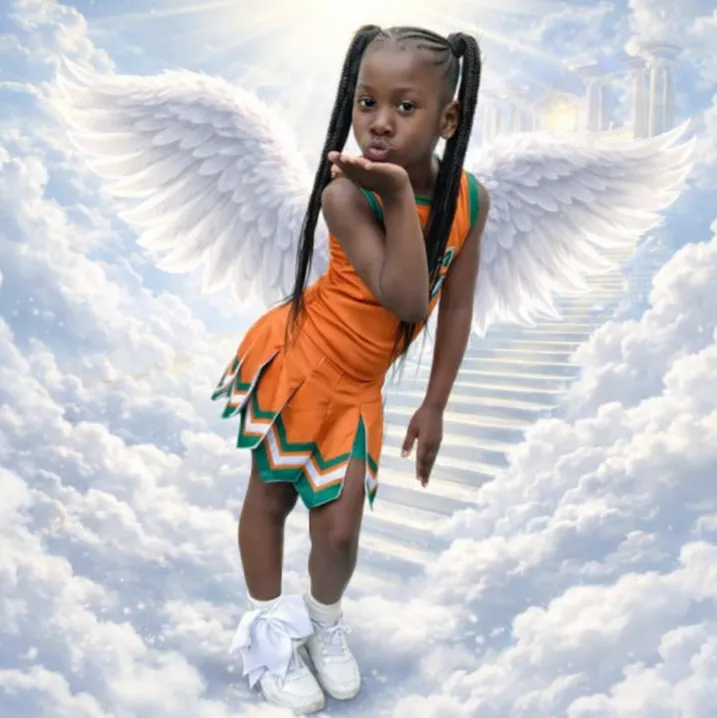
Eight-year-old Kayla Frazier, a bright and energetic second-grader, had just been dropped off at home by her grandmother after school. Nothing felt unusual. Children gathered outside, voices overlapping with laughter and plans for the rest of the afternoon. It was childhood unfolding exactly as it should—carefree, loud, and full of possibility.
Then Kayla stepped into the street.
As she crossed with her friends toward a nearby house, most vehicles slowed, responding to the presence of children in the crosswalk. One car did not. In a matter of seconds, Kayla was struck and thrown several feet down the road. The sound, witnesses later said, was unmistakable. Panic followed instantly.
The moment was captured on video by a nearby resident, but no recording can fully convey the shock that rippled through the neighborhood. What had been a routine afternoon in
Atlanta became a scene of horror, confusion, and fear.
Police officers arrived just before 4 p.m. at the intersection of Joseph E. Boone Boulevard NW and Cairo Street NW, where Kayla lay injured on the pavement. Initial reports mistakenly listed her age as ten. Her mother, Tia Lawson, would later correct that detail with quiet clarity: Kayla was only eight years old.
Emergency responders moved quickly. Neighbors stood frozen, some crying, others praying, all watching as a child’s life hung in the balance. Kayla was rushed to Children’s Healthcare of Atlanta, where doctors began an urgent fight to stabilize her.
For Tia Lawson, the hours that followed blurred into one long stretch of fear. Sitting beside her daughter’s hospital bed, she struggled to process how quickly everything had changed. “It’s devastating,” she said softly. “Kayla is usually so full of energy—laughing, playing, always moving. Seeing her like this is heartbreaking.”

Doctors soon confirmed the severity of Kayla’s injuries. She had suffered significant spinal trauma, one of the most complex and delicate injuries a child can endure. Within days, she underwent two surgeries. Each procedure carried risks, and each recovery milestone felt both hopeful and terrifying.
Spinal injuries in children require extraordinary care. Physicians explained that Kayla would need constant monitoring, specialized treatment, and an extended period of rehabilitation. Physical therapy, occupational therapy, and emotional counseling would all become part of her life—at an age when most children are thinking only about homework, playdates, and Christmas lists.
For Lawson, the emotional toll has been overwhelming. Every day brings new anxieties: waiting for test results, watching for signs of progress, trying to remain strong while fear lingers beneath the surface. “It’s hard to watch your child go through this,” she said. “But we’re holding onto hope. Kayla is strong.”
Kayla’s grandmother, who had dropped her off just minutes before the accident, carries her own quiet burden. Like many family members in such tragedies, she replays the moment endlessly, wondering if anything could have been done differently. Those questions have no answers, only weight.

As Kayla remained hospitalized, the reality of the approaching holidays added another layer of pain. Christmas, a time usually filled with decorations, family gatherings, and excitement, would be spent inside a hospital room. Lawson faced the heartbreaking task of explaining to an eight-year-old why she couldn’t go home, why she couldn’t run or play, and why her body suddenly felt unfamiliar.
“We’re trying to make Christmas special for her,” Lawson said. Holiday cards line the walls. Small decorations hang near the bed. Familiar toys offer comfort in an otherwise sterile environment. Nurses and doctors do what they can to soften the experience, but the loss of normal childhood joy is impossible to ignore.
Outside the hospital, the northwest Atlanta community responded with compassion. Neighbors brought meals. Friends offered rides and childcare. Social media filled with messages of support, prayers, and calls for accountability. Vigils were held. Candles were lit. Kayla’s name traveled far beyond the intersection where her life changed.
Schools in the area addressed pedestrian safety, reminding families and drivers alike that children are especially vulnerable. Community leaders and advocates renewed calls for better signage, improved crosswalk visibility, speed control measures, and stricter enforcement in residential neighborhoods. Kayla’s accident became part of a larger conversation—one born from pain but driven by a desire to prevent future tragedy.

For Lawson, that awareness matters. “Please slow down,” she urged drivers. “Pay attention. Be aware of children crossing streets. A moment of carelessness can change lives forever.”
Yet even as she speaks about prevention, Lawson remains deeply grateful. She credits medical staff, neighbors, and even strangers for helping her family endure the hardest days of their lives. “The kindness we’ve received reminds us that we’re not alone,” she said.
Through it all, Kayla continues to show a quiet resilience that surprises everyone around her. Despite pain and uncertainty, there are moments of laughter. Moments of curiosity. Moments when her spirit shines through the hospital room. “She’s determined,” her mother said. “She’s strong.”
Doctors caution that recovery will be long. Progress may come slowly. But each small improvement—a slight movement, a successful therapy session, a pain-free hour—is celebrated as a victory. Rehabilitation will extend well beyond the holidays, requiring patience, support, and unwavering encouragement.
For parents, watching a child endure trauma reshapes everything. Lawson reflects often on how quickly life can change. “One moment, everything feels normal,” she said. “The next, you’re in a hospital, praying your child will be okay.”
In that reality, the community has found both sorrow and unity. Neighbors now drive slower. Parents hold their children tighter. Streets feel different—more fragile, more personal.
Kayla Frazier’s story is not just about an accident. It is about vulnerability, responsibility, and the power of collective care. It is a reminder that childhood should be protected fiercely, and that attention—something as simple as slowing down—can mean the difference between safety and tragedy.
This Christmas will not look the way Kayla or her family imagined. But within hospital walls, surrounded by love, determination, and hope, an eight-year-old girl continues to fight her way back toward the life that was interrupted.
And in northwest Atlanta, her story lingers—quietly urging everyone who passes through those streets to remember how precious, and how fragile, a single moment can be.