
In the days after the December 14 terror attack, Bondi Beach no longer felt like a place of leisure or laughter.
The shoreline, once synonymous with summer mornings and careless freedom, transformed into something quieter and heavier.
Flowers lined the walkways.
Candles flickered against the ocean breeze.
Handwritten notes lay pressed beneath stones, weighted down so grief itself would not blow away.
What had once been a postcard image of Australia became a living memorial.
A place where strangers stopped, stood still, and tried to understand how violence had reached a space that always felt open and safe.
For many families, the pain of that day arrived suddenly and irrevocably, cutting life into a clean before and after.
For others, the suffering did not end with the sound of gunfire echoing along the sand.
It followed them into hospital corridors, into operating rooms filled with harsh light and measured voices.
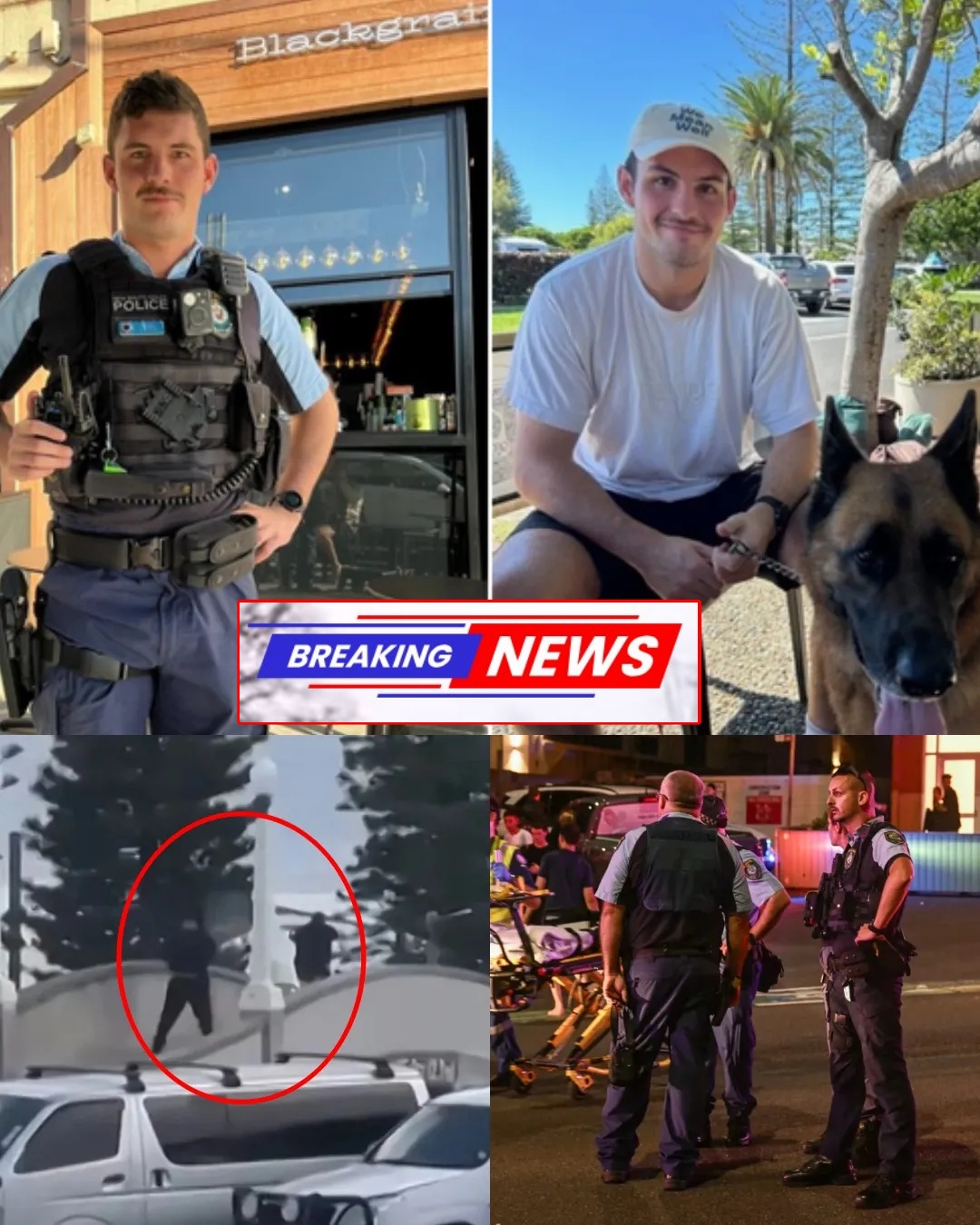
Among them was the family of Scott Dyson, a 25-year-old New South Wales Police constable whose life was forever altered while responding to the attack.
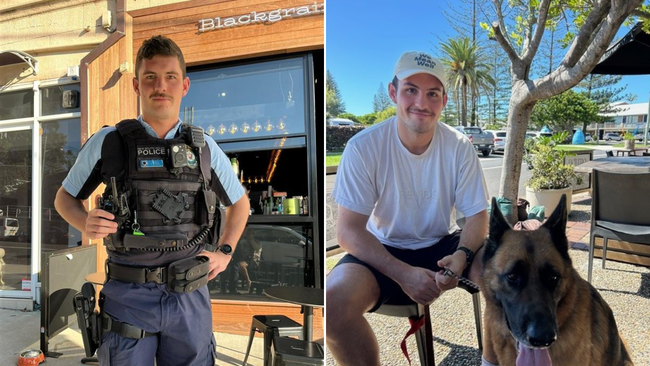
Scott was critically injured doing exactly what he had trained for and believed in.
Running toward danger when others ran away.
Protecting the public in a moment of terror where seconds mattered and fear spread faster than words.
The bullets that tore through Bondi Beach did not distinguish between bystanders and first responders.
They carved devastation into everything they touched, leaving behind consequences that would stretch far beyond that single afternoon by the sea.
In a somber update released by his family, the reality of Scott’s condition was laid bare.
Since the shooting, he has undergone surgeries almost daily, a relentless cycle of procedures aimed at saving his life and rebuilding what violence had shattered.
Each operation marks both progress and uncertainty, a fragile balance between hope and fear.
Earlier this week, there was a moment the family will never forget.
Scott emerged from a medically induced coma.
He opened his eyes to a world that no longer looks the way it once did.
For his parents, it was a milestone filled with relief, terror, and overwhelming emotion, all colliding at once.

Waking up, however, was not the end of the battle.
It was the beginning of a long and arduous recovery that doctors warn could take years.
The injuries he sustained were severe, and the road ahead remains uncertain, winding through pain management, rehabilitation, and emotional healing.
Hospital rooms have become the family’s entire universe.
Days are measured in surgical schedules, specialist consultations, and careful monitoring of vital signs.
Nights are spent waiting for updates, clinging to small improvements, and bracing for setbacks that arrive without warning.
Scott’s parents speak in quiet, measured words that barely contain the weight they carry.
They describe exhaustion that seeps into the bones, paired with gratitude that their son is still alive.
Hope, they say, now exists in fragments, found in the smallest signs of progress.
A movement of a hand.
A steady heartbeat.
A moment of awareness that reminds them he is still here.
The December 14 attack itself has been etched into the nation’s memory.

Fifteen lives were lost in an act of violence that shattered the sense of safety in one of Australia’s most iconic public spaces.
Dozens more were injured, their futures abruptly redirected by a single afternoon they never saw coming.
For first responders like Scott, the impact was doubled.
They confronted chaos head-on, moving toward screams and danger rather than away from them.
In doing so, they placed themselves directly in harm’s way, testing a commitment that most people will never be asked to prove.
Colleagues from the New South Wales Police Force describe Scott as calm, dedicated, and deeply committed to service.
At just 25, he was still early in his career, full of ambition and pride in the uniform he wore.
That uniform now carries a deeper meaning in the public imagination.
It is no longer only a symbol of authority.
It has become a symbol of sacrifice.
Across Sydney, vigils have continued in the weeks following the attack.
Strangers stand shoulder to shoulder, united by grief and a shared refusal to let the victims fade into statistics.
Scott’s name is often spoken among them, a reminder that survival does not mean the absence of suffering.

Mental health professionals warn that recovery from such trauma extends far beyond physical wounds.
Survivors and first responders alike may carry psychological scars that remain long after the media moves on.
Flashbacks, anxiety, and survivor’s guilt often surface quietly, reshaping lives from the inside out.
For Scott’s family, those concerns loom alongside the immediate medical crisis.
They understand that healing will require more than surgeries.
It will demand time, therapy, patience, and unwavering support.
The man who ran onto Bondi Beach on December 14 will not be the same man who eventually leaves the hospital.
Yet within that reality lives an undeniable pride.
Pride in Scott’s courage.
Pride in his refusal to hesitate when others were in danger.
Pride in knowing that his actions may have prevented even greater loss of life on that beach.
The public response has been immense.
Messages of support, donations, and letters have poured in from across Australia and beyond.
Many come from people who have never met Scott, yet feel connected to him through shared humanity and gratitude.
His family says those messages matter more than words can express.
They serve as reminders that Scott’s sacrifice has not gone unnoticed.

In moments of despair, they become lifelines, proof that compassion still exists even after horror.
Beyond the hospital walls, a broader conversation has taken hold.
Questions about public safety, extremism, and emergency response are being asked at every level of government.
But for families like Scott’s, those debates feel distant and abstract.
They are not thinking in terms of policy or headlines.
They are thinking about infection risks, pain levels, and whether today’s surgery will bring progress or complications.
Their world has narrowed to a hospital ward, even as the nation searches for meaning.
Doctors remain cautiously optimistic.
They note that Scott’s youth and physical strength work in his favor, even as they acknowledge the severity of his injuries.
Recovery, they emphasize, will not be linear.
There will be steps forward followed by sudden setbacks.
Victories so small they might seem insignificant to outsiders.
But to Scott and his family, each one will be monumental.
As weeks turn into months, the story of the Bondi Beach attack will continue to unfold.
Investigations and court proceedings will provide answers about how and why it happened.
None of them, however, will fully capture the human cost.

That cost lives in hospital charts and sleepless nights.
It lives in families learning to be patient with uncertainty.
It lives in Scott Dyson’s ongoing fight to heal.
For now, Scott remains under constant medical care.
Surgeries continue, one after another, each representing both survival and sacrifice.
His family waits, hopeful but realistic, sustained by love and resilience.
They know the road ahead will be long.
They also know that Scott has already defied the odds simply by being alive.
And in that truth, they find the strength to face whatever comes next.