
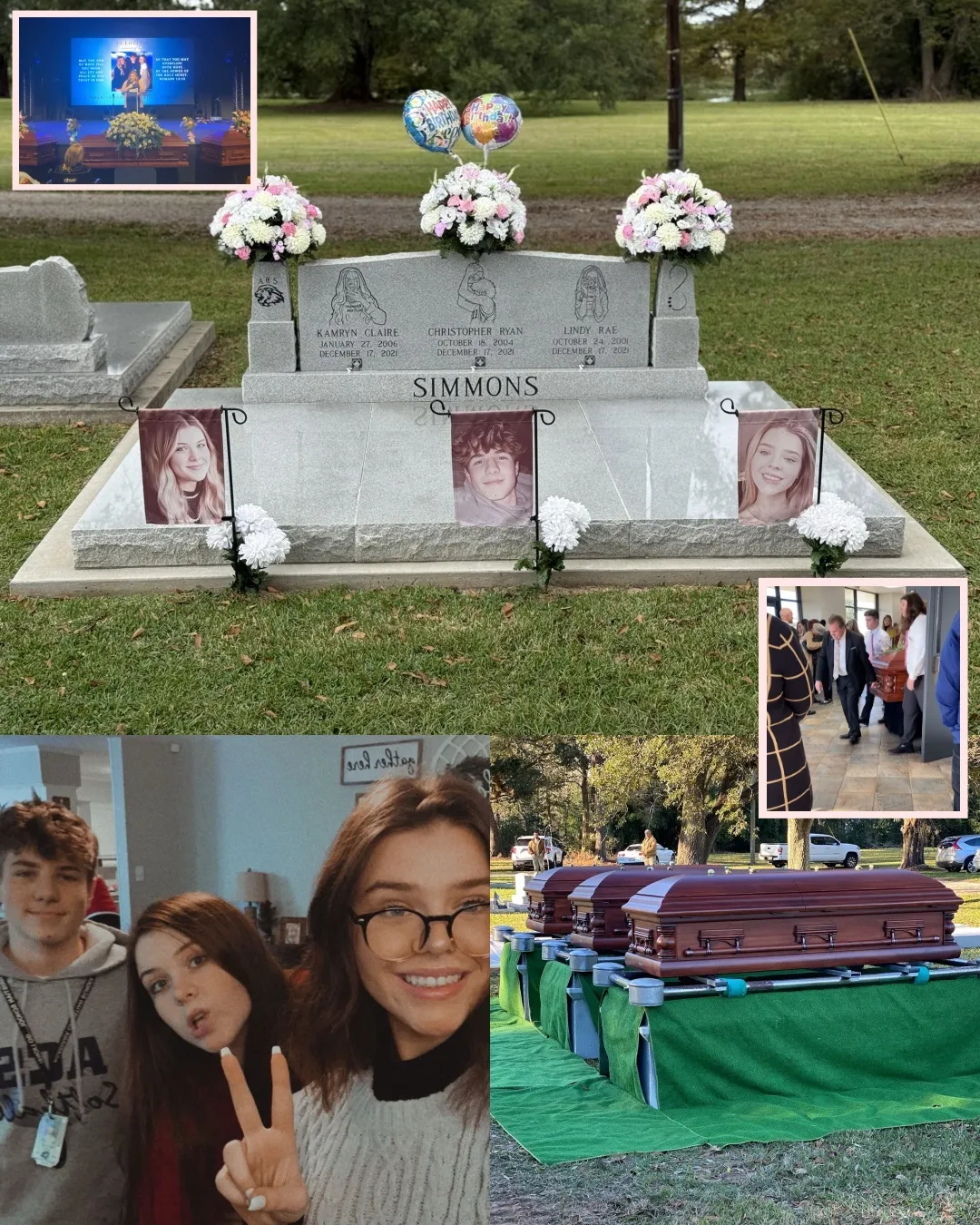
Four years ago today—January 4, 2022—was the last day I saw their faces. Three faces that had once been woven so deeply into my everyday life that I could never have imagined a world without them. Three people who were not just present in my story, but foundational to it. In a single moment, I was forced to say goodbye to them forever, even though no part of me was ready to understand what that really meant.
Time has passed since that day, but time has not softened it in the way people promise it will. The sharpness remains, dulled only slightly by repetition. I’ve learned that grief does not move in a straight line. It circles back on anniversaries, on quiet car rides, on ordinary days that suddenly feel heavy for no obvious reason. Even now, four years later, the rawness still lingers close to the surface.
That day began with a long drive. Miles of road stretched out ahead of me, empty and unchanging, while the sound of my mother’s voice filled the space between us. We talked about everything and nothing at all—mundane details, passing thoughts, small distractions. It was a way to survive the drive, a way to avoid speaking the truth out loud. The road allowed us to hide inside motion, to delay the moment when everything would become real.

Outside the car, the world felt distant, almost unreal. Inside, my heart was heavy with the knowledge I tried not to name: it had been four years since three caskets closed on three massive parts of my heart. I had told myself I was doing okay. I had learned how to function, how to move forward, how to exist in a world that no longer looked the way it once did. But days like this refuse to be ignored. They demand to be felt.
I thought I had learned how to tuck the pain away, how to store it neatly in the back of my mind where it wouldn’t interfere with daily life. But this day would not allow that. It brought everything forward—memories, decisions, moments I had tried to compartmentalize. The pain had nowhere to hide, and I had nowhere to run from it.
I couldn’t let the day pass without acknowledging it. I couldn’t pretend it was just another date on the calendar. This moment was too deeply entwined with who I am, with how my life was reshaped. To ignore it would feel like erasing them, and that was something I could never do. Honoring them meant stepping back into the sorrow, even when it hurt more than I wanted to admit.

Sharing this story has always been part of how I survive. It’s how I process, how I heal, how I make sense of a loss that will never fully make sense. My mom and I have been working with an incredible grief counselor—someone who has gently guided us through the chaos that loss creates. She has helped us understand that grief isn’t something to conquer or escape. It’s something to carry.
She once told us that, despite the depth of our pain, we were further along than many people at this stage. Not because it hurt less, but because we had learned to feel it instead of fighting it. To let the pain move through us rather than locking it inside. Grief doesn’t disappear when it’s ignored. It waits, patient and quiet, until it forces its way out.
So we revisit the memories. We talk about the heartbreak, the impossible decisions, the moments no one should ever have to face. Avoiding those memories doesn’t erase them—it only delays their return. Grief has a way of resurfacing when we least expect it, demanding to be acknowledged on its own terms.
I will never forget the moment we arrived that day. My mom talks about it often—the image of three hearses lined up, waiting. She arrived first and saw them before anyone could prepare her. I came from another direction and didn’t see that sight, but it lives vividly in her memory. It’s an image that has etched itself permanently into her heart, one that will never fade.

My own memory of that day comes in fragments. I remember the line of people wrapping around the building, far longer than I ever expected. I remember faces blurred together, voices blending into a low hum. I remember my mom, fragile and broken, sitting in a wheelchair with cracked ribs and unimaginable pain, still reaching out to others, still offering comfort when she had none left to give.
She insisted on hugging people, even though it hurt. Even though she could barely breathe. She had to be there—fully present, no matter the cost. I wish I had more photographs from that day, more tangible proof of what it looked like, of how much love filled the space alongside the grief. But my memory feels hazy, as if my mind hasn’t fully allowed me to process it yet.
I was running on empty, fueled by adrenaline and obligation. I was trying to be strong for everyone else, holding myself together while quietly falling apart inside. One decision from that day still haunts me—the moment I had to decide when the caskets would be closed. As the person coordinating the service, that responsibility fell to me, whether I wanted it or not.
A few days before, I asked my mom when she wanted them closed. Her response was immediate and heartbreaking. She began to cry and said, “Never.” She couldn’t bear the thought of that final separation. I knew then that she wasn’t ready for that goodbye. But the service had to move forward, and the decision still had to be made.

Between the viewing and the service, we gave her medication and escorted her to the restroom. While she was gone, the caskets were closed. She never had to see that moment. She never had to witness that final act of separation. I don’t know if it was the right decision. I made it out of fear—fear that her heart couldn’t survive it, fear that it would break her in ways we couldn’t fix.
That day was filled with decisions like that. Heavy, irreversible choices that no one should ever have to make. But grief doesn’t ask for permission. It demands action even when you are barely standing. I kept telling myself to just keep going, to get through the next moment, the next task, the next breath.
Tonight, as I sit with all of this, I realize that survival alone isn’t enough. Healing requires acknowledgment. It requires allowing grief to exist without shame or urgency. It requires honoring the pain instead of running from it. That’s the only way forward.
After returning home from Austin today, I found myself honoring the kids in a quiet, meaningful way. I opened packages that had arrived—small moments tied to kindness, rooted in who Kamryn was and how she loved others. It felt right. It felt like a connection, like a reminder that love doesn’t disappear just because life changes.

We crossed paths with a stranger today, someone whose kindness stayed with me long after the moment passed. The conversation, the hug, the words she shared—they felt intentional, as if they were meant for me. It felt like a small sign, a reminder that the kids are still with us in ways we don’t always understand.
Four years have passed since that day. Four years since three caskets closed on three massive parts of my heart. The pain hasn’t vanished, but I’ve learned how to carry it. I will never stop talking about them. I will never stop sharing their stories. I will never stop remembering.
Because one person’s choice changed everything about our family’s world. Four years have gone by, yet it still feels close, still feels raw. And even in the pain, I am learning—slowly, imperfectly—how to heal, how to honor, and how to keep their memory alive.