

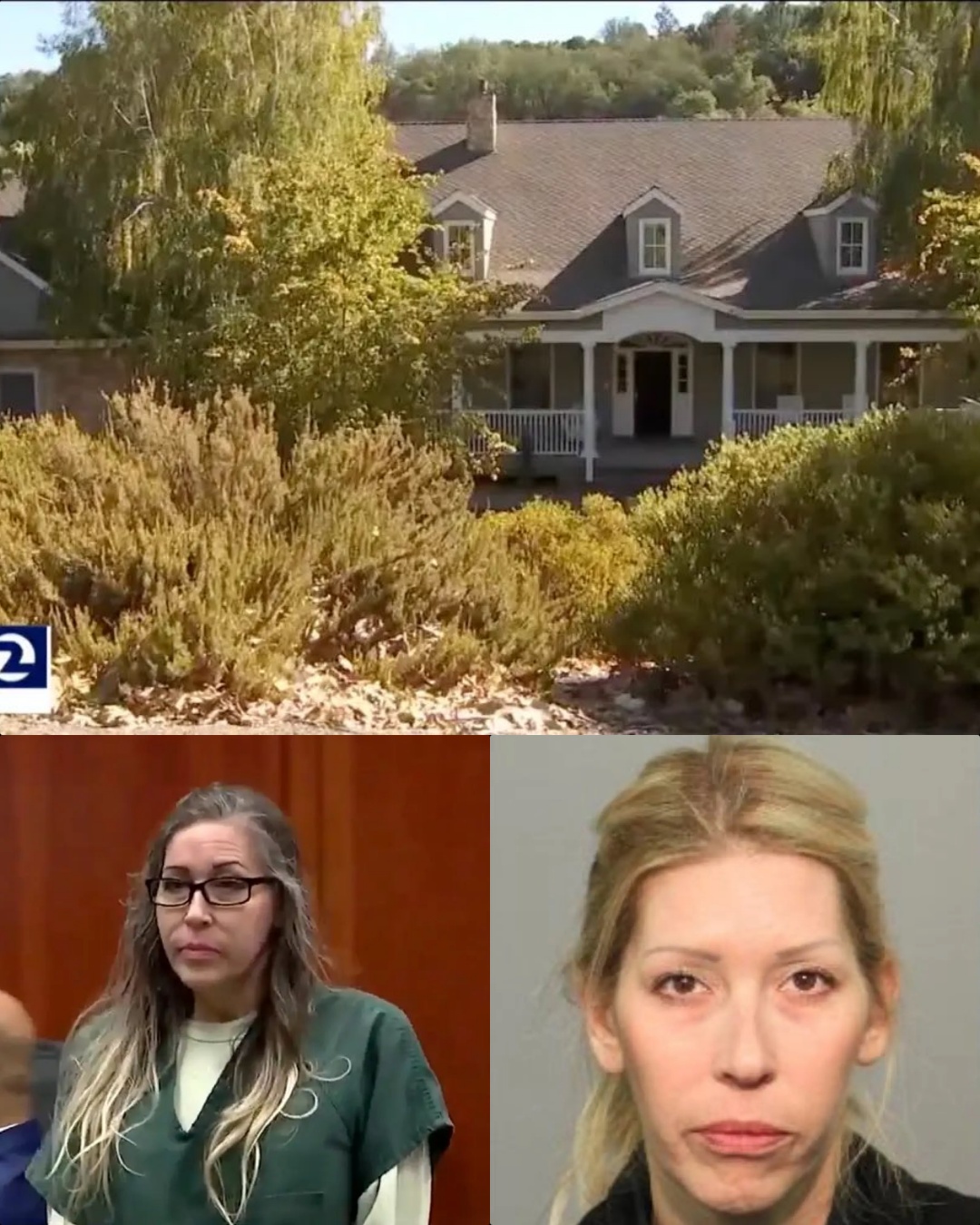
The quiet, affluent hills of Los Gatos are known for privacy, prestige, and the illusion of safety. Tree-lined streets wind past gated homes and manicured lawns, places where neighbors expect discretion and families assume security. For years, one such mansion blended seamlessly into this landscape, its walls hiding what prosecutors now describe as a deeply disturbing pattern of abuse and manipulation.
At the center of the case is Shannon O’Connor, a 50-year-old California woman accused of orchestrating a series of secret parties involving underage high-school students. According to court testimony, these gatherings were not spontaneous teenage get-togethers but carefully curated events, allegedly designed, supervised, and enabled by an adult who used her authority and resources to control the environment.
O’Connor appeared in court dressed conservatively, seated quietly as teenagers—now older but still grappling with what they experienced—recounted events that prosecutors argue amounted to systematic exploitation. The courtroom in San Jose courthouse was tense as jurors listened to testimony describing alcohol, secrecy, and the erosion of boundaries that should never have been crossed.

According to court documents, the alleged parties began in the summer of 2020, shortly after O’Connor’s son finished middle school and prepared to enter high school. What initially appeared to be parental permissiveness soon escalated into something far more alarming, investigators say. Teenagers described being invited to exclusive gatherings, selected based on popularity and perceived silence rather than age or safety.
Many of the teens attended Los Gatos High School, including members of the school’s freshman football team. Witnesses testified that the invitations carried an unspoken rule: what happened at the house stayed there. That expectation of secrecy, prosecutors argue, was reinforced by O’Connor herself.
One teenage witness, identified in court as John Doe 5, told jurors that he was just 13 or 14 years old when he attended his first gathering at O’Connor’s home. He testified that he had never consumed alcohol before that night. Within hours, he said, he had ingested far more than his body could handle, leaving him disoriented and physically impaired.
The alcohol, according to testimony, was not accidentally available. It was allegedly hidden in the garage, concealed in a laundry basket beneath a tarp. Teenagers described being shown where it was kept and told when it was “safe” to access it. O’Connor allegedly instructed them to wait until her husband was gone before drinking, reinforcing the idea that these activities were both intentional and covert.

As the night progressed, witnesses described a loss of control among attendees. Some struggled to walk or think clearly. Others became ill. The atmosphere, once framed as a party, quickly became chaotic. Yet, according to testimony, no adults intervened to stop the drinking or ensure the teens’ safety.
Multiple witnesses told the court that these gatherings became frequent. Birthdays, holidays, and weekends were marked by similar events, including one at a vacation property in Santa Cruz. Each time, prosecutors allege, the pattern repeated itself: alcohol supplied, boundaries blurred, and teenagers placed in vulnerable situations.
More troubling were allegations that certain rooms in the home were effectively designated for unsupervised activity. Teen witnesses described being directed away from common areas and into private spaces. Prosecutors argue this was not neglect but facilitation.
One of the most serious allegations presented to the jury involved a New Year’s Eve gathering. Court documents claim that a severely intoxicated teenage girl was placed in a dangerous situation while O’Connor was nearby and failed to intervene. The testimony surrounding this incident was careful and restrained, yet the implications were stark.
Prosecutors emphasized that the alleged harm was not only physical but psychological. Teenagers described confusion, shame, and a distorted sense of trust. O’Connor, they said, presented herself as a confidante—someone they could talk to about relationships and personal struggles—while simultaneously enabling dangerous behavior.
Several witnesses said they viewed O’Connor as a “cool mom” at the time, someone who made them feel accepted and protected. Looking back, many described that perception as deeply unsettling. One teen told the court that only with maturity did he realize how abnormal the situation truly was.
Photographs and videos were introduced as evidence, allegedly showing O’Connor distributing alcohol to minors. Prosecutors argue these images contradict any suggestion that she was unaware of what was happening in her home. The defense, meanwhile, has sought to challenge the interpretation of these materials.
The parties reportedly escalated until a massive Halloween gathering where dozens of teens attended. Witnesses testified that several became violently ill and that at least one lost consciousness. It was after this event, according to testimony, that some parents began to notice alarming changes in their children.

One teenager said he was discovered by his parents after returning home intoxicated, missing clothing items, and unable to explain what had happened. That discovery set off a chain of events that would eventually involve law enforcement.
Investigators began piecing together accounts from multiple teens, many of whom initially hesitated to speak. Prosecutors argue that fear of social consequences and loyalty to peers kept many silent. Over time, however, patterns emerged that painted a consistent picture.
In 2021, authorities arrested O’Connor. She was later indicted on 61 charges, including child molestation, furnishing alcohol to minors, and endangering the health and welfare of children. The scope of the charges reflected what prosecutors described as repeated conduct rather than isolated mistakes.
One particularly striking detail revealed in court was that the night before her arrest, a dozen teenagers allegedly slept over at O’Connor’s home. Prosecutors argue this underscores how normalized the behavior had become within that circle.
Media coverage from outlets including KRON 4 and The Daily Mail brought national attention to the case. Headlines labeled O’Connor the “Party Mom,” a phrase prosecutors say trivializes the seriousness of the allegations.
For the families involved, the trial has been deeply painful. Parents testified about guilt, anger, and disbelief that such events could unfold in a place they considered safe. Some spoke about the lasting emotional effects on their children, including anxiety and mistrust.
Legal experts following the case say it highlights a broader issue: how abuse can be concealed behind wealth, social status, and the appearance of permissiveness. When adults position themselves as allies rather than authority figures, experts warn, lines can be dangerously erased.
As the trial continues, jurors are tasked with evaluating not only the facts but the intent behind them. Prosecutors insist the evidence shows a deliberate pattern of behavior. The defense maintains O’Connor did not act with criminal intent.

Regardless of the verdict, the case has already left a mark on the community. It has forced parents, educators, and students to confront uncomfortable questions about supervision, trust, and accountability.
In the quiet neighborhoods of Los Gatos, the mansion at the center of the case now stands as a symbol of betrayal rather than privilege. Its walls, once associated with parties and popularity, are now linked to testimony, trauma, and a reckoning that continues to unfold in a courtroom miles away.
And for the teenagers who once crossed its threshold believing they were safe, the trial represents more than justice—it is an attempt to reclaim boundaries that should never have been taken from them.