

And everything that manual said about river defense was telling you the same thing. A river 600 m wide, defended by organized forces, did not fall in a single afternoon. You had held river lines before. You had studied them. You had bled across them from the opposite bank, so you knew what crossing one cost. The Rine at Remigan was not merely a river.
It was a wall, and you had been trained by the best army in the world to maintain walls. You also knew something else. The Americans attacking towards you were fielding tank crews with fewer than 200 combined hours of training. Their infantry battalions absorbed green replacements every week. Men who had been civilians 8 months earlier.
The 9inth SS Panzer Division’s afteraction report from Arnum filed just 5 months before had described American tactical behavior as predictable to the point of mechanical mechanical. You had beaten them before at Casserine, at Herkin, in the opening days of the Arden offensive. You had the records to prove it.
Here is the strange detail that you will want to read a second time. On March 7th, 1945, a single American battalion, approximately 300 men with supporting armor at a force smaller than what most armies would commit to secure a crossroads, crossed the Ludenorf Bridge at Ramagan, Germany. In the following 10 days, without withdrawing a single meter, that force absorbed the attacks of three German divisions, including some of the Vermach’s most experienced armored and infantry formations.
And while those German divisions consumed themselves, trying to eliminate a position, they outnumbered six to one, the United States Army poured an entire core, 25,000 men and more than 4,000 vehicles across the Rine behind them, collapsing the entire German defensive posture in the west. Three divisions, one battalion.
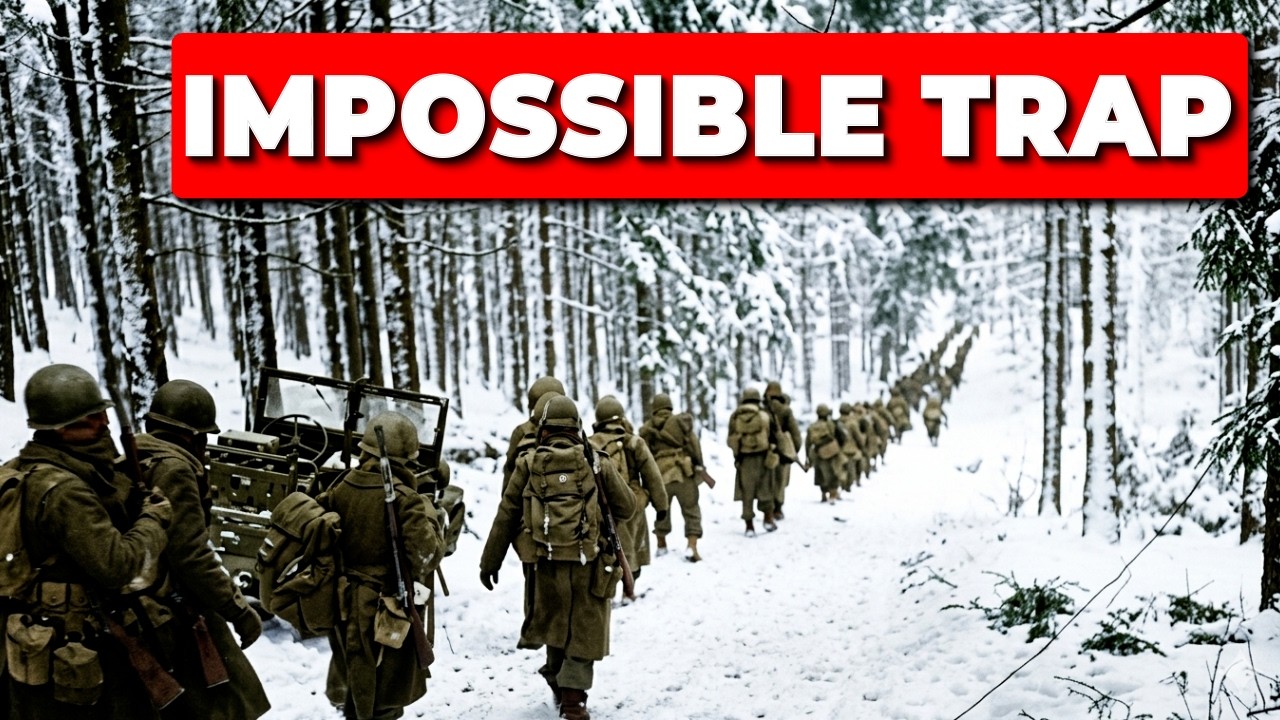
Here is the sentence that explains the entire battle. The Germans and the Americans were not fighting the same war. They were fighting in the same location on the same river area for the same bridge. But they were each optimizing for a completely different metric, measuring success on a completely different scale.
and neither side’s framework could fully perceive what the other was doing. Part one, the weight of the river. The German defensive position at the Rine in the late winter of 1945 was not by any serious military standard a weak one. This matters. If you walk away from this story thinking the Germans lost because they were incompetent, you have missed the entire lesson. They were not incompetent.
They were operating a system of extraordinary professional quality. A system that had conquered more of Europe in three years than Napoleon had managed in 15. And that system was working exactly as it was designed to work. The problem was not the systems quality and the problem was what the system was designed for.
The troopenfur troop leadership was the foundational doctrinal manual of the German army. First published in 1933 under the primary authorship of General Ludvig Beck. Beck’s manual represented the accumulated operational wisdom of the Prussian and imperial German military tradition refined by the catastrophic lessons of the first world war and its central philosophy was called of tactic mission type tactics in which commanders at every level were empowered to exercise independent judgment in pursuit of the commander’s intent without
waiting for orders they might not survive long enough to receive. Post-war American military theorists would spend three decades studying this system and trying to replicate it. It was genuinely brilliant. But the troopen furong rested on a second principle that received considerably less admiring attention in the post-war literature.
Craftasparin, the conservation of force. The German system was designed from its deepest philosophical roots around the assumption of scarcity. The Vermacht had always fought with less, less fuel than the Allies, less steel, less rubber, fewer trained replacements. The entire doctrinal edifice had been constructed to extract maximum tactical effect from minimum resource expenditure.
German officers were trained to calculate, to conserve, to treat every shell, every lighter of fuel, every company of infantry as a finite resource that could not be replaced if wasted. This was not a weakness. For 3 years, it had been the German army’s most formidable asset. The Vermach’s ability to do more with less, to hold a line with a battalion where any Western general would have demanded a full division, was a genuine military achievement that demands respect from anyone who examines it seriously.
The German soldier of 1944 and early 1945 was by any measurable tactical standard the finest individual infantrymen on the Western Front. At Ramigan specifically, the defensive posture was organized around precisely this principle of calculated scarcity. Major Hans Sheller had been assigned the bridge defense with approximately 500 men, a mixed force of combat engineers, folkmur militia, remnants of the 9th Panzer Division’s reconnaissance elements, and a small contingent of regular infantry who had been pulled out
of the line to rest and found themselves in a defensive assignment instead. Heller had anti-aircraft guns on the bridge towers that could be depressed to sweep the approaches. He had telephone communication to his core headquarters. Most importantly, he had demolition charges wired to the bridge structure, 60 kg of explosives set to destroy the main span and deny the Americans a crossing point.
His orders were unambiguous. If any substantial Allied force approached, he was to destroy the bridge and force the Americans to execute a deliberate river assault. This was not defeatism. It was doctrine. A deliberate river crossing against a defended bank was by every standard in every military manual on the continent a minimum 48-hour operation.
You needed to bring up assault boats. You needed to suppress the defenders with mass artillery preparation. And you needed engineers to establish a bridging site under fire. The process was expensive, dangerous, and slow. But it was known. It was modeled. German divisional planning assumed 48 to 72 hours between American arrival at the river and American establishment of a bridge head.
Those hours were the commodity that mattered. In those hours, German reserves could move. German defenses could consolidate. German artillery could register its fires. Sheller’s ammunition allocation reflected this calculation with precise German logic. He had enough ammunition to sustain a 36-hour defensive engagement.
He had enough fuel for a controlled withdrawal to prepared position 6 km east of the river. He did not have more than this because the German logistics chain was stretched catastrophically thin by Allied air interdiction and chronic fuel shortages that had grounded the Luftvafa and immobilized armored reserves was operating on the assumption that resourceful officers would multiply every resource they received.
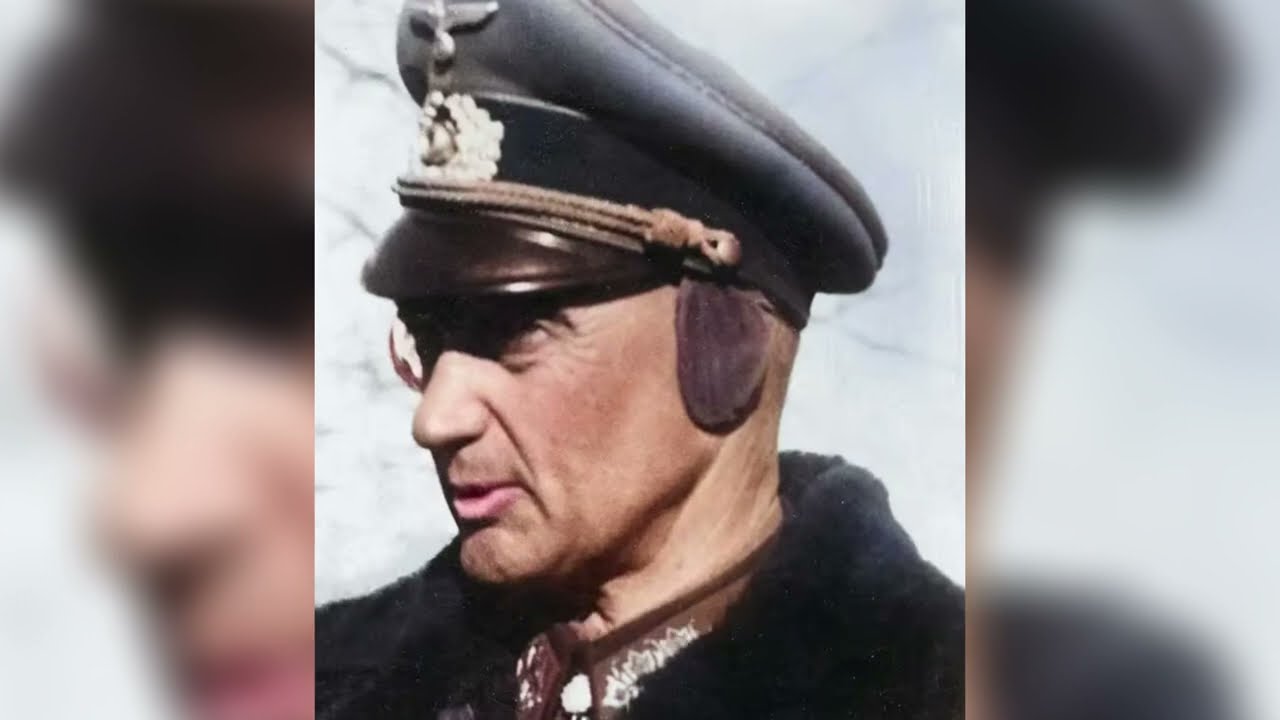
Multiplying effect was what German officers did. It was codified in their doctrine. Corporal Verer Meltzer, a German engineer assigned to the bridge demolition team, gave a post-war deposition in 1947 in which he described waiting at Remigan on the morning of March 7th. He wrote, “We had our plans. We had our charges.
We believed in our orders. Nobody told us the Americans would simply run across. Nobody had told them because nobody had modeled for it. The troop in Furong had a framework for a deliberate assault. It had a framework for an infantry infiltration. It did not have a framework for what Lieutenant Colonel Leonard Engin’s combat command B had been doing for the previous six days as it advanced toward the river.
What Engin’s force had been doing was something the German system had no category to describe. Moving at a speed that treated time itself as ammunition and treating every delay, every administrative halt, every traffic jam, every cautious pause as a tactical defeat. What the German system could not conceive of was a doctrine that had abandoned the calculus of scarcity entirely.
Part two, the gate in the river. Here is the core idea behind what the Americans did at Remigan on March the 7th, 1945. And it is so simple that it took an entire industrial nation to believe in it. The river was not an obstacle. It was a gate. And a gate, unlike a wall, rewards the man who moves first, not the man who prepares most carefully.
The operational doctrine governing US Army Offensive Operations in the European theater was FM00-5, Field Service Regulations, Operations, the Army’s primary manual for combined arms warfare. The language in FM 100-5 that separated American operational thinking from German in the most fundamental way was not a tactical prescription.
It was a philosophical statement. Speed of action and continuity of pressure will compensate for local deficiencies in force. Read that sentence a second time. Speed compensates for deficiency. The American doctrine explicitly built into its architecture the assumption that you would be locally weaker, locally outnumbered, locally at a disadvantage and that the answer was not to accumulate sufficient force before moving but to move faster than the calculation could be completed.
This is the doctrinal engine behind everything that happened on March 7th. The sequence is worth walking through almost minuteby minute because it illustrates with clinical precision how a doctrine built around momentum produced an outcome that a doctrine built around calculation classified as impossible. At approximately 12:17 p.m.
on March the 7th, Sergeant James Carrington, a tank commander in the lead elements of the 14th Tank Battalion, crested a ridge 1,400 m west of Remigan and looked down through his periscope to see something that did not belong in the tactical situation his chain of command had briefed him to expect. The Ludenorf bridge spanning the full width of the Rine was still standing.
He reported it up the chain within 2 minutes. The report reached Captain Wartley at battalion headquarters at 12:24. By 12:31, Lieutenant Colonel Engin had the report and was already on the radio to Brigadier General William Hoga, Commanding Combat Command B. Hoga’s response took four minutes. His order to Enammen was seven words.
Get to that bridge. Get across it. No artillery preparation. No reconnaissance of the eastern bank. No request for higher command authorization. No calculation of whether the assigned force was sufficient for the task. The window existed. FM 100-5 said, “Go through it.” Lieutenant Carl Timberman was 22 years old and had been in combat since the Normandy hedge.
He received his orders from Captain Nbomb at approximately 12:45. Take company A across the bridge before the Germans could destroy it. Timberman looked at the bridge. I looked at the smoke rising from a partial detonation that had clearly not fully functioned, saw the German anti-aircraft positions on the far towers, and told his platoon leaders to move to the bridge approach.
No speech, no dramatic hesitation. Pause on that detail. A 22-year-old officer presented with a 600 meter bridge across the Rine under active German demolition effort, flanked by enemy gun positions, ordered his men to run across it. Not because he had calculated that it was safe. It was not safe.
But because FM 100-5 and every tactical instinct 8 months of combat had drilled into him said that the cost of waiting was higher than the cost of moving. At 3:17 p.m., Company A reached the bridge approach and began its assault. German engineers, though working frantically with wiring that had been cut in places and compromised by the partial detonation, managed to fire a second charge at 320.
A charge that lifted a section of decking, but did not break the main span. American soldiers were already on the bridge, running through smoke, using wire cutters on demolition leads as they went, their boots clanging on steel, grading over 600 m of cold water. Tank fire from the Western Bank walked rounds up the stone towers to suppress the defenders.
Sergeant Alexander Drabick, a butcher from Holland, Ohio before the war, reached the Eastern Bank at approximately 3:26 p.m. with 11 other men from the 27th Armored Infantry Battalion, making them the first American soldiers to cross the Rine on German soil. Andrabic would later tell an interviewer with characteristic directness, “I didn’t think about whether we should do it. I just ran.
” War correspondent John Thompson of the Chicago Tribune was with the division and filed his dispatch that night from a position on the Eastern Bank. His description of the crossing contains one line that strips away all tactical complexity. They didn’t capture the bridge because they had more men.
They captured it because nobody stopped to count. By 5:00 p.m., all of Company A, approximately 150 men, had established a perimeter on the eastern bank. By 900 p.m., the entire 27th Armored Infantry Battalion was across. By midnight, US Army engineers had established supplementary pontoon crossing capability 800 meters downstream, and the bridge had been cleared and reinforced for vehicular traffic.
And by dawn on March 8th, the 9inth Armored Division was pouring across in strength. The Germans were using the metric of efficiency. Every resource they committed to the Rine defense was a calculated investment in a system designed to impose maximum cost on a deliberate assault. The Americans were using the metric of momentum. Every hour of forward movement was a compounding return on industrial investment that the German system had never had to model.
Those two metrics did not merely produce different tactical outcomes. They produced armies that were in the most precise sense invisible to each other, occupying the same ground while fighting entirely different wars. This video gives you the story, but the combat blueprint, our free newsletter, gives you everything that doesn’t fit in a video. Deeper details.
Forgotten heroes. Free to join. Take 10 seconds to sign up. Link in the description. Now back in the video. Part three. The river behind the river. To understand why 300 American soldiers could hold a bridge head against three German divisions for 10 days, you need to understand what was behind those 300 soldiers.
Not metaphorically, literally on the roads and in the depos and ammunition dumps stretching back through Belgium and France to the channel ports. a logistical system of a magnitude that the German army supply officers, even if they had been given complete and accurate intelligence about it, would have struggled to process as a real number.
The communications zone supply network feeding the US first army in the winter of 1945 was moving an average of 17,000 tons of supplies per day to forward combat units. 17,000 tons per day of the entire German army group B defending the Rine models force comprising roughly 250,000 men stretched across 200 km of front was receiving approximately 2,400 tons per day in early March 1945 when Allied air interdiction and chronic fuel shortages allowed even that reduced figure to be achieved.
The Americans had a 7:1 logistics advantage before the first soldier set foot on the Ludenorf bridge. That advantage did not narrow during the bridge head battle. It widened because the bridge head created a new crossing point that shortened the supply line and allowed even higher throughput. The Red Ball Express, the famous truck convoy system established during the August 1944 breakout from Normandy, had been superseded by a more sophisticated multimodal system by early 1945.
But its legacy was a trucking infrastructure of nearly 6,400 vehicles running continuous circuits between Antworp and the forward depot. The US Army had prepositioned 22,000 tons of ammunition within 40 mi of planned Rine crossing sites before the first assault crossing was attempted. 22,000 tons in reserve waiting.
Not the ammunition being fired in ongoing operations. The ammunition sitting in forward depots for the crossing operation that hadn’t started yet. To understand what this meant at the company level, consider the situation of a German divisional quartermaster in this period. The 277th Vulks Grenadier Division supply records captured intact and cataloged by the US Army’s historical branch.
I show that by February 1945, the division was operating on an ammunition allocation of 1.2 basic loads for offensive operations. One basic load was the German army’s standard for the minimum supply required to sustain a unit through one day of heavy combat 1.2 basic loads. The Americans at Rayagen were operating according to calculations in the army’s official history the sie freed line campaign published in 1963 with 6.
4 for basic loads prepositioned per division in the First Army’s area of operations. This is not an abstraction. This comparison changes what a commander was allowed to believe. An American captain holding a perimeter on the eastern bank of the Rine did not ration his fire support requests. When German infantry came at his position in the early morning of March 9th, at that captain got on the radio and called for artillery support, and the artillery battalions behind him responded responded within 4 minutes, which was the First Army’s standard
response time for pre-registered defensive fires. Because those battalions had shells stacked in their gunpits higher than a man could reach and convoys were replenishing those stacks around the clock. The resource was not a constraint. It was a weapon. Every German attack was met with a volume of fire that exceeded the attacking forces available ammunition for the entire day’s operation.
A German battery commander firing on the bridge head was doing something qualitatively different. He had by the first week of March 1945 an average of 73 rounds per gun per day available for all fire missions. 73 rounds. and the US Army’s doctrinal standard for counter battery suppression.
Just the opening phase of a fire mission designed to silence an enemy gun position called for a minimum of 100 80 rounds per target. The German artillery officers defending the Rayagan perimeter were by the mathematics of their own supply situation structurally incapable of using their weapons the way their training prescribed. General Litnant Fritz Berline, commander of Panser Lair Division, one of the German army’s elite armored formations and a man who had served under Raml in North Africa and commanded forces at Normandy and the Bulge was interrogated
by Allied intelligence officers in June 1945. His assessment of the Rimogan situation recorded in the US Army’s postwar interrogation archive is bracingly clear. The fundamental problem was not the quality of the men or the tactical skill of the commanders. The fundamental problem was that we were asked to fight a war of maneuver without the fuel for maneuver and a war of attrition without the ammunition to attrie.
When both of those things are simultaneously true, there is no tactical solution. Byerline was not making excuses. He was performing the same forensic analysis that his American counterparts would perform decades later in staff colleges. He had understood too late to change anything that the Americans were not fighting a war of the same type.
They were not optimizing for efficiency per unit of resource. They were converting industrial output directly into tactical result as fast as the transportation network could carry it forward. Every shell that could be fired was fired. Every position that could be held was held indefinitely because the cost of holding it was absorbed by a system deep enough to absorb it without calculation.
The Americans were not asking what can we afford. They were asking is there a gate? And at Remigan on March 7th, 1945, there had been a gate. An American doctrine, American logistics, and one 22year-old lieutenant had gone through it. Part four, the realization. The Germans who were sent to eliminate the Remagian bridge head were not failures.
They were some of the most experienced military professionals on the Western Front and their post-war accounts amount to a body of professional military literature that is remarkable for its honesty. a first rate army’s systematic effort to diagnose in real time and why it was losing a battle it had calculated it should win.
Field Marshal Walter Model commanded Army Group B, the formation responsible for the Rine defenses. Model’s reputation in the German military was unique. He had stabilized the Eastern Front at Moscow in 1941 when it should have collapsed. He had constructed the defensive systems that slowed the Allied advance through France in 1944.
Albert Spear in his post-war memoir wrote that model was the only senior commander whose military judgment Hitler genuinely respected rather than merely tolerated. When the initial report of the Ray Magen bridge capture reached Army Group B headquarters on the afternoon of March 7th, model’s response recorded in the army group’s war diary was measured and professional.
Establish the enemy’s force size. Seal the perimeter as prepare the counterattack. The Troop and Furong response. the response of a commander who had spent 30 years training for this kind of emergency. Model committed three divisional formations to eliminating the bridge head. The 11th Panzer Division, a veteran armored unit with a distinguished record on both the eastern and western fronts, was assigned the primary counterattack mission.
Elements of the 9inth Panzer Division, already badly attited, were committed to contain the perimeter’s northern axis. The 272nd Vulks Grenadier Division’s remaining combat effective regiments were assigned the southern sector. Three divisions against a battalion strength bridge head represented by every conventional military calculation.
a crushing superiority of force. Model staff estimated the bridge head would be eliminated within 48 hours. At the end of 48 hours, the bridge head expanded. Between March 8th and March 11th, German forces launched 14 coordinated attacks against the perimeter. All 14 were repulsed. The pattern was the same in every attack.
German infantry advanced to within striking distance. American artillery responded within minutes with a volume of fire that exceeded anything the attacking commanders had been allocated to fire for the entire day’s operation and the attack collapsed. German afteraction reports from this period contain an almost formulaic phrase that appears in nine separate divisional reports.
Foyer nicked su uber beaten fire impossible to exceed. The German officers writing those reports were not being hyperbolic. They were recording a literal operational fact. And the Americans were firing more rounds per hour in defense than the German attackers had available for the entire operation. General Hasso Fon Mantofl was one of the Vermach’s most formidable armored commanders.
He had commanded fifth panzer army during the battle of the bulge, had studied American operational behavior more carefully than almost any of his peers, and was transferred to assess the remagin situation on March 10th. His assessment filed on March 11th and recovered from Army Group B’s captured records is worth reading carefully.
He wrote, “The American position at Ray Magen does not behave as a conventional bridge head under attack. It absorbs fire without degrading. It absorbs infantry assault without reducing. Each time we compress it in one sector, it reconstitutes in another. This is not a consequence of American tactical quality, which in many respects remains inferior to our own.
It is a consequence of supply. They are receiving material faster than we can destroy it. We cannot achieve this condition on any axis we currently hold. He was diagnosing a system, not a battle. The German effort to destroy the bridge head escalated with a sequence of increasingly desperate measures that taken together constitute the most extraordinary testimony to American logistical depth in the entire European campaign.
Between March 8th and March of 17th, the Luftwafa flew 367 sorties against the bridge and bridge head, including attacks by ME262 jet aircraft, the most technically advanced combat aircraft in the world at that moment, which were committed in a deliberate tactical role for the first time in the war.
The bridge absorbed hits. It was damaged. It was repaired by army engineers working under fire, sometimes at night on suspended scaffolding above the Rine Current. The Vermacht fired 11 V2 ballistic missiles at the bridge. The first deliberate use of ballistic missiles against a tactical target in the history of warfare. Seven of the 11 missed entirely.
Three caused peripheral damage. One struck within 50 m of the bridge structure and caused no structural effect. They sent combat swimmers downstream with explosive charges. The swimmers were captured. For a German commander reading the daily reports from the bridge head perimeter, there was no tactical answer.
The answer to the problem being posed at Remigan was not a tactic. The answer required a different industrial nation behind it. And Germany did not have one. Every action you can keep watching tells the story of what those engineers on the bridge scaffolding were holding together while five divisions masked behind them.
Part five, the verdict. On March 25th, 1945, 18 days after Sergeant Alexander Drabik crossed the Rine with 11 other men from the 27th Armored Infantry Battalion, the United States Third Corps launched its breakout from the Remagan Bridge head. The breakout force comprised seven divisions, 342 operational tanks, 210 tank destroyers, and fire support from 97 artillery battalions.
The German forces assigned to contain and destroy the bridge head, the remnants of the 11th and 9inth Panzer divisions and the 272nd Vulks Grenadier Division had 41 operational tanks between them. They had expended their artillery ammunition reserves during 10 days of feudal counterattacks. The breakout penetrated 32 kilometers on the first day, shattering the German defensive line east of the Rine across a 60 kilometer front.
By April 1st, 1945, the US first and 9inth Armies had completed the encirclement of the rurer industrial region. Field Marshall models Army Group B. 325,000 men trapped in a pocket from which there was no exit. And the bridge head that had made that encirclement possible had been seized by a force of 300 men who did not stop to calculate whether they could afford to cross.
The forensic audit begins here. What were the Germans right about? almost everything. Technically, they were right that a 600 meter river defended by organized forces should not fall in an afternoon to a battalion strength force. They were right that the troopen furong executed by competent officers produced a tactical quality that was in many respects superior to what the Americans deployed at the unit level.
They were right that a bridge head held by 150 men had no business surviving the counterattacks of three divisions. Their tactical calculations performed correctly within the system they were measuring produced answers that were internally consistent and professionally defensible. The German officers at Rayagan were not wrong.
They were measuring correctly within the wrong framework. What metric were they using that made the Americans look vulnerable? Resource efficiency. The German operational culture forged over a century of fighting under material scarcity refined through two world wars against richer industrial powers evaluated military effectiveness by the ratio of outcome to resource expended.
By that metric the Americans at Remigan were genuinely proflegate. The ammunition expended by US artillery in defense of the bridge head in a single 24-hour period would have sustained an entire German core for 3 weeks of offensive operations. The fuel consumed by first army logistics in a single week exceeded the total petroleum reserve available to Army Group B for the entire month of March.
Measured on the scale of efficiency, the Americans were fighting a war of reckless waste. What was the actual metric? The Americans were optimizing for momentum. Specifically, the conversion of industrial output into territorial and positional advantage as fast as the transportation network could physically carry it forward. The American system was not designed to maximize output per unit of resource.
It was designed to eliminate the interval between industrial production and tactical effect to bring the factory floor as close to the battlefield as the roads would allow and to eliminate the calculation that intervened between we have it and we fire it. FM100-5 was not a manual for efficiency. It was a manual for velocity, speed of action, continuity of pressure.
The assumption that whatever local deficiency exists in force will be compensated by tempo. Why were those two metrics invisible to each other? Because they were not merely different tactical choices. They were different relationships to the concept of resource itself. The German army had been built from its philosophical roots in the Prussian tradition through the Tupin furong to the desperate resource calculations of 1944 and 1945 on the foundational assumption that resources were scarce, finite, and irreplaceable.
That assumption was sometimes literally true and was always operationally true in the German experience. The American army had been built from the industrial mobilization of 1942 through the Red Ball Express to the 22,000 tons of ammunition sitting in forward depot when the first patrol reached the Rine on a foundational assumption that resources were renewable, that the factory would replace what the battlefield consumed, and that the correct question was not can we afford this but can we reach it in time.
Two armies, two philosophies, one river and the Germans were right about everything that had been true in every previous war. The Americans were operating inside a new set of conditions that German doctrine for all its sophistication had been built to fight around rather than to fight within. The philosophical core is this.
The German army lost at Remigan not because it was outfought. It was outfought in places at times but not decisively. It lost because it was outconceptualized because the Americans had developed a doctrine built on a material reality that the troopenfur had no framework to model. The Vermacht spent the entire Second World War optimizing a military system for scarcity.
The United States spent the entire Second World War building building a military system premised on abundance. When those two systems met at a river crossing point in March 1945, you know, the outcome had been determined 2 years earlier in the production halls of the Detroit Arsenal, in the warehouses of Antwerp, in the root schedules of 6,400 trucks running circuits in the dark.
It compounded in the form of 22,000 tons of ammunition sitting in forward dapos before a single assault boat touched the rine. It compounded in the form of Corporal Eugene Doorland, writing in his diary that his unit had covered 22 miles in a day and 18 miles the day before in a tone that suggested this was simply the nature of things.
It compounded in the form of John Thompson’s dispatch from the eastern bank of the Rine written that night in the cold. They didn’t capture the bridge because they had more men. They captured it because nobody stopped to count. It compounded in the form of 25,000 men and 4,000 vehicles crossing the last great river barrier in Western Europe through an opening that had been made by 150 soldiers who ran across a bridge under fire, cutting demolition wires as they went because their doctrine said that the cost of
waiting was always higher than the cost of moving. the men of company A, 27th Armored Infantry Battalion, and every engineer and truck driver and artillery crew and ammunition handler who fed the machine behind them did not win that battle by being better soldiers than the men they faced.
In the narrowest tactical sense, they may not have been. They won it by fighting inside a system that had abolished the calculus of scarcity that had decided at the level of national industrial policy that the question can we afford this was a category error and that the only question worth asking was is there a gate at Remigan on March 7th 1945 at 3:17 in the afternoon there was a gate They went through it.
This video gives you the story, but the combat blueprint, our free newsletter, gives you everything that doesn’t fit in a video. Deeper details. Forgotten Heroes. Free to join. 10 seconds to sign up. Link in the descriptions.