

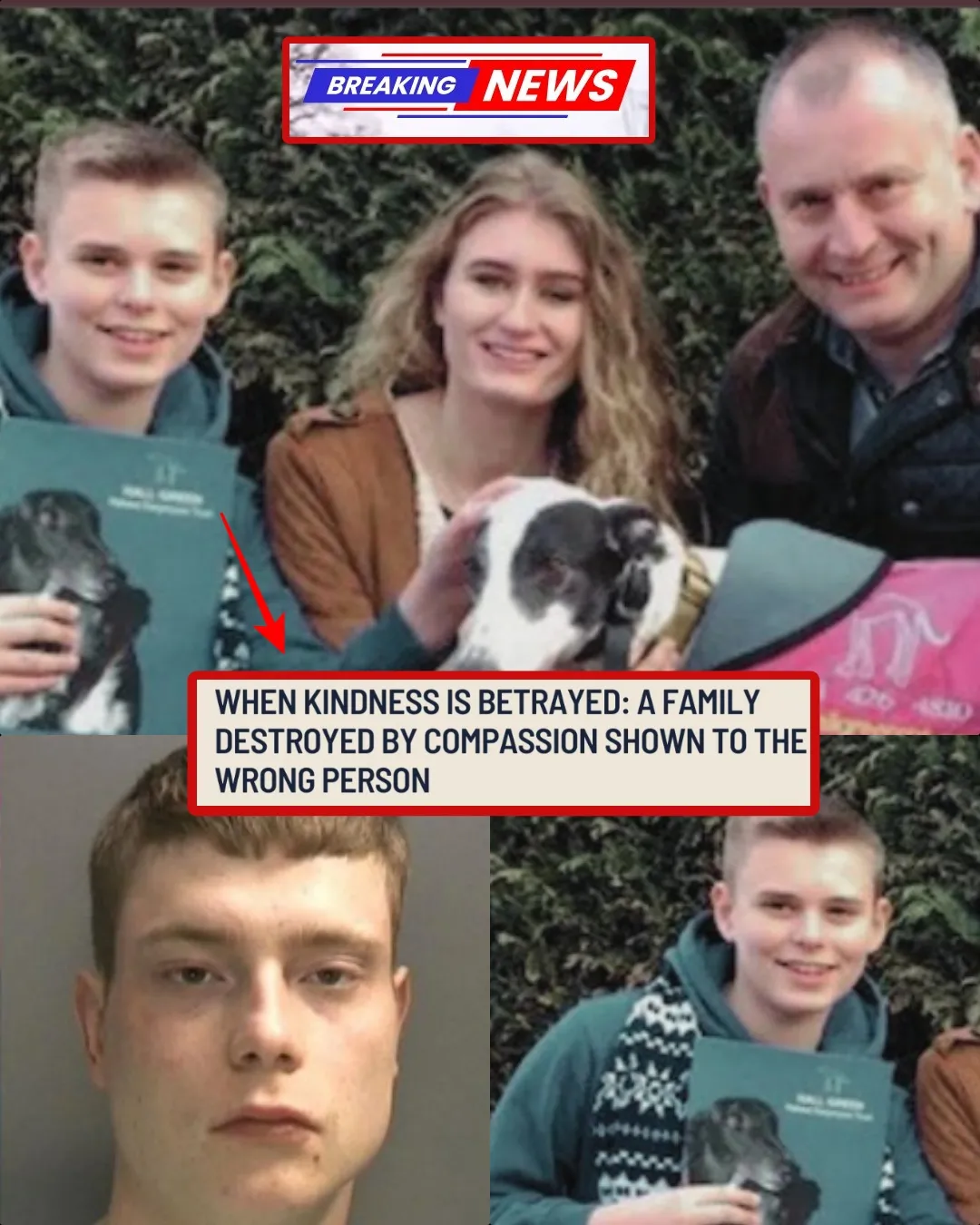
Tracey Wilkinson was known among friends and neighbors as a woman defined by kindness. She had a natural instinct to help those who were struggling, even when it required personal sacrifice. Her empathy extended beyond words; she acted on it. She believed that no one should be ignored or left behind, especially those who had fallen through society’s cracks. That belief would ultimately place her in the path of a man who would betray her trust in the most devastating way imaginable.
Aaron Barley was 24 years old when Tracey first encountered him. He was homeless, sleeping rough outside a supermarket, visibly vulnerable and clearly in need of help. Many people passed him without stopping, but Tracey did not. She saw a young man who looked lost, not a threat. She spoke to him, listened to him, and decided that he deserved compassion rather than judgment.
Tracey began by offering him food. Hot meals replaced cold nights. Conversations replaced isolation. What started as a simple act of kindness quickly grew into something more substantial. She helped Barley find accommodation so he would no longer be sleeping on the streets. She made sure he had access to food and support. In her mind, she was doing what any decent person should do when faced with someone in need.
Her husband, Peter Wilkinson, shared her values. When Tracey told him about Barley, he did not object or express fear. Instead, he offered practical help. He gave Barley work, believing that structure and opportunity could help him rebuild his life. The Wilkinsons did not see themselves as rescuers; they simply saw themselves as people doing the right thing.
Barley was welcomed into their lives in ways that went beyond obligation. He was invited into their home, into their routines, and into their family moments. On Christmas Day, he sat at their table, sharing a meal that symbolized warmth, belonging, and acceptance. At one point, he even wrote a card to Tracey, addressing it “To the mother that I never had.” To the Wilkinsons, it appeared that their kindness had reached someone who genuinely appreciated it.
Tracey’s children also treated Barley with openness. Her son Pierce, just 13 years old, lived a life filled with the innocence and energy of early adolescence. He trusted the people his parents trusted. He could not have known that the man welcomed into his home would later become the person who ended his life.
What happened next defied all logic and understanding. In the early hours of the morning, Barley returned to the Wilkinson family home. This time, he did not come as a guest. He arrived dressed in black, his face partially concealed by a balaclava. He waited silently in the garden, watching, planning, and preparing for an act of violence that remains inexplicable.
The house was unlocked, as it so often is in places where people feel safe. Barley entered without resistance. Inside, the home was quiet. The family was asleep, unaware that the trust they had extended was about to be weaponized against them.
Tracey Wilkinson was attacked in her bed. The assault was sustained and ferocious. She was stabbed 17 times, an act that the court later described as vicious and unprovoked. There was no evidence of a struggle that suggested an argument or confrontation. The violence was one-sided, overwhelming, and deliberate.
Pierce was attacked in his own bedroom. He was stabbed eight times. A child who had gone to sleep in safety was met with terror and pain in the place where he should have been most protected. The brutality of the attack left no chance for escape.
After killing Tracey and Pierce, Barley did not flee immediately. Instead, he waited. When Peter Wilkinson returned home after walking the dog, unaware that his life had already been destroyed, Barley ambushed him. Peter was stabbed six times in a sudden, violent attack. Despite his injuries, he survived, though his survival would come with physical scars and emotional wounds that would never fully heal.
Barley fled the scene in Peter’s vehicle, leaving behind devastation that would ripple outward for years. Emergency services arrived to a scene of unimaginable horror. Two lives had been taken. One man was left fighting to survive. A family had been torn apart in the most violent way possible.
When Barley was arrested and brought before the court, the enormity of his actions became a matter of public record. At Birmingham Crown Court, Mrs Justice Carr described the killings as a “vicious and unprovoked attack.” She emphasized that Barley had abused the trust, access, and knowledge he gained solely through the family’s compassion.
The judge noted that Barley showed no remorse for his actions. In her sentencing remarks, she stated that he appeared to regret only one thing: that Peter Wilkinson had survived. It was a statement that underscored the chilling nature of the crime and the absence of any recognizable empathy.
Psychiatric evaluations found no mental illness that could diminish Barley’s responsibility. He was fully aware of his actions and capable of understanding their consequences. Despite extensive investigation, no clear motive was ever established. There was no financial gain, no provocation, and no explanation that could make sense of the violence.
For the surviving members of the Wilkinson family, the courtroom became a place of raw grief. Lydia Wilkinson, Tracey and Peter’s daughter, addressed the court with words that reflected devastation beyond repair. She said Barley had “obliterated” her life, murdering half of her family and leaving her haunted by loss and trauma.
Peter Wilkinson’s statement was equally heartbreaking. He spoke of Tracey as a woman whose defining trait was compassion. She devoted her life to helping others, often putting their needs before her own. “She wouldn’t see harm come to anybody,” he said. “She liked to help people.” Those words carried a cruel irony in light of how her life ended.
Of Barley, Peter spoke with bitterness and pain. He said there was no motive, no explanation, and no closure. “I wish we had never met him,” he told the court, a sentence heavy with regret and unimaginable sorrow.
The judge sentenced Barley to life imprisonment, stating that he may never be released. The punishment reflected not only the severity of the crimes but the betrayal at their core. This was not violence committed by a stranger breaking in randomly; it was violence committed by someone who had been invited in, trusted, and cared for.
The case left the community of Stourbridge shaken. It forced residents to confront uncomfortable questions about trust, safety, and the risks of kindness in an unpredictable world. Many struggled with the idea that generosity, something so deeply valued, could be met with such cruelty.
Yet for those who knew Tracey and Pierce, their identities are not defined by the way they died, but by how they lived. Tracey’s compassion remains a testament to her character, not a mistake. Pierce’s life, though tragically short, is remembered for the joy and promise it held.
This crime stands as one of the most disturbing examples of betrayed trust in recent memory. It is a reminder that while kindness does not guarantee safety, it remains one of humanity’s most essential virtues. The tragedy lies not in Tracey’s compassion, but in the darkness that chose to exploit it.
In the end, the Wilkinson family’s story is not just about violence. It is about love, generosity, and the irreversible consequences of betrayal. It is a story that continues to haunt all who hear it, precisely because it began with goodness — and ended in unimaginable loss.