
At the time, Banks was just a teenager, still navigating high school life, friendships, and the pressures that come with being young and gifted. Football was more than a sport to him; it was structure, purpose, and hope. It represented a way out, not just for himself, but for his family as well. Everything he worked for seemed aligned toward a single direction—until one accusation shattered it all.
In 2002, a classmate named Wanetta Gibson accused Brian Banks of rape. The claim was devastating in its immediacy and finality. There was no physical evidence presented. No witnesses came forward. No medical examination supported the allegation. Yet the accusation alone was enough to derail his life in a matter of days.
In the climate of fear and urgency surrounding such allegations, the system moved quickly. Banks was arrested and charged. Overnight, he went from a celebrated student-athlete to a defendant facing the most serious accusation imaginable. The court of public opinion turned against him before any facts could be weighed. His name, once associated with promise, became linked to suspicion and shame.
Prosecutors built their case almost entirely on Gibson’s testimony. Despite the absence of corroborating evidence, the accusation was treated as unquestionable truth. Banks, young and inexperienced, was suddenly thrust into a legal battle he did not understand and could not control. His family watched in disbelief as the justice system closed in on him.
Facing the possibility of spending the rest of his life in prison if convicted at trial, Banks was placed under immense pressure. His legal team advised him that juries rarely sided with defendants in such cases and that the risks were overwhelming. Terrified, confused, and desperate to survive, he agreed to a plea deal.
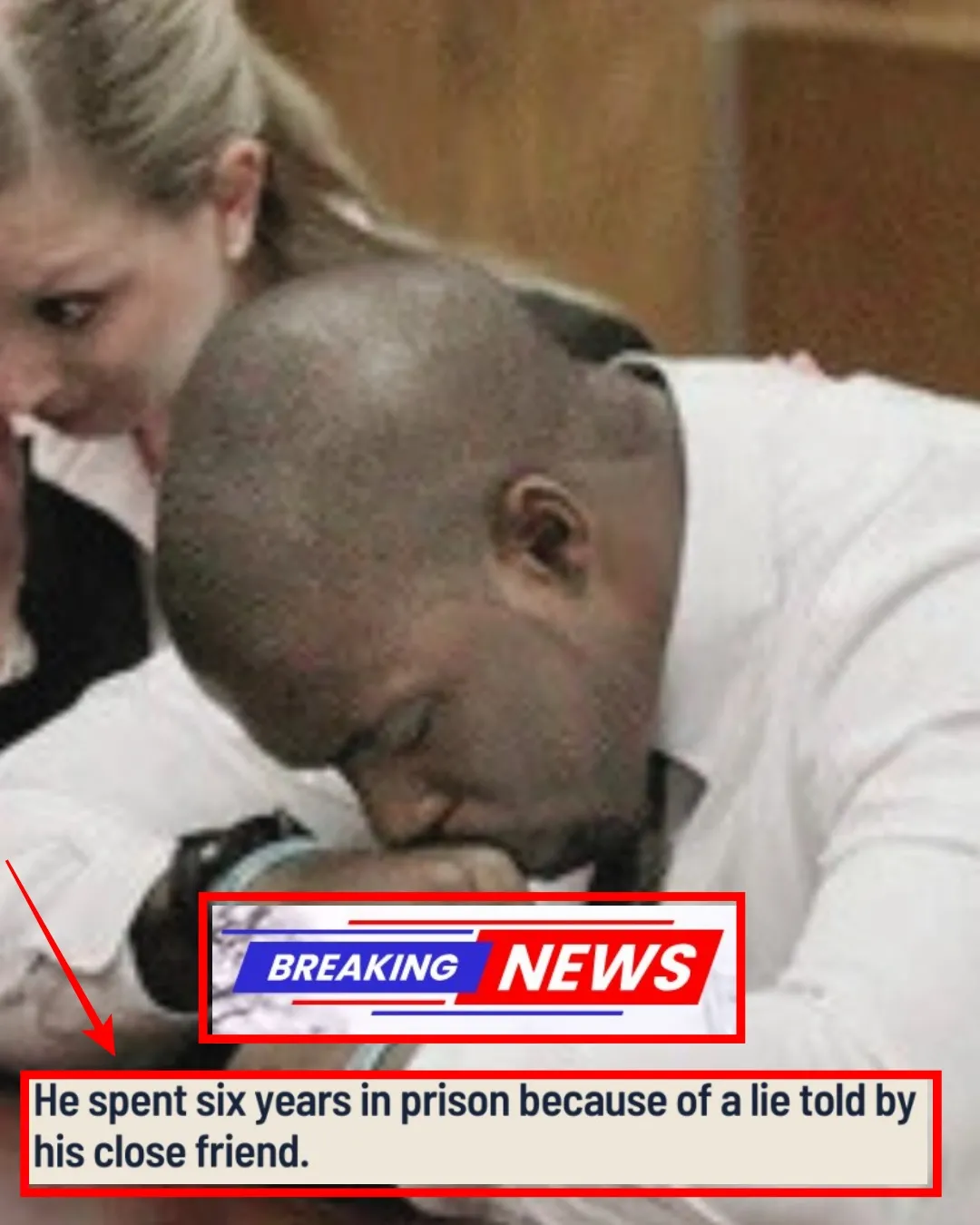
That decision would haunt him for years. By pleading no contest, Banks was sentenced to six years in prison. He was also required to register as a sex offender, a label that would follow him long after his release. His football scholarships disappeared overnight. College recruiters vanished. The NFL dream ended without a single snap at the professional level.
Prison was brutal. Banks entered the system as a teenager, surrounded by men hardened by years of incarceration. He lived every day under the weight of an identity that was not his, serving time for a crime he insisted he did not commit. His youth slipped away behind concrete walls and locked doors.
While Banks was imprisoned, the world outside continued without him. His peers went to college. His former teammates advanced in football. Life moved forward, leaving him frozen in a place defined by punishment and isolation. Every year that passed felt like a reminder of everything he had lost.
When Banks was eventually released, his sentence did not truly end. Parole conditions restricted nearly every aspect of his life. He was monitored, limited in where he could live, and barred from countless opportunities. Finding a job was nearly impossible. Employers saw only his record, not the truth behind it.
Freedom, for Banks, was fragile and conditional. He carried the stigma of his conviction everywhere he went. Simple moments—walking in public, applying for work, building relationships—were shadowed by suspicion. The damage extended beyond lost years; it reshaped how society viewed him and how he viewed himself.
Despite everything, Banks never stopped maintaining his innocence. He held onto the truth quietly, knowing that few were willing to listen. The justice system had already decided who he was. Challenging that narrative seemed impossible.
Nearly a decade after the accusation, something unexpected happened. In 2011, Wanetta Gibson contacted Banks through social media. What began as a strange interaction soon took a dramatic turn. Banks, sensing an opportunity, recorded their conversations without her knowledge.
During those recorded calls, Gibson made a stunning admission. She confessed that the sexual encounter had been consensual. She admitted that she had lied about the rape, explaining that she fabricated the accusation out of fear of getting into trouble. Her words confirmed what Banks had said all along.
Armed with this evidence, Banks and his legal team returned to court. The recordings changed everything. In 2012, a judge formally overturned Brian Banks’ conviction. The court acknowledged that an innocent man had been imprisoned based on a false accusation and a failed legal process.
Banks walked out of the courtroom a free man, his name legally cleared. But freedom came with mixed emotions. Relief was paired with anger, grief, and disbelief. Nearly six years of his life were gone, along with opportunities that could never be recreated.
Public reaction was swift and intense. The case sparked nationwide outrage and reignited debates about wrongful convictions, plea bargains, and the dangers of relying solely on accusations without evidence. Many asked how such a profound miscarriage of justice could happen in a system meant to protect the innocent.
Even more controversial was the outcome for Wanetta Gibson. Despite admitting to lying, she faced no criminal charges. She was not sentenced to prison. The contrast was stark: Banks lost years of his life, while the person who caused his imprisonment faced no legal consequences.
Banks later received a financial settlement from the school district involved, but money offered little comfort. No settlement could restore his lost youth, erase the trauma of prison, or undo the damage to his reputation. Compensation could not replace the years when his life stood still.
Still, Banks refused to let bitterness define him. Determined to reclaim what he could, he returned to football. Against incredible odds, he trained relentlessly, eventually earning a chance to try out for professional teams. His perseverance paid off when he signed with an NFL team, a moment that symbolized resilience rather than victory.
Though his professional football career was brief, the significance of that achievement ran deeper than statistics. It represented defiance against a system that failed him and proof that his spirit had not been broken.
Today, Brian Banks’ story is studied, discussed, and remembered as one of the most powerful examples of wrongful conviction in modern America. It forces uncomfortable questions about justice, truth, and accountability. It challenges the assumption that the system always gets it right.
His case remains a cautionary tale about how quickly lives can be destroyed when belief replaces evidence and fear overrides fairness. It also raises difficult questions about how many others may still be imprisoned under similar circumstances, waiting for a truth that may never surface.
Brian Banks rebuilt his life, but the scars remain. His story is not just about innocence lost and reclaimed—it is about a justice system that failed, a lie that carried devastating power, and a truth that arrived far too late.