
According to reported accounts of special operations activities from this period, such engagements would rarely make the news headlines or appear in official histories of the Iraq War, but would instead be known primarily through after-action reports filed away in classified archives and in the accounts of the men who were actually there on the ground in the desert.
The American military had just received intelligence that a high-value target was moving through the western Iraqi desert, somewhere in the vast expanses of Anbar province where targets could disappear across unmarked routes and where the terrain favored those who knew how to navigate it. The intelligence was fresh and tasking officers were treating it as actionable.
The information had come through in the early hours of the morning, originating from signals intelligence monitoring Iraqi military communications, human intelligence sources embedded in key locations throughout the western regions, and reconnaissance reports from coalition aircraft conducting surveillance flights across the desert.
American commanders reading this intelligence in their operation center with its large screens showing map overlays and constant streams of real-time communication traffic immediately began mobilizing assets for what they anticipated would be a complex and potentially lengthy operation. F-16 fighter jets were being prepped on the tarmac at forward airbases, pilots briefed on their potential tasking, transport helicopters were being fueled and readied for launch.
Entire headquarters staff was springing into action, coordinating what they believed would be a complex multi-hour operation involving air support, ground coordination, and the kind of careful timing that characterized American military doctrine. The American commanders estimated they would have forces ready to move within 4 to 6 hours.
They were already being optimistic in their timeline projections. Standard timelines for operational response, even for a mobile target in a location where American forces were already deployed throughout the region, involved careful planning, risk assessments, briefings up the chain of command, coordination with air support, clearance from higher authority, and the kind of deliberate methodology that had defined American military operations since at least the time of the Cold War and through decades of doctrine development. It was
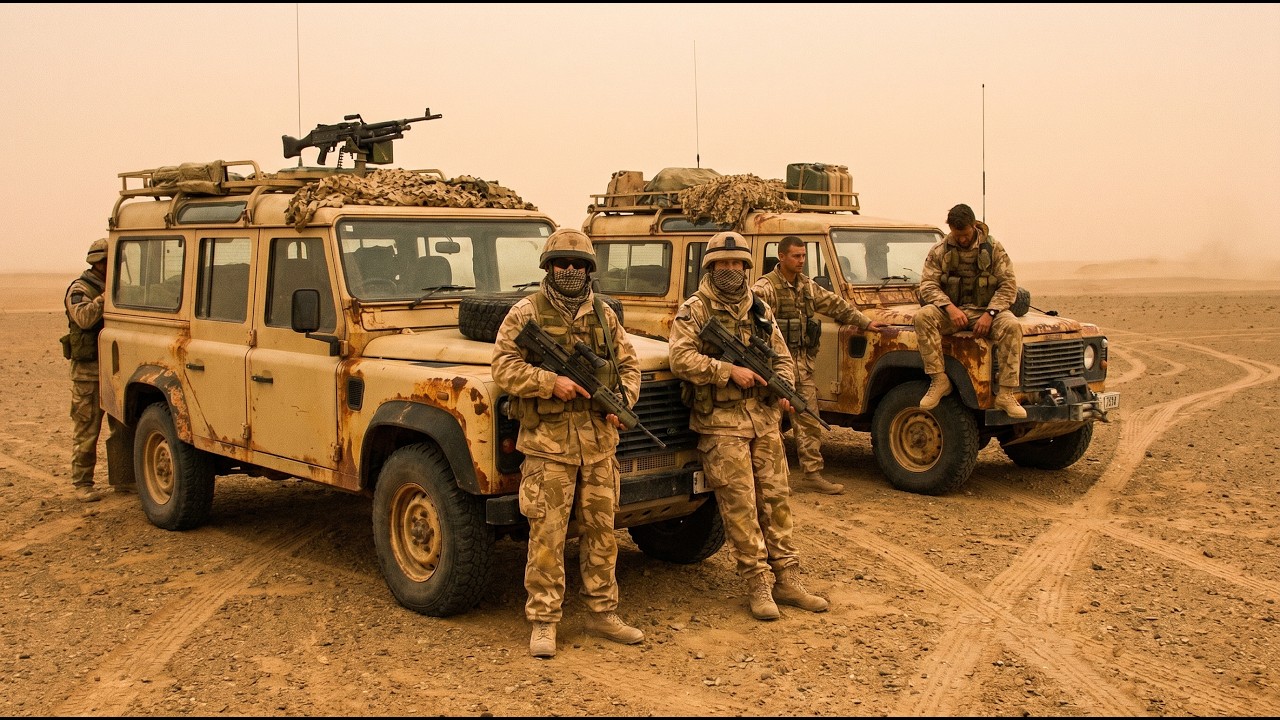
thorough. It was professional. It was, by any objective measure, significantly slower than what was actually about to happen out in the desert. 23 km west of the target location, the British SAS was already on the move. Their vehicles, weathered Land Rover Defenders that looked more like they belonged to a ranching operation or a safari company than a special forces unit, had been monitoring the same intelligence channels that the Americans were receiving.
These vehicles had a reputation that preceded them throughout the special operations community across multiple continents and conflicts and generations of warfare. In SAS operations across the Middle East and the rest of the world, the Land Rover Defender had become iconic and recognized as a tool of choice for rapid mobile warfare and close target reconnaissance.
Where the Americans were beginning their preparations in air-conditioned command centers, where colonels and majors were convening to discuss resource allocation and timing, where the whole apparatus of American military coordination was being activated, the SAS had already made their decision to move. They had packed their vehicles within minutes of receiving the intelligence.
They had checked weapons and ammunition, verifying that magazines were loaded and weapons were ready for immediate action. They had loaded navigation equipment and medical supplies and communication equipment. They were already moving toward the target location. By the time American commanders were still discussing resource allocation and arguing about whether this particular air asset or that particular air asset should be tasked to this operation, whether these particular helicopters or those particular helicopters would be
best suited for the mission, the SAS was already halfway to the intercept point. According to accounts from British special operations personnel, responses to American task force commanders requesting status updates sometimes indicated that SAS units had completed tactical objectives while larger American formations were still coordinating asset deployment.
Such anecdotes illustrate the operational philosophy differences between small rapid response units and larger conventional formations during the opening weeks of the invasion. British special operations in those early weeks demonstrated the tactical effectiveness of rapid response operations, though specific operational details from classified records remain limited in the historical record.
The story of this operation and the broader doctrine it represented reveals something fundamental about special forces warfare that conventional military leadership often struggles to grasp intuitively. It is not about the biggest force. It is not about the most sophisticated technology. It is not about the longest planning cycle or the most comprehensive intelligence picture.
It is about the fastest decision-making cycle combined with the highest possible level of autonomy at the tactical level. The SAS understood this principle with an almost intuitive clarity that had been refined through decades of operations in different theaters against different enemies facing different operational challenges from Malaya to Borneo to Aden to Northern Ireland to the Falkland Islands to the First Gulf War and beyond.
They understood that in fluid situations, in moments when intelligence is fresh and the target is still within reach, every minute matters. Every committee meeting is a minute lost. Every layer of approval is a minute lost. Every piece of coordination that requires confirmation from someone further up the chain is a minute lost. By the time those minutes accumulate into hours, and they do accumulate quickly in military operations, the target has moved or the window has closed or the opportunity has simply evaporated entirely. The Americans,
operating from a base 300 km away, were thinking in terms of operational layers and risk management and the proper coordination of assets across a large formation. The SAS, already in the theater, positioned forward in patrol bases, was thinking in terms of immediate action drills and the principle that the best plan executed immediately is superior to a perfect plan executed late.
This was not a new idea. It had been formulated in the founding principles of the SAS during World War II by its founder David Stirling and had been refined continuously in operations throughout the decades since its formation. The tactical vehicles that would carry out this operation had a history as interesting as the men who operated them.
The British SAS had not always favored lightweight, relatively unarmored vehicles for direct action missions in desert environments. In the 1980s and early 1990s, their mobility operations often relied on more heavily equipped platforms that offered better protection and greater firepower in extended engagements. But a series of operations throughout the 1990s, particularly in the Balkans during the post-Cold War interventions and during the reconnaissance and direct action campaigns against Iraqi forces in the 1991 Gulf War and the subsequent no-fly
zone enforcement that continued through the entire 1990s, had gradually shifted their thinking about how to balance protection with speed. They had learned through hard experience that speed and surprise were better than armor in many situations. They had learned that the ability to move fast enough to reach a target before it could be reinforced was better than the ability to survive incoming fire.
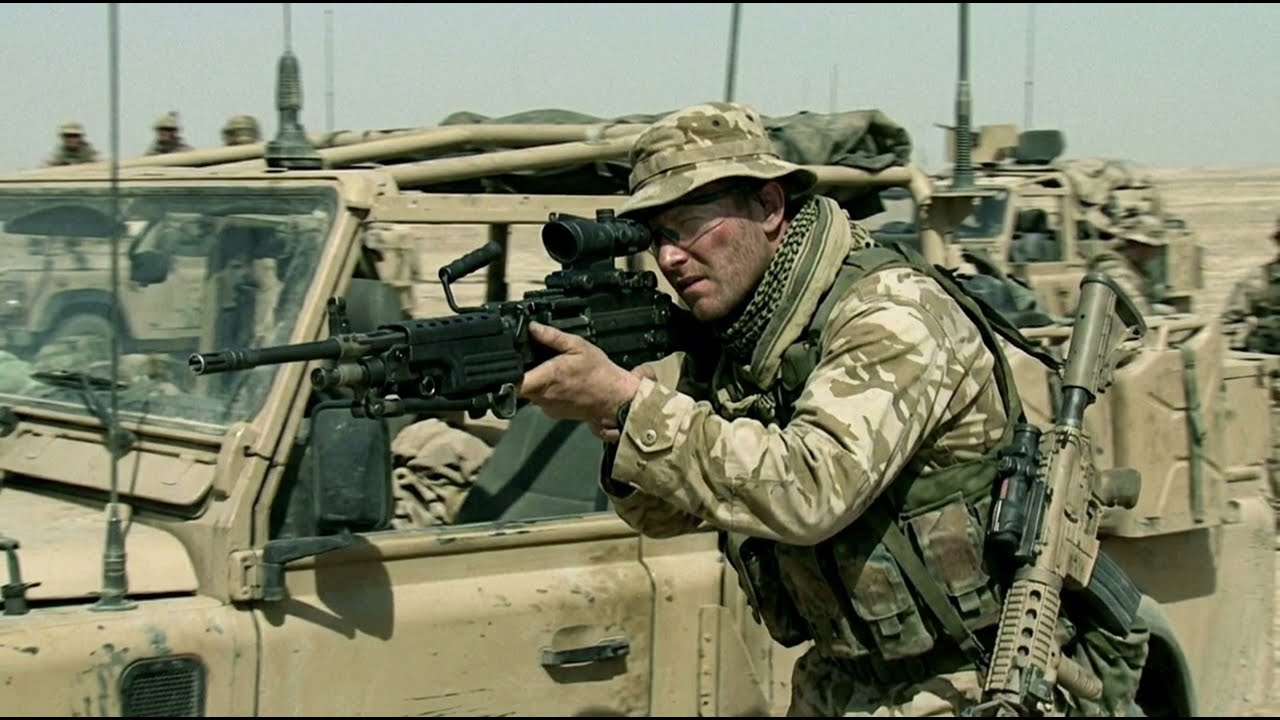
They had learned that a lighter vehicle driven with aggressive confidence could cover ground faster and could reach a position faster than anything that tried to survive being shot at. The Land Rover Defenders, usually painted in desert tan or left in a basic olive green, had become the preferred platform for rapid mobile operations.
They carried heavy weapons, GPMG machine guns mounted on flexible tripods and ammunition belts containing hundreds of rounds, sniper rifles capable of precision fire at extended ranges of 800 m or more, sometimes grenade launchers for breaching purposes or to provide support to other elements. But the philosophy was clear and unwavering.
These weapons were there to suppress enemy forces only long enough for the team to achieve its objective and extract. The vehicle itself was not meant to be a mobile fortress. It was not meant to be a platform from which a prolonged firefight could be conducted. It was meant to be a mobile platform for men who moved fast and thought faster than their opponents.
The logistics of maintaining these operations in the field were deceptively simple on the surface, but required meticulous planning and practice. A typical four-man SAS patrol in a Land Rover Defender could operate for extended periods with minimal resupply if their requirements were carefully calculated and prioritized.
Water was the critical factor in desert operations, far more critical than bullets or food. Food could be compressed into energy bars and high-calorie rations that provided thousands of calories in minimal bulk. Ammunition could be calculated to weight and mission requirements, with standard loadouts creating a balance between firepower and mobility.
But water in the desert was the constraint that governed everything. A four-man team with sufficient weapons and ammunition to conduct a significant engagement might carry 70 L of water, enough for several days of operations if rationed carefully, and if the men were trained to function effectively on limited water intake.
The vehicles themselves had been modified extensively through countless patrol cycles and lessons learned in previous operations. Fuel consumption had been optimized through engine modifications and careful maintenance procedures. Navigation equipment, still in those years often relying on traditional GPS units supplemented by detailed map reading and terrain association, was mounted in positions where the patrol commander and driver could access them without stopping or slowing down significantly.
Combat supplies were organized in modular containers that could be accessed while the vehicles were moving or stationary. The engineering that went into these vehicles was substantial, even if it appeared minimal to an outside observer. A trained observer walking around a Land Rover Defender prepared for SAS operations might notice that every single item stowed had a purpose, that nothing was redundant, that everything that weighed anything was essential to the operation.
These were not vehicles prepared for a prolonged stand against a determined enemy. These were vehicles prepared for rapid movement, sudden violence, and immediate extraction from the area of operations. The intelligence that triggered this particular operation had come through standard coalition intelligence channels.
The Americans had detected movement of a significant target through western Iraq. The target had military significance and, in the political context of early 2003, had potential intelligence value. The information was passed to coalition forces operating in the desert, who were responsible for their respective areas of operations.
In the British sector, this information was received by the SAS squadrons that had been operating continuously in Iraq since the opening days of the invasion just weeks earlier. These men had already been in country for weeks by this point in March. They understood the terrain in detailed ways that only come from extensive patrolling and reconnaissance.
They understood the patterns of movement through the desert. They understood which roads were used, which routes were preferred for speed, which routes were preferred for concealment, and what kind of timelines made sense for interception of mobile targets. The decision was made at the tactical level to move immediately on this opportunity.
There was no committee meeting, there was no staffing process that required paperwork and approval from higher authority. There was a patrol commander who had the autonomy, the experience, and the mandate to make a decision about whether to pursue an opportunity or let it pass. He decided to move.
Within minutes, the Land Rovers were starting their engines and beginning their movement toward the target area. Within an hour, they were in position at the intercept point, having covered the distance across terrain that would have taken conventional forces much longer to traverse. The actual intercept was conducted with the kind of methodical violence that the SAS had perfected over decades of operations in different theaters and against different enemies.
The vehicles moved to a position ahead of the expected movement of the target based on the intelligence they had been given and based on their understanding of the likely routes through the desert. They waited in position, maintaining communication discipline and readiness. When the target vehicle appeared on the horizon, the standard immediate action drill was executed with the kind of synchronized precision that comes from repeated training and rehearsal.
The Land Rovers moved to a blocking position that prevented the target vehicle from proceeding forward. Weapons were deployed with professionalism and confidence. The occupants of the target vehicle were given immediate commands to exit with their hands visible and empty. There was no ambiguity about what was expected. There was no negotiation.
The target, presented with this situation, with the sight of SAS personnel in tactical positions with weapons trained, complied immediately. He was secured, secured meaning his hands were restrained with plastic restraints. A bag was placed over his head to prevent him from seeing and to restrict his sense of what was happening, and he was loaded into one of the Land Rovers.
The entire operation, from the first vehicle movement to the securing of the target, took less than 3 minutes. The Land Rovers then moved away from the area, traveling back toward the coalition position where the detainee could be processed and handed over to the appropriate authority for interrogation and intelligence gathering.
By the time the American helicopters were lifting off their landing zones, by the time the American pilots were checking in with their forward air controllers, by the time the American ground forces were doing their final weapons checks and verifying their routes, the SAS had already covered the return route back to friendly territory.
They had already secured the target. They were already communicating the successful completion of the operation to the higher command structure. The American response when it came was not characterized by criticism or recrimination. It was, by most accounts, a mixture of surprise and acknowledgement of superior speed.
In the American military culture, there was a deep respect for what the British forces had accomplished. The American commanders understood that this was not a case of the SAS being reckless or taking unnecessary risks. This was a case of the SAS understanding that in the desert, in a theater of operations where targets could move freely and where fixed positions and forward bases were still being established, the ability to make a rapid decision and execute that decision faster than anyone else was a profound operational
advantage. The broader context of this operation is important for understanding its significance within the larger Iraq campaign. In March 2003, the invasion of Iraq was in its opening phases. The major combat elements of the American military were still establishing their positions. The American military, for all its technological sophistication and power, was operating in an unfamiliar environment with limited intelligence about which forces and individuals posed what level of threat.
The temptation was to solve this uncertainty with more planning, more coordination, more certainty before acting. The SAS, by contrast, was willing to accept a certain amount of uncertainty because speed, they understood, was itself a form of certainty. If you move fast enough, if you act decisively, even with imperfect information, you can often achieve your objective before circumstances change.
This philosophy had deep roots in British special forces culture. It had been tested and validated across multiple conflicts and multiple theaters. It was not a philosophy born from arrogance or excessive confidence. It was born from a hard-won understanding of what works in the kind of fluid tactical environment that characterized asymmetric warfare and counterinsurgency operations.
The vehicles that the SAS used for these operations had another advantage that often went unnoticed in the broader discussion of special forces tactics. They were, by design, unmistakable. A conventionally camouflaged military vehicle painted in appropriate desert colors might be mistaken for an Iraqi military vehicle or a hostile force vehicle, particularly in the chaotic first weeks of the invasion when civilian authority had completely collapsed and various armed groups were moving through the countryside.
The SAS vehicles, by contrast, were immediately and unquestionably identifiable as professional military platforms. They carried the kind of weapons that only trained military personnel could effectively operate. They moved with a kind of confidence and precision that broadcast their nature. In a paradoxical way, this visibility was actually protective.
It prevented mistakes. It prevented accidents. It prevented local forces from attempting to engage what they might have otherwise mistaken for a hostile element. The vehicles said wordlessly, “We are professionals. We are dangerous. We are not to be engaged without consequence.” And this message was transmitted not just by their visible armaments, but by the very way they moved through the landscape with purposefulness and authority.
The training that prepared SAS personnel for these rapid response operations was extensive and grueling throughout their service. Selection itself, the famous SAS selection course, had been refined over decades to find and develop the right kind of soldiers. It was designed to find men who could operate independently without close supervision, who could make sound tactical decisions under stress, and who could maintain their effectiveness when isolated from immediate command and control.
A typical selection course would last several weeks and would involve extended navigation exercises in difficult terrain, often carrying heavy loads and operating on minimal sleep. The physical demands were severe and exhausting, but the psychological demands were arguably more important. The course was designed to break men mentally, to put them in situations where they wanted to quit, and then to see who kept going anyway.
The men who successfully completed selection were not necessarily the strongest or the fastest. They were the men with sufficient mental toughness and sufficient self-belief to continue when every instinct and every fiber of their being told them to stop. This selection process had created a culture within the SAS of men who were confident in their own judgment, who were willing to make decisions and own the consequences of those decisions, and who understood that their role was to get the job done with the minimum
necessary force and the maximum possible speed. After selection, the training continued throughout a soldier’s service in the regiment. Squadron training focused on the specific tasks that the SAS was likely to conduct in their operational area. In the years leading up to the Iraq invasion, much of this training focused on rapid mobility operations, on vehicle-based tactics, on the kind of high-speed intercepts and direct action missions that characterized operations in the no-fly zones over Iraq and in the counterterrorism campaigns that had
followed the First Gulf War. The SAS would practice these operations repeatedly until they became second nature to the personnel. A rapid assault from vehicles onto a target location would be rehearsed dozens and dozens of times. The movements would be synchronized. The communication between vehicles and personnel would be streamlined.
The decision-making would become almost instinctive when the actual moment came. When the patrol commander made the decision to move on this particular target in March 2003, he was not making a novel decision. He was executing a decision-making process that he had practiced hundreds of times over months and years of training.
His confidence in his ability to execute the operation and in the ability of his men to do their part was not arrogance. It was earned through countless hours of preparation and previous operational success. The execution itself was not improvisation. It was the delivery of a practiced drill that had been refined through years of training and repeated application.
The SAS philosophy was that if you rehearsed your actions correctly, if you trained until the execution became automatic, then when the real moment came, your body and your mind would do what they had been trained to do. There would be no hesitation, no confusion, no uncertainty about what was expected. The men would move with the kind of automatic confidence that comes from knowing that you have done this a hundred times in training and dozens of times in actual operations.
The target, seeing this professionalism and this confidence, would recognize the futility of resistance and would comply without issue. The broader question of why smaller special operations units had advantages in rapid response operations over larger military forces comes down to organizational culture and decision-making architecture.
Large military organizations require layers of approval because they need to ensure that tactical decisions align with strategic objectives and with higher-level political guidance. These layers of approval are not arbitrary. They exist for good reasons. They prevent unauthorized operations. They ensure accountability.
They ensure that military force is being applied in ways that serve national interests rather than the personal interests of individual commanders. But the cost of this layered decision-making is speed. The American military, facing this very dilemma, had to balance the need for rapid response with the need for centralized control.
Smaller special operations organizations with specific mandates and clear understandings of their operational parameters could maintain tighter decision-making cycles. Unit commanders, operating within clearly defined authorities, knew what kinds of decisions they could make without seeking approval from higher command and what parameters governed their operations.
Within those parameters, they had significant autonomy. This combination of clear constraints and meaningful autonomy within those constraints became recognized as optimal for rapid tactical decision-making in battlefield environments where response time is critical. The Land Rovers themselves, viewed as technical platforms, were less impressive than much of the military technology that was in use at the time.
They had no sophisticated fire control systems. They had no advanced navigation platforms beyond basic GPS units. The weapons mounted on them were, by and large, conventional weapons that had been in use for decades. A GPMG, a general-purpose machine gun, is not a particularly advanced weapon. It is, in fact, a nearly unchanged descendant of weapon systems that had been in use since the 1960s.
Sniper rifles were high-quality precision weapons, but they were not revolutionary. The armored protection on the vehicles, such as it was, was minimal. Many of the vehicles used by the SAS in Iraq had additional armor added through modular plates, but this was basic steel plating, not the kind of advanced composite materials or advanced protection systems that were being used on some other military vehicles.
The vehicles could take small arms fire. They could absorb hits from enemy rifles and machine guns. They could not reliably survive anything heavier, such as anti-tank weapons or heavy machine gun fire. If the SAS encountered a well-armed, well-positioned enemy force in prepared defensive positions, the Land Rovers would be at a severe disadvantage. This was understood.
This was accepted by everyone involved. The vehicles were designed for a specific role, to move fast across desert terrain, to arrive at a target location before the target could be reinforced or before the target could escape, and to deliver sufficient firepower to suppress enemy resistance long enough for the SAS personnel to complete their objective and extract.
They were not designed for prolonged engagements. They were not designed to stand and fight a numerically superior force. They were designed for the shock of surprise and the speed of execution. The intelligence picture in early 2003 was, by modern standards, relatively primitive. There were no real-time video feeds from drones watching specific locations.
There were no satellite imagery updated every few hours showing current positions. What there was included signals intelligence, analysis of intercepted communications, agent reports from people on the ground who had access to information, and inference from patterns of movement and behavior. The target in this case had been identified through a combination of these sources.
The Americans had become confident enough in the intelligence to initiate operations against this target. The SAS, receiving the intelligence from American sources, had to make a rapid assessment of its credibility. Is this real intelligence or is it a possible indicator? Is the target likely to remain in the area or is he likely to move on? Are we positioned well enough to conduct an effective intercept? Do we have sufficient resources in the immediate area to execute the operation successfully? These questions had to be answered in minutes, not hours. The
patrol commander, based on his years of experience and his professional judgment, assessed that the intelligence was credible, that they were well positioned to conduct an intercept, and that the opportunity was worth pursuing. He recommended moving to his troop commander. The troop commander, having similar confidence in the patrol commander’s judgment and operational capabilities, approved the operation.
The entire decision cycle took less than 10 minutes from the time the intelligence was received to the time the vehicles were moving toward the target. In that same 10 minutes, the American command structure was still in the initial phases of tasking helicopters and air support assets. The concept of presence in military operations is often overlooked in discussions of special forces tactics.
The SAS maintained a forward presence in Iraq throughout the period after the initial invasion. They had patrol bases established throughout the American sector of operations. They were conducting regular patrols and reconnaissance missions. This forward presence meant that when an opportunity arose, they were already positioned to respond.
They did not need to be moved into theater. They did not need to be moved from a distant airbase hundreds of kilometers away. They were already there. This is a significant advantage in rapid response situations. The American forces based further back and less dispersed throughout the operational area did not have the same forward presence in every location.
This was not a failure on their part. It was a reflection of their different operational model and their different resource allocation. But it meant that when opportunities arose, the SAS was often already nearby, already in position, already prepared to act immediately. The conceptual image that captures something essential about special forces operations in the modern era is not one of massive air strikes or heavily armored vehicles with overwhelming firepower.
Rather, it is the archetype of a small team of personnel in utilitarian vehicles deploying rapidly to estimated target locations based on current intelligence and executing practiced immediate action drills with precision and confidence. Such vehicles are often so unremarkable that observers unfamiliar with military equipment might not immediately recognize them as military platforms.
The operators are in practical uniforms carrying weapons that are high quality but not necessarily cutting edge operating from organizational structures that grant meaningful decision-making authority at the tactical level. This arrangement, modest platforms combined with well-trained autonomous personnel, has proven to be one of the most effective approaches to conducting rapid response operations in uncertain, fluid environments.
The real lesson is not that superior equipment or firepower is essential. Rather, it is that success depends on the right personnel making sound decisions as quickly as possible supported by organizational culture that trusts them to do so. Such vehicles are tools. The actual capability resides in the human beings operating them, shaped by decades of doctrine and training and supported by organizational structures that permit timely action based on their judgment and experience.
Professional competence, clear decision-making authority, and organizational trust in personnel have proven to be as valuable as technological superiority in many special operations contexts. These principles have influenced special operations training and doctrine over subsequent decades informing how various special forces approach rapid response missions and independent operations in multiple theaters.
The operational context of this single engagement, though seemingly minor in the grand scheme of the Iraq war, actually revealed a profound shift that would characterize special operations warfare throughout the 2000s and beyond. The question of who could move faster, who could make decisions quicker, and who could act with the greatest autonomy was no longer an abstract military theory.
It was a practical matter with immediate consequences. The SAS had answered that question in March 2003, and the answer had been captured in radio traffic and in after-action reports. The Americans had learned the lesson, even if learning it had been uncomfortable. By the time Iraq was fully engaged and by the time operations had shifted into counterinsurgency mode, American commanders and American special operations forces had begun to adopt many of the principles that the SAS had demonstrated on that day in the Iraqi desert. The doctrine that would emerge
from the Iraq war and from the lessons of the first few years of operations would place far greater emphasis on rapid decision-making at lower levels of command. American special operations forces would be given more autonomy. Commanders would be trusted with more discretion. The approval cycles would be streamlined.
This evolution did not happen overnight. It happened gradually, driven by operational experience and by the recognition that in insurgent warfare, speed and autonomy were essential. But the seeds of this evolution had been planted in those early months of the invasion when American commanders watched the SAS accomplish in 1 hour what they had estimated would take 4 to 6 hours with American forces.
The broader transformation of military doctrine that this operation symbolized extended beyond special operations forces. Even conventional military units began to recognize that some level of decentralized decision-making and tactical autonomy was necessary to respond effectively to insurgent threats.
The highly centralized command structures that had served well in conventional warfare against peer competitors were not optimal in counterinsurgency warfare against dispersed, mobile enemy forces. Commanders at all levels began to be given more flexibility, more authority, and more responsibility for making tactical decisions.
The approval cycles were streamlined. Rules of engagement were modified to give commanders in the field more authority to make immediate decisions without consulting higher authority in every instance. This evolution represented a fundamental shift in American military culture. The American military had traditions of centralized command, of careful planning, of approval from higher authority.
These traditions had served well in many contexts, but in the fluid environment of Iraq and Afghanistan, they were sometimes counterproductive. The lessons of that March 2003 operation, though not explicitly codified in any formal doctrine change, nonetheless influenced how American military commanders thought about command and control and about the tradeoffs between centralized oversight and decentralized decision-making.
The Land Rovers themselves, those unremarkable vehicles in the desert, had become iconic representations of a particular approach to military operations. They represented the principle that the simplest, most efficient solution is often the best. They represented the value of speed and maneuverability. They represented the faith that military organizations place in their personnel to make good decisions when empowered with the authority to do so.
The vehicles were not the most sophisticated platforms. They were not the most powerful. But they were effective because they were paired with well-trained personnel and with an organizational culture that trusted those personnel to make decisions. That combination of simple platform, excellent training, and trust in personnel proved to be highly effective.
The legacy of this operation extended beyond the immediate tactical success. The operation had influenced American military thinking about how special operations forces should operate. It had influenced American thinking about command and control and about decentralized decision-making. It had influenced American doctrine. These influences were gradual and not always explicitly traced back to this particular incident, but they were real.
The American military learned from watching the SAS, and those lessons were incorporated into how Americans conducted special operations warfare. Over the subsequent years as the Iraq war evolved and intensified, American commanders at all levels would reference the principles demonstrated in those early special operations engagements. Senior leaders in the Pentagon would cite the effectiveness of rapid response operations.
Training programs at special operations schools would use case studies from early Iraq operations to illustrate principles of decentralized decision-making. The cultural shift happened slowly, but it was real and measurable in how American special operations forces were organized, trained, and deployed. The question of whether the American approach or the SAS approach was ultimately superior is complex.
Both approaches had strengths and weaknesses. The American approach provided oversight and prevented some kinds of mistakes. It created accountability and a clear record of decision-making. But it was slow. The SAS approach was fast, and it relied on trust in personnel. But it created risks of the wrong decisions being made without proper oversight.
The ideal approach, which many military organizations have since come to embrace, is some hybrid of the two. Decentralized decision-making within clear parameters of authority with oversight that is meaningful but not paralyzing. This hybrid approach, which is now common in military doctrine, owes something to the lessons learned in those early months of the Iraq war when an American military that was not yet adapted to insurgent warfare watched a British special operations unit demonstrate how to move fast and make decisions quickly in a fluid tactical
environment. Following the early 2003 operations in Iraq, military strategists and special operations training commands have studied and analyzed the principles of rapid decision-making demonstrated by special operations units. Various operations from the period have been examined as case studies in military schools, discussed in seminars on command and control, and referenced in doctrine development.
The fundamental principle that speed of decision-making can sometimes be more valuable than comprehensive planning has become increasingly accepted in military circles. Drawing on lessons from various Iraq operations conducted during this period, this acceptance did not come easily, and it did not come from a single operation.
But this operation was one of the early data points that suggested that the American way of war, at least in special operations contexts, might benefit from moving faster and trusting field commanders more. The cultural differences between the American military and the British SAS that this operation highlighted were not matters of superior competence.
Both organizations were professional. Both were competent. The difference was in philosophy, in doctrine, and in organizational culture. The Americans believed in certain things about how military organizations should function. The SAS believed in different things. Neither was wrong, but they operated from fundamentally different premises about how special operations forces should be organized and how they should make decisions.
The operation in March 2003 had demonstrated that under certain conditions, the SAS approach produced faster results. It did not necessarily produce better results in every sense, but it produced results faster. That was the key lesson. The broader significance of this operation lies not in the operation itself, which was a relatively small tactical engagement, but in what it revealed about how military organizations think, how they organize themselves, and how they make decisions.
It revealed that there were fundamentally different approaches to command and control, and that each approach had strengths and weaknesses. It revealed that speed was sometimes valuable, sometimes very valuable, even at the cost of some amount of planning and certainty. It revealed that trust in personnel, combined with training and with clear authority structures, could be a powerful organizational principle.
These lessons, while obvious to students of organizational behavior and to historians of military organizations, were not universally accepted in military circles in 2003. The operation contributed to a gradual shift in military thinking that would accelerate over the subsequent years. The operation also revealed the power of forward presence and of having resources already positioned in theater.
The SAS was effective partly because they were already there. They did not need to be moved into theater. They did not need to stage through a forward base. They were already in position. This principle, which seems obvious in retrospect, had profound implications for how the American military would organize its special operations forces in subsequent years.
Forward-based special operations forces became increasingly important. The concept of special operations personnel being forward deployed and ready to respond to emerging opportunities became more central to American special operations doctrine. This shift was influenced by many factors, but the effectiveness of the SAS model in Iraq was certainly one of them.
The story of the Land Rovers in the desert in March 2003 is ultimately a story about military effectiveness, about organizational culture, and about how different military organizations approach the fundamental problems of command and control and decision-making under uncertainty. It is a story that has been studied and analyzed and referenced in military doctrine development.
It is a story that captures something important about special operations warfare in the modern era, and it is a story that, while it involved only a handful of personnel and a small tactical operation, had implications that extended far beyond that single engagement. The lessons embedded in this operation would resurface repeatedly in the debates and discussions about how to conduct counterinsurgency operations effectively.
When American commanders struggled with the pace of operations in Iraq and Afghanistan, they would remember the principle that speed sometimes matters more than perfection. When military academies taught lessons about organizational command and control, they would reference the tension between centralized oversight and tactical autonomy.
When special operations forces were being designed and organized for future conflicts, the principles demonstrated in that March 2003 engagement would inform those organizational decisions. The aftermath of the operation saw the target secured, processed, and handed over to appropriate authorities for interrogation and intelligence exploitation.
The tactical success was complete. The Americans, reviewing the operation, had to acknowledge that the SAS had accomplished what they were attempting to accomplish, and they had done it faster. The American force that was launching helicopters and coordinating air support was stood down. The American personnel who had been preparing for the operation were reassigned to other tasks.
The American air assets that had been tasked were released to support other operations. The entire American operation plan, which had been comprehensive and which had involved many moving parts, was made irrelevant by the faster action of a small special operations unit.