
The Illusion of Safety: A Story of Distraction, Loss, and Unforgivable Consequences
The Texas highway stretched long and open under a pale November sky, the road unwinding before travelers like an endless promise of distance. On that morning, the usual rhythm of traffic hummed along, its cars and trucks weaving through the lanes with the ease of a daily commute. No one expected the road to become a place of final goodbyes.
Inside a Nissan Altima, four women were simply trying to get from one place to another. They had experienced the common inconvenience of a flat tire, forcing them to slow down and carefully hug the right lane, adhering to caution as they moved. They weren’t seeking danger, they were adapting to an unforeseen issue. But the world they knew, the world of simple problem-solving, was about to end in an instant.
Behind them, an 18-wheeler barreled down the road, heavy with its load of potatoes—a shipment bound for grocery stores where families would buy them without a second thought. At the wheel sat Guadalupe Villarreal, a professional truck driver who had been trusted with a machine capable of extreme destruction. Unfortunately, that trust would soon be shattered.
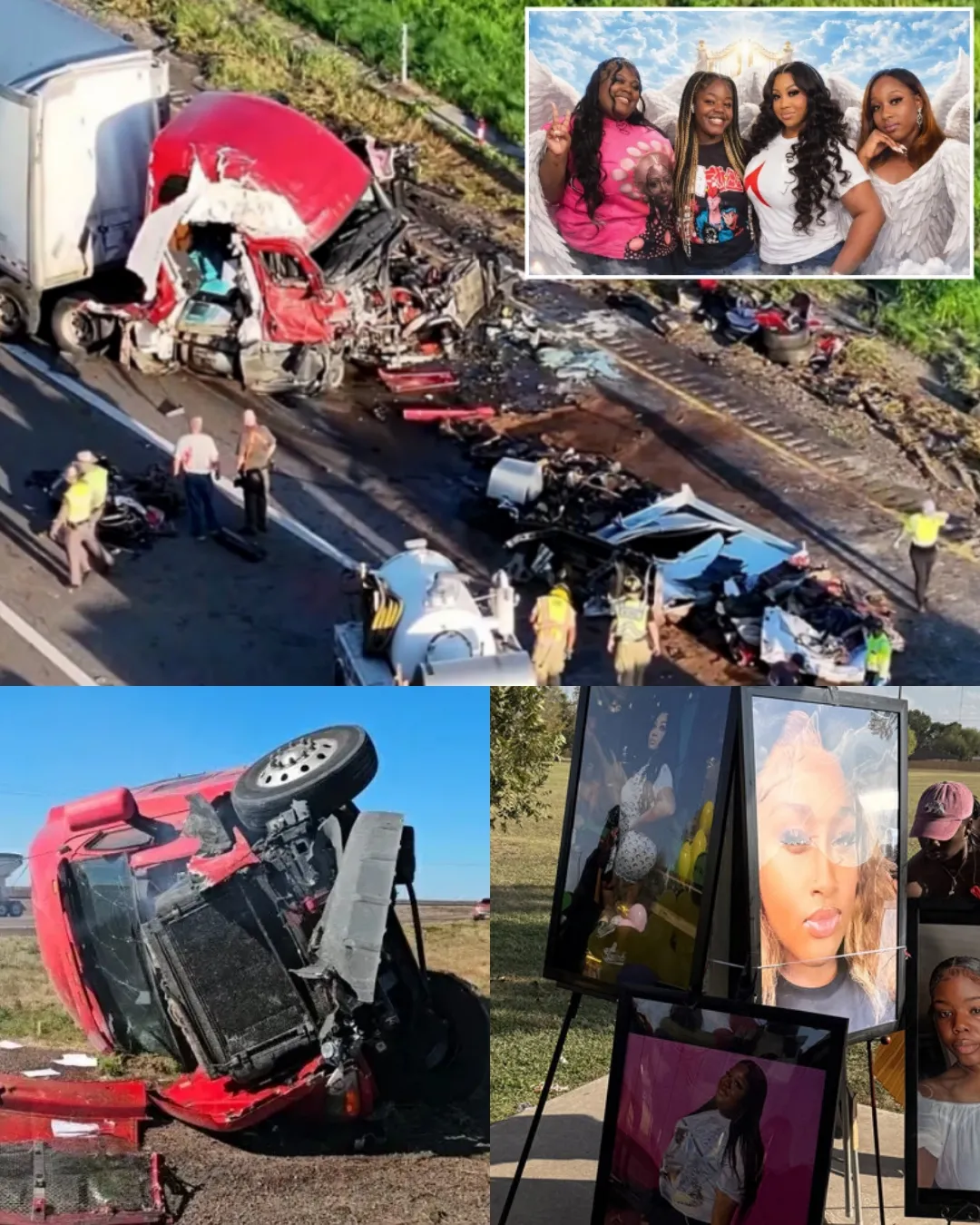
The dashcam footage, recorded moments before the collision, revealed the tragic seconds leading up to the crash. The truck, coming up quickly behind the Nissan, didn’t slow in time, didn’t veer away, and didn’t brake with urgency. Instead, it plowed into the back of the small sedan, the impact violent and unrelenting. In those brief moments, four lives were wiped away, irrevocably and without warning.
Lakeisha Brown, Breanna Brantley, Myunique Johnson, and Taylor White were the women who perished in the crash. They were daughters, sisters, friends, each with hopes, dreams, and futures that would never unfold. Their absence left a void that no legal document could ever fully capture.

The families of the women filed a lawsuit against the driver, alleging negligence and distraction. It wasn’t just an accident, they argued. It was the result of a lack of focus, speed, and failure to pay attention when it mattered most. And at the center of that claim was a cellphone—a device that has become an all-too-common source of distraction on the roads.
The lawsuit pointed to the likely cause of the inattention: Villarreal was reportedly using his phone while driving. In addition to the distraction, he was traveling at an unsafe speed, even when there was clear evidence that slowing down was necessary.
At the core of this tragedy is a question that still lingers: How could a professional driver, someone trained to handle such a massive vehicle, fail to notice the dangers ahead? How could he allow something as seemingly innocent as a phone to take his focus away from the road?
The crash, as seen in the dashcam footage, showed no dramatic last-second swerve, no attempt to avoid the disaster. The truck simply crashed into the Nissan, with no sign of hesitation or effort to steer away. The lack of action in the face of impending danger spoke volumes. The Altima had done nothing wrong. It was already slowed due to the flat tire, taking precautions as any responsible driver would. But what followed came from behind, unseen and unstoppable.
When the Texas Department of Transportation filed the official crash report, it came to a grim conclusion: The truck driver “failed to control speed.” There was no mention of emotion, no words for the lives lost—just an impersonal finding. This was a tragedy, but to the report, it was simply a matter of speed.
Despite the severity of the crash, no criminal charges were filed against Villarreal. For the families of the women, this was an additional wound. It felt as though the legal system was dismissing their grief, reducing the devastating loss to a mere statistic. Accountability, they believed, had to go beyond a report number.
The families’ lawsuit named several parties: Villarreal, Parkway Transport, Scrappy Trucking, and H-E-B—the corporate entities that were responsible for hiring and overseeing the driver. The families argued that the lack of proper oversight and the failure to ensure safe driving practices had contributed to the tragedy. This wasn’t just one person’s fault—it was a failure at every level of responsibility.
Cellphones, though they are an essential part of modern life, have become a quiet danger on the road. They don’t demand attention with the loudness of a crash; they pull drivers in with soft whispers. And in this case, that whisper was powerful enough to end four lives.
The families’ attorneys had requested that Villarreal’s phone records be preserved. They wanted to know exactly what had distracted him in the moments before the crash. Whether he was texting, scrolling, or talking, they knew that something had pulled his focus away from the road, and that distraction had fatal consequences.
Though it remains unclear what exactly Villarreal was doing on his phone, what is clear is that he was not paying attention when he needed to. And in a world where thousands of pounds of metal are hurtling down highways, divided attention can be fatal.
For Aric Hutchinson, the husband of Sam Miller, grief arrived in waves. At first, there was shock, followed by disbelief. Then, an overwhelming silence. But the hardest part came later—when the anger set in. How could someone be so careless? How could one person’s inattention cause so much pain?
In the months following the crash, the families of the victims remembered the women for who they truly were—not as victims, but as vibrant people full of potential. They recalled moments of laughter, plans for the future, and birthdays that would never come. All of it, stolen because one person decided to look away for too long.
The crash that killed Sam and the other women wasn’t just another accident on a highway. It was a harsh reminder that life can change in an instant, that a single moment of distraction can alter the course of so many lives. The tragedy didn’t just affect the families—it shook the community, forcing everyone to confront the dangers of distracted driving.
As the legal case moved through its slow and painful process, questions began to multiply. Who was truly responsible for this? What safeguards failed before the crash? What could have been done to prevent such a senseless loss?
For now, there are only empty seats, vacant spaces in lives that should have been filled with joy. And as the families try to move forward, they are left with the question that no legal process can answer: What would have happened if someone had simply paid attention?
The families’ lawsuit isn’t just about seeking justice or compensation—it’s about making sure that this loss is recognized. It’s about forcing society to pay attention to a danger that has become so common, it’s almost invisible. Distracted driving is no longer just a personal risk—it’s a communal one. One person’s choice can extinguish multiple lives in the blink of an eye.