

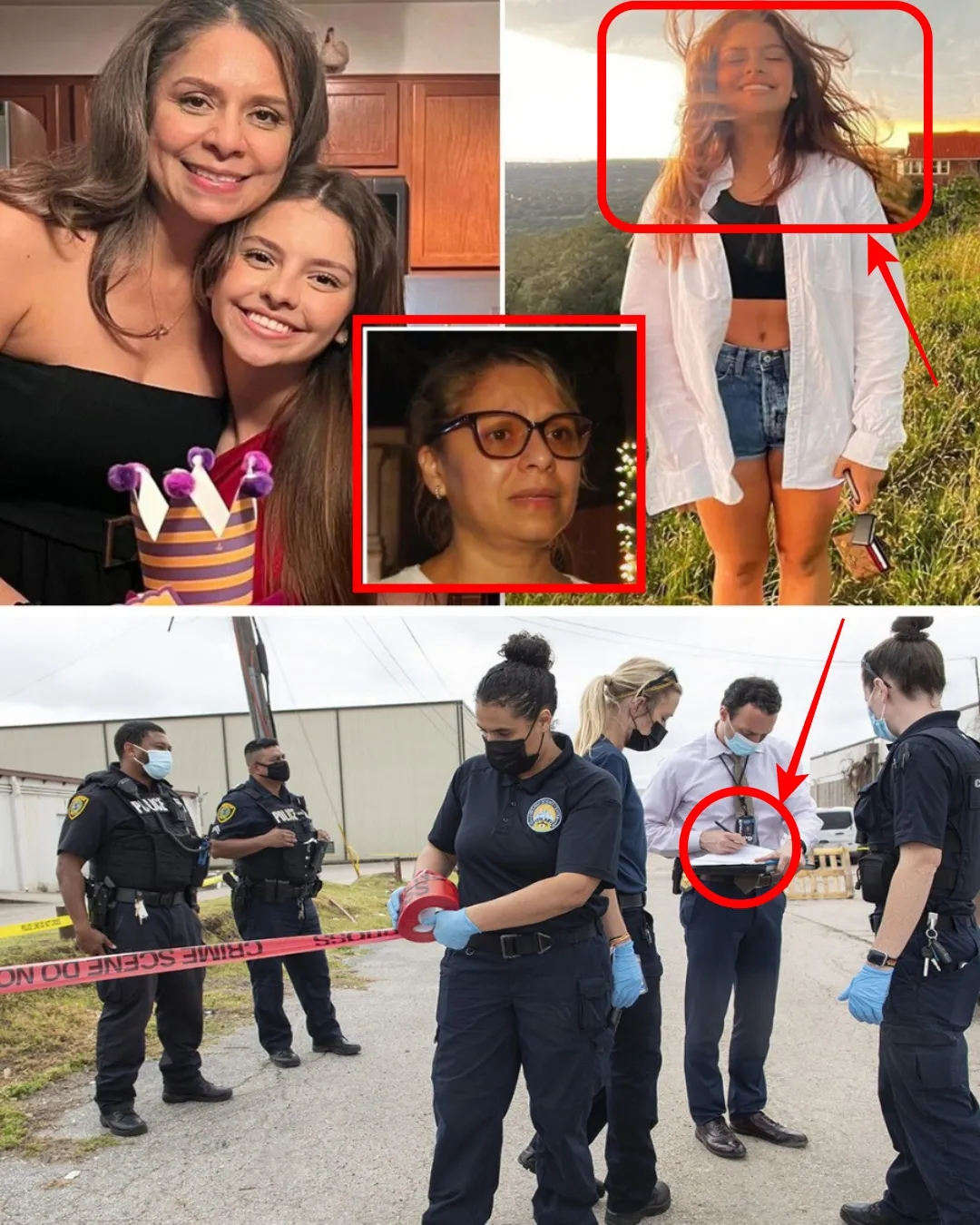
The early morning air over San Antonio was cool and crisp, carrying the faint scent of damp earth and pine as the city slowly stirred awake. On Christmas Eve, most residents were immersed in holiday routines—lights twinkled from windows, children hurried past in winter jackets, and neighbors exchanged cheerful greetings. But in the Mendoza household, a sense of unease had begun to settle, signaling a day that would soon spiral into tragedy.
Camila Mendoza Olmos, 19, had left her family home in the quiet suburb as part of her usual early-morning routine. Her mother, Nancy Mendoza, expected the familiar pattern, assuming her daughter would return after a short walk or a quick errand. But hours passed, and Camila did not return. A mounting anxiety gripped Nancy, turning her worry into urgent concern, and she contacted local authorities to report her daughter missing.
The initial response by law enforcement focused on the immediate surroundings. Officers canvassed streets, backyards, and neighborhood paths. They checked parked cars, spoke with neighbors, and sought any indication of her whereabouts. Camila’s cellphone remained in her bedroom, powered off, deepening the uncertainty and heightening the tension. No signs of a struggle were visible inside the home, and neighbors had noticed nothing unusual overnight.

Security camera footage provided the first glimpses into the mystery. One nearby camera captured what appeared to be Camila inspecting her car, seemingly looking for an item before the footage abruptly ended. Another clip, from a dashcam, showed her walking along the side of a quiet road. She appeared alone and calm, but the images offered little explanation as to why she never returned home.
Hours stretched on, and the search area widened. Law enforcement officers, supported by volunteers, combed nearby parks, wooded areas, and alleyways. Every potential lead was followed, from reported sightings to phone pings, but nothing concrete emerged. Anxiety mounted among the Mendoza family, friends, and neighbors, the weight of uncertainty pressing on the community.
Sheriff Javier Salazar and the Bexar County Sheriff’s Office coordinated an organized response, deploying officers in structured grids while volunteer groups conducted parallel searches. Media outlets amplified the search, broadcasting Camila’s image and encouraging any tips from the public. Each passing hour without information intensified the family’s concern and the urgency of the investigation.
By afternoon, the family’s worry had turned into palpable fear. Alfonso Mendoza, Camila’s father, described the anguish of not knowing whether his daughter had gotten lost, been harmed, or had left voluntarily. Nancy Mendoza, meanwhile, oscillated between hope and dread, haunted by the absence of any sign or explanation for her daughter’s disappearance.
Authorities emphasized exploring all possibilities. Sheriff Salazar publicly confirmed that investigators were considering voluntary absence, self-harm, and potential third-party involvement. Camila’s social interactions, online activity, and recent encounters were scrutinized to identify any possible triggers or risks.
Investigators followed every lead, tracking sightings and reviewing digital evidence, including phone records, messages, and social media activity. Even minor details—an offhand comment, a location check-in, or a brief interaction—were examined for significance. Yet, despite thorough investigation, Camila remained missing, and the community grew increasingly tense.
On a follow-up search several hours later, authorities discovered Camila’s body approximately 100 yards from her home. The location had been overlooked in initial searches due to dense brush, illustrating how easily the semi-natural suburban landscape concealed critical evidence. The find was both a breakthrough and a moment of profound grief.
The response was immediate and coordinated. Sheriff Salazar credited a combined effort involving FBI agents, local police, and volunteers for the meticulous follow-up that led to the discovery. The collaborative search highlighted both the dedication of law enforcement and the community’s commitment to finding Camila.
The Bexar County Medical Examiner’s Office conducted a thorough examination. Camila’s identity was confirmed, and preliminary findings indicated a gunshot wound to the head. After careful review, the cause of death was ruled a suicide, based on trajectory, environmental context, and other forensic indicators.
Investigators noted Camila’s history of mental health challenges, including depression and prior suicidal thoughts. While this background informed their understanding, authorities maintained that all investigative avenues would be pursued to ensure no detail was overlooked, including the possibility of external involvement.
Family members struggled to process the devastating news. Alfonso Mendoza expressed deep anguish, relying on faith to cope with the sudden loss. Nancy Mendoza spoke of the shock and difficulty of reconciling the disappearance with the confirmed death, facing the complexity of grief compounded by unanswered questions.
Authorities continued to review Camila’s last movements. Surveillance footage, dashcam recordings, and neighborhood camera feeds were analyzed frame by frame to reconstruct her final hours. Cross-referencing witness statements allowed investigators to develop a timeline that accounted for her path and interactions prior to the discovery.
The case’s documentation was meticulous. Forensic teams cataloged photographs, environmental samples, and digital logs, ensuring a clear record for potential future inquiries. Every detail, from the position of the body to surrounding foliage, was analyzed to maintain accuracy and integrity.
Experts in adolescent psychology and crisis intervention were consulted to contextualize Camila’s mental state. Authorities sought to understand the interplay of mental health challenges, social pressures, and family dynamics, highlighting the complexity of factors that may have contributed to her actions.
Community support remained crucial. Local groups offered counseling, held vigils, and created spaces for collective mourning. Neighbors and friends honored Camila’s memory with flowers and personal notes, demonstrating the shared grief and the need for communal closure.
Law enforcement maintained transparency while protecting sensitive details. Public updates emphasized investigative progress and safety recommendations without revealing graphic content, balancing the family’s privacy with the community’s need for information.
Investigators also assessed neighborhood safety measures, considering lighting, visibility, and surveillance enhancements. Lessons from the case prompted renewed discussions about adolescent mental health resources, emphasizing proactive support and early intervention.
Camila’s death underscored the hidden struggles faced by many young adults. Authorities and counselors highlighted the importance of recognizing warning signs of depression and providing timely intervention through family, school, and community channels.
The recovery, confirmation, and ruling provided closure in factual terms, but emotional wounds persisted. Friends, family, and the broader community grappled with grief, lingering questions, and the complexity of loss.
The investigation’s thoroughness demonstrated law enforcement’s commitment to diligence and care. Each step, from initial response to forensic analysis, reflected an adherence to procedure and compassion for those affected.
Even with the official conclusion, one critical question remained: Could early recognition, intervention, or support have prevented this tragic outcome? While the facts are established, the human story behind Camila Mendoza Olmos’ final hours leaves a haunting echo that resonates far beyond her San Antonio home.