
Sir Keir Starmer’s premiership would be over if Labour’s Caerphilly by-election wipeout is repeated at next May’s local elections, Labour MPs have admitted.
Labour slumped to just 3,713 votes (11 per cent) in the Valleys town on Thursday – a backslide of a staggering 34.9 per cent compared to 2021.
With Reform UK surging from practically a standing start to second place at 36 per cent of the vote, fears are now rising that Sir Keir’s party could permanently slip to third, west of the border.
As the exit poll came in on Thursday, party sources branded the election a “defeat for Starmerism”.
If Caerphilly’s catastrophe is repeated at the May 7 local elections next year, Sir Keir’s time could be up.
“If the national vote across Wales in May is even in the ballpark of Caerphilly, there’s absolutely no way we can carry on like we are after that,” one senior backbencher told The Guardian.
They continued: “Obviously, parties in government struggle in byelections, but when your vote collapses to that extent, someone has got to take responsibility for it.
“Everyone’s miserable, everyone’s despondent. It’s not as if there is an obvious sort of answer or successor to get us out of this mess.
“But we’re all pretty clear, we can’t just carry on as we are.”
Sir Keir Starmer’s premiership would be over if Labour’s Caerphilly by-election wipeout is repeated at next May’s local elections
PA
More Labour MPs have condemned the party’s “totally incoherent” strategy.
It’s a similar story in the Lords. Peers met No10 chief of staff Morgan McSweeney this week – one told HuffPost the talks a “car crash in slow motion”.
The May 7 locals – if they still go ahead – will see more than 1,600 council seats contested across England, including in London.
Wales and Scotland will also vote for their respective parliaments.
In both countries, opinion polls show that voters would pick Plaid Cymru or the SNP, then Reform, then Labour.
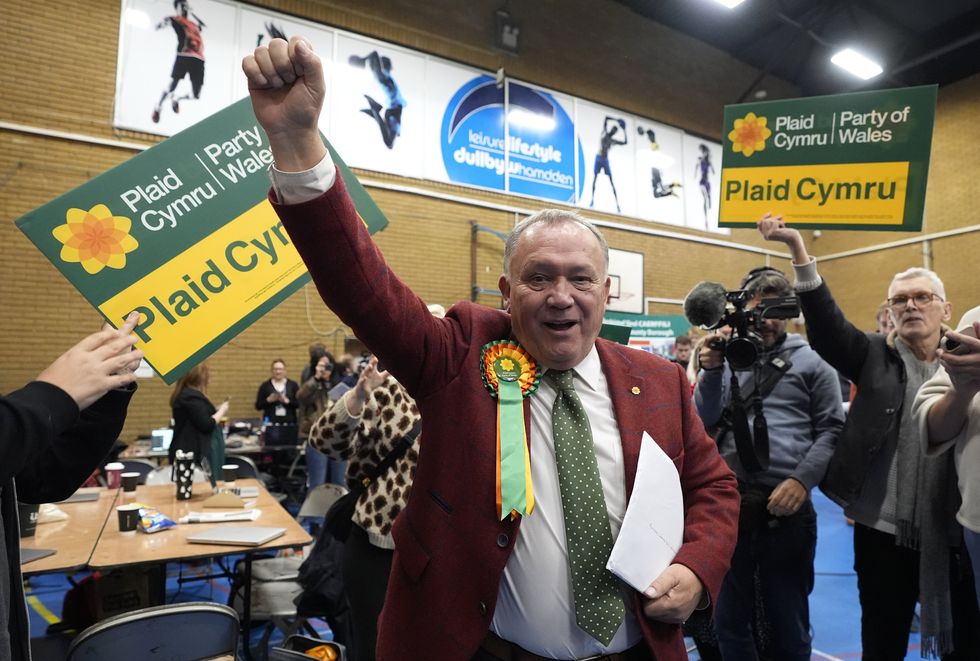 Plaid Cymru’s Lindsay Whittle won the election with 15,961 votes PA
Labour MPs now fear that tactical voting for nationalist parties could crush their party entirely.
Nigel Farage agrees. He said on Friday: “The Senedd elections next year are a two-horse race between Reform UK and Plaid Cymru.”
“Our strategy is based on the idea we can unify progressive voters around a ‘stop Reform’ campaign,” one Labour MP told The Guardian.
“That works so long as you remain the most viable progressive party. But if people start to think that it’s maybe another party, then suddenly that tactical voting starts to work against Labour and you get punished really badly.”
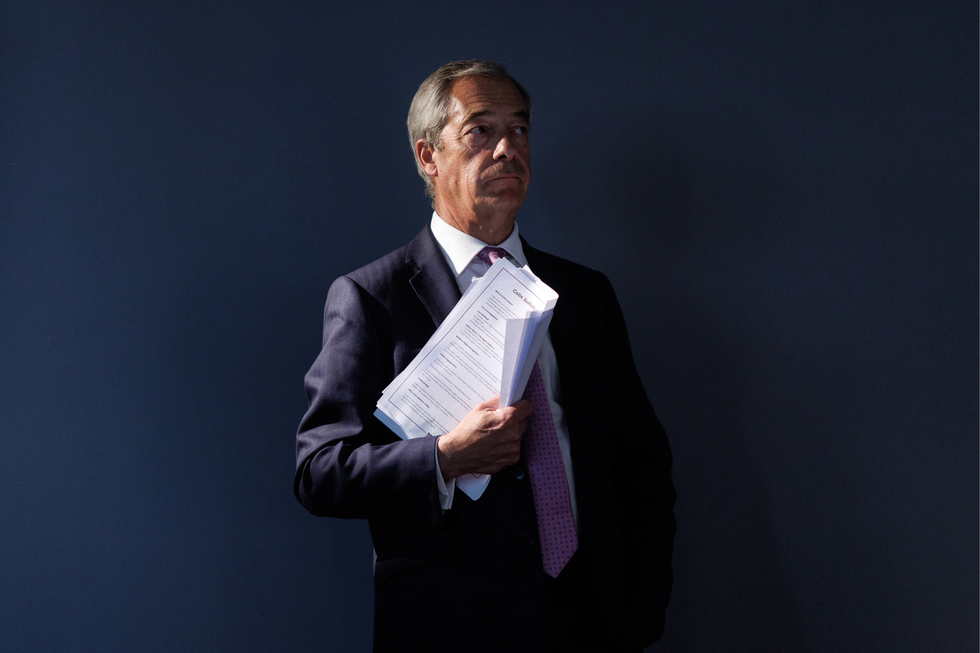
‘Our strategy is based on the idea we can unify progressive voters around a “stop Reform” campaign,’ one Labour MP said
GETTY
Another fumed: “The loss of Caerphilly is the direct result of the party losing touch with its own voters.”
Welsh First Minister Baroness Morgan said the by-election was fought “in the midst of difficult headwinds nationally” in an apparent swipe at the PM.
“Welsh Labour has heard the frustration on doorsteps in Caerphilly that the need to feel change in people’s lives has not been quick enough,” she added.
“We take our share of the responsibility for this result. We are listening, we are learning the lessons, and we will come back stronger.”
‘We Can’t Carry On!’ Keir Starmer’s Leadership Hangs by a Thread as Labour MPs Turn on PM After Caerphilly Defeat
Prime Minister Keir Starmer is facing mounting political pressure after Labour suffered a humiliating defeat in the Caerphilly by-election, triggering renewed questions about his leadership and the future direction of the party. The dramatic result has exposed growing divisions within Labour, with frustrated MPs reportedly expressing concerns about the government’s declining popularity and its ability to reconnect with traditional supporters. As opposition parties celebrate their gains, Starmer faces an increasingly difficult challenge to restore confidence among his own colleagues and convince the British public that Labour remains capable of delivering meaningful change.
First of all, the Caerphilly by-election represented a significant turning point in Welsh politics. The constituency had traditionally been considered one of Labour’s safest seats, with a political history closely connected to the industrial working-class communities of South Wales. For generations, Labour enjoyed considerable support in the area, benefiting from its historical relationship with trade unions, coal miners and ordinary working families.
Consequently, losing such a traditionally reliable constituency was particularly damaging for the party. The result demonstrated that historical political loyalties are becoming increasingly fragile and that voters are more willing than ever to consider alternative parties.
Reform UK’s victory was especially significant because it demonstrated the party’s growing electoral appeal in areas previously dominated by Labour. Its candidate, Llyr Powell, secured 12,113 votes, defeating Plaid Cymru and Labour in a contest that attracted considerable national attention. Labour’s candidate, Lindsay Whittle, finished third with 6,292 votes. The outcome ended Labour’s long-standing dominance in the constituency and provided Nigel Farage with an important political victory.
For Reform UK, the result represented further evidence that its message was attracting voters beyond its traditional support base. The party has concentrated its campaigning on immigration, taxation, national identity and dissatisfaction with established political institutions.
Meanwhile, the defeat has created an uncomfortable situation for Keir Starmer. When Labour won the 2024 general election, the Prime Minister promised to rebuild Britain, improve public services and restore confidence in government. However, many voters have become increasingly frustrated with the pace of change and the decisions made by his administration.
One of the biggest sources of dissatisfaction concerns the economy. Although Labour inherited significant financial challenges, voters increasingly expect the government to demonstrate tangible improvements in their everyday lives. Rising living costs, housing difficulties and pressure on household budgets remain major concerns for families across the country.
Taxation has also become a politically sensitive issue. Some traditional Labour supporters feel that the government has failed to provide sufficient reassurance about its economic priorities. Others believe that public spending decisions have not delivered the improvements they expected after voting for political change.
Immigration represents another major challenge. Reform UK has successfully used public frustration about small boat crossings and border security to attract support. Farage has repeatedly argued that successive governments have failed to control irregular migration, presenting his party as a tougher alternative.
Labour has attempted to defend its approach by emphasising international cooperation, action against people-smuggling networks and improvements to immigration enforcement. Nevertheless, the government faces continuing pressure to demonstrate that these measures are producing measurable results.
The Caerphilly defeat has therefore raised concerns among Labour MPs about whether the party’s current political strategy is working. Some representatives fear that Labour is losing support among the working-class communities that traditionally formed the foundation of its electoral success.
There are also concerns about the Prime Minister’s leadership style and political communication. Critics argue that Starmer has struggled to establish a clear public identity and communicate a convincing long-term vision. They believe that voters need to understand not only what the government intends to achieve but also how its policies will improve their lives.
Within the Labour Party, disagreements over political strategy could become increasingly difficult to manage. MPs representing vulnerable constituencies have particular reasons to worry about declining support. They must answer directly to local voters who may be considering Reform UK, the Conservatives or other opposition parties.
However, replacing a prime minister would not automatically solve Labour’s problems. Leadership changes can create further instability, divide parliamentary colleagues and distract the government from important policy decisions. Any potential successor would also inherit the same economic difficulties, public service pressures and immigration challenges.
Furthermore, the opposition parties are becoming increasingly competitive. Reform UK’s success in Caerphilly has strengthened Farage’s position, while Plaid Cymru has demonstrated that it can also benefit from dissatisfaction with Labour. The Conservative Party, meanwhile, is seeking to rebuild its support after losing the 2024 general election.
For Starmer, the immediate priority must be restoring confidence within his parliamentary party. He needs to demonstrate that Labour can respond to criticism, deliver its election promises and provide a convincing explanation of its economic and social policies.
There are several areas where the government could make a difference. Improving NHS waiting times, expanding affordable housing, supporting struggling households and strengthening local public services would help address concerns affecting millions of people. The government must also demonstrate that immigration enforcement is effective and that taxpayers’ money is being spent responsibly.
Equally important is rebuilding the relationship between Labour and traditional working-class voters. These communities have historically supported the party because they believed it represented their interests. If Labour wants to retain that support, it must show that it understands the pressures facing ordinary families rather than relying on historical loyalty.
The Prime Minister must also recognise that political communication matters. Voters want clear explanations, realistic promises and evidence of progress. Repeated assurances without visible results risk creating further frustration and weakening public confidence.
Ultimately, the Caerphilly defeat should be treated as a serious warning rather than an isolated electoral setback. It demonstrates that Labour cannot assume that traditional supporters will remain loyal regardless of government performance.
In conclusion, Keir Starmer is facing one of the most difficult political challenges of his premiership following Labour’s historic defeat in Caerphilly. The result has exposed growing dissatisfaction among voters and increased pressure from within his own party. Although reports of internal frustration do not automatically mean that his leadership is about to end, the political warning is unmistakable. Labour must reconsider its strategy, address public concerns and demonstrate that it can deliver meaningful improvements. Otherwise, Reform UK and other opposition parties could continue to benefit from the government’s difficulties. Ultimately, Starmer’s political future will depend not simply on his ability to survive criticism from Labour MPs, but on whether he can restore the trust of the British people.