
Brexit Debate Reignites as Andy Burnham Blames Departure from EU for Britain’s Border Challenges
Prime Minister Andy Burnham has reignited Britain’s long-running Brexit debate by arguing that leaving the European Union weakened the country’s ability to manage immigration and control its borders. His comments have opened the door to discussions about closer European cooperation and potentially rejoining the EU, prompting strong reactions from political opponents and raising questions about the future of Britain’s relationship with Europe.
Nearly a decade after the United Kingdom voted to leave the European Union, Brexit has returned to the centre of British political debate.
This time, the discussion has been reignited by Prime Minister Andy Burnham, who has questioned whether leaving the EU delivered the benefits promised during the 2016 referendum campaign.
In a series of recent interviews, Burnham argued that Brexit has weakened Britain’s economy and reduced its ability to cooperate with European countries on immigration enforcement.
His comments have attracted considerable attention because they challenge one of the central arguments made by Leave campaigners: that leaving the European Union would give Britain greater control over its borders.
The Prime Minister has gone further by acknowledging that he would personally like to see the United Kingdom rejoin the European Union during his lifetime.
However, he has also insisted that he will not impose such a decision on the public or introduce fundamental changes during the current parliamentary term.
His intervention has nevertheless reopened a political debate that many believed had been settled following Britain’s departure from the bloc.
Burnham’s Central Argument: Brexit Has Not Delivered What Was Promised
Speaking to journalists and broadcasters in October 2026, Burnham argued that Britain’s relationship with the European Union had not developed as supporters of Brexit originally anticipated.
He particularly questioned the consequences for immigration control.
According to the Prime Minister, Britain previously benefited from arrangements that allowed greater cooperation with European countries when returning people who did not have the right to remain in the country.
Following Brexit, those arrangements changed.
Burnham argues that the loss of certain European cooperation mechanisms has made it more difficult for British authorities to manage irregular migration.
He has specifically connected this issue to the growth of small-boat crossings across the English Channel.
In his view, the current system has left Britain with weaker practical control over some aspects of immigration than voters were promised.
His comments have attracted attention because they challenge the assumption that leaving the EU automatically strengthened border security.
However, the relationship between Brexit and irregular migration is complicated.
Border enforcement also depends on international cooperation, people-smuggling networks, asylum procedures, geographical circumstances and the effectiveness of domestic immigration policy.
Brexit alone cannot explain every development in Britain’s migration figures.
The Small Boats Crisis and the Loss of European Cooperation
One of Burnham’s strongest arguments concerns the United Kingdom’s previous ability to cooperate with European countries on returns.
Before Brexit, Britain participated in certain EU arrangements that helped coordinate asylum responsibilities and the transfer of individuals between participating countries.
Leaving the bloc changed the legal and administrative framework governing those arrangements.
The Prime Minister argues that this weakened Britain’s ability to return some people who arrived irregularly.
He believes that rebuilding practical cooperation with European governments could help address this problem.
However, returning to the previous arrangements would not automatically resolve the small-boats crisis.
The issue also involves the activities of organised smuggling networks, the difficulty of identifying individuals, legal protections and the willingness of other countries to accept returns.
Any future agreement would therefore need detailed negotiations and practical enforcement mechanisms.
Could Britain Rejoin the European Union?
Perhaps the most significant part of Burnham’s recent comments concerns his personal support for eventual EU membership.
During an interview with ITV’s Good Morning Britain on October 26, he said that he would like to see Britain return to the European Union during his lifetime.
He also made clear that he would not move ahead of public opinion.
His position represents a significant change in the tone of the national political discussion.
Rather than treating Brexit as an irreversible political settlement, Burnham has argued that Britain should examine whether its current relationship with Europe is still appropriate.
However, he explicitly ruled out proposing that Britain rejoin the EU during the current Parliament.
He also stated that he would not abandon the commitments contained in Labour’s 2024 election manifesto.
These included rejecting an immediate return to the single market, customs union or freedom of movement.
The distinction between his personal preference and the government’s immediate policy is essential.
Burnham has opened a debate about Britain’s long-term future, but he has not announced an immediate application to rejoin the EU. <Cite refs={[“turn473135search2″,”turn473135search5”]}/>
Freedom of Movement: The Most Difficult Question
One of the most controversial consequences of closer European integration would be the possibility of restoring freedom of movement.
Before Brexit, eligible British and EU citizens generally enjoyed the right to live and work in participating countries without applying for conventional immigration visas.
Supporters of that system argued that it created opportunities for businesses, workers, students and families.
Critics, however, believed that it reduced Britain’s ability to control immigration according to domestic priorities.
Burnham has acknowledged that freedom of movement created significant challenges.
Nevertheless, he has argued that migration patterns have changed since Brexit and that the previous arrangements should be examined in light of current circumstances.
On October 26, he explicitly stated that he would not restore EU freedom of movement without a public referendum.
He also ruled out making such a change during the current parliamentary term.
His position suggests that any fundamental change would require a clear democratic mandate rather than being introduced through an administrative agreement. <Cite refs={[“turn473135search3″,”turn473135search14”]}/>
Why Political Opponents Are Concerned
Burnham’s comments have generated strong reactions from politicians who believe that reopening Brexit risks dividing the country again.
Nigel Farage has criticised the prospect of renewed freedom of movement, describing it as a betrayal of the people who voted to leave the European Union.
Conservative politicians have also questioned whether Labour is attempting to reverse important elements of Brexit without first obtaining public approval.
Their argument is that the 2016 referendum established a clear democratic decision and that politicians should respect its outcome.
Supporters of Burnham’s approach offer a different interpretation.
They argue that democratic decisions should not prevent future governments from reconsidering policies when circumstances change.
They also point out that voters were promised greater control over immigration, yet Britain continues to face significant challenges involving irregular arrivals and asylum administration.
The disagreement therefore concerns not only immigration policy but also the meaning of democratic accountability.
The Economic Consequences of Brexit
Immigration is only one part of Burnham’s criticism.
He has also argued that Brexit weakened Britain’s economy.
Leaving the EU introduced additional administrative requirements for many businesses trading with European markets.
Exporters have faced customs procedures, regulatory requirements and other barriers that did not previously exist in the same form.
Supporters of closer European cooperation argue that reducing these obstacles could improve productivity and encourage investment.
Economists have also examined the longer-term consequences of reduced trade integration.
However, the economic effects vary across industries and businesses.
A closer relationship with Europe could provide advantages, but it would also involve obligations concerning regulation, market access and financial contributions.
The challenge for policymakers is to determine which arrangements would deliver meaningful economic improvements without creating unacceptable compromises.
The November EU Summit: An Important Opportunity
The next significant development is expected to come from the UK-EU summit scheduled for November 20, 2026, in Brussels.
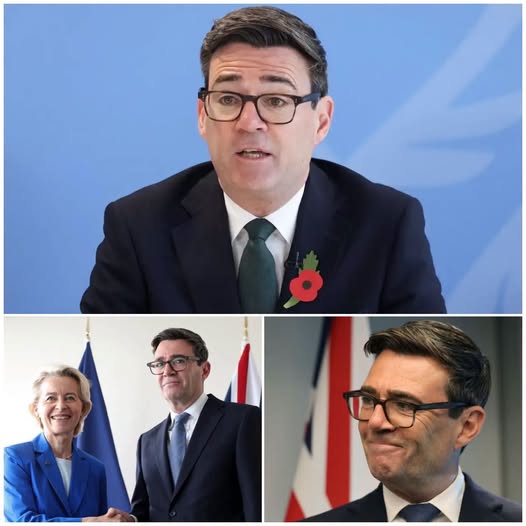
Burnham is expected to meet senior European representatives, including European Commission President Ursula von der Leyen.
The discussions are expected to focus on practical cooperation, including trade, agriculture, food manufacturing and immigration enforcement.
Rather than immediately negotiating full EU membership, the government is expected to explore areas where improvements could be achieved within the existing framework.
European leaders have generally welcomed the prospect of closer cooperation, although any substantial change would require negotiations on both sides.
The EU has also made clear that access to its single market comes with responsibilities and cannot simply be negotiated on a selective basis. <Cite refs={[“turn473135search9″,”turn473135news21”]}/>
Could Brexit Become the Main Issue at the Next Election?
Burnham’s comments could have significant consequences for the next general election.
The issue is particularly sensitive for Labour because its electoral coalition includes voters with very different views about Brexit.
Some traditional Labour supporters backed leaving the EU, particularly in communities where immigration and national sovereignty were major concerns.
Others strongly supported remaining in the bloc and would welcome a closer relationship with Europe.
A future proposal to rejoin the EU could therefore attract support from some voters while alienating others.
The next general election, expected by 2029, may provide an opportunity for political parties to present more detailed proposals.
Whether Labour ultimately chooses to campaign on closer integration or full EU membership remains uncertain.
What Does This Mean for Britain?
The latest developments demonstrate that Brexit remains an unresolved political question for many people.
Burnham believes Britain should examine the consequences of leaving the EU and consider whether a different relationship could improve economic performance and immigration cooperation.
His opponents argue that reopening the issue risks ignoring the democratic decision made in 2016.
Both positions raise legitimate questions about the country’s future.
The central challenge is finding a balance between national sovereignty, economic prosperity, effective border management and public consent.
What is clear is that Britain has not yet decided to rejoin the European Union or restore unrestricted freedom of movement.
Burnham has called for a more honest discussion about the consequences of Brexit, but any fundamental change would require substantial political support and negotiations with European partners.
The November summit may provide the first indication of how ambitious the government’s plans really are.
For millions of British voters, the debate is about more than immigration or trade.
It concerns the country’s identity, its economic future and the extent to which the decision made in 2016 should shape the next generation of British politics.
Nearly ten years after the referendum, one question remains difficult to avoid: did Brexit give Britain the control it was promised, or has the country reached a point where a different relationship with Europe deserves serious consideration?