

Danny Tommo Remanded in Custody as Channel Boat Case Fuels Wider Debate Over Bail, Protest and Claims of “Two-Tier Justice”
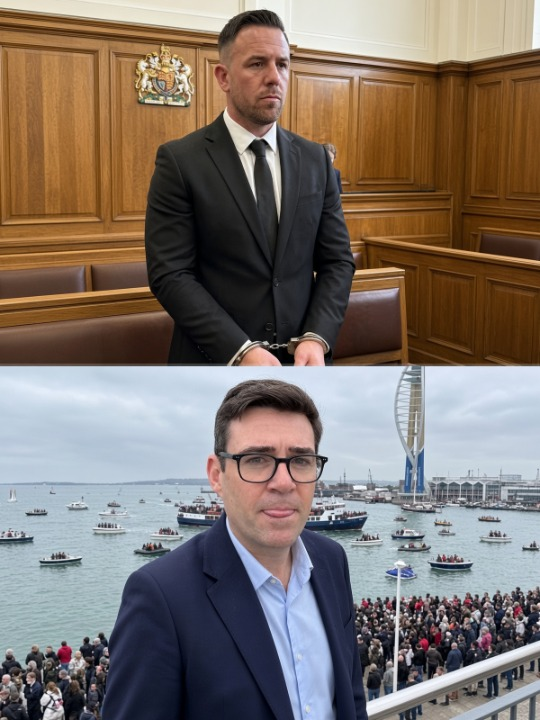
Daniel Thomas, better known as Danny Tommo, has been refused bail at Portsmouth Crown Court and will remain in custody as he awaits further proceedings over allegations arising from an incident in the English Channel. The decision has prompted strong reactions among his supporters, including renewed claims that Britain operates a “two-tier” justice system. Yet the verified court record is more specific—and in several important respects different—from some of the claims circulating on social media. Thomas denies the charges against him, no trial has yet determined whether he committed the alleged offences, and the judge who refused bail explicitly said political issues and motivations were being put aside.
The case of Daniel Thomas has rapidly moved beyond the confines of a single criminal proceeding and into Britain’s increasingly contentious debate over migration, political protest, policing and public confidence in the justice system. Thomas, a 37-year-old anti-migration activist widely known as Danny Tommo and associated with the Patriot Platform, appeared by video link at Portsmouth Crown Court on Tuesday, 29 September 2026. Judge James Newton-Price KC refused an application for bail and ordered that Thomas remain in custody. Multiple reports from the hearing confirm that Thomas had previously pleaded not guilty to criminal damage in connection with an alleged incident involving a boat in the English Channel on 22 September. He has also denied an allegation that he failed to disclose the PIN for his mobile telephone to police under Section 53 of the Regulation of Investigatory Powers Act 2000. A provisional trial date has been fixed for 1 March 2027, while his next court appearance is scheduled for 12 November. Coast FM
Those dates are important because some posts circulating around the case appear to combine information from different stages of the proceedings. The claim that Thomas was being held “until 29 September” appears to refer to the period before his Crown Court bail hearing rather than the position following it. The 29 September hearing has now taken place. Thomas was refused bail at that hearing and remains remanded in custody, with the next listed hearing on 12 November and a provisional trial beginning on 1 March 2027. That distinction illustrates one of the difficulties surrounding rapidly developing criminal cases: information that was accurate at one stage can become misleading when reposted after subsequent hearings. The Independent
What is Daniel Thomas accused of doing?
At the centre of the proceedings is an incident alleged to have taken place in the English Channel on 22 September. Prosecutors allege that Thomas damaged a boat that had previously been used by migrants and was adrift at sea while an emergency responder was aboard it. Reporting from the court says prosecutors allege that Thomas used a knife to slash the vessel. Thomas has pleaded not guilty to criminal damage, meaning the prosecution’s account remains an allegation that must be proved in court rather than an established finding of fact. ITVX
The prosecution case is potentially complicated by the fact that the alleged incident was connected to material broadcast online. Court reporting says Thomas is alleged to have livestreamed from the Channel at around 4.30pm on 22 September to a substantial online audience. Prosecutors have referred to statements allegedly made during that broadcast as part of the surrounding circumstances. Those statements and the video evidence may become relevant during later proceedings, but their precise legal significance will ultimately be determined through the court process rather than through social-media commentary. AOL
Thomas also faces a separate allegation concerning access to his telephone. Reports from Portsmouth Crown Court state that he denies failing to disclose his phone PIN under Section 53 of the Regulation of Investigatory Powers Act 2000. That charge is legally distinct from the criminal-damage allegation and should not be treated as proof of the underlying allegation concerning the boat. Coast FM
Thomas therefore enters the next stages of proceedings as a defendant who contests the allegations. Under the presumption of innocence, a remand decision does not amount to a conviction, nor does it establish that the prosecution’s version of events is correct.
What happened at the bail hearing?
The most consequential development came when Thomas’s defence asked the Crown Court to release him on conditional bail. His barrister, Simon Pentol KC, proposed what was described in court reporting as a “package of bail conditions” intended to address concerns that might otherwise justify continued detention. The defence also characterised the prosecution as politically charged and fundamentally flawed. AOL
Judge James Newton-Price KC nevertheless refused bail.
Significantly, the judge directly addressed the political context surrounding the case. According to reporting of his remarks, he said that he was not concerned with political issues or motivations and was putting them aside when deciding the bail question. That statement does not resolve the broader public argument over whether Thomas has been treated fairly, but it is an important part of the verified court record because it demonstrates that the judge expressly distinguished the legal bail decision from the political controversy surrounding Thomas. AOL
The precise reasoning underlying bail decisions can involve matters that cannot always be fully reported while criminal proceedings remain active. British courts generally assess factors such as the likelihood that a defendant will attend future hearings, risks of further offending or interference with witnesses or the administration of justice, and whether conditions can adequately address identified risks. The application of those principles depends on the facts before the court.
Consequently, the mere fact that stringent conditions were offered does not automatically require a court to grant bail. Equally, refusal of bail does not establish guilt. Bail and guilt are legally separate questions.
The social-media claim versus the confirmed court record
Reaction to Thomas’s detention has been considerably more sweeping than the narrow question the court was required to decide. Posts supportive of Thomas have described the refusal of bail as evidence that authorities have “crossed the line,” portrayed the prosecution as an effort to make an example of an anti-migration activist and contrasted his treatment with that received by migrants arriving across the Channel.
Those arguments represent political interpretations of the case rather than findings made by the court.
The currently verified facts are narrower. Thomas has been charged with criminal offences. He denies them. His lawyers sought bail. The Crown Court rejected that application. He remains in custody. His next hearing is scheduled for 12 November, and a provisional trial date has been set for 1 March 2027. Coast FM
No court finding identified in current reporting establishes that Thomas was remanded because he is English, because of his political views or because authorities wanted to silence criticism of migration policy. Indeed, the judge’s reported statement explicitly says political motivations were put aside in reaching the bail decision. AOL
That does not prevent Thomas, his lawyers or his supporters from questioning the proportionality of his detention. Such criticism is part of legitimate public debate. But there is an important distinction between arguing that a decision was excessive and establishing that the decision resulted from discriminatory political treatment.
What does “two-tier justice” mean in this debate?
The phrase “two-tier justice” has become increasingly prominent in British political discussion. It is generally used by critics who believe that police, prosecutors, courts or other public institutions apply different standards depending on the identity, political beliefs or background of those involved.
In Thomas’s case, supporters have drawn a particularly sharp comparison between the detention of an anti-migration activist and the treatment of people who arrive in Britain through irregular Channel crossings.
The comparison is rhetorically powerful but legally complicated because the two groups are normally interacting with different parts of the legal system.
A person charged with criminal damage is dealt with through criminal proceedings. Whether that defendant is detained or granted bail is governed by criminal-law rules and the circumstances of the individual case.
A person arriving across the Channel may instead enter immigration and asylum processes, although criminal offences, detention powers and removal procedures can also become relevant depending on individual circumstances. Accommodation provided to asylum seekers is part of an administrative immigration system and is not equivalent to bail following a criminal charge.
Therefore, the fact that one person is remanded while another is accommodated pending an immigration or asylum decision does not, by itself, demonstrate that two people accused of equivalent conduct received different treatment. Establishing systemic unequal justice would require comparisons between genuinely comparable cases and consideration of the reasons behind the decisions.
That distinction does not make public concerns about consistency irrelevant. Governments, police forces and courts depend heavily on public confidence, and perceptions of unequal enforcement can become politically significant even where different legal frameworks explain particular outcomes.
Why Thomas’s political profile matters—and why it does not determine the criminal case
Thomas is not entering the court process as an anonymous defendant. He has developed a public profile through anti-migration activism and founded the Patriot Platform. His demonstrations and political activities have attracted substantial attention during a period in which migration—particularly small-boat crossings—is among Britain’s most contentious political subjects. Coast FM
That profile inevitably affects the public reaction to his prosecution.
To supporters, Thomas represents opposition to a migration system they believe has failed to control Britain’s borders. His detention can therefore be interpreted through a broader political narrative about immigration, free expression and state power.
Critics see matters differently. They argue that political protest does not exempt anyone from laws concerning property damage, public order or conduct that may endanger others. From this perspective, the relevant question is not whether Thomas’s political message is popular or unpopular but whether prosecutors can prove the alleged criminal conduct beyond reasonable doubt.
The criminal court’s responsibility is narrower still.
It is not being asked to decide whether Britain’s immigration policy is successful. It is not determining whether Channel crossings should be reduced, whether asylum accommodation policies are appropriate or whether Thomas’s political movement is justified.
Ultimately, the court will determine whether the prosecution can prove the offences charged.
Tommy Robinson’s involvement adds another political dimension
Stephen Yaxley-Lennon, widely known as Tommy Robinson, has publicly supported Thomas. Reporting from Thomas’s earlier magistrates’ court appearance noted Robinson’s presence in connection with the proceedings. The Times
That involvement has helped expand the story’s reach across political and social-media networks.
Robinson and other supporters have framed Thomas’s case within wider concerns about policing, migration and freedom of political expression. Their involvement does not form evidence of Thomas’s guilt or innocence, but it contributes to the environment in which the case is being publicly interpreted.
The danger in such circumstances is that the criminal case becomes secondary to the political symbolism attached to it.
For supporters, Thomas may become evidence of alleged institutional hostility toward anti-migration activists.
For opponents, the case may become evidence of increasingly confrontational tactics within anti-migration activism.
Neither interpretation answers the central legal question.
Only evidence tested through the judicial process can do that.
The Channel is the political backdrop
The controversy cannot be understood without considering the significance of the English Channel in contemporary British politics.
Small-boat migration has transformed a narrow stretch of water between Britain and France into both a humanitarian challenge and a potent political symbol. Governments have faced continuing pressure to prevent dangerous crossings, dismantle smuggling networks and process asylum claims efficiently while complying with domestic and international legal obligations.
For critics of current migration policy, boats crossing the Channel represent visible evidence that Britain’s border controls are inadequate.
For refugee and humanitarian organisations, the same crossings demonstrate the desperation of people willing to risk their lives at sea and the absence, in many cases, of accessible alternatives.
For emergency services and organisations involved in maritime rescue, the immediate priority is considerably simpler: preventing people from drowning.
Those perspectives frequently collide.
Thomas’s alleged conduct occurred directly within that contested physical and political space, helping explain why an allegation that might otherwise have remained a relatively conventional criminal-damage case has attracted national attention.
The presence of an emergency responder could become important
One detail repeatedly contained in court reporting is that an emergency responder was allegedly aboard the boat when Thomas damaged it. ITVX
The significance of that circumstance should not be prejudged before evidence is heard. Prosecutors will have to establish the relevant elements of the offence they have charged, while Thomas’s defence will have an opportunity to challenge the prosecution’s evidence and legal arguments.
What can safely be said is that the allegation is not simply that an unattended object was damaged on land.
It concerns an alleged incident at sea involving a vessel and another person.
Those circumstances help explain why summaries of the case that describe Thomas merely as being imprisoned for distributing leaflets or “speaking up” do not accurately capture the charge presently before the court.
His political activism provides the context.
The alleged damage to the boat provides the basis of the criminal-damage prosecution.
Keeping those two things separate is essential.
Why being remanded does not mean Thomas has been convicted
Perhaps the most important distinction in reporting this case is between detention before trial and punishment following conviction.
Thomas has not been convicted of the criminal-damage allegation.
He pleaded not guilty.
He therefore remains entitled to the presumption of innocence.
A court refusing bail makes a decision about whether a defendant should remain detained while proceedings continue. It is not making the ultimate determination that the defendant committed the alleged crime.
This distinction becomes especially important when public debate is politically charged.
Supporters should not have to accept that Thomas is guilty merely because a judge refused bail.
Critics should likewise avoid describing the allegations as proven events before a trial or guilty plea establishes them.
The legal process exists precisely because allegations, even those supported by video or other apparently compelling evidence, must be tested.
Why the case appears to be moving quickly
The original social-media account describes proceedings as happening at “lightning speed,” implying that authorities are rushing to imprison Thomas.
There has certainly been rapid procedural activity following the alleged incident on 22 September. Thomas was arrested and appeared before magistrates shortly afterwards, followed by proceedings at Portsmouth Crown Court.
But speed alone does not establish improper motivation.
Where a defendant is held in custody, courts have particular reasons to progress proceedings efficiently. Pre-trial detention imposes a serious restriction on liberty, which is why remanded cases operate within procedural deadlines and judicial oversight.
The more revealing milestone will be the trial itself.
Current reporting gives a provisional trial date of 1 March 2027, several months after the alleged incident. Coast FM
Until then, there may be additional hearings addressing evidence, legal arguments and case management.
The political debate surrounding the Patriot Platform
Thomas’s Patriot Platform has meanwhile become part of a broader debate over anti-migration demonstrations.
Angela Rayner has publicly criticised marches associated with Thomas, arguing that intimidating demonstrations should not be treated in the same way as legitimate peaceful protest. Her remarks reflect one side of an increasingly polarised discussion over the boundary between protest, disruption and intimidation. Supporters of such movements, by contrast, argue that strong demonstrations are a response to public frustration over migration policy and government inaction. The Guardian
Those competing views illustrate why Thomas’s criminal proceedings have become politically explosive.
There is a fundamental democratic distinction between unpopular or confrontational political speech—which generally receives significant legal protection—and criminal conduct.
Determining where particular behaviour falls is sometimes straightforward and sometimes contested.
But criminal liability must be based on the conduct alleged and the applicable law, not merely on whether the defendant’s political beliefs are popular.
Protest and criminal law are not mutually exclusive concepts
Britain has a long tradition of disruptive political protest.
Campaigners from across the ideological spectrum have blocked roads, occupied buildings, disrupted events and engaged in acts designed specifically to attract public attention.
Some such conduct remains lawful.
Some leads to arrest.
Some results in prosecution.
Political motivation can explain why someone acted without necessarily providing a legal defence to what they did.
Conversely, the fact that someone participates in a controversial political movement does not diminish the protections they receive under criminal law.
Thomas’s defence will therefore be entitled to challenge every relevant element of the prosecution case regardless of his political activities.
What evidence might matter at trial?
The prosecution will need to establish the offence or offences charged to the required criminal standard.
Evidence potentially relevant to the case may include video recordings, witness testimony, maritime evidence, information concerning the vessel, police evidence and material relating to Thomas’s actions and intentions.
The defence may challenge the factual allegations, interpretation of recordings, ownership or status of property, the circumstances surrounding the incident, legal elements of the offence or the admissibility and significance of particular evidence.
None of those issues should be assumed to have been resolved merely because fragments of footage circulate online.
A viral clip is not a criminal trial.
Courts examine evidence according to evidentiary rules, hear competing arguments and allow witnesses or evidence to be challenged.
That process frequently produces a more complicated picture than the one conveyed by a short social-media video.
The phone-PIN charge raises a separate question
The allegation concerning Thomas’s mobile telephone also deserves separate treatment.
Section 53 of the Regulation of Investigatory Powers Act relates to circumstances in which a person allegedly fails to comply with a lawful requirement concerning access to protected information.
Thomas denies the charge. Coast FM
Whatever evidence exists concerning the telephone will have to be dealt with according to the applicable statutory requirements.
It would be inappropriate to infer from the existence of this allegation that Thomas was attempting to conceal evidence of the boat incident. That would require evidence not established merely by the charge itself.
Likewise, the fact that investigators sought access to a device does not establish misconduct by investigators.
Those questions remain matters for the proceedings.
Public confidence and the perception problem
Even where legal explanations exist, the political reaction to Thomas’s detention highlights a wider challenge facing British institutions.
Justice systems depend not only on applying rules consistently but also on convincing the public that those rules are being applied consistently.
When politically controversial defendants are detained, supporters naturally compare their treatment with cases in which other defendants received bail.
When protesters receive substantial sentences, comparisons are made with offenders convicted of different crimes.
When migrants receive accommodation while their immigration status is considered, some voters compare that support with the treatment of British citizens struggling with housing costs.
Those comparisons can influence political attitudes even when they involve fundamentally different legal situations.
The challenge for responsible analysis is therefore to examine such claims rather than simply dismissing or endorsing them.
Evidence of genuine unequal treatment would be important.
But demonstrating it requires comparable cases, comparable risks, comparable offences and comparable procedural circumstances.
Immigration accommodation is not a criminal sentence
One of the most emotionally powerful arguments circulating around Thomas’s case contrasts his detention with accommodation provided to asylum seekers.
Yet the legal categories are different.
A person housed while an asylum claim is processed is not receiving accommodation as a reward for unlawful conduct. The government is administering an immigration and asylum system under statutory and international obligations.
A defendant remanded by a criminal court is subject to criminal proceedings following specific charges.
There are legitimate political arguments about how much asylum accommodation should cost, how long cases should take, who should qualify for protection and what should happen to people whose claims fail.
Those questions can and should be debated.
But comparing asylum accommodation directly with criminal bail risks conflating two separate legal processes.
Could there still be legitimate questions about bail?
Yes.
Neutral reporting does not require assuming that every judicial decision is beyond criticism.
Defence lawyers routinely argue that bail conditions can adequately manage risks. Courts sometimes agree and sometimes do not.
Thomas’s legal team proposed conditions as an alternative to detention. The judge rejected the application. AOL
Questions about proportionality, consistency and the length of pre-trial detention are legitimate matters for legal and public discussion.
What cannot currently be established from the publicly reported facts is the stronger claim that Thomas was detained specifically because authorities oppose his political views.
The judge expressly said political considerations were being put aside.
Anyone arguing otherwise would need evidence beyond disagreement with the outcome.
What happens next?
Thomas remains in custody following the 29 September ruling.
His next scheduled appearance at Portsmouth Crown Court is 12 November 2026. A provisional trial date has been set for 1 March 2027. Coast FM
Between now and trial, lawyers may deal with evidential questions, procedural matters and other issues necessary to prepare the case.
Depending on subsequent applications and developments, the custody position could also be revisited through the appropriate legal mechanisms, although no particular future outcome should be assumed.
The prosecution will eventually be required to prove its case.
The defence will be entitled to contest it.
Until the proceedings are concluded, Thomas remains legally presumed innocent of the charges he denies.
A case that has become larger than the defendant
The intensity surrounding Danny Tommo’s prosecution says something broader about Britain in 2026.
Migration has become intertwined with arguments over national identity, public spending, border sovereignty, policing, free speech and trust in institutions.
Against that background, individual criminal cases can rapidly become symbols.
Thomas’s supporters see a political activist being detained after confronting an immigration system they regard as fundamentally broken.
His critics see a defendant accused not merely of expressing political opinions but of taking direct action against a vessel at sea while an emergency responder was aboard.
The court, however, must operate between those competing narratives.
Its task is considerably less dramatic but far more precise: determine whether the evidence establishes criminal liability according to law.
What is established—and what remains disputed
Several central facts can now be stated with reasonable confidence.
Daniel Thomas, known as Danny Tommo, is 37 and is associated with the anti-migration Patriot Platform. He has been charged following an alleged incident involving a boat in the English Channel on 22 September. He has pleaded not guilty to criminal damage and has denied a separate allegation concerning disclosure of his phone PIN. His defence sought bail at Portsmouth Crown Court. Judge James Newton-Price KC refused that application on 29 September. Thomas remains in custody. His next listed hearing is on 12 November, with a provisional trial scheduled for 1 March 2027. Coast FM
Other claims require considerably greater caution.
It has not been established that Thomas was detained because he is English or because of his political beliefs. It has not been established that authorities are deliberately attempting to make an example of him. And the bail ruling does not establish that he is guilty.
Likewise, describing the prosecution simply as punishment for “speaking up” omits the actual allegation before the court: prosecutors accuse Thomas of physically damaging a vessel in the Channel while an emergency responder was aboard. Thomas disputes the criminal allegations, and they remain to be tested. Sky News
The claim of “two-tier justice” therefore remains a political argument rather than a judicial finding in this case. Those who believe the case demonstrates unequal treatment can point to it as part of their wider criticism of British institutions; those who reject that interpretation can point to the different legal frameworks involved and to the judge’s statement that political considerations played no part in his bail decision.
The eventual trial may answer the central criminal question.
It will not necessarily settle the political argument.
For now, the most defensible conclusion is narrower: Danny Tommo has been denied bail and remains in custody, but he has not been convicted of the charges he contests. The next significant court date is 12 November 2026, and his trial is provisionally scheduled for 1 March 2027. The Independent
In a case already surrounded by powerful political narratives, maintaining that distinction between allegation, verified fact and political interpretation will become increasingly important as proceedings continue.