
In a fiery exchange that has sent shockwaves through London’s political landscape, Assembly Member Susan Hall confronted Mayor Sadiq Khan, urging him to “pack your bags” amid rising tensions surrounding pro-Palestinian protests. The heated debate, which unfolded during a recent assembly meeting, has reignited discussions about public safety, civil liberties, and community fears.
The confrontation was sparked by protests that took place on significant dates, including the holiest day in the Jewish calendar and following a terror attack in Manchester. Hall didn’t hold back, criticizing the behavior of protesters who chanted slogans deemed offensive, questioning Khan’s failure to address the concerns of the Jewish community.
Khan, in his defense, argued that while the protests may have been insensitive, labeling them as anti-Semitic was a matter of context. He emphasized the importance of freedom of expression, even for those with whom he vehemently disagrees. However, Hall challenged his stance, insisting that the chants and slogans used during these protests were not just inappropriate, but deeply troubling for Jewish Londoners.

The exchange revealed a stark divide in how both politicians view the protests, with Hall arguing that the mayor’s lack of condemnation for the anti-Semitic rhetoric only exacerbates fears within the Jewish community. “You should be doing something about that,” she implored Khan, highlighting the palpable anxiety felt by many.
William’s SHOCKING Announcement About Meghan Leaves the Entire UK Stunned!

CHAOS ERUPTS AT LONDON ASSEMBLY AS SUSAN HALL DEMANDS SADIQ KHAN RESIGN OVER ‘TERRIFYING’ PROTESTS ON JEWISH HOLY DAYS
The atmosphere inside the London Assembly descended into an extraordinary political confrontation as Conservative politician Susan Hall launched a fierce attack on London Mayor Sadiq Khan, demanding that he resign immediately over growing concerns about protests taking place on Jewish holy days.
What should have been an opportunity to discuss public safety, community relations and the responsibilities of London’s leadership quickly became a heated political showdown.
Susan Hall did not hold back.
Her criticism focused on what she described as the frightening impact of demonstrations on Jewish communities, particularly when protests take place during important religious occasions.
The confrontation has reignited a wider debate about antisemitism, freedom of protest, public order and whether London’s political leadership is doing enough to protect residents who feel increasingly vulnerable.
For many observers, the exchange represented more than another disagreement between politicians.
It exposed the growing tensions surrounding how demonstrations are managed in one of the world’s most diverse cities.
And it placed Sadiq Khan under renewed pressure to explain exactly where he stands.
Susan Hall Delivers a Blistering Challenge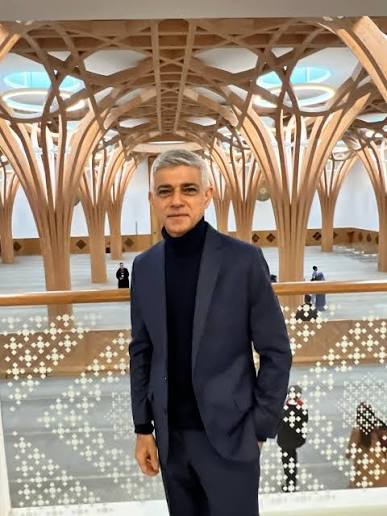
Susan Hall has repeatedly positioned herself as one of the strongest critics of Sadiq Khan’s leadership.
Her latest intervention brought those tensions into sharp focus.
During the discussion, Hall challenged the Mayor over the concerns being raised by Jewish residents and the atmosphere surrounding demonstrations held on significant religious days.
Her message was direct: people should not have to feel frightened when attending religious services, celebrating their faith or walking through their own neighbourhoods.
The issue is particularly sensitive because religious festivals and holy days are important moments for families and communities.
They are occasions when people should be able to gather peacefully, maintain traditions and participate in religious activities without feeling intimidated.
Hall’s criticism suggested that the authorities must take greater responsibility for ensuring that these basic freedoms are protected.
She also raised the broader question of political accountability.
If residents believe that their concerns are being ignored, who should answer for the situation?
For Hall, the responsibility ultimately rests with those holding positions of leadership.
Her demand for Khan’s resignation transformed the discussion into a much bigger political confrontation.
However, a demand from an opposition politician does not automatically establish that the Mayor has failed in his legal responsibilities. The circumstances surrounding individual demonstrations, policing decisions and public safety measures must be examined separately.
Nevertheless, the political consequences of the exchange could prove significant.
Why Protests on Jewish Holy Days Have Become Such a Sensitive Issue
Demonstrations are a normal part of democratic life.
London has a long history of public marches, political rallies and campaigns organised by groups seeking to influence government policy.
The right to protest is an important democratic freedom.
However, that right exists alongside another fundamental principle: everyone should be able to practise their religion without harassment, intimidation or discrimination.
This is where the debate becomes particularly complicated.
When demonstrations take place near Jewish religious institutions or during important Jewish holy days, members of the community may have concerns about their safety and ability to participate in religious activities.
The presence of large crowds, police barriers, chanting and heightened political tensions can create an intimidating atmosphere, even when demonstrators insist that their intentions are peaceful.
The distinction between political criticism and antisemitism is also essential.
Criticising the policies of the Israeli government is not automatically antisemitic.
Equally, targeting Jewish people because of their religion, holding them collectively responsible for the actions of a foreign government, or using antisemitic language and threats is unacceptable.
Public authorities must be capable of recognising that distinction.
They must protect peaceful demonstrators while also ensuring that Jewish residents are not subjected to intimidation or discrimination.
For London’s political leadership, getting that balance right is an enormous responsibility.
Sadiq Khan Faces Difficult Questions
Sadiq Khan has built much of his political identity around London’s diversity, inclusion and multicultural character.
As Mayor, he regularly speaks about the importance of protecting communities and ensuring that people from different backgrounds can live together peacefully.
Those principles are now central to the questions being raised by his critics.
Hall’s intervention challenges the Mayor to demonstrate that his commitment to diversity extends beyond speeches and public statements.
Critics want to know whether enough is being done to address the fears of Jewish Londoners.
They also want clearer explanations of how the authorities respond when demonstrations create serious concerns for local communities.
There are several important questions.
Are police resources being deployed appropriately?
Are religious institutions receiving sufficient protection when tensions are elevated?
Are organisers being held accountable when demonstrations cross legal boundaries?
And are complaints from Jewish residents being taken seriously?
These are not questions that can be answered simply through political arguments.
They require evidence, clear procedures and effective cooperation between the police, local authorities and community organisations.
Khan’s supporters may argue that the Mayor cannot personally control every demonstration or direct every operational policing decision.
London’s Metropolitan Police operates independently in many of its operational responsibilities.
That distinction matters.
Nevertheless, political leadership still carries considerable influence.
The Mayor has a public platform, a responsibility to represent London’s communities and the ability to demand explanations about issues affecting public confidence.
That is why Hall’s criticism is unlikely to disappear quickly.
The Jewish Community Deserves More Than Political Arguments
Behind the political confrontation is a much more important issue: the experience of ordinary people.
For Jewish families, religious celebrations and holy days are deeply meaningful.
They involve attending synagogues, meeting relatives, participating in community events and maintaining traditions that have existed for generations.
Feeling unsafe during these activities can have a profound emotional impact.
Nobody should have to reconsider attending religious services because they are worried about encountering hostility.
Nobody should feel that their religious identity makes them a target.
And nobody should be expected to accept intimidation as an unavoidable consequence of living in a major political city.
The concerns of Jewish residents deserve serious attention regardless of their political opinions.
At the same time, the response must be based on facts rather than assumptions about everyone participating in a demonstration.
Peaceful protesters should not be collectively blamed for the behaviour of individuals who engage in harassment or unlawful conduct.
Likewise, concerns about antisemitism should never be dismissed simply because they arise during politically controversial demonstrations.
A responsible approach requires both principles to be defended consistently.
The challenge for London’s leadership is to ensure that neither freedom of expression nor religious freedom becomes an excuse for undermining the other.
Freedom of Protest Versus Public Safety
The confrontation at the London Assembly highlights a dilemma facing cities across the democratic world.
How can authorities protect the right to demonstrate while ensuring that public gatherings do not threaten the safety or freedom of other residents?
There is no simple answer.
A democratic society must allow people to express disagreement with governments, challenge political decisions and organise public campaigns.
Restricting demonstrations simply because their messages are controversial would create a dangerous precedent.
However, freedom of expression does not provide unlimited permission to threaten, harass or intimidate others.
Police can impose lawful conditions on demonstrations when necessary to prevent serious disorder, disruption or other legally recognised risks.
Such decisions must be proportionate and based on the circumstances.
The timing and location of a demonstration may also become relevant when considering its impact on religious communities.
For example, authorities may need to consider whether particular routes or gathering locations could create unnecessary risks for people attending religious services.
That does not mean every protest should be banned during a religious festival.
It means that the rights and safety of everyone affected must be considered carefully.
This is precisely the kind of difficult issue that requires competent leadership rather than political point-scoring.
London’s Political Divisions Become Increasingly Visible
The confrontation also reflects the wider political battle between Labour and the Conservatives over the future of London.
Hall has consistently challenged Khan on issues including crime, transport, taxation and public confidence.
For Conservative politicians, the latest controversy provides another opportunity to question whether the Mayor’s administration is delivering the leadership London needs.
For Khan and his supporters, the challenge is to demonstrate that criticism is not replacing constructive discussion about practical solutions.
The political consequences could extend beyond the Assembly chamber.
Jewish community concerns, public safety and the management of demonstrations are issues that resonate with voters who may not normally follow local government politics.
They also touch on questions of trust.
People want to know whether their elected representatives understand their concerns and whether those representatives are prepared to act when problems arise.
If residents believe that their fears are being ignored, confidence in political institutions can deteriorate.
That is particularly dangerous in a city where different communities depend on mutual respect and cooperation.
Political leaders therefore have an interest in avoiding language that deepens divisions unnecessarily.
They must also avoid minimising genuine concerns simply because acknowledging them might create political difficulties.
Could Susan Hall’s Intervention Have Lasting Consequences?
Hall’s demand for Khan to resign is an extremely serious political challenge.
However, whether it develops into a lasting crisis will depend on what happens next.
The Mayor’s response will be important.
If he provides clear explanations, demonstrates an understanding of the concerns and supports practical measures to protect vulnerable communities, some of the political pressure may ease.
If the controversy continues without convincing answers, opposition politicians will almost certainly keep raising the issue.
There are several steps that could help rebuild confidence.
First, there should be clear communication between the Metropolitan Police, Jewish community representatives and local authorities.
Second, concerns about demonstrations near religious institutions should be assessed carefully, with appropriate safety arrangements where necessary.
Third, incidents involving threats, harassment or antisemitic abuse must be investigated properly.
Fourth, political leaders from all parties should make it clear that religious discrimination has no place in London.
Finally, the public deserves accurate information about what happened, what decisions were made and whether any legal requirements were breached.
These measures would provide something more valuable than another dramatic political exchange: practical reassurance.
A Defining Test for London’s Leadership
The extraordinary confrontation involving Susan Hall and Sadiq Khan has placed an uncomfortable question at the centre of London’s political debate.
Can the capital protect its extraordinary diversity while ensuring that every community feels safe?
London’s strength has always been its ability to bring together people with different religions, backgrounds, cultures and political beliefs.
But diversity cannot survive on slogans alone.
It requires respect, protection and a willingness to confront intimidation wherever it occurs.
Jewish residents must be able to celebrate their holy days without fear.
Peaceful demonstrators must be able to exercise their democratic rights.
And public authorities must enforce the law fairly, regardless of which political movement or community is involved.
Hall’s demand for the Mayor to resign may dominate the headlines, but the deeper issue is much larger than the political fortunes of either politician.
The real test is whether London’s institutions can respond effectively to the concerns being raised.
Khan now faces renewed pressure to demonstrate that his leadership can deliver both inclusion and public safety.
Hall, meanwhile, will be looking to ensure that the controversy remains firmly on the political agenda.
One thing is clear: the argument over protests, antisemitism and the responsibilities of London’s leadership is far from over.
And the people most affected deserve answers, not simply another round of political shouting.