
Andy Burnham has become the first British prime minister to publicly say that Russia interfered in the 2016 Brexit referendum, after revealing that he asked officials for a clear answer when he entered Downing Street.
Speaking on The Rest Is Politics, Burnham said he wanted to know whether Moscow had attempted to influence the vote and was told that it had.
He said:
“I asked the question coming to Downing Street, well was there interference in the 2016 referendum from Russia? I’ve had the clear answer that yes, there was.”
Burnham added that he believed it was important to put that information formally on the record because voters across Europe needed to understand the extent to which hostile states were trying to interfere in democratic politics.
The intervention is significant because successive British governments have spent years avoiding such a direct statement about the referendum, despite parliamentary investigations identifying Russian attempts to influence political debate and criticising ministers for failing to properly assess what happened.
It does not, however, mean the government is saying Russia changed the result.
Downing Street and Foreign Office minister Stephen Doughty have both stressed that while Russia attempted to interfere, there is no evidence that those efforts were successful or that the 52-48 Leave result was invalid.
Burnham says he wanted a straight answer after entering Downing Street
Burnham said one of the questions he raised after replacing Keir Starmer this summer concerned the extent of Russian interference in British democracy.
He told Rory Stewart and Alastair Campbell:
“These things are important now to put clearly on the record and I believe help voters in Germany and France understand that some of this politics is instigated via our enemies, namely Russia.”
He added:
“I think we’ve been too much on the back-foot on that actually and we haven’t informed people sufficiently about the extent to which people are seeking to disrupt the political process from overseas.”
The comments came after Burnham discussed the threat of Russian disinformation with German Chancellor Friedrich Merz, including concerns over the far-right AfD and Russian efforts to influence political debate in Germany.
Burnham had already used a speech to the United Nations last month to accuse Russia of mounting an “industrial-scale assault” on Western democracies through bots, fake websites, forged newspaper branding and other forms of information warfare.
At that time, he also said the British government had evidence that Russia tried to interfere in the 2019 general election.
The 2020 Russia report never said there was no interference
Burnham’s comments reopen one of the most contentious parts of the long-delayed parliamentary Russia report published in 2020.
That report was frequently described at the time as finding “no evidence” of Russian interference in Brexit, but its actual conclusion was more awkward for the government.
The Intelligence and Security Committee said ministers and intelligence agencies had not properly investigated the question in the first place.
The committee said it had:
“not been provided with any post-referendum assessment of Russian attempts at interference”
and criticised the government for failing to seek evidence in the way US intelligence agencies had after Russia’s interference in the 2016 American presidential election.
The committee also pointed to open-source research showing pro-Brexit and anti-EU material from Russian state broadcasters RT and Sputnik, as well as the use of bots and troll accounts.
It said that if British intelligence had carried out a proper assessment before the referendum, it was “inconceivable” that it would not have identified the Russian state’s intent to interfere in democratic processes.
That is an important distinction.
The 2020 report did not establish that Russia changed the outcome, but neither did it establish that nothing happened. Its central criticism was that the British state had failed to investigate properly enough to know the full extent of the activity.
Burnham’s government says the result still stands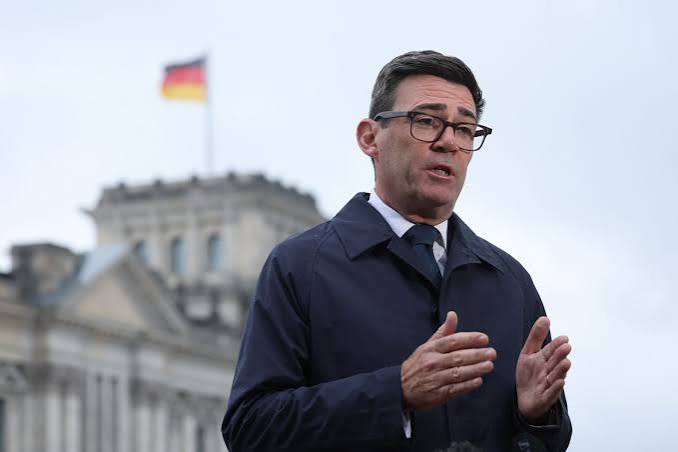
The government has moved quickly to separate Burnham’s statement about interference from any suggestion that the referendum should be declared illegitimate.
Foreign Office minister Stephen Doughty told Sky News that Russia had attempted to interfere but said those efforts had not succeeded.
He said:
“They’ve attempted to, [but] they haven’t succeeded.”
Doughty also declined to go into detail about the intelligence behind Burnham’s comments, saying the government would not discuss the specifics of Russian operations against Britain.
A government spokesperson similarly reaffirmed that the referendum result remains legitimate.
That means Burnham’s claim should not be interpreted as an official declaration that Brexit was “caused by Russia” or that Leave would otherwise have lost.
The government’s position is narrower: Russia interfered, but there is no evidence the interference determined the outcome.
Farage calls Burnham ‘a liar’
Nigel Farage reacted angrily to the prime minister’s remarks.
Speaking at a press conference in Hythe, the Reform UK leader said:
“There was no Russian interference, and the Russia hoax has run all the way through this.”
He accused Burnham of using Russia to undermine Brexit and reopen an argument the country had already settled.
Farage has long rejected claims that Kremlin activity played any meaningful role in the referendum.
When the Russia report was released in 2020, he said “some serious apologies” were due and argued that it had produced no evidence of Russian interference.
His critics have pointed to a different part of his record. Brexit Party MEPs voted in 2019 against stronger European Parliament measures aimed at countering Russian propaganda and disinformation, arguing at the time that they opposed giving more power and money to the EU.
More recently, Farage attacked Burnham’s new National Centre for Information Defence, which has been set up to tackle foreign disinformation and deepfakes, describing it as a potential “Ministry of Truth”.
The timing matters because Burnham is reopening Britain’s EU relationship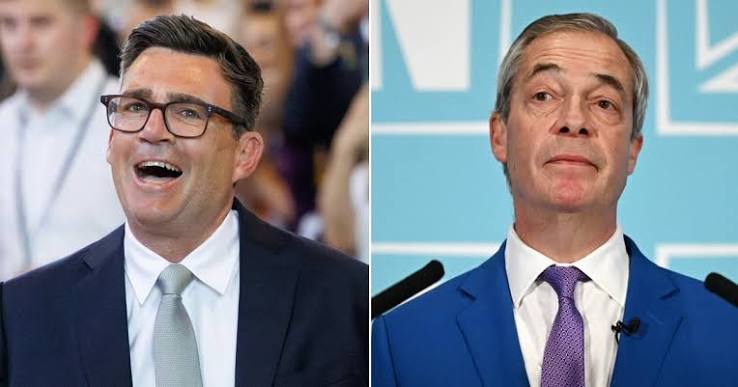
Burnham’s intervention also comes just as his government prepares for a major UK-EU summit in Brussels next month.
He has already said Brexit caused “more harm than good” and has left open a wide range of options for Britain’s future relationship with the bloc, including closer customs arrangements, single-market alignment and potentially even full membership at some point in the future.
He is expected to tell MPs that refusing to seek a better relationship with Europe would amount to a “dereliction of duty”, while insisting that any major change would require public consent.
That inevitably makes the Russia comments politically explosive.
Brexit supporters will argue Burnham is trying to weaken the legitimacy of the 2016 result just as he prepares to move Britain closer to the EU.
Pro-European campaigners, meanwhile, say confirmation of Russian interference strengthens the case for greater transparency about what happened during the referendum and for reconsidering Britain’s long-term relationship with Europe.
Burnham himself has been careful not to connect the two points directly. He has not said Russian interference invalidates the vote, and his government has explicitly rejected that conclusion.
Russia has always denied meddling
The Kremlin has consistently denied interfering in Britain’s democratic processes.
Russia has made similar denials over accusations of interference in elections in the United States and elsewhere, although Western intelligence agencies have repeatedly accused Moscow of using cyber operations, state-backed media, social-media manipulation and covert influence campaigns against democratic states.
The British government commissioned the Rycroft Review in 2025 to examine foreign financial influence and interference in UK politics. Published this year, it made 17 recommendations for strengthening the system against foreign influence and political finance risks.
Burnham’s government has since gone further by creating a dedicated centre intended to identify and counter foreign information operations.
What we still don’t know
The biggest unanswered question is what exactly Burnham was shown after becoming prime minister.
He has not identified the intelligence, the agencies involved or the specific forms of interference that led officials to give him what he described as a “clear answer”.
The government has also not said whether the assessment relies on intelligence gathered since the 2020 Russia report or whether agencies have simply become more willing to state conclusions publicly that were previously kept classified.
That distinction matters because Burnham’s wording is much firmer than anything previous governments were willing to say.
For the first time, a serving prime minister has put the basic point on the record: according to the information he was given after entering Downing Street, Russia did interfere in the 2016 Brexit referendum.
What remains unresolved is how extensive that interference was, what form it took and whether the public will ever see the evidence behind that conclusion.
Jordon Scott is a digital media specialist and editor at The Daily Britain. He focuses on political coverage, platform strategy, and ensuring journalism remains accessible without compromising editorial standards.
He oversees publication structure, reach, and transparency across the site.
Andy Burnham Says Russia ‘Clearly Interfered’ in Brexit Referendum After Asking Officials on Entering No 10
British Prime Minister Andy Burnham has reignited one of the most divisive debates in modern British politics after declaring that Russia interfered in the 2016 Brexit referendum.
His comments are particularly significant because Burnham says he sought answers about possible Russian involvement shortly after entering Downing Street.
Speaking on The Rest Is Politics podcast, the Prime Minister revealed that he had directly asked officials whether Moscow had attempted to interfere with the referendum that resulted in Britain voting to leave the European Union.
According to Burnham, the response he received was unequivocal.
“I asked the question coming to Downing Street: well, was there interference in the 2016 referendum from Russia? I’ve had the clear answer that yes, there was,” he said.
The statement represents a major moment in the continuing political argument surrounding Brexit, a decision that transformed Britain’s relationship with Europe and continues to influence elections, government policy and public debate.
However, Burnham’s announcement immediately raises another important question: what exactly did Russia do, and how much influence could it have had on the result?
The Prime Minister did not provide detailed evidence during the interview. He did not identify the officials who gave him the assessment, explain which intelligence reports they relied upon or specify the precise activities that he believes constituted interference.
Nevertheless, his willingness to make the allegation publicly has placed the issue firmly back on the political agenda.
For years, questions about Russian influence over Western democracies have attracted growing attention. Intelligence agencies, politicians and security experts have warned that hostile states can use online propaganda, misleading information, social media networks and other methods to undermine confidence in democratic institutions.
Burnham believes Britain should have been more open about these threats.
He argued that the country had been too defensive in discussing foreign attempts to disrupt its political system and that voters had not been adequately informed about the scale of the danger.
His remarks were also directed towards developments elsewhere in Europe.
The Prime Minister said he wanted voters in Germany and France to understand that some political movements and narratives could be encouraged or exploited by hostile foreign powers.
This warning comes at a time when European governments are increasingly concerned about disinformation campaigns and the possibility of outside interference in national elections.
A referendum that continues to divide Britain
The 2016 Brexit referendum remains one of the most consequential political decisions in British history.
On 23 June 2016, voters were asked whether the United Kingdom should remain a member of the European Union or leave.
The Leave campaign won with approximately 52 per cent of the vote, while Remain received around 48 per cent.
The result triggered years of negotiations, political instability and fierce disagreements over Britain’s future.
It also led to the departure of several prime ministers, divisions within both major political parties and a fundamental change in the country’s economic and diplomatic relationship with Europe.
For Brexit supporters, the referendum represented a democratic decision to restore national control over laws, borders and political institutions.
For opponents, it was a decision that weakened Britain’s international position and created economic and diplomatic challenges that continue to be debated.
Burnham’s latest comments introduce another dimension to that argument.
If Russia attempted to influence the referendum, the public has a legitimate interest in understanding what happened, which organisations or individuals were targeted and whether the country’s democratic safeguards were sufficiently strong.
But the existence of interference and the question of whether it changed the outcome are not the same thing.
That distinction has become central to the political response.
What did the intelligence investigation establish?
The issue was examined by Parliament’s Intelligence and Security Committee, which published a major report on Russia in 2020.
The committee criticised the government for failing to properly assess the possible impact of Russian activity on the Brexit referendum.
It highlighted concerns about Russian state-backed media outlets and social media accounts, as well as the absence of a comprehensive assessment of possible interference following the vote.
The report did not establish that Russian intervention had changed the referendum result.
It also did not provide a definitive conclusion that Moscow had successfully manipulated the outcome.
Instead, it raised serious questions about whether the government had done enough to investigate the potential threat.
The committee argued that attempts by a hostile state to interfere in a democratic process were important in their own right, regardless of whether those attempts ultimately succeeded.
Burnham’s statement appears to go further than the cautious public position adopted by previous governments.
However, his words have not yet been accompanied by a detailed public explanation of the intelligence behind his conclusion.
That leaves a gap between the Prime Minister’s confidence and the evidence currently available to voters.
The government may have access to classified assessments that cannot immediately be released. But the public will inevitably expect a clearer explanation of the nature of the alleged interference.
Without further details, it is difficult to determine whether the activity involved propaganda, coordinated online campaigns, attempts to amplify particular political messages or other forms of influence.
Downing Street insists the referendum result remains legitimate
The controversy has also forced the government to clarify what Burnham’s comments mean for the legitimacy of the Brexit vote.
Foreign Office minister Stephen Doughty said Russia had attempted to interfere with British democratic processes but rejected the suggestion that Moscow had successfully influenced the 2016 referendum.
Asked about the possibility that interference had changed the outcome, he said: “They haven’t succeeded.”
A spokesperson for Burnham also made clear that the government continued to regard the referendum result as legitimate.
This clarification is politically important.
The Prime Minister is not announcing that the referendum should be cancelled, nor is he claiming that the United Kingdom automatically has grounds to reverse its departure from the European Union.
Instead, he is arguing that Russian interference occurred and that Britain should be more honest about the threat posed by hostile foreign powers.
That distinction may not satisfy either side of the Brexit debate.
Some Remain supporters may argue that any confirmed interference raises questions about the conditions under which the referendum took place.
Brexit supporters, meanwhile, are likely to resist attempts to use allegations of foreign involvement to undermine a decision made by millions of British voters.
The challenge for Burnham will be to explain his position without appearing to question the democratic rights of those who voted Leave.
Nigel Farage and Brexit campaigners respond
Burnham’s statement has also created an obvious political confrontation with leading Brexit supporters.
Nigel Farage, one of the most prominent figures in the Leave campaign, rejected the Prime Minister’s claim and accused him of making misleading statements.
For Farage and other supporters of Brexit, the referendum was a clear expression of public opinion after a long national campaign.
They argue that millions of voters made their decisions based on concerns about sovereignty, immigration, the economy and Britain’s relationship with Brussels.
They are likely to insist that the existence of foreign propaganda does not mean British voters were incapable of making independent choices.
That argument reflects a wider concern about the political consequences of reopening the Brexit debate.
Any suggestion that the referendum was influenced by Russia could become a powerful weapon in the continuing struggle between pro-European politicians and those who want Britain to maintain its current position outside the EU.
Burnham will therefore face pressure from both sides.
He must demonstrate that his comments are based on credible intelligence while making clear that he is not attempting to rewrite the result through political rhetoric.
Russia and the wider European security threat
Burnham’s warning was not limited to Britain.
During the same interview, he discussed conversations with German Chancellor Friedrich Merz about the political situation in Germany.
The Prime Minister said Merz had raised concerns about the far-right Alternative for Germany party, commonly known as the AfD, and its alleged connections with Russia.
Burnham suggested that misinformation and disinformation originating from Russia were entering German political debate.
These comments reflect broader European concerns about the use of information warfare to weaken public trust, deepen social divisions and create political instability.
Modern interference does not necessarily require a foreign government to control a political party or directly finance a campaign.
Influence can also be exerted by spreading misleading stories, amplifying existing grievances, impersonating trusted media organisations or encouraging hostile arguments across digital platforms.
Such tactics can make it harder for voters to distinguish genuine political debate from coordinated manipulation.
Britain has already faced warnings about fake websites, manipulated videos and online campaigns designed to appear like legitimate news reporting.
The development of artificial intelligence has made the problem more complicated, allowing convincing fake images, audio and video to be produced and distributed rapidly.
Burnham has argued that democratic countries need to become more effective at identifying and disrupting these activities.
His government has also announced plans for a National Centre for Information Defence, intended to strengthen Britain’s ability to detect and respond to hostile information campaigns.
A difficult question for the Prime Minister
There is, however, a political risk in making such serious allegations without publishing the evidence behind them.
If Burnham wants the public to understand the scale of Russian interference, he will need to explain what the intelligence community has established and what remains uncertain.
National security considerations may prevent the release of sensitive material.
Even so, the government could potentially provide a public summary describing the methods used, the targets involved and the reasons officials believe Russia was responsible.
It could also explain whether the alleged activity was directed at the Leave campaign, the Remain campaign, both sides of the debate or the wider political environment.
These distinctions matter.
A foreign state attempting to undermine confidence in British democracy is a serious concern, but it should not automatically be interpreted as proof that a particular referendum result was manufactured or invalid.
The government will need to maintain that distinction if it wants to preserve public confidence.
For many people, the Brexit debate has already caused years of political exhaustion. Reopening arguments about the referendum risks reviving divisions that Britain has struggled to move beyond.
Yet ignoring credible evidence of foreign interference would create an equally serious problem.
Democratic accountability requires governments to investigate threats, explain their conclusions and ensure that institutions are better prepared for future elections.
The debate is far from over
Burnham’s declaration has placed the question of Russian interference back at the centre of British politics.
His claim that officials gave him a clear confirmation after he entered Downing Street is striking, particularly because previous public investigations did not establish whether Russia had successfully influenced the referendum outcome.
The Prime Minister has made clear that he wants Britain to speak more openly about foreign interference.
But the public still needs answers.
What evidence was presented to him? Which methods were used? Why was the issue not investigated more thoroughly at the time? And can the government demonstrate that similar activity will not threaten future elections?
Those questions are likely to follow Burnham for some time.
The 2016 referendum was a democratic decision with consequences that continue to shape the United Kingdom.
Acknowledging possible Russian interference does not, by itself, settle the argument over Brexit or invalidate the result.
It does, however, reinforce the need for transparency about attempts by foreign powers to influence British political life.
For Burnham, the challenge is now to turn a dramatic statement into a clear public explanation.
Until that happens, the controversy over Russia, Brexit and the integrity of Britain’s democracy will remain far from resolved.