
Tice opened the debate by pointing out the stark contrast between UK and US energy costs, stating that US gas prices are a “mere 20%” of those in the UK.
He attributed this economic advantage to the United States’ embrace of hydraulic fracturing, commonly known as fracking, over the past two decades.
Tice argued that the UK possesses vast unexploited resources, claiming there are 30 to 50 years’ worth of onshore gas available across the country .
He further asserted that Lincolnshire alone holds a decade’s worth of shale gas, which he argued could generate “thousands and thousands” of domestic jobs .
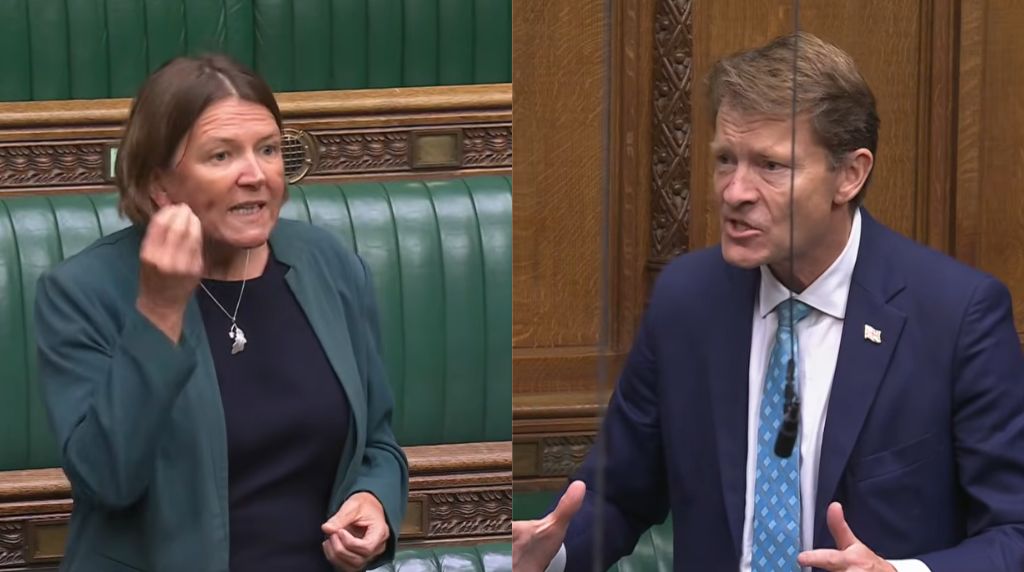
The Green Party MP strongly rebuked these assertions, interrupting to point out that there are currently no commercially proven reserves of shale gas in the UK .
She repeatedly demanded that Tice cite his sources for the reserve estimates, arguing that actual evidence shows the cost of renewable energy consistently declining.
The exchange momentarily broke parliamentary protocol, prompting an intervention from the Deputy Speaker.
The Deputy Speaker had to remind the Green MP of the courtesies of the House, noting that turning her back to the chair to face Tice made it difficult for microphones to pick up her comments and violated parliamentary convention .
Advertisement
When pressed repeatedly for his sources, Tice cited estimates from the British Geological Survey and referenced specific tests conducted in the Gainsborough Trough.

The Green MP dismissed these domestic fossil fuel ambitions as a “complete distraction.”
Advertisement
She argued that opening new fossil fuel production would do almost nothing to lower consumer bills or improve energy security.
She compared further investments in fossil fuels to investing in “typewriters during the era of the personal computer” or “horses and carriages during the era of the development of the car,” insisting that a clean, renewable energy transition is the country’s only viable hope .
To counter Tice’s claims of mass job creation, she referenced the Jackdaw gas field, stating it would generate only 27 jobs—a number of people she noted could fit on the top of a double-decker bus.
Tice retorted sharply, accusing the Green MP of promoting a policy direction that would effectively offshore British wealth, skills, and jobs.
He characterized her stance as one that would leave the British public “impoverished in a tent on a sandbag” by refusing to utilize domestic natural resources.
Advertisement
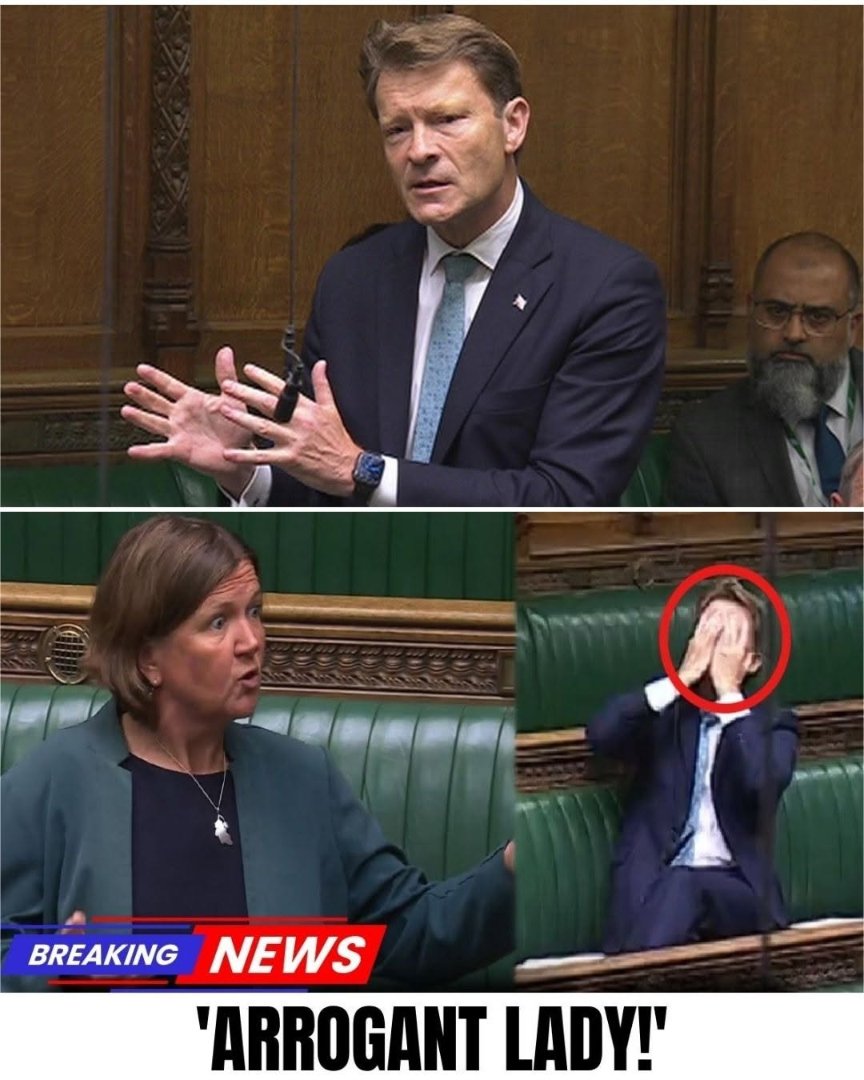
The confrontation underscores the deep, ongoing ideological divide in Parliament regarding how to best secure the UK’s energy independence while navigating environmental concerns and a volatile global energy market.
REFORM UK’S RICHARD TICE DROPS A BOMBSHELL THAT COULD SAVE BRITAIN BILLIONS — GREEN MP CHALLENGES HIS CLAIMS IN HEATED PARLIAMENTARY CLASH!
A heated parliamentary exchange has brought Britain’s energy debate back into the spotlight after Reform UK deputy leader Richard Tice made sweeping claims about the potential economic benefits of changing the country’s energy strategy.
The confrontation involved Green MP Ellie Chowns, who challenged Tice over his claims about Britain’s potential shale gas reserves and demanded that he provide evidence to support his figures.
The exchange quickly became a tense moment in the Commons, exposing the deep divisions between Reform UK and the Green Party over energy security, renewable power, and the future of Britain’s net-zero commitments.
For Tice, the argument is about reducing energy costs, making better use of domestic resources, and questioning whether current government policies are delivering value for taxpayers.
For Chowns, the central issue is whether politicians are presenting reliable evidence when making claims about Britain’s energy resources.
And behind this parliamentary disagreement lies a much bigger question: how should Britain secure affordable energy without creating new economic and environmental problems?
RICHARD TICE’S BILLIONS-OF-POUNDS ARGUMENT
Richard Tice has repeatedly argued that Britain’s approach to net zero is unnecessarily expensive and that changing course could reduce costs for households and businesses.
He believes the country should reconsider its energy strategy, including restrictions on domestic fossil fuel production.
During the parliamentary exchange on 15 September 2026, Tice referred to Britain’s potential shale gas resources and suggested that enormous economic value could be available.
His argument formed part of Reform UK’s wider criticism of the government’s energy transition.
The party has called for a major change in direction, arguing that expensive energy policies are putting pressure on British households and damaging industrial competitiveness.
Tice has also argued that reducing energy costs should be an immediate priority rather than relying on long-term promises about future technologies.
However, the financial savings he describes remain a political claim that requires careful examination.
The potential value of underground gas resources is not the same as the amount of commercially recoverable gas, and neither figure automatically translates into savings on household energy bills.
THE GREEN MP DEMANDS EVIDENCE — AND THE TEMPERATURE RISES
The exchange became particularly interesting when Green MP Ellie Chowns challenged the figures being presented.
Chowns questioned whether Britain actually possessed the commercially viable shale gas resources implied by Tice’s argument.
She pointed out that the existence of substantial geological resources does not mean that those resources can automatically be extracted economically.
She also challenged his claims by highlighting the falling costs of renewable energy.
Her intervention focused on a fundamental question: where was the evidence supporting the enormous financial benefits being suggested?
Tice initially indicated that he would provide sources before continuing his argument.
The exchange was recorded in the parliamentary proceedings, with Chowns repeatedly pressing him to substantiate his claims.
At one point, she called for greater adherence to the convention that MPs should provide evidence when making significant claims.
The disagreement illustrated just how sharply divided the two politicians were over Britain’s energy future.
<Cite refs={[“turn247079search7″,”turn247079search11”]}/>
WHY ENERGY POLICY HAS BECOME SUCH A HUGE POLITICAL BATTLE
Britain’s energy costs have become a major concern for households, businesses, and industrial employers.
High electricity and gas bills have placed pressure on family budgets, while energy-intensive industries have warned about the difficulties of remaining competitive.
Reform UK argues that the government’s approach to net zero is contributing to these problems.
Tice has repeatedly criticised renewable energy subsidies, climate-related spending, and restrictions on fossil fuel production.
He believes Britain should make greater use of its domestic energy resources and reconsider policies that could increase costs.
The Green Party takes a fundamentally different position.
Its representatives argue that expanding renewable energy is essential for reducing emissions, improving energy security, and protecting the country from volatile international fossil fuel markets.
They also point to the potential economic benefits of investment in clean energy industries.
The disagreement is therefore not simply about whether energy should be cheaper.
It concerns which technologies Britain should prioritise, who should pay for the transition, and what risks the country should accept.
COULD REFORM UK REALLY SAVE BILLIONS?
One of Tice’s central arguments is that changing Britain’s net-zero strategy could release substantial resources for other priorities.
Reform UK has previously argued that abandoning or substantially changing net-zero policies could make billions of pounds available for public services.
The party has specifically connected its energy proposals with reducing household bills and improving NHS funding.
However, these financial claims have attracted criticism.
In 2024, The Guardian reported that Reform’s estimate of more than £30 billion in annual net-zero costs relied on calculations that were not fully transparent.
The government disputed the figures, while critics argued that abandoning climate policies could create additional economic and healthcare costs.
The financial debate is complicated because energy subsidies, infrastructure investment, private-sector expenditure, and government spending are different categories.
It would therefore be misleading to assume that every pound associated with net-zero policies could simply be transferred into the NHS or used to reduce household bills.
The real financial consequences would depend on which policies were removed, what replaced them, and how energy markets responded.
<Cite refs={[“turn247079news15″,”turn247079search6”]}/>
THE GREEN PARTY’S WARNING ABOUT RENEWABLE ENERGY
Chowns and other Green politicians argue that Reform’s approach risks overlooking the long-term advantages of renewable energy.
Wind and solar power have become increasingly important components of Britain’s electricity system.
Supporters argue that expanding domestic renewable generation could reduce dependence on imported fossil fuels and improve energy security.
They also highlight employment opportunities in manufacturing, construction, engineering, and maintenance.
The Green Party’s position is that Britain should accelerate the transition rather than abandon its climate commitments.
However, renewable energy also presents challenges.
Wind and solar generation depend on weather conditions, requiring investment in storage, electricity networks, and other sources of flexible power.
The costs of infrastructure and system balancing must therefore be considered alongside the price of generating electricity.
This is why the debate cannot be reduced to a simple comparison between renewable energy and domestic gas.
Both approaches involve costs, risks, and potential benefits.
THE SHALE GAS QUESTION: IS BRITAIN SITTING ON A HIDDEN ENERGY RESOURCE?
Perhaps the most technically complicated part of the parliamentary confrontation concerned shale gas.
Britain has significant estimated shale gas resources underground, but geological estimates do not establish how much gas can be extracted commercially.
The distinction is extremely important.
A resource may exist beneath the ground without being economically recoverable using available technology and under existing regulations.
The British Geological Survey has conducted research into shale gas potential, but commercial production in Britain has not been established.
Tice’s argument raises questions about whether Britain should reconsider its approach to domestic gas exploration.
Critics argue that environmental concerns, local opposition, geological uncertainty, and extraction costs cannot be ignored.
Any future policy would therefore need to examine the available scientific evidence rather than simply relying on the headline value of estimated underground resources.
WESTMINSTER’S BIGGER PROBLEM: WHO WILL PAY FOR BRITAIN’S ENERGY FUTURE?
The confrontation highlights a difficult problem facing every British government.
Households want affordable electricity.
Businesses need predictable energy prices.
The country needs reliable supplies.
At the same time, Britain has legally binding climate targets and must consider the long-term environmental consequences of its energy decisions.
These objectives can sometimes pull policymakers in different directions.
Reform UK believes a major change of direction is necessary.
The Green Party believes accelerating renewable energy is essential.
Labour has attempted to pursue a transition towards cleaner electricity while addressing concerns about affordability and energy security.
Each approach carries different economic and political implications.
Ultimately, voters will want evidence that whichever strategy is adopted can deliver reliable energy at a price households and businesses can afford.
CONCLUSION: A PARLIAMENTARY CLASH THAT EXPOSES BRITAIN’S ENERGY DIVIDE
Richard Tice’s confrontation with Green MP Ellie Chowns has highlighted one of the most important political disagreements facing Britain.
At its centre is a question that affects millions of households: how can the country secure affordable, reliable energy without creating unsustainable long-term costs?
Tice believes Britain’s energy strategy needs a dramatic change and argues that domestic resources and reduced net-zero spending could provide significant economic opportunities.
Chowns challenges the evidence behind those claims and argues that renewable energy offers a more sustainable direction.
The parliamentary exchange demonstrated how difficult it has become for politicians with opposing energy philosophies to find common ground.
But the public deserves more than dramatic exchanges and competing financial promises.
It deserves transparent calculations, credible scientific evidence, and realistic explanations of what different policies would mean for household bills.
Britain’s energy future will affect generations to come.
The real question is not simply who wins the argument in Parliament. It is which policies can deliver affordable energy, protect economic stability, and provide a reliable future for the country.