

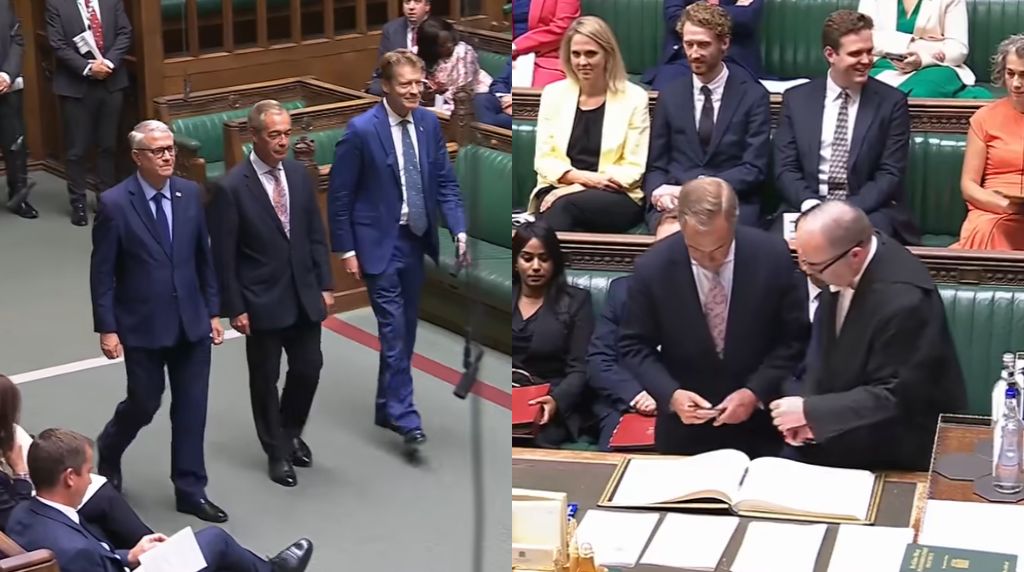
The proceedings were straightforward and adhered to the traditional protocols of the House.
Called to the table by the Speaker of the House, Farage, accompanied by his supporters, proceeded down the center aisle of the chamber.
Advertisement
In a brief and solemn moment, Farage took the oath of allegiance.
Holding a religious text, he recited the required pledge: “I swear by Almighty God that I will be faithful and bear true allegiance to His Majesty King Charles, his heirs and successors, according to law.
So help me God.”
Advertisement
Following the oath, Farage signed the official parliamentary register, a formal act solidifying his status as a Member of Parliament.
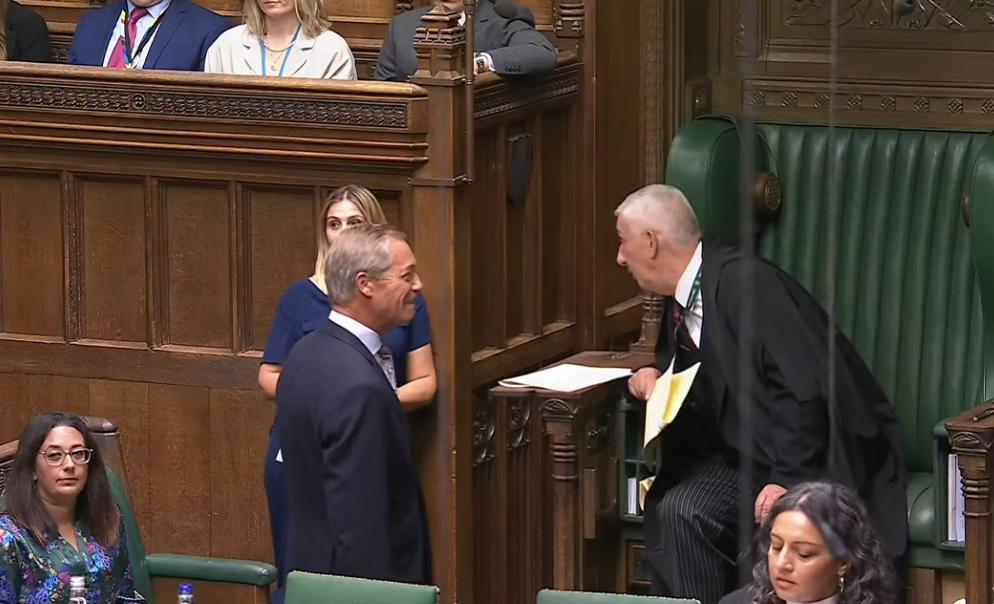
He then briefly approached the Speaker’s chair, exchanging a few words before returning to the floor.
The ceremony was brief, and the atmosphere in the chamber was composed as Farage completed the necessary procedural steps to assume his office.
Advertisement
This event officially begins Farage’s tenure in the current Parliament, where he will represent his constituency and lead his party’s legislative efforts.
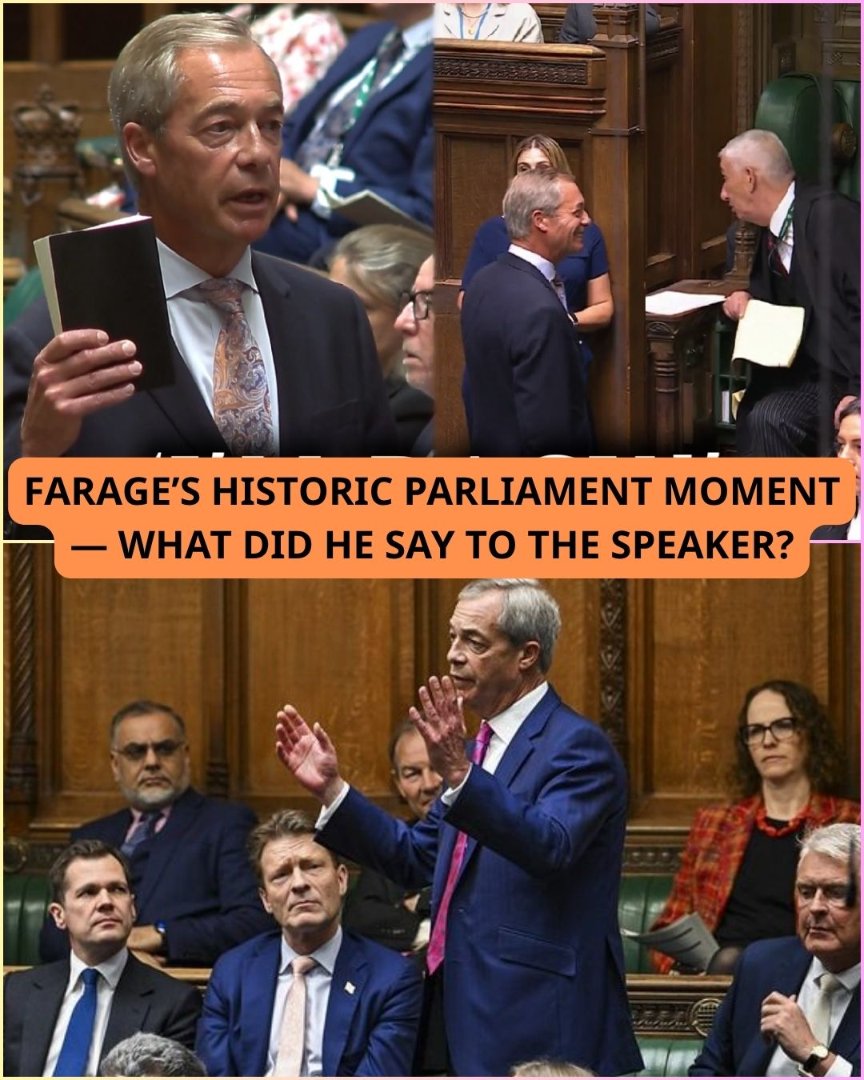
FARAGE FINALLY ENTERS PARLIAMENT — BUT WHAT HAPPENED NEXT LEFT EVERYONE WATCHING! WESTMINSTER BRACES FOR A POLITICAL EARTHQUAKE AS REFORM UK’S LEADER TAKES HIS SEAT!
British politics witnessed a historic moment when Nigel Farage finally entered the House of Commons as a Member of Parliament, marking a major turning point in his extraordinary political career. After decades of campaigning, television confrontations, electoral battles, and repeated attempts to challenge the political establishment, the Reform UK leader had finally secured a seat at the very heart of British democracy. But his arrival in Parliament was about much more than one politician taking his place among hundreds of elected representatives. It represented the arrival of a political force that threatened to disrupt the traditional balance of power at Westminster. Cameras followed Farage closely as he entered the parliamentary chamber, with politicians, journalists, and political commentators watching carefully. Supporters saw the moment as a remarkable achievement for a man who had spent years campaigning against the established parties. Critics, meanwhile, questioned whether his confrontational political style would translate into effective parliamentary leadership. Farage had finally achieved something that had eluded him through several previous election campaigns: a place inside the House of Commons. And suddenly, the political establishment had to deal with him on an entirely different level. For years, Farage had criticised Westminster from outside its walls. Now, he had the opportunity to challenge its politicians directly, question government decisions, and make his arguments in Parliament itself. The moment was particularly significant because Reform UK had secured five parliamentary seats in the 2024 general election, with Farage winning Clacton after several unsuccessful attempts to enter the Commons. His victory transformed the party’s political position and gave it a parliamentary platform that could no longer be ignored. But the biggest question was what Farage would do with that opportunity. A LONG ROAD TO WESTMINSTER Farage’s journey into Parliament was anything but straightforward. He had spent years attempting to establish himself as a Westminster politician while simultaneously building a reputation as one of Britain’s most recognisable political campaigners. His involvement in the Brexit movement brought him enormous national attention. He became a prominent voice arguing that Britain should leave the European Union and regain control over important political and economic decisions. The 2016 referendum became the defining moment of his political career. However, despite his influence over the national debate, Farage repeatedly failed to win a seat in the House of Commons. That contradiction became one of the most remarkable features of his career. He could dominate political headlines, influence national conversations, and challenge prime ministers on television, yet he remained outside Parliament. His eventual victory in Clacton changed everything. For Farage, it was personal political vindication. For Reform UK, it was an opportunity to establish itself as a parliamentary movement rather than simply an electoral protest party. THE MOMENT THAT PUT WESTMINSTER ON NOTICE Farage’s arrival immediately attracted attention because his political style is very different from that of many traditional Westminster politicians. He is known for his direct language, provocative statements, and ability to turn parliamentary and media exchanges into national talking points. His supporters appreciate what they see as an ability to challenge established political conventions. His opponents argue that his approach can deepen political divisions and distract from complicated policy questions. Whatever the interpretation, his presence creates a new dynamic inside Parliament. Labour MPs must now respond to a politician who has made immigration, economic dissatisfaction, and government accountability central to his political identity. Conservative MPs also face pressure because Reform UK is competing for many voters who previously supported their party. Farage’s arrival therefore creates challenges on both sides of the political divide. LABOUR FACES A NEW AND UNCOMFORTABLE OPPONENT For the Labour government, Farage’s parliamentary presence creates another source of political pressure. Immigration remains one of the most controversial issues facing ministers. Small-boat crossings across the English Channel, asylum accommodation, and the effectiveness of border enforcement continue to attract intense public attention. Farage has repeatedly used these issues to challenge successive governments. Now, he can raise them directly inside the Commons. He can question ministers, challenge government explanations, and use parliamentary proceedings to highlight policies he believes are failing. Labour will need to prepare for increasingly difficult exchanges. However, Farage’s presence also means that he must accept the responsibilities that come with being an elected representative. Voters will expect more than criticism. They will want to see credible proposals, serious scrutiny, and evidence that Reform UK can contribute to solving the country’s problems. THE CONSERVATIVES FACE A DIFFERENT KIND OF THREAT While Labour must defend its government record, the Conservatives face a more complicated political challenge. Reform UK has increasingly attracted voters who are dissatisfied with the Conservative Party’s previous leadership and policies. Immigration, taxation, national sovereignty, and public confidence are among the issues driving this competition. Farage has repeatedly argued that the Conservatives failed to deliver on important promises while in government. His presence in Parliament gives him a permanent platform from which to repeat and develop that criticism. The Conservatives now face a difficult choice. They can attempt to compete directly with Reform on immigration and national identity, or they can concentrate on rebuilding their own political reputation. Either strategy could carry electoral risks. The more successful Farage becomes at presenting Reform as a credible alternative, the harder it may be for the Conservatives to recover voters who have moved elsewhere. WHAT HAPPENED AFTER FARAGE ENTERED PARLIAMENT? Perhaps the most important development was not a single dramatic confrontation but the wider political attention surrounding his arrival. Journalists, commentators, and political opponents immediately began examining how he would use his new position. Would he concentrate on immigration? Would he challenge the government’s economic decisions? Would he attempt to build alliances with other opposition MPs? Or would he focus on transforming Reform UK into a much larger parliamentary organisation? These questions became central to discussions about the party’s future. Farage’s first months in Parliament would also reveal the difference between campaigning and legislating. Television interviews allow politicians to deliver short, memorable arguments. Parliament requires detailed scrutiny, sustained debate, and an understanding of complicated legislation. Farage would need to demonstrate that he could operate effectively in both environments. His opponents would undoubtedly scrutinise every mistake, while his supporters would be eager to celebrate every successful intervention. REFORM UK WANTS MUCH MORE THAN FIVE SEATS Farage’s election victory was never likely to be the final destination of his political ambitions. Reform UK wants to expand its parliamentary representation and become a major force in British government. To achieve that objective, the party must develop a stronger national organisation, recruit capable candidates, and establish detailed policies across a wide range of issues. Immigration may remain its most recognisable political subject, but governing Britain would require much more. The party would need credible plans for the NHS, education, housing, taxation, defence, infrastructure, and economic growth. It would also need to demonstrate that its candidates could represent local communities effectively. Winning attention is one thing. Building a sustainable political movement is another. Farage now has an opportunity to prove that Reform UK can do both. THE PUBLIC WILL BE WATCHING EVERY MOVE Farage’s arrival in Parliament also reflects a wider change in British politics. Many voters have become increasingly frustrated with traditional political parties and are more willing to consider alternatives. The result is a political environment in which established loyalties are becoming less predictable. Labour must prove that it can deliver meaningful improvements. The Conservatives must rebuild confidence after years of political difficulties. Reform UK must demonstrate that its promises can withstand the realities of parliamentary scrutiny. Every major parliamentary exchange could become another test of credibility. Social media will amplify the most dramatic moments, while traditional broadcasters will closely examine Farage’s performance. His ability to attract attention is already well established. The real challenge is showing that he can turn that attention into political results. CONCLUSION: FARAGE HAS FINALLY ENTERED THE ROOM — AND WESTMINSTER WILL NEVER LOOK QUITE THE SAME Nigel Farage’s election to Parliament marked a historic milestone in his political journey and a significant moment for Reform UK. After years of campaigning from outside Westminster, he finally secured a seat in the House of Commons and gained the opportunity to challenge the political establishment from within. His arrival has created fresh pressure for Labour, intensified competition on the political right, and raised questions about the future direction of British politics. But the real test is only beginning. Farage must now demonstrate that he can move beyond campaigning and contribute credible solutions to the problems facing the country. His opponents will be watching closely, and millions of voters will want to see whether Reform UK can deliver on its promises. One thing is certain: Nigel Farage is no longer simply standing outside Parliament demanding to be heard. He is now inside the chamber, with a national platform and a political movement determined to make its presence felt. The question is no longer whether Farage can enter Westminster. It is how much he can change now that he is finally there.