
Advertisement
Rayner is back on the Cabinet now Andy Burnham is in charge, and you don’t have to like her to appreciate what she is saying here, specifically on why those two donations totalling £72m to Reform UK are so important.
Peacock Greenlights Three Additional Seasons Of ‘The Traitors’ After Third Successive Emmy Win For Best Reality Competition
Advertisement
Nailed it? Probably.
And the absolute bile it prompted from a certain type of Reform UK-er – only space for three of them here for reasons which will become obvious – just made us like it even more.
Stay classy, Reform UK.
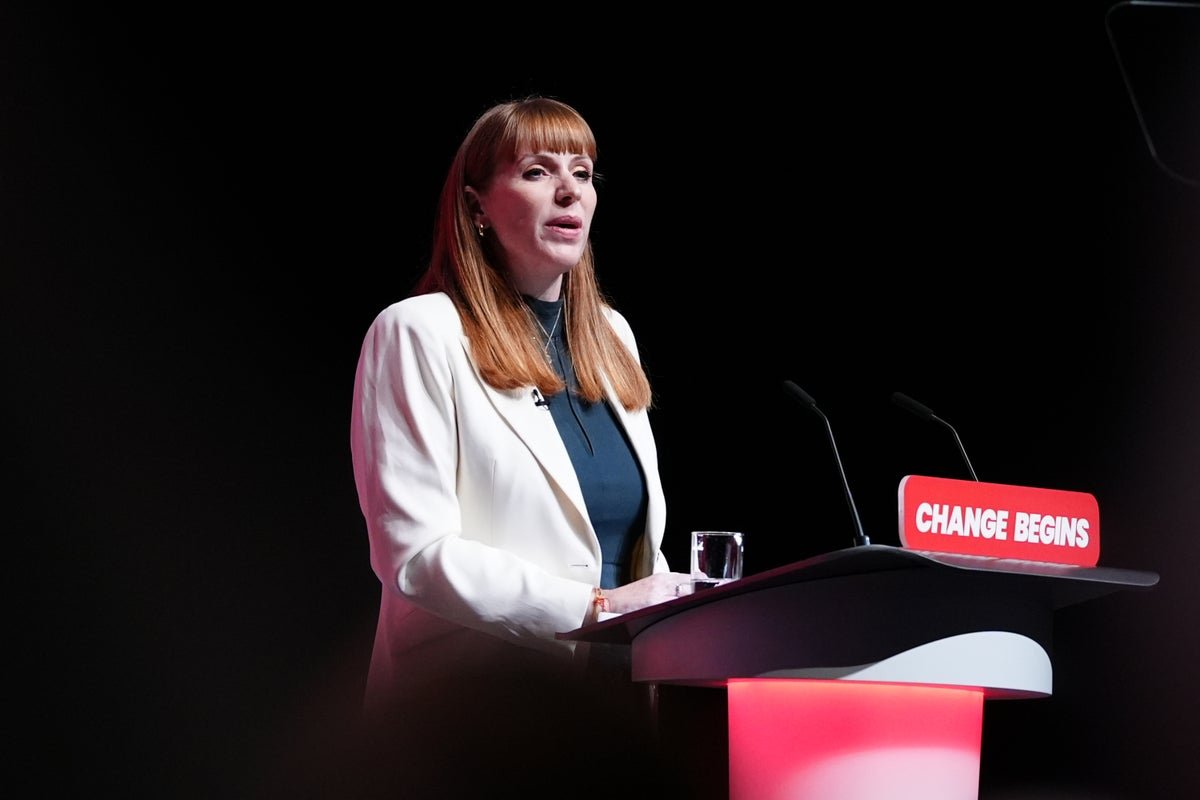
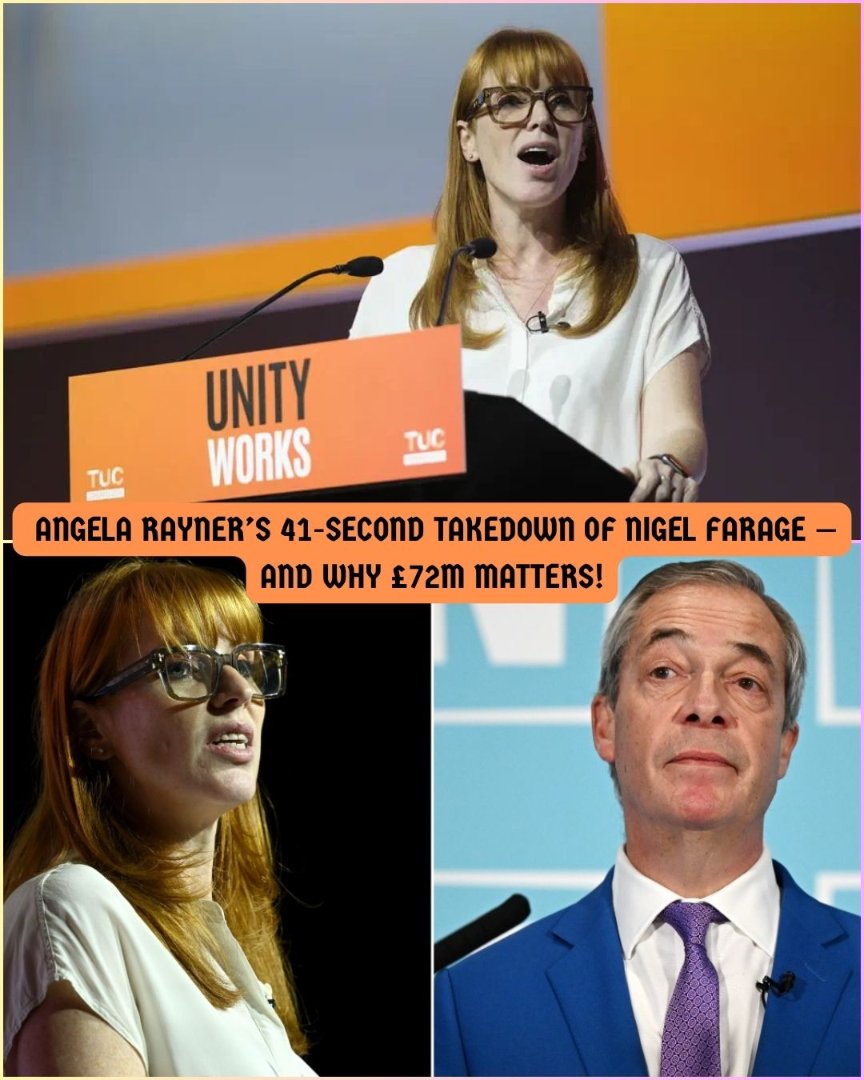
ANGELA RAYNER VS NIGEL FARAGE — 41 SECONDS THAT SPARKED A POLITICAL FIRESTORM! BREXIT ROW ERUPTS AS LABOUR FACES FRESH QUESTIONS OVER EU FREEDOM OF MOVEMENT!
Just 41 seconds of political discussion have helped reignite one of Britain’s most divisive arguments: Brexit.
Angela Rayner has found herself at the centre of a growing political storm after refusing to rule out the possibility of restoring some form of European Union freedom of movement. Her comments, made during a Sky News interview, prompted an immediate response from Reform UK leader Nigel Farage, who accused Labour of betraying the millions of people who voted to leave the EU.
The disagreement has quickly developed into a wider confrontation over immigration, national sovereignty, economic growth and the future direction of Britain’s relationship with Europe.
For Farage, the suggestion that Britain could reconsider freedom of movement represents a fundamental challenge to the result of the 2016 referendum.
For Rayner, refusing to discuss future possibilities would be an unnecessary restriction on Britain’s ability to negotiate a better relationship with its European neighbours.
The political consequences could be significant, particularly with the next UK-EU summit approaching.
And with Andy Burnham also facing questions about his position on Brexit, Labour is discovering that the argument over Britain’s European future is far from over.
The 41-second moment that reignited Brexit
The controversy began when Rayner was questioned during a Sky News interview about Britain’s future relationship with the European Union.
The interviewer pressed her on whether she would support a return to freedom of movement, the arrangement that previously allowed EU citizens to live and work across member states without the immigration controls applied to other foreign nationals.
Rather than giving a definitive yes or no, Rayner suggested that Britain should remain open to discussing what might be possible.
She said:
“In terms of our future relationship with the EU, of course we should be having a conversation and understanding the facts of what could be possible.”
That answer immediately created political difficulties for Labour.
Critics argued that refusing to rule out freedom of movement was effectively reopening one of the most divisive questions in modern British politics.
Supporters of closer European cooperation, however, argued that discussing future arrangements should not automatically be interpreted as an attempt to reverse Brexit.
The distinction matters.
Rayner did not announce that Britain would rejoin the freedom-of-movement system. She indicated that the Government should be willing to examine possible arrangements as part of wider discussions with Brussels.
Nevertheless, her answer gave Farage an opportunity to challenge Labour’s position publicly.
Farage launches his attack
Nigel Farage reacted angrily to the comments, accusing Rayner and Burnham of undermining the result of the 2016 referendum.
The Reform UK leader described the possibility of renewed freedom of movement as a “total betrayal of Brexit Britain”.
His argument is straightforward: millions of people voted to leave the European Union partly because they wanted greater national control over immigration and the ability to determine who could live and work in Britain.
Farage believes that restoring freedom of movement would undermine one of the central political promises made during the Brexit campaign.
He has also questioned Labour’s explanation that closer economic cooperation with Europe does not necessarily mean surrendering control over immigration.
For Reform UK, the issue offers an opportunity to reconnect with voters who believe Brexit has not yet delivered the changes they expected.
Farage wants Labour to provide a clear answer.
Will the Government maintain its commitment to keeping Britain outside the EU’s freedom-of-movement arrangements, or is it preparing to reopen the debate?
Labour has so far maintained that its approach is about improving relations with Europe rather than reversing Brexit.
<Cite refs={[“turn309458search0″,”turn309458search2”]}/>
Andy Burnham becomes part of the controversy
The debate has become even more complicated because of Andy Burnham’s previous comments about Britain’s relationship with Europe.
Burnham has historically supported remaining in the European Union.
During the 2016 referendum, he backed the Remain campaign and subsequently supported the possibility of another referendum.
At Labour’s 2025 conference, he expressed the hope that Britain could return to the EU during his lifetime.
More recently, his comments about the economic consequences of Brexit have attracted renewed attention.
Burnham has argued that Britain’s departure from the EU changed migration patterns and created additional barriers for businesses.
He has also suggested that migration under the previous European arrangements was different in character from some of the immigration pressures experienced in more recent years.
His critics have interpreted these comments as evidence that Labour is gradually reconsidering its Brexit position.
Farage has been particularly critical, accusing Burnham of failing to respect the political expectations of Leave voters.
However, there is an important distinction between supporting closer economic cooperation with Europe and formally seeking to restore freedom of movement.
These are separate political questions.
Labour’s challenge is to explain precisely where it intends to draw that distinction.
What would freedom of movement actually mean?
Freedom of movement was one of the defining features of Britain’s EU membership.
It allowed citizens of EU member states to move to Britain for employment, study or residence, subject to the applicable rules.
After Brexit, Britain regained control over its immigration system and introduced a points-based framework covering workers from both EU and non-EU countries.
Restoring freedom of movement would represent a significant change.
It could affect employment, recruitment, migration statistics and the relationship between Britain’s domestic immigration system and European institutions.
Supporters of the arrangement argue that it would make it easier for British businesses to recruit workers, particularly in sectors facing labour shortages.
They also point to the opportunities it would create for younger people wishing to study, work and travel across Europe.
Opponents argue that it could reduce the Government’s ability to control immigration and recreate political tensions that contributed to the Brexit referendum.
Neither position should be treated as a complete description of the economic consequences.
The actual effects would depend on the precise agreement negotiated, the sectors covered and the safeguards introduced.
Crucially, Rayner’s comments do not establish that such an agreement has been negotiated or approved.
Labour faces an uncomfortable political dilemma
For Andy Burnham and Angela Rayner, the challenge is finding a position that satisfies competing economic and political priorities.
Britain’s relationship with the European Union remains important for trade, manufacturing, investment and employment.
Businesses have repeatedly raised concerns about additional administrative requirements and the costs associated with trading across borders since Brexit.
Labour wants to improve these arrangements.
However, the party’s 2024 general election manifesto committed to remaining outside the EU single market, customs union and freedom of movement.
That commitment creates an important political boundary.
Any attempt to move beyond it could require a new electoral mandate and a clear explanation to voters.
Labour therefore faces a difficult balancing act.
It wants better relations with Brussels without appearing to reverse the referendum result.
It wants to improve economic cooperation without reopening the entire immigration debate.
And it wants to demonstrate that Brexit can be made to work while acknowledging that leaving the EU created additional challenges.
Rayner’s interview has exposed how difficult that balance may become.
Reform UK sees an opportunity
Farage’s response reflects a wider political strategy.
Reform UK has built much of its political identity around immigration control, national sovereignty and criticism of the established political parties.
Brexit remains central to that identity.
The party argues that Labour’s approach risks gradually reversing the political changes achieved by leaving the European Union.
Farage can use the controversy to question whether Labour genuinely accepts the referendum result or simply wants to renegotiate Britain’s relationship with Europe until the practical differences between membership and non-membership become less significant.
However, Reform also faces questions about how it would address the economic consequences of maintaining a more distant relationship with the EU.
British businesses depend heavily on European markets, and any political programme must consider the practical implications of trade barriers and recruitment difficulties.
The debate therefore involves more than slogans about sovereignty.
It concerns the balance between immigration control, economic opportunity and international cooperation.
What do ordinary voters think?
The political importance of the controversy lies in the fact that Brexit remains a sensitive subject for millions of people.
Some voters believe leaving the EU was necessary to restore democratic control.
Others believe the country has experienced unnecessary economic disruption and should reconsider closer integration.
There are also voters who supported Brexit but now favour practical agreements with Europe that do not involve rejoining the EU.
This third group creates an important challenge for both Labour and Reform.
The public debate is not simply divided between people who want Brexit reversed and those who want complete separation from Brussels.
Many voters are concerned primarily with employment, living standards, immigration levels and the cost of everyday goods.
Politicians must explain how their proposed European policies would affect these practical concerns.
Without that explanation, the debate risks becoming another battle of political identities rather than a discussion about Britain’s economic future.
The next UK-EU summit could prove crucial
The timing of Rayner’s comments is particularly important.
The Government is preparing for another major meeting with European leaders next month.
The summit is expected to form part of Labour’s wider attempt to rebuild relations following years of disagreement over trade and immigration.
For Burnham, the meeting represents an opportunity to clarify the Government’s objectives.
For Farage, it provides another opportunity to challenge Labour over the direction of its European policy.
Questions about youth mobility, employment arrangements, trade cooperation and border controls are likely to attract attention.
However, discussions about individual agreements should not automatically be confused with restoring full freedom of movement.
The Government will need to explain what it is negotiating, what it is prepared to concede and which commitments remain unchanged.
That clarity will be essential if Labour wants to prevent further accusations of political inconsistency.
A Brexit battle that refuses to disappear
The confrontation between Rayner and Farage demonstrates that Brexit remains an unresolved political issue in Britain’s national debate.
Rayner believes Britain should be prepared to discuss possible improvements to its relationship with Europe.
Farage believes even considering renewed freedom of movement risks undermining the democratic decision made in 2016.
Burnham’s previous comments have added another layer of uncertainty, leaving Labour under pressure to explain whether its European ambitions extend beyond the commitments made in its election manifesto.
The coming weeks will be important as ministers prepare for discussions with European leaders.
But one thing is already clear: Britain’s relationship with the European Union remains politically sensitive, and any suggestion of changing immigration arrangements will attract intense scrutiny.
Forty-one seconds may be enough to create a political headline, but the argument behind those comments is much bigger. It concerns the future of Brexit, the meaning of national sovereignty and the kind of relationship Britain wants with Europe.
And as Nigel Farage continues to challenge Labour, Angela Rayner and Andy Burnham will have to answer a question that millions of voters still care deeply about:
Has Britain finally settled the Brexit question, or is another major political battle over Europe only beginning?