
The speech featured stringent new measures targeting Israeli settlements and included some of the strongest language used by the party leadership to date regarding the ongoing conflict in Gaza and the West Bank.
Addressing the conference, Miliband reaffirmed the party’s commitment to a two-state solution, advocating for both a secure Israel and a secure Palestine .
While he explicitly condemned Hamas’s “murderous attack on October the 7th” and declared that the party stands “emphatically against those who seek [Israel’s] destruction,” the core of his address focused on sharply criticizing the current Israeli administration .
Advertisement
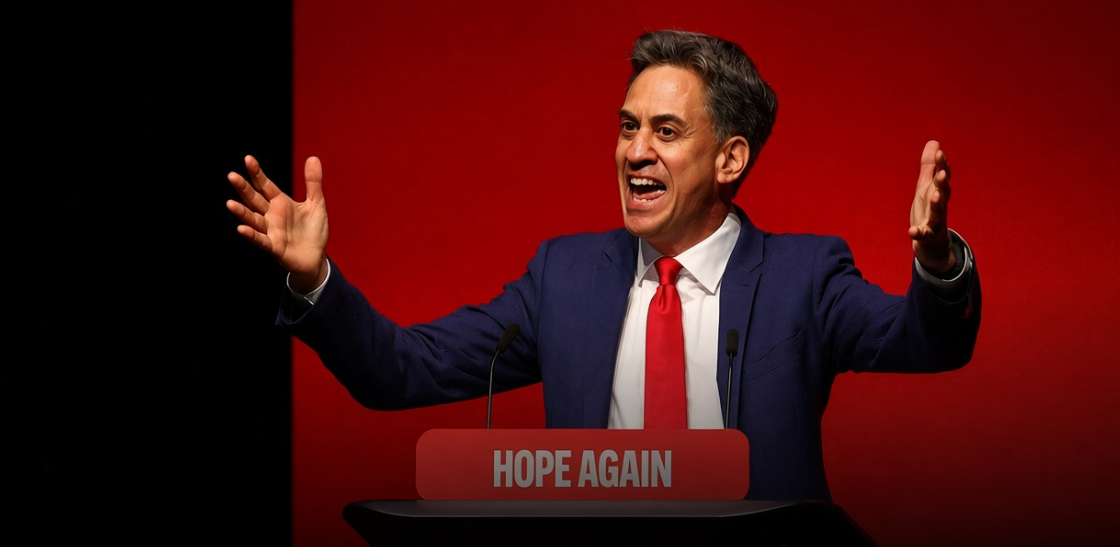
Miliband described the suffering inflicted by the Netanyahu government in Gaza and the West Bank as “a stain on the conscience of the world” .
In a direct appeal to the citizens and demonstrators outraged by the plight of the Palestinian people, he stated, “We hear you, you were right” .
Advertisement
The speech marked a definitive policy shift, with Miliband announcing concrete actions against Israeli settlements.
“We call out ethnic cleansing by the settler terrorists in the West Bank, we call out the evidence of war crimes in Gaza, we call out Israel’s illegal occupation of Palestine,” he declared to a round of applause .
To match these words with action, Miliband announced a total ban on the import of goods from illegal settlements and pledged to actively disrupt British financial, construction, and service supply lines that support settlement expansion .
Advertisement
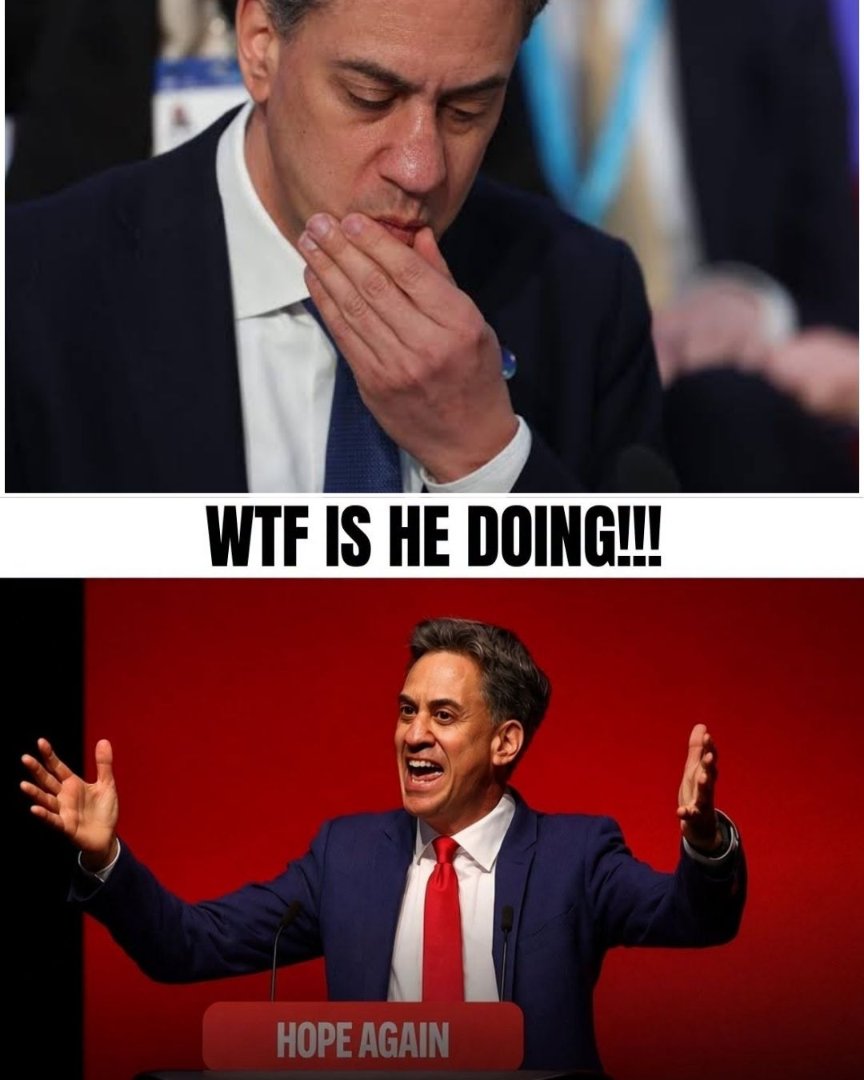
The address has rapidly ignited intense debate among political commentators.
Critics of the speech argue that the Labour government’s aggressive posturing toward Israel is heavily influenced by domestic electoral strategies rather than consistent international relations.
Advertisement
Some right-wing commentators suggest the sweeping rhetoric is a calculated move to secure and pander to the domestic Muslim voting bloc, which they argue was threatened following recent electoral challenges, including a notable Green Party victory in a recent by-election .
Furthermore, detractors have accused Miliband and the Labour leadership of applying a double standard in their foreign policy.
Critics juxtaposed the severe terminology used against Israel—such as “settler terrorists” and “ethnic cleansing”—with the party’s broader diplomatic engagements.
Specifically, commentators pointed to recent footage of Miliband cordially shaking hands with the Iranian Foreign Minister, arguing that the government is failing to apply similarly uncompromising vocabulary or punitive actions against regimes like Iran, Hamas, or Hezbollah .
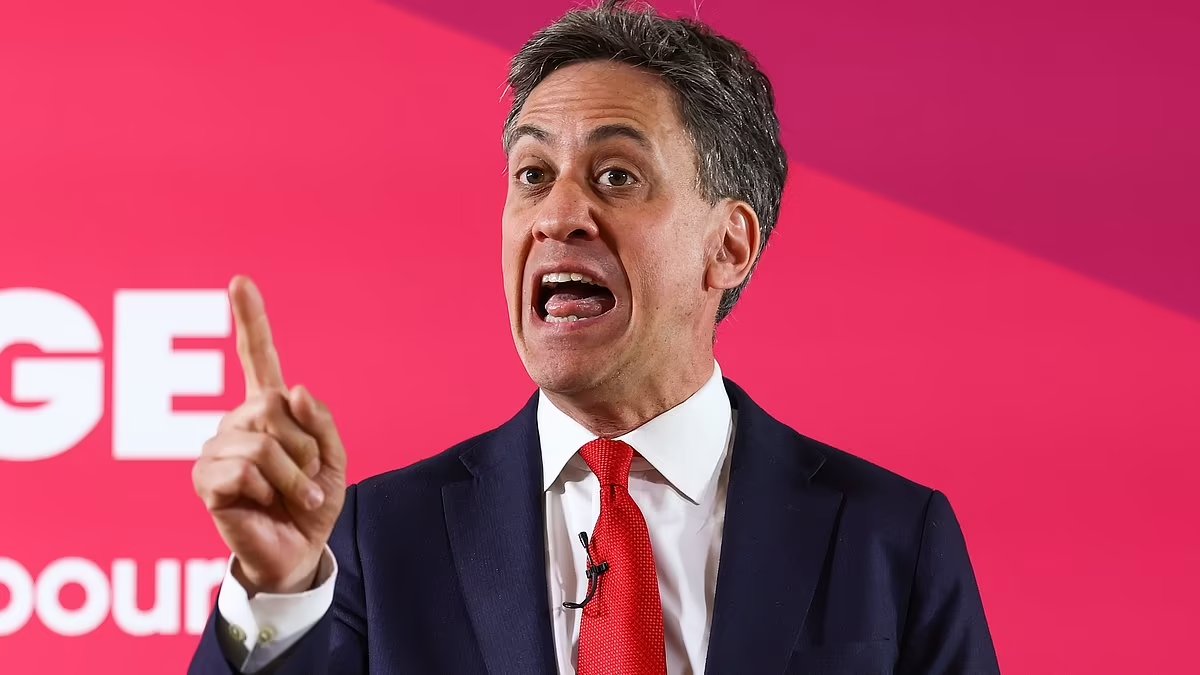
The fiery address underscores the deepening internal and public divisions within the UK regarding international relations, border security, and the ongoing crisis in the Middle East.
BREAKING: LABOUR’S MASSIVE MIDDLE EAST SHIFT JUST TRIGGERED A POLITICAL EARTHQUAKE! ED MILIBAND’S NEW ISRAEL POLICY SPARKS FURY ACROSS BRITAIN!
British politics has been shaken by a major change in the government’s approach to the Middle East, with Prime Minister Andy Burnham and Foreign Secretary Ed Miliband facing intense scrutiny following a series of new measures targeting Israeli settlements in the occupied West Bank.
What was once a relatively cautious diplomatic approach has developed into a much tougher position, creating tensions between London and Jerusalem and opening another political battle inside Westminster.
The government’s announcement has attracted international attention because it goes beyond verbal criticism. Labour is proposing concrete economic restrictions, additional sanctions, and new measures targeting individuals and businesses connected to settlement activity.
Supporters describe the changes as an important commitment to international law and Palestinian rights.
Critics, however, question whether the measures will achieve their intended objectives or create further diplomatic complications for Britain.
And with relations between the United Kingdom and Israel becoming increasingly strained, the consequences could extend well beyond Westminster.
THE ANNOUNCEMENT THAT CHANGED BRITAIN’S MIDDLE EAST POLICY
On 8 September 2026, the British government announced a significant package of measures concerning Israel and the occupied Palestinian territories.
Foreign Secretary Ed Miliband presented the changes as part of a comprehensive reset of Britain’s Middle East policy.
The central announcement concerned plans to prohibit imports of goods produced in illegal Israeli settlements in the occupied West Bank.
The government also proposed additional powers to target individuals and companies that support, facilitate, or profit from settlement activities.
Another proposed measure would prohibit advertising or promoting property and land located in illegal settlements.
The government explained that these restrictions were intended to protect the possibility of a two-state solution, under which Israelis and Palestinians could live alongside one another in peace and security.
The announcement represented a substantial change in the practical direction of British policy.
Instead of relying exclusively on diplomatic statements and expressions of concern, Labour was proposing economic and legal measures designed to create consequences for settlement-related activities.
WHY ED MILIBAND’S DECISION HAS CAUSED SUCH A STORM
The government’s announcement has generated strong reactions because Israel remains an important British partner in areas including security, intelligence, trade, and international diplomacy.
Critics argue that introducing additional economic restrictions could damage bilateral relations and complicate cooperation on wider regional security issues.
Supporters counter that maintaining a close relationship with Israel does not require Britain to remain silent about policies it considers contrary to international law.
Miliband has defended the government’s approach by distinguishing between the Israeli government and the Israeli population.
He has also emphasised that the measures are directed towards settlement-related economic activity rather than people because of their nationality or religion.
This distinction is politically important, particularly given concerns about antisemitism in Britain.
The government has stressed that criticism of Israeli government policy must never become hostility towards British Jewish communities.
ISRAEL RESPONDS WITH A DIPLOMATIC COUNTERMOVE
The controversy quickly developed into a diplomatic confrontation.
Following Britain’s announcement, the Israeli government responded by ordering the closure of the British consulate general in East Jerusalem.
This decision created another serious problem for British diplomats.
The consulate had played an important role in Britain’s diplomatic engagement with Palestinians.
Its presence was particularly significant because of Britain’s longstanding support for a negotiated two-state solution.
On 8 October, the British government announced that the building would remain open under the name UK Mission, Jerusalem, although the diplomatic presence would be reduced.
Only a limited number of British diplomats would remain.
Ed Miliband also decided against carrying out a previously considered reciprocal move involving Israeli diplomats in London.
The developments demonstrated how quickly disagreements over settlement policy could affect diplomatic relations.
Britain was attempting to maintain its diplomatic presence while responding to an Israeli decision that significantly changed the arrangements in Jerusalem.
THE PALESTINIAN RESPONSE: A SIGNIFICANT CHANGE IN BRITISH POLICY
The Palestinian leadership has welcomed Britain’s tougher position.
Palestinian Ambassador to the UK Husam Zomlot described the measures as an important development, arguing that Britain was beginning to move beyond criticism towards practical action.
In an interview published on 13 October 2026, he welcomed the government’s decision to target economic activity connected with illegal settlements.
However, he also emphasised that implementation would be essential.
His argument was that announcing restrictions was only the beginning. The government would need to ensure that the measures were properly enforced.
The issue is particularly important because settlement expansion has remained one of the most significant obstacles in negotiations over Palestinian statehood.
The United Nations and numerous international legal institutions have repeatedly raised concerns about the consequences of settlement activity in the occupied West Bank.
For Palestinians, the concern is that continued territorial expansion could make the establishment of a viable and geographically connected state increasingly difficult.
LABOUR’S TWO-STATE SOLUTION UNDER PRESSURE
The government insists that its central objective remains a negotiated two-state solution.
Under this framework, Israel and Palestine would exist as separate states, with arrangements intended to guarantee security, political independence, and mutual recognition.
However, achieving this outcome has become increasingly difficult.
Settlement expansion, violence in the West Bank, the humanitarian situation in Gaza, and disagreements over security arrangements have created enormous obstacles.
Labour argues that economic restrictions against settlement-related activity are necessary to defend the possibility of a future agreement.
The government has also called for improved humanitarian access to Gaza and continued diplomatic efforts to secure a sustainable peace.
At the same time, it has maintained that Hamas must have no role in the future governance of Gaza or a Palestinian state.
These positions illustrate the complexity of Britain’s approach.
The government is attempting to increase pressure on Israeli settlement policies while maintaining its opposition to Iranian threats and armed groups operating throughout the region.
THE CONSERVATIVES CHALLENGE LABOUR’S STRATEGY
The announcement has also created a political dispute inside Westminster.
Conservative politicians have questioned whether Labour’s measures will improve the situation or simply deepen tensions with an important international partner.
Kemi Badenoch has criticised the government’s approach and raised questions about the political and diplomatic consequences.
Opposition politicians have argued that Britain must carefully consider how sanctions and trade restrictions affect its international relationships.
There are also questions about whether economic pressure will produce meaningful changes on the ground.
The government, however, insists that its approach is consistent with international law and Britain’s longstanding support for a negotiated settlement.
The disagreement reflects a wider political debate about how Britain should use its economic and diplomatic influence.
Should the country take stronger measures when it believes international law is being violated, even if those measures create diplomatic consequences?
Or should it prioritise maintaining existing relationships and rely more heavily on private diplomacy?
These are difficult questions, and the arguments on both sides deserve serious examination.
IRAN REMAINS A MAJOR PART OF LABOUR’S MIDDLE EAST STRATEGY
One particularly important detail is that Labour’s tougher approach towards Israeli settlement activity has been accompanied by additional measures against Iran.
The government announced plans to strengthen sanctions targeting Iran’s economy and its nuclear programme.
New powers are also intended to target Iranian shadow-fleet vessels and financial networks connected to activities considered threatening to British and international security.
The measures include restrictions involving financial services, trade, energy, and transport.
This is significant because it demonstrates that Labour’s Middle East policy is not simply a shift towards supporting one side of the regional conflict.
The government is attempting to pursue several objectives simultaneously.
It wants to increase pressure on settlement activity, support Palestinian statehood, maintain Israel’s security, and restrict Iranian activities that it considers destabilising.
These objectives can create competing diplomatic pressures.
Britain must therefore balance its relationships with regional governments while avoiding further escalation.
WHAT DOES THIS MEAN FOR BRITAIN’S RELATIONSHIP WITH THE UNITED STATES?
Another major question concerns Washington.
The United States remains one of Britain’s most important security and diplomatic partners.
However, Britain and America do not always share identical approaches to Israel and the Palestinian territories.
The British government’s decision to introduce settlement-related restrictions could create disagreements with American policymakers, particularly if Washington considers the measures counterproductive.
Nevertheless, Britain has sought to coordinate its approach with other international partners, including France and Canada.
The government’s position is that international cooperation can increase diplomatic pressure while supporting a negotiated political settlement.
The challenge will be maintaining that cooperation without creating unnecessary divisions among Western allies.
THE ECONOMIC CONSEQUENCES: WHO WILL BE AFFECTED?
The proposed restrictions also raise practical questions for British businesses.
Companies involved in importing, distributing, financing, or advertising settlement-related products and services may face additional legal responsibilities.
Businesses will need clarity about which products are covered, how restrictions will be enforced, and what exemptions may apply.
The government has emphasised that its policy is focused on illegal settlement activity rather than general trade with Israel.
Maintaining that distinction will be essential.
British companies also need predictable rules so that they can understand their legal obligations and avoid unintended consequences.
The effectiveness of the measures will ultimately depend on enforcement, international cooperation, and the government’s ability to identify the economic networks involved.
WHAT HAPPENS NEXT?
The coming months will be important for determining whether Labour’s policy shift produces practical results.
The government must translate its announcements into effective legislation and enforcement arrangements.
It will also need to manage the diplomatic consequences of Israel’s response and maintain Britain’s presence in Jerusalem.
Meanwhile, opposition parties will continue scrutinising the policy, particularly its economic implications and its impact on Britain’s international relationships.
The situation in Gaza and the occupied West Bank will remain central to the wider discussion.
Britain will also need to continue addressing threats involving Iran and other regional actors.
Ultimately, the success of the government’s approach will depend on whether its policies contribute to greater security, improved humanitarian conditions, and meaningful progress towards a political settlement.
CONCLUSION: LABOUR HAS CHANGED THE TONE OF BRITAIN’S MIDDLE EAST POLICY
The government’s September 2026 announcement represents a significant development in Britain’s approach to Israel and Palestine.
Ed Miliband’s settlement-related measures have created a diplomatic dispute with Israel, attracted support from Palestinian representatives, and triggered criticism from political opponents.
The controversy demonstrates how difficult it is for Britain to balance international law, national security, economic interests, and diplomatic relationships.
For Labour, the challenge is now to demonstrate that its tougher approach can produce meaningful results rather than simply generate political headlines.
For Israel, the dispute raises questions about the future of its relationship with one of its longstanding Western partners.
For Palestinians, the central issue remains whether international pressure can help preserve the possibility of a viable independent state.
And for ordinary British citizens, the debate raises a broader question about the role Britain should play in one of the world’s most complicated international conflicts.
The political argument is far from over.
But one thing is clear: Britain’s approach to the Middle East has entered a new phase, and the consequences of this decision will continue to be debated in Westminster and across the international community.