


The shocking nature of the crime has been heavily utilized by right-wing media and political commentators to criticize the current government’s strategy for housing asylum seekers.
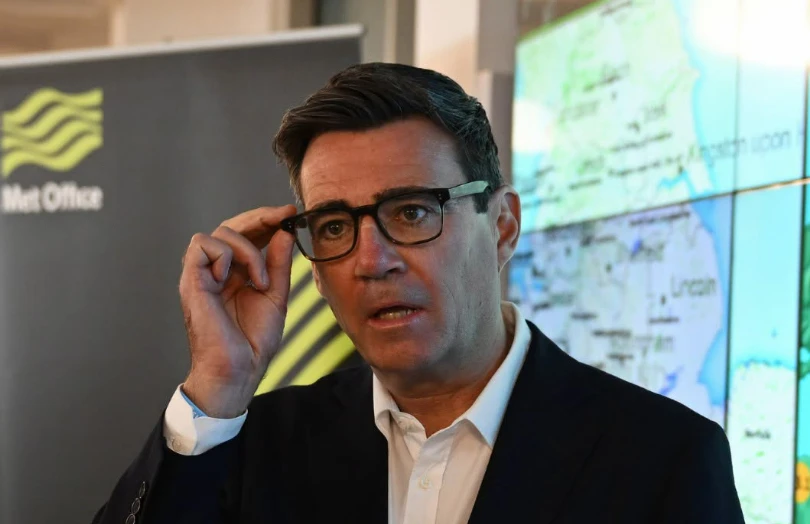
Specifically, commentators on GB News linked the incident to statements made by Andy Burnham regarding the dispersal of migrants across the UK.
Burnham has publicly argued that the responsibility of housing refugees and asylum seekers should not fall exclusively on the poorest communities.
“We cannot have a situation where it’s only the poorest communities in the country that receive all of the dispersal… I do believe all parts of the country need to play their part,” Burnham previously stated .
Advertisement
Critics have sharply condemned this “burden-sharing” approach, arguing that it simply spreads potential crime to rural and middle-class areas rather than addressing the core issue.
The GB News broadcast highlighted the rural village of Pittington, where the government reportedly plans to relocate up to 1,250 migrants into a community that currently has only 350 local residents .
During the broadcast, commentators expressed deep concern for the safety of rural residents.
A clip was played featuring a local mother from a similar village, who tearfully expressed fear that her daughter would no longer be safe participating in childhood traditions, such as blackberry picking, due to the sudden influx of hundreds of unvetted men .
Panelists on the network, including Daily Express columnist Carol Malone and Reform UK’s Sergey Bry, argued that the government is fundamentally failing to protect its citizens.
Bry contended that the UK cannot ensure public safety until it formally leaves the European Court of Human Rights (ECHR), which he claims prevents the rapid deportation of dangerous foreign offenders .
Malone echoed these sentiments, questioning why the attacker was granted asylum given the severe cultural differences and lack of women’s rights in his home country .
In response to the Harrow assault, the Home Office released a statement commending the bravery of the victim and witnesses.
Advertisement
“The perpetrator has now rightly been convicted.
After sentencing, we will do everything in our power to remove him, and he will be denied all refugee protection,” the Home Office spokesperson confirmed .

As the government continues its efforts to clear the asylum backlog and close temporary migrant hotels, the clash over where to house applicants—and how to manage the associated societal impact—remains a highly volatile issue in British politics.
UK MIGRATION ROW ERUPTS — RURAL COMMUNITIES DEMAND ANSWERS! VILLAGES CHALLENGE GOVERNMENT OVER ASYLUM ACCOMMODATION PLANS!
A growing political dispute is unfolding across rural England as communities challenge government plans to accommodate asylum seekers in former military facilities and other properties. From Oxfordshire to Suffolk, residents are organizing demonstrations, demanding public consultations, and questioning whether local infrastructure is prepared for the proposed changes.
The controversy has become an important national political issue, bringing together concerns about immigration, public safety, housing, local democracy, and government accountability.
For many residents, the issue is not simply about immigration numbers. It is about whether communities have been properly informed and consulted before decisions are made that could significantly affect their surroundings.
Recent developments in Piddington and Barnham have brought these concerns into the national spotlight.
PIDDINGTON: A VILLAGE SENDS A POLITICAL MESSAGE
One of the most extraordinary developments occurred in Piddington, Oxfordshire, where residents organized a symbolic referendum over government plans to accommodate asylum seekers at a nearby former military site.
The proposed facility at the former Ministry of Defence site in Bicester could accommodate up to 1,256 male asylum seekers.
Piddington itself has a population of approximately 350 people.
The scale of the proposal became a central concern for residents, who argued that such a significant development required much more consultation with the surrounding communities.
On 15 September 2026, villagers participated in a symbolic vote on whether Piddington should seek independence from the United Kingdom.
The result was striking: 285 people voted in favour, 26 voted against, and one ballot was spoiled.
Turnout reached approximately 92%.
The referendum had no legal power to remove the village from the United Kingdom. Instead, it was intended as a political demonstration of dissatisfaction with the government’s approach.
The unusual protest attracted international media attention and highlighted the depth of frustration among some rural residents.
For campaigners, the message was straightforward: decisions affecting small communities should not be made without meaningful local involvement.
BARNHAM: ANOTHER RURAL COMMUNITY DEMANDS ANSWERS
The controversy has since spread to Barnham in Suffolk.
A former RAF base near the village has been identified as a potential location for asylum accommodation.
Initial government proposals reportedly considered accommodation for approximately 1,250 people. The proposed capacity was subsequently reduced to around 930.
Nevertheless, opposition among some residents continued.
On 24 October 2026, villagers voted overwhelmingly at a public meeting to organize a symbolic referendum on leaving the United Kingdom.
Only seven of approximately 80 attendees reportedly voted against holding the referendum.
Campaigners argued that the government had failed to provide sufficient consultation about a proposal that could significantly affect their community.
The Home Office responded that it recognized the strength of local feeling and was listening to residents’ concerns.
The development demonstrates that opposition to asylum accommodation is no longer limited to individual hotels or large urban centres. Former military facilities in rural areas have also become major subjects of public debate.
WHY IS THE GOVERNMENT MOVING ASYLUM SEEKERS OUT OF HOTELS?
To understand the controversy, it is necessary to examine the government’s wider immigration strategy.
For several years, the UK asylum system has relied heavily on hotels to accommodate people awaiting decisions on their applications.
This arrangement has generated substantial public expenditure and criticism from local authorities, businesses, and residents.
The government has therefore announced plans to reduce hotel accommodation and replace it with alternative facilities, including former military properties.
According to the Migration Observatory at the University of Oxford, the proportion of asylum seekers accommodated in hotels fell from 41% at the end of 2023 to 21% by the end of March 2026.
The government has presented the transition as part of an effort to reduce accommodation costs and create a more sustainable system.
In August 2026, the Home Office announced the closure of another 13 asylum hotels, with former military facilities among the alternatives being considered.
However, moving people away from hotels does not automatically resolve the challenges associated with asylum accommodation.
It can also transfer the debate to communities that have little previous experience of hosting such facilities.
LOCAL RESIDENTS WANT MORE THAN GOVERNMENT PROMISES
One of the central complaints from rural campaigners concerns consultation.
Residents argue that they should receive detailed information before accommodation plans move forward.
They want answers about the number of people expected to arrive, the duration of the arrangements, security provisions, transport access, healthcare facilities, and the responsibilities of local authorities.
These are practical questions.
A small rural community may have limited public transportation, fewer healthcare facilities, and less capacity to respond to sudden increases in demand for local services.
Residents in Piddington have also raised concerns about pedestrian access to the proposed Bicester facility, including the lack of safe walking routes along nearby roads.
Such concerns deserve examination through proper planning assessments rather than being dismissed as political opposition.
At the same time, the Home Office argues that former military sites can provide controlled accommodation with security arrangements, CCTV, and facilities designed to support residents.
The government says its objective is to distribute asylum accommodation more fairly across the country instead of concentrating it in a relatively small number of towns and cities.
THE POLITICAL BATTLE IS GROWING
The controversy has created further political opportunities for opposition parties and local campaign organizations.
Reform UK has criticized the proposed accommodation arrangements, with its representatives arguing that communities should have a stronger say in decisions affecting their areas.
Conservative politicians have also questioned the suitability of particular locations and the government’s consultation process.
Meanwhile, Labour ministers have defended the broader strategy as part of their effort to end the expensive use of asylum hotels.
This disagreement reflects a wider political challenge.
Governments must manage immigration and provide accommodation for people whose asylum applications are being processed. However, they must also consider the concerns of existing communities and the practical capacity of local infrastructure.
The difficulty lies in balancing these responsibilities.
Political disagreements become especially intense when residents feel that important decisions have already been made before they have been given an opportunity to express their views.
PUBLIC SAFETY AND COMMUNITY COHESION
Another important aspect of the debate concerns public safety.
Residents want assurances that accommodation facilities will operate with appropriate security arrangements and that police and emergency services will have the resources needed to respond to problems.
The government has said that proposed former military facilities will have security measures and will be managed in cooperation with relevant authorities.
However, public confidence depends on more than official statements.
Local communities need clear communication, transparent procedures, and reliable information about how facilities will operate.
It is equally important to avoid treating asylum seekers as collectively responsible for crime or disorder.
People seeking asylum come from different countries and circumstances. Their applications must be considered individually under the law.
Peaceful opposition to government policy is a democratic right, but threats, harassment, and attacks against individuals are unacceptable.
Successful integration requires both effective government management and mutual respect between people living in the same communities.
A NATIONAL QUESTION THAT CANNOT BE IGNORED
The developments in Piddington and Barnham reveal a broader issue facing Britain.
How should the government distribute asylum accommodation fairly while respecting the concerns of local communities?
Should former military sites become the main alternative to hotels?
What level of consultation should residents receive before major accommodation projects are approved?
And how can local authorities ensure that public services are properly funded when population demands change?
These questions require detailed answers.
The government cannot simply announce new accommodation facilities and expect every community to accept the decisions without explanation.
Equally, national asylum responsibilities cannot be addressed solely through local opposition.
Britain needs a system that is transparent, properly funded, legally compliant, and capable of responding to the needs of both asylum seekers and established communities.
CONCLUSION: RURAL BRITAIN WANTS TO BE HEARD
The migration controversy surrounding Piddington and Barnham has become a significant test of the government’s approach to asylum accommodation.
The symbolic independence referendum in Piddington and the planned referendum in Barnham demonstrate the determination of some residents to make their objections heard.
Their concerns include consultation, infrastructure, security, and the potential long-term impact of large accommodation facilities on small communities.
The government’s position is that moving away from expensive hotels and using alternative facilities is necessary to reform the asylum system.
Both the practical challenges and the concerns of residents deserve serious consideration.
The issue should not become a battle between rural communities and vulnerable people seeking protection. It should instead be an opportunity to demand better planning, clearer communication, fairer distribution, and stronger accountability.
Ultimately, the success of Britain’s immigration system will depend not only on border enforcement and asylum decisions, but also on whether communities trust the institutions responsible for implementing those policies.
Rural residents are asking for answers. The government must provide them with facts, meaningful consultation, and a clear explanation of what happens next.