

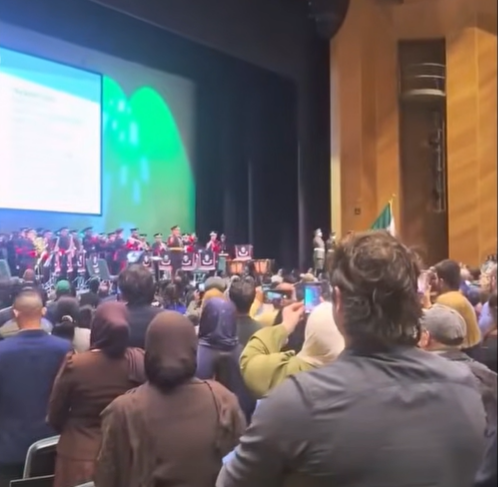
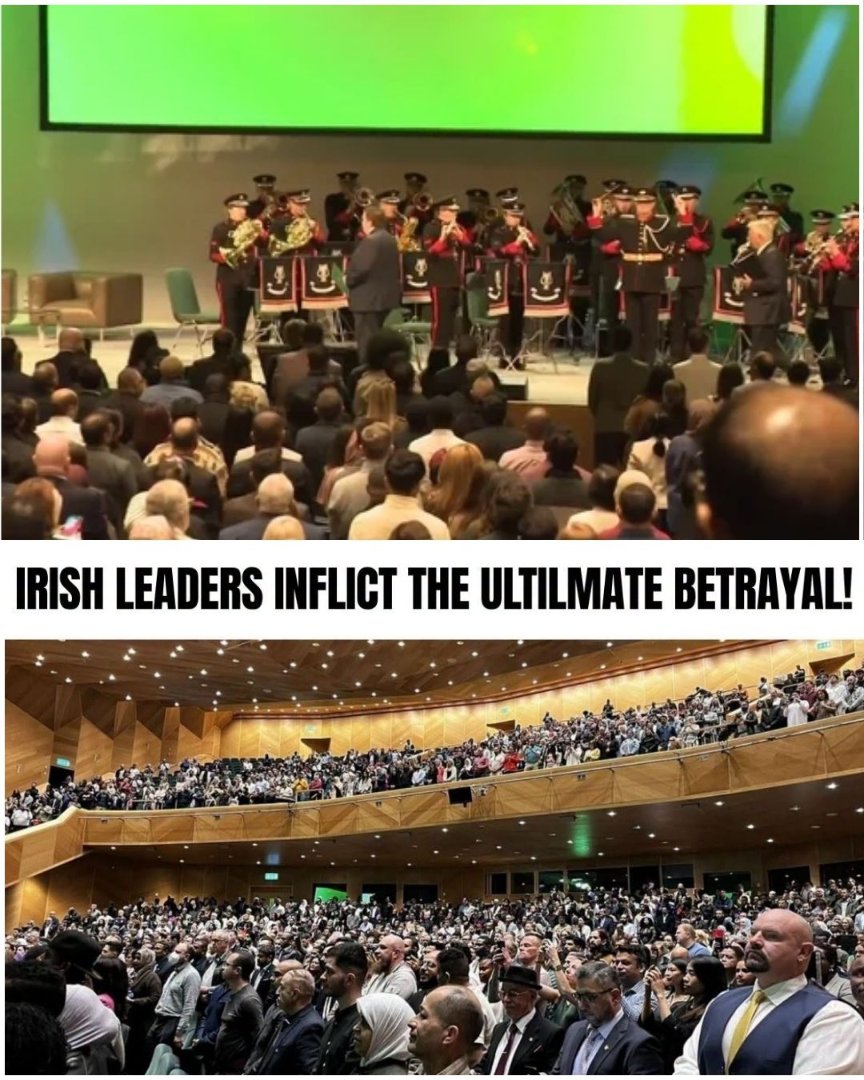
Over the course of a recent two-day period, approximately 6,000 individuals from 138 different countries were officially granted Irish citizenship in ceremonies held in Dublin.
According to reports cited in recent commentary, the largest demographic groups among the new citizens originate from Pakistan, India, Syria, Afghanistan, and Somalia.
The ceremonies have become a focal point for critics of Ireland’s current immigration framework.
Right-wing commentators and political analysts have seized upon the event to highlight broader demographic shifts within the country.
Recent statistics indicate that Ireland has recorded over 100,000 immigrants arriving annually for five consecutive years.
Currently, it is estimated that approximately 16.8% of the Irish population—more than one in six people—are foreign nationals, bringing the total population past 5.5 million.
Furthermore, recent data suggests a net emigration of Irish citizens, with more Irish nationals leaving the country than returning over the past year.
Under current Irish law, individuals generally become eligible to apply for citizenship after accruing five years of reckonable residence in the state.
Critics argue this timeline is too short and point to recent proposals to extend the residency requirement from five to eight years as evidence of growing concern.
Advertisement
The controversy surrounding the ceremonies reflects a deeper political argument occurring across Europe.
Opponents of mass naturalization argue that the process fundamentally alters the democratic landscape.
Some commentators draw direct parallels to recent elections in Sweden, claiming that left-wing coalitions are securing electoral victories primarily by relying on the voting power of recently naturalized immigrant populations, rather than native-born citizens.
These critics argue that governments in Ireland, the UK, and elsewhere are deliberately maintaining high immigration and rapid naturalization rates as a “tactical masterclass” to secure a loyal voter base and maintain power, despite widespread domestic opposition to such policies.
Advertisement
The Irish government maintains that its citizenship processes are rigorous and necessary for economic growth and social integration.
The ceremonies in Dublin are presented by the state as celebrations of diversity and commitment to the nation.
However, the viral spread of footage from these ceremonies, accompanied by sharp criticism regarding demographic change and electoral manipulation, underscores the deepening political divide over immigration policy in Ireland.
MASS CITIZENSHIP CEREMONY ERUPTS INTO CHAOS! Over 6,000 New Citizens Sworn In Just 48 HOURS, and the Internet Is Going Wild!
A major citizenship ceremony has sparked widespread discussion online after reports emerged that more than 6,000 people became citizens within a remarkable 48-hour period. The scale of the event has attracted attention, raised questions about immigration policy, and reignited an increasingly heated debate about national identity, integration, and the future of the country.
For thousands of people, receiving citizenship represents the culmination of years of waiting, paperwork, uncertainty, and personal sacrifice. It is a moment that can transform an individual’s relationship with the country they have chosen to call home. Yet, when thousands of people are involved in a short period, the event inevitably attracts wider public attention.
Images and discussions surrounding large citizenship ceremonies can quickly spread across social media. Some viewers celebrate the opportunity for people to begin a new chapter of their lives, while others question how governments manage immigration, citizenship applications, and the practical responsibilities that come with welcoming new citizens.
But beyond the dramatic headlines, there are important questions that deserve careful examination.
A Historic Moment for Thousands of Families
For many people, citizenship is much more than receiving an official document.
It represents security, belonging, opportunity, and the possibility of building a permanent future.
Some applicants have spent years studying, working, raising children, and contributing to their communities before becoming eligible for citizenship. Others have experienced complicated immigration journeys involving family separation, financial difficulties, and lengthy administrative procedures.
When citizenship is finally granted, the emotional significance can be enormous.
Parents may celebrate alongside children who have grown up in their adopted country. Couples may finally feel that their future is more secure. Individuals who arrived as students, workers, refugees, or family members may see citizenship as recognition of their long-term connection to society.
For these individuals, the ceremony is not simply a government event. It is a personal milestone.
However, the reported figure of more than 6,000 people receiving citizenship within 48 hours requires further verification. Without an identified country, official announcement, or confirmed government record, it would be premature to describe the event as an established national record.
Why Are Citizenship Ceremonies Becoming Such Important Political Events?
Immigration has become one of the most closely debated political subjects in many democratic countries.
Governments must balance several responsibilities: controlling borders, processing applications fairly, protecting vulnerable people, supporting economic development, and ensuring that immigration systems operate effectively.
Citizenship represents the final stage of a much longer process.
In many countries, applicants must satisfy residence requirements, demonstrate knowledge of the country’s language or institutions, meet character requirements, and complete other legal procedures.
The exact rules differ considerably between countries.
Consequently, a large citizenship ceremony may reflect several factors, including increased application processing, administrative changes, accumulated backlogs, or scheduled ceremonies involving applicants who completed the process over many months.
It does not necessarily mean that thousands of people entered the country during the same 48-hour period.
This distinction is important because immigration, permanent residence, and citizenship are three different legal processes.
The Internet Reacts: Celebration and Controversy
Social media has transformed the way major political and national events are discussed.
A citizenship ceremony involving thousands of people can generate enormous interest because it touches on questions that many citizens feel strongly about.
Supporters of immigration often emphasize the economic, cultural, and social contributions made by newcomers.
They point to workers filling essential positions, entrepreneurs establishing businesses, students contributing to universities, and families becoming active members of local communities.
For them, citizenship ceremonies demonstrate that national identity can evolve while remaining connected to shared institutions, responsibilities, and democratic values.
Other commentators raise concerns about the capacity of public services, housing availability, employment competition, and the ability of governments to manage population growth.
These concerns are not necessarily identical to opposition to immigration itself. Some people support immigration while arguing that governments must improve infrastructure and public planning.
Others believe citizenship requirements should be stricter and that governments should place greater emphasis on integration and language proficiency.
The important point is that these discussions should be based on reliable information rather than assumptions about individuals attending a ceremony.
What Does Becoming a Citizen Actually Mean?
Citizenship generally provides a collection of important legal rights and responsibilities.
Depending on the country, new citizens may gain the right to vote in national elections, apply for a national passport, stand for certain public offices, and receive stronger legal protection against removal from the country.
Citizenship can also create new responsibilities.
These may include obeying national laws, fulfilling tax obligations, participating in civic life, and respecting the constitutional principles of the country.
In some countries, citizens are also expected to participate in jury service or other forms of public duty.
The precise rights and responsibilities depend on national legislation.
For many new citizens, the ability to participate fully in democratic life is particularly meaningful.
They are no longer simply residents of the country. They become members of the political community with a formal role in shaping its future.
That is why citizenship ceremonies frequently include official speeches, national symbols, and formal declarations of allegiance.
The Economic Debate Cannot Be Ignored
Large-scale citizenship events also encourage discussions about the economic consequences of immigration.
New citizens can contribute to the workforce, establish businesses, purchase homes, pay taxes, and participate in local economies.
In countries facing ageing populations and labour shortages, immigration can play an important role in supporting economic activity.
However, the effects are not automatically positive in every location or sector.
Population growth can increase demand for housing, healthcare, education, transportation, and other public services.
If governments fail to expand infrastructure and public investment alongside population growth, communities may experience additional pressure.
Economists therefore examine immigration through several different measures, including employment, wages, productivity, public finances, and demographic change.
A citizenship ceremony alone cannot establish whether immigration is economically beneficial or harmful.
That assessment requires broader evidence and careful consideration of the relevant time period and population.
National Identity and the Meaning of Belonging
Perhaps the most emotional aspect of citizenship is the question of national identity.
What makes someone a member of a nation?
Is it birthplace, ancestry, language, culture, shared values, participation in society, or legal citizenship?
Different people answer this question differently.
For some, national identity is strongly connected to historical traditions and cultural continuity.
For others, it is based primarily on shared democratic principles, common institutions, and a commitment to contributing to the country’s future.
Citizenship ceremonies bring these perspectives together.
People from different backgrounds may stand together, make the same declaration, and receive the same legal recognition.
Their personal histories may be completely different, but they now share a formal connection to the same country.
This can be an important symbol of national unity.
At the same time, successful integration requires more than a ceremony. It depends on opportunities to learn the language, find employment, access education, build relationships, and participate in community life.
Governments and communities both have important roles in making that process successful.
Questions Governments Must Answer
If a government has genuinely processed more than 6,000 citizenship applications within 48 hours, several questions deserve answers.
How many applications were submitted before this period?
Were the ceremonies part of a planned administrative programme?
How many applications had previously been delayed?
What resources were allocated to process the applications?
And what support is available to help new citizens participate fully in society?
Transparency is essential.
Citizens deserve to understand how immigration and naturalization systems operate, particularly when the numbers involved attract significant public attention.
New citizens also deserve a fair process that recognizes their legal rights and treats their achievements with dignity.
Political leaders should avoid turning individual citizenship ceremonies into opportunities for unnecessary division.
Conclusion: A Ceremony That Raises Bigger Questions
The reported mass citizenship ceremony has generated attention because it brings together several issues that remain central to modern political debate.
For thousands of individuals and families, citizenship represents hope, security, and a new beginning.
For governments, it represents the responsibility to manage immigration systems fairly and ensure that public institutions can respond to changing population needs.
For existing citizens, it raises legitimate questions about national identity, economic planning, public services, and the future direction of society.
These discussions deserve serious attention.
However, the scale of a citizenship ceremony should not automatically be interpreted as evidence of uncontrolled immigration or a sudden change in national demographics.
Citizenship is the result of a legal process, and the number of people attending a ceremony is not necessarily the number of people who entered a country during that period.
Ultimately, a successful citizenship system must balance fairness, accountability, integration, and respect for the law.
The most important question is not simply how many people received citizenship within 48 hours.
It is whether governments can create the conditions in which new citizens and established communities can build a secure, productive, and shared future.
That is the conversation that deserves to continue long after the ceremonies have ended and the headlines have disappeared.