

BRITAIN WILL END UP ‘ON FIRE’ LIKE FRANCE IF WE DON’T TIGHTEN OUR BORDERS — IMMIGRATION WARNING SPARKS FRESH POLITICAL ROW!
Britain is facing another fierce political debate over immigration, border security and the future of national identity, following warnings that the country could experience unrest similar to that seen in France if the government fails to take stronger action.
The comparison has reignited tensions across Westminster, with politicians, immigration campaigners and members of the public questioning whether Britain’s current approach is sustainable.
For critics of the government’s immigration policy, the warning is clear: Britain cannot afford to ignore growing public frustration over border controls, asylum accommodation and pressure on public services.
The debate has also created an opportunity for Reform UK leader Nigel Farage, who has repeatedly argued that successive governments have failed to control immigration effectively.
But is Britain genuinely at risk of experiencing France-style unrest, or is this another example of political rhetoric designed to attract attention?
The answer involves much more than immigration figures. It concerns public confidence, economic pressures, integration and the government’s ability to maintain social cohesion.
1. The Warning That Has Reignited Britain’s Immigration Debate
The suggestion that Britain could end up ‘on fire’ like France has attracted considerable attention because it raises fears about social disorder and political instability.
France has experienced serious episodes of unrest in recent years, including violent disturbances following the police shooting of teenager Nahel Merzouk in June 2023.
The incident triggered demonstrations, riots and widespread damage across several French cities.
Although the causes of the unrest were complex, involving policing, discrimination, social inequality and tensions between communities, the events became an international warning about the consequences of unresolved social divisions.
Some British politicians have pointed to these developments as a reason why the government should take immigration, integration and community relations more seriously.
However, it would be misleading to suggest that immigration alone caused the French unrest.
Britain must examine the wider circumstances rather than simply assume that the same events will happen here.
2. Immigration Has Become One of Britain’s Biggest Political Issues
Immigration remains one of the most divisive subjects in British politics.
For many people, the central concern is whether the government has sufficient control over who enters the country and whether immigration levels are sustainable.
Small-boat crossings across the English Channel have become particularly controversial.
The arrival of asylum seekers has generated political arguments about border security, accommodation and the government’s ability to process applications efficiently.
There are also concerns about pressure on housing, healthcare, education and local authority budgets.
However, immigration also contributes to Britain’s economy.
Migrants work across healthcare, construction, hospitality, agriculture and other important industries.
The challenge for any government is therefore to establish a system that protects national borders while meeting legitimate labour needs and international legal obligations.
Simply promising tougher controls will not solve every underlying problem.
3. Nigel Farage Sees an Opportunity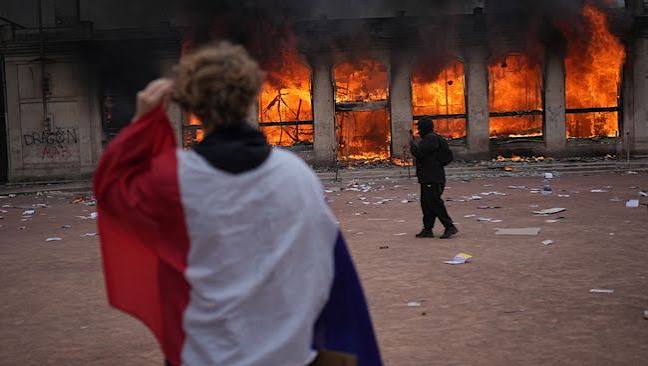
Few politicians have made immigration more central to their political identity than Nigel Farage.
The Reform UK leader has repeatedly criticised successive governments for failing to reduce irregular migration and strengthen border enforcement.
His message appeals to voters who believe the established political parties have ignored their concerns.
Reform argues that Britain needs a much tougher approach to illegal immigration, faster deportation procedures for people with no right to remain and stronger enforcement of existing laws.
Farage has also linked immigration to wider concerns about national identity, public services and the cost of living.
For Reform, this is a major political opportunity.
If Labour struggles to demonstrate that its policies are producing results, Farage could attract further support from voters who want a more restrictive immigration system.
Nevertheless, the party must also explain how its proposals would work in practice and how they would comply with Britain’s legal obligations.
4. France Offers a Serious Warning About Social Division
France’s experience provides an important lesson for Britain.
The country has struggled with long-standing tensions involving poverty, unemployment, discrimination, policing and social integration.
Some suburban communities have experienced significant disadvantages, including limited employment opportunities and poor access to public services.
When tensions escalate, isolated incidents can trigger wider unrest.
The 2023 riots demonstrated how quickly anger can spread when public confidence in institutions is weakened.
However, France’s experience should not be used to portray entire migrant communities as responsible for violence.
Most migrants and their families live peacefully, contribute to society and have no connection with criminal activity.
The real lesson is that governments must address social problems before they become more serious.
Effective policing, educational opportunities, employment and community integration are essential components of long-term stability.
5. Labour Faces Growing Pressure to Deliver on Border Security
The Labour Government faces a difficult balancing act.
It must demonstrate that Britain’s borders are properly managed while ensuring that immigration policy remains consistent with international law.
The government has promised stronger action against people-smuggling networks and greater cooperation with international partners.
However, voters are likely to judge ministers on practical results rather than political announcements.
If small-boat arrivals continue and asylum decisions remain delayed, public frustration could increase.
There are also questions about the financial cost of accommodating asylum seekers while local communities struggle with housing shortages and pressure on public services.
Labour needs to explain how it intends to improve the system and ensure that local authorities have the resources required to manage their responsibilities.
Failure to communicate a credible strategy could create further political difficulties.
6. Are Britain’s Borders Really Out of Control?
This is one of the most important questions in the debate.
The Channel crossing issue has become a powerful political symbol, but it represents only one part of Britain’s wider immigration system.
Legal migration, work visas, student visas, family migration and asylum applications all contribute to the overall picture.
A serious immigration strategy must distinguish between these different categories.
People arriving irregularly do not automatically have no right to seek asylum. Their claims must be assessed under the applicable legal framework.
At the same time, individuals whose applications are rejected and who have no other legal basis to remain may be subject to removal.
The government therefore needs an efficient system that can distinguish between genuine protection claims and cases where removal is legally appropriate.
Without effective processing and enforcement, public confidence will remain difficult to restore.
7. What Should Britain Do to Avoid Serious Unrest?
Preventing social instability requires more than tougher border rhetoric.
There are several areas where government action could make a meaningful difference.
-
Stronger border enforcement: Disrupt people-smuggling networks and improve cooperation with neighbouring countries.
-
Faster asylum decisions: Reduce lengthy delays and provide clarity for applicants and local authorities.
-
Effective integration: Improve access to language education, employment and community programmes.
-
Fair immigration rules: Ensure that people understand the legal requirements and that decisions are applied consistently.
-
Support for local communities: Give councils adequate resources where population changes place additional pressure on housing and public services.
-
Public safety: Address criminal activity firmly while protecting the rights of peaceful communities.
These measures would help address the underlying causes of public frustration without unfairly blaming entire communities.
8. The Political Consequences Could Be Significant
Immigration is likely to remain a major issue in Britain’s political debate.
Reform UK will continue to argue that Labour and the Conservatives have failed to deliver meaningful change.
The Conservatives will attempt to demonstrate that they can offer a tougher and more effective alternative.
Labour, meanwhile, must convince voters that it can manage immigration responsibly while maintaining economic stability and social cohesion.
The danger for all political parties is that increasingly aggressive language could deepen divisions without producing practical solutions.
Britain needs a serious discussion about immigration, but that discussion must be based on evidence rather than fear.
The country can debate border security, immigration levels and integration without suggesting that entire communities are responsible for the actions of a minority.
Conclusion: Britain Must Act Before Divisions Become More Serious
The warning that Britain could experience France-style unrest has reignited an important national debate.
Public confidence in immigration policy matters. Border security matters. The ability of local communities to access housing, healthcare and other essential services matters.
Ignoring these concerns would be a serious political mistake.
However, predicting that Britain will inevitably descend into violence would be equally irresponsible.
France’s experience demonstrates that social unrest has multiple causes, including inequality, discrimination, policing problems and a breakdown in trust between communities and institutions.
Britain must learn from those lessons.
The government needs an immigration system that is controlled, efficient and fair, alongside stronger investment in integration and local services.
Nigel Farage and Reform UK may benefit politically if Labour fails to deliver on these priorities. But ultimately, the consequences of failure would extend far beyond Westminster.
Britain does not need fear and division. It needs secure borders, effective government and communities where people can live together safely.
The real question is whether politicians can deliver those objectives before public frustration becomes an even greater challenge for the country.