
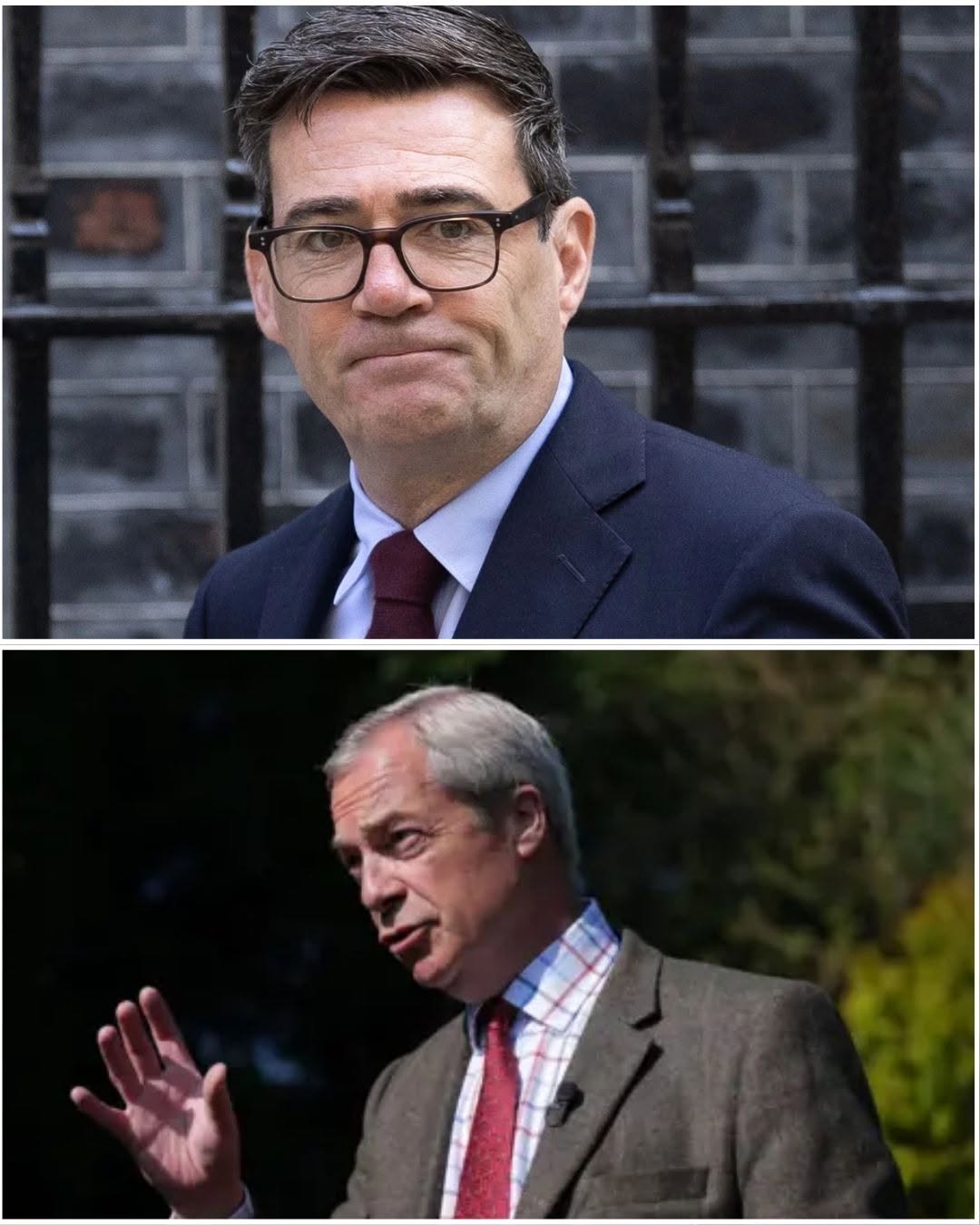
Andy Burnham’s Popularity Surge Gives Labour New Hope — But Can Britain’s Prime Minister Turn Strong Poll Ratings Into Lasting Political Change?
LONDON, October 9, 2026 — Prime Minister Andy Burnham has emerged as Britain’s most positively rated major political leader in recent Opinium polling, offering the Labour government renewed encouragement as it attempts to rebuild public confidence and strengthen its position ahead of the next general election. However, while the figures suggest a significant improvement in Labour’s political fortunes, questions remain about whether Burnham’s popularity represents lasting support or a temporary honeymoon following his arrival in Downing Street.
A survey conducted by Opinium between August 5 and 7 recorded a net approval rating of +16 for Burnham, with 37% of respondents approving of his performance as prime minister and 21% disapproving.
The result placed him ahead of the other major political leaders included in the research, reinforcing the impression that his leadership had generated a more favourable public response than that experienced by his immediate predecessor, Keir Starmer.
The findings also suggested that Burnham was performing substantially better than Conservative leader Kemi Badenoch and Reform UK leader Nigel Farage when voters were asked who would make the better prime minister.
For Labour, these results represented an encouraging development after an extended period of political difficulty.
However, the figures require careful interpretation.
The +16 rating came from an August survey rather than the latest October poll. More recent Opinium research, conducted between September 30 and October 2, placed Burnham’s net approval at +8.
Although lower than his early peak, the October figure remained positive and continued to distinguish him from the other major political leaders tested.
This suggests that some of Burnham’s initial popularity has moderated, but that his personal standing remains comparatively strong.
A Remarkable Change in Labour’s Political Position
Burnham entered Downing Street in July 2026 following a difficult period for the Labour Party.
Under Starmer, Labour had experienced declining public confidence, disagreements over government policy and growing pressure from opposition parties.
Reform UK, led by Farage, had become an increasingly important force in national polling, while the Conservatives were attempting to rebuild their electoral position under Badenoch.
Against that background, Burnham’s arrival provided Labour with an opportunity to present a change of leadership and direction.
Opinium’s late-July survey offered an early indication of this shift.
Labour moved into the lead on voting intention with 27%, compared with 23% for Reform UK and 17% for the Conservatives.
The pollster described the result as Labour’s first voting-intention lead in its research since April 2025.
Burnham also entered office with a +16 net approval rating, based on 36% approval and 20% disapproval.
The following week’s survey recorded the same net figure, with approval increasing to 37% and disapproval to 21%.
These findings suggested that voters were responding positively to the change in leadership, even if they remained uncertain about the government’s longer-term performance.
What the Latest Polling Shows
By early October, Labour had strengthened its position further in Opinium’s voting-intention research.
The poll conducted between September 30 and October 2 placed Labour on 30%, Reform UK on 25% and the Conservatives on 17%.
The Greens received 11%, while the Liberal Democrats stood at 9%.
The results suggested that Labour had established a five-point advantage over Reform UK, an improvement from the narrower margins recorded during parts of the summer.
Burnham’s personal approval rating stood at +8, while Badenoch recorded -1 and Farage -22.
Liberal Democrat leader Ed Davey registered -6, while Green Party leader Zack Polanski stood at -22.
These figures made Burnham the only leader among those tested to receive a positive net approval rating.
Nevertheless, a positive net rating does not mean that most voters necessarily approve of a leader.
It means that the proportion expressing approval exceeds the proportion expressing disapproval.
The distinction is important because undecided respondents and those expressing neither approval nor disapproval can account for a substantial share of the electorate.
The polling therefore demonstrates a relative political advantage, rather than overwhelming public endorsement.
Burnham’s Lead Over Badenoch and Farage
One of the most politically important findings concerns how voters compare Burnham directly with his main opponents.
In Opinium’s late-September polling, Burnham maintained a lead of approximately 20 points over Badenoch and more than 20 points over Farage on the question of who would make the best prime minister.
The early-October research showed a similar pattern.
Burnham led Badenoch by 21 points and retained a comparable advantage over Farage.
These results suggest that his popularity extends beyond a general assessment of his performance.
When presented with direct leadership alternatives, more respondents preferred Burnham.
For the Conservatives, the challenge is demonstrating that Badenoch offers a convincing alternative government while recovering voters who have moved towards Reform UK or other parties.
For Farage, the problem is different.
Although Reform UK continues to attract substantial voting-intention support, its leader’s personal ratings remain significantly weaker than Burnham’s.
This gap highlights an important distinction between support for a political party and confidence in its leader as a potential prime minister.
Voters may support Reform’s policies or express dissatisfaction with established parties without necessarily believing Farage would be the strongest national leader.
At the same time, Labour cannot assume that Burnham’s personal advantage will automatically translate into an election victory.
Voting intentions can change considerably as economic conditions, political controversies and campaign priorities evolve.
Why Voters May Be Responding Positively
Several factors may help explain Burnham’s stronger personal ratings.
His previous experience as mayor of Greater Manchester helped establish a public profile associated with regional government, transport, public services and economic development.
Since becoming prime minister, he has emphasised national unity, public-sector improvement and the need for government to respond more directly to everyday concerns.
Opinium’s July research found that voters rated him positively on several leadership characteristics, including likeability, decisiveness and competence.
The poll also indicated that more people believed their opinion of Labour had improved since Burnham became prime minister than believed it had worsened.
However, these findings establish changes in public perceptions, not necessarily the reasons behind them.
It remains difficult to determine precisely how much of Labour’s recovery can be attributed to Burnham personally, policy announcements, opposition weaknesses or other political developments.
The prime minister has also attracted attention through proposals involving transport, economic reform, public services and Britain’s relationship with the European Union.
Such announcements may help a government shape the political agenda, but their popularity can change once implementation costs and practical consequences become clearer.
The Honeymoon Effect: A Temporary Boost?
New political leaders often enjoy an initial period of increased public goodwill.
Voters who were dissatisfied with a previous administration may become more optimistic when a new leader promises a different approach.
This phenomenon, commonly described as a political honeymoon, can create an early improvement in approval ratings without guaranteeing long-term support.
Burnham’s polling trajectory is consistent with that possibility.
His +16 net approval in early August had declined to +8 by early October, although he remained the most positively rated major leader in Opinium’s research.
The decline does not necessarily signal a political crisis.
Instead, it may indicate that voters are gradually shifting from judging the prime minister’s personal qualities to evaluating his government’s decisions.
The September polling also revealed important limitations in Labour’s recovery.
While Burnham received positive ratings for personal competence and likeability, Labour itself continued to receive negative assessments on several measures of trust and representation.
This suggests that rebuilding confidence in the party may take longer than improving perceptions of its leader.
Economic Pressures Remain a Major Risk
The government’s greatest test may come from the economy.
British households continue to face concerns about living costs, housing affordability, taxation and public services.
Political popularity can prove fragile when voters experience financial pressure or believe that promised improvements are not reaching their communities.
Burnham must also manage competing demands for public investment while maintaining confidence in the government’s fiscal policies.
His administration has proposed changes involving taxation, public infrastructure and the delivery of essential services.
Supporters argue that a more interventionist approach could help address longstanding economic problems.
Critics question how additional commitments would be financed and whether government intervention would produce sustainable results.
The polling suggests that voters are willing to give Burnham an opportunity, but it does not establish unconditional confidence in his economic agenda.
An Ipsos survey published on September 29 also found that more than half of respondents believed Labour was performing poorly in reducing the cost of living.
That finding illustrates the difference between supporting a prime minister personally and approving of the government’s handling of major economic challenges.
What Does This Mean for the Next Election?
Labour’s improved polling position gives Burnham an opportunity to strengthen the party’s electoral prospects.
However, Britain’s fragmented political environment makes long-term predictions difficult.
Reform UK continues to compete for voters dissatisfied with immigration policy and established political institutions.
The Conservatives are seeking to rebuild their traditional support, while the Liberal Democrats and Greens remain relevant competitors in numerous constituencies.
Under Britain’s parliamentary electoral system, national vote shares do not translate directly into seats.
Regional voting patterns, tactical voting and constituency-level competition can substantially influence election outcomes.
A five-point Labour polling advantage therefore should not be treated as a guaranteed parliamentary majority.
Furthermore, one polling company’s findings represent a snapshot of public opinion rather than a definitive forecast.
Surveys are subject to sampling uncertainty, methodological differences and changes in voter preferences.
A Promising Start, but No Guaranteed Transformation
Burnham’s early approval ratings represent a meaningful political development.
His August +16 rating indicated a notably positive public response, while the early-October figures showed that he remained ahead of the other major political leaders tested.
Labour’s recovery to 30% in Opinium’s latest available voting-intention poll also suggests that the party has regained some ground after a difficult period.
Yet the government’s future will depend on whether that improvement can be sustained through difficult policy decisions and changing economic conditions.
The central question is whether Burnham can transform personal popularity into lasting public confidence in Labour’s ability to govern.
If his administration delivers improvements that voters recognise in their daily lives, the current polling advantage could develop into a more durable political shift.
If expectations are disappointed, the early enthusiasm could diminish.
For Badenoch and Farage, Burnham’s relative strength presents a challenge, but also an opportunity to test the government’s record and offer alternative policies.
For Labour, the message is encouraging but far from conclusive.
Andy Burnham has begun his premiership with stronger ratings than his principal rivals. Whether this becomes the foundation of a lasting political transformation or simply a temporary honeymoon will be decided by what happens next.
Editorial Note: The 37% approval, 21% disapproval and +16 net approval figures refer to Opinium’s survey conducted in August 2026, not October. The later survey conducted September 30–October 2 recorded a +8 net approval rating. Polling figures measure public opinion at particular points in time and should not be interpreted as election predictions.
ANDY BURNHAM SOARS — BEST PRIME MINISTER POPULARITY RATING IN YEARS!
British politics could be approaching a significant turning point as Andy Burnham attracts growing attention in discussions about the future leadership of the country. Known for his political experience, communication skills, and emphasis on public services, Burnham has become a prominent figure in debates about what Britain needs from its next generation of leaders. His name increasingly raises an important question: could he one day become the person capable of transforming the political landscape and restoring public confidence in government?
The prospect of Burnham achieving a popularity rating comparable to, or even higher than, those of recent British prime ministers has captured the imagination of political observers. At a time when voters are demanding practical solutions to the cost of living, pressure on the National Health Service, housing shortages, and economic uncertainty, a politician who presents himself as focused on everyday concerns could attract considerable support.
However, claims that Burnham has achieved the best prime ministerial popularity rating in years should be examined carefully. Burnham has not served as prime minister, and any claim about his popularity must be supported by identifiable polling data, including the survey date, sample size, and the question respondents were asked. Nevertheless, his political profile provides an interesting starting point for examining the possibility of a future leadership challenge.
A Political Figure Capturing National Attention
Andy Burnham is a senior Labour politician who has served as Mayor of Greater Manchester since 2017. Before becoming mayor, he held several important positions in national politics, including serving as a government minister and as Secretary of State for Health under the Labour government led by Gordon Brown.
His experience in Westminster has helped shape his political identity, while his work as mayor has given him a distinct regional platform. Unlike politicians whose public profiles depend primarily on parliamentary debates and television interviews, Burnham has spent years presenting himself as a leader concerned with the practical challenges facing a major metropolitan region.
His political approach has often emphasised transport, housing, regional investment, public services, and the need to address inequalities between different parts of England. These issues resonate with voters who believe that national politics has become too focused on internal party disputes and not sufficiently concerned with the pressures affecting ordinary households.
For supporters, Burnham represents a politician who understands the importance of local leadership and the relationship between economic opportunity and public services. His experience in both national government and regional administration may also help him appeal to voters seeking a leader with a broader understanding of Britain’s challenges.
Yet experience alone does not guarantee popularity. The real test is whether a politician can turn public recognition into sustained support across the country.
Why Popularity Matters in British Politics
Popularity is a powerful force in modern democratic politics. A politician who can communicate clearly, appear confident under pressure, and connect with voters may enjoy an advantage over opponents who struggle to explain their policies or defend their records.
Prime ministers are particularly vulnerable to changes in public opinion because they carry responsibility for the government’s overall performance. Economic difficulties, controversial decisions, internal party disagreements, and unmet campaign promises can all contribute to declining approval ratings.
For this reason, a politician who appears comparatively popular can attract attention even before formally seeking national leadership.
Burnham’s potential appeal may stem from his ability to discuss issues that affect people’s daily lives. Housing affordability, the availability of healthcare, transport costs, wages, and access to secure employment are not abstract political questions. They influence whether families can pay their bills, whether young people can afford to move out of their parents’ homes, and whether communities believe they have a fair opportunity to prosper.
A political figure who consistently addresses these concerns may benefit when voters become dissatisfied with the established political leadership.
Nevertheless, popularity polls must be interpreted in context. A politician can receive favourable personal ratings without necessarily commanding majority support for a particular party or winning a general election. Personal approval, voting intention, leadership preference, and public trust are different measures, and they should not be treated as interchangeable.
The Appeal of a Different Kind of Leadership
One possible explanation for Burnham’s appeal is that some voters are looking for a different style of leadership. After years of intense political arguments and changes in national leadership, there may be an appetite for politicians who appear more focused on long-term solutions than on daily political confrontation.
Burnham’s mayoral position allows him to speak about regional development and the practical delivery of services. His political message has frequently emphasised the need to give local communities greater influence over decisions affecting their futures.
This approach could be attractive to voters who believe that too much economic power and political attention remain concentrated in London and the South East. Greater investment in transport, skills, housing, and local industries is often presented as a way to create a more balanced national economy.
The argument is straightforward: Britain cannot reach its full potential if opportunities are concentrated in a limited number of places.
For communities experiencing declining high streets, limited public transport, or a shortage of affordable homes, a leader who promises practical improvements may be more persuasive than one who relies on broad ideological language.
However, the challenge for Burnham would be to demonstrate that policies developed for Greater Manchester could be adapted successfully to the diverse circumstances of the entire United Kingdom.
Could Andy Burnham Become Prime Minister?
The question of whether Burnham could become prime minister is politically intriguing, but the path from regional leadership to Downing Street would be complicated.
First, he would need to navigate the internal processes of the Labour Party and establish sufficient support among party members and parliamentary colleagues. Leadership contests require more than favourable headlines; they depend on political organisation, credibility, relationships, and a convincing programme for government.
Second, he would need to demonstrate that his appeal extends beyond Greater Manchester. Winning the confidence of voters in northern England would be important, but a successful national leader must also connect with communities in the Midlands, southern England, Wales, Scotland, and other parts of the country.
Third, he would need to present detailed and financially credible policies. Promising better healthcare, improved public transport, more affordable housing, and stronger economic growth is relatively easy. Explaining how these objectives would be funded, delivered, and evaluated is much more difficult.
Finally, Burnham would have to withstand the scrutiny that accompanies national political leadership. His previous decisions, political relationships, policy proposals, and record in public office would receive much closer examination.
A strong personal reputation can open the door to a leadership opportunity, but only a convincing political programme can help sustain it.
The Challenges Facing Britain’s Next Leader
Whoever eventually leads Britain will inherit a demanding set of challenges. The cost of living remains a major concern for households, while the NHS faces persistent pressures involving waiting lists, staffing, and access to care.
Housing affordability is another major issue, particularly for younger generations who struggle to save for deposits or find secure accommodation at reasonable prices. Economic growth, productivity, infrastructure investment, and regional inequality will also remain central to national debate.
These challenges require more than effective communication. They demand careful planning, realistic financial decisions, and the ability to work with local authorities, businesses, public institutions, and communities.
Burnham’s supporters may argue that his regional experience gives him useful insight into these problems. Critics, meanwhile, may question whether his record in Greater Manchester demonstrates that he could manage the broader economic and constitutional responsibilities of national government.
Both arguments deserve consideration.
The decisive question is whether he can show that his ideas would produce measurable improvements for people throughout Britain, rather than simply offering an appealing alternative to the current political establishment.
Media Attention and the Power of Public Perception
Political popularity is also shaped by the media. Television interviews, newspaper headlines, online discussions, and social media campaigns can rapidly increase the visibility of a potential leader.
A headline declaring that Burnham is soaring in popularity may encourage audiences to view him as a serious contender for national leadership. But public perception can change quickly, and intense media attention does not always translate into lasting electoral support.
Responsible analysis therefore requires access to credible polling. To establish whether Burnham has achieved an exceptional popularity rating, journalists should identify the polling organisation, compare his results with those of other politicians, and examine how the figures have changed over time.
It is also important to distinguish between an approval rating and a preference for prime minister. A survey showing that respondents view a politician favourably does not necessarily mean they want that person to lead the government.
These distinctions may seem technical, but they are essential to understanding the real state of British public opinion.
Conclusion: A Potential Leader, but the Evidence Matters
Andy Burnham’s political experience, regional leadership, and emphasis on public services make him a figure worth watching in discussions about the future of British politics. His profile offers a possible alternative for voters who want stronger regional investment, more effective public services, and a political culture focused on practical results.
Whether he can translate that profile into a successful bid for national leadership remains an open question. The challenges would include securing party support, broadening his appeal beyond Greater Manchester, developing a credible national programme, and demonstrating that his approach could deliver tangible improvements across Britain.
Claims that Burnham has achieved the best prime ministerial popularity rating in years should be supported by verified polling rather than repeated as established fact. Since he has not served as prime minister, comparisons must also make clear whether they concern personal favourability, hypothetical leadership preferences, or approval ratings for actual prime ministers.
Ultimately, the future of British politics will depend on more than the popularity of a single individual. Voters will judge potential leaders on their policies, their records, their integrity, and their ability to improve everyday life.
Andy Burnham may yet play a significant role in that debate. Whether he becomes a future prime minister, however, will depend on political developments, public opinion, and his ability to turn his reputation into a convincing national offer.
For now, the most important question is not simply whether Burnham is popular, but whether he can persuade the British public that he has the experience, vision, and practical solutions required to lead the country.