

Reform UK has vowed to scrap all remaining EU laws to save Brexit as part of a major pre-Budget policy blitz.
The party, led by Nigel Farage, is set to publish its “teal book” of policies today in a bid to rival Chancellor John Healey’s “red book”.
Reform will detail its plan for 60 job-creating measures in order to reduce red tape and regulation and scrap net zero.
Treasury spokesman Robert Jenrick will also unveil plans around UK home improvements and more help for Britain’s motorists.
Speaking on delivering Brexit, Mr Farage said: “The British public is frankly fed up with successive governments dodging the big decisions.
“It’s clear that urgent action is required. Reform’s proposals will create a vibrant, growing private sector that delivers well-paid jobs for British citizens.”
This afternoon, Mr Jenrick is set to accuse the Chancellor of “dodging the tough decisions our country needs” in the Budget.
He is expected to say: “We can’t continue like this. The country can’t wait 10 years for Andy Burnham to work out a plan, we need action now.”
The move from the party comes after falling to third place in the latest polls.
New Ipsos polling data on Sunday showed Labour leading with 32 per cent, the Tories on 24 per cent and Reform just below at 20 per cent.
FOLLOW BELOW FOR LIVE UPDATES THROUGHOUT THE DAY…
Follow for the LATEST UPDATES throughout the day…
- Andrew Bowie has accused Andy Burnham of wanting to ‘open the floodgates to cheaper migration from Europe’
Tories accuse Andy Burnham of wanting to ‘open the floodgates to cheaper migration’ from Europe
Andy Burnham has been accused of wanting to “open the floodgates to cheaper migration from Europe” after admitting he is hoping for an “honest discussion” with the EU.
Speaking to GB News, Shadow Energy Secretary Andrew Bowie said the Prime Minister has “no idea” how to deal with the issues facing Britain today.
He said: “Is the Prime Minister really suggesting the best way to resolve this crisis is to open the floodgates to cheaper migration from Europe? Absolutely mad. Frankly, his priorities are all in the wrong place.
“This is a man who’s fighting the battles of 2016 with no idea of how to deal with the huge issues that we face today. We have a responsibility as legislators, as those who seek to be in Government or are in Government, to those young people who are struggling to get into the workplace.
“Everything this Government has done since they got into power through the National Insurance hike on businesses, the unemployment rights bill, everything they’ve done has worked against young people getting into the workplace.
“If now we were to open our gates to cheaper migration and workers from Europe coming in and taking those jobs, we’d see even more young people struggling to get into work. So this is completely the wrong approach. It’s wrongheaded. It’s fighting the battles of 2016, and nobody in this country wants to go back and fight those Brexit battles all over again.”
-
Andy Burnham rules out an early general election
The Prime Minister has ruled out calling an early general election, arguing that Britons now want him to “get on with the job”.
Appearing on ITV’s Good Morning Britain, Andy Burnham was pressed on whether he was “softening us all up for an early general election”.
The Prime Minister responded: “No, no, I’ve ruled that out. I did that before the Labour conference, because I just don’t think people want another backward looking squabble. They want me to get on with the job.”
Asked why he has “brought up rejoining the EU” if he is not seeking early election, he made clear: “We have a decade of experience now looking back at Brexit, and I don’t think it has played out as people said it would at the time.
“We got a harder Brexit than was proposed in the referendum campaign. It’s weakened our economy. It’s also weakened our control of immigration.”
-
Andy Burnham stands by Shabana Mahmood’s reforms to indefinite leave to remain
Andy Burnham has made clear he is standing by the reforms to the immigration system set out by Shabana Mahmood, following speculation that a political backlash could force them to be watered down.
Speaking to ITV’s Good Morning Britain, he was asked if he agreed with Home Secretary’s policy of extending the time it takes to secure indefinite leave to remain to 15 years from five for some migrants.
The Prime Minister said: “The Home Secretary is right, in my view, to bring forward changes that are based on the principle that settlement is a right to be earned, not just something that is granted automatically.
“And she’ll set out the final conclusion soon.”
- Richard Tice has told GB News that he and Robert Jenrick will ‘resign’ if Reform’s plan fails within 100 days
Richard Tice declares he ‘will resign’ if Reform UK plan fails within its first 100 days
Richard Tice has declared that he and Robert Jenrick will “resign” if their latest plan for Britons fails within their 100 days of a Reform UK Government.
Speaking to GB News, the deputy leader of Reform outlined the party’s plans to create 60 “job creating policies” and build “50,000 extra affordable homes”.
He said: “I’ve pledged to reduce energy bills by £250 again in the first 100 days, and Robert and I, we’ve made it very clear we’ve put our neck on the line and said if we don’t do this, then we will both resign. It’s as simple as that, and we will scrap net stupid zero, scrap all these daft regulations, get rid of GDPR, make things like energy performance certificates voluntary.
“All of these things to reduce the unnecessary burdens, the unnecessary costs on business to create jobs and growth and incentive. That’s what people want. They want an easier life. They want the state to get out of their way, frankly.
“And that’s why I urge people to look at that list of 60 excellent job creating initiatives that will come forward later today at our press conference. There’s so much for everybody within that.”
-
Britain returning to free movement with the EU is ‘completely mad’, Robert Jenrick says
Reform UK’s Robert Jenrick has branded the idea of returning to free movement with the European Union “completely mad”.
Speaking on BBC’s Sunday with Laura Kuenssberg, the Treasury spokesman argued that mass migration had been a “disaster” for working Britons.
He said: “I think it’s completely mad the idea that this country needs more immigration. It’s a total mess at the moment.
“We’re trying to grapple with the Boris wave and all the challenges that we’ve had in recent times. And Andy Burnham is proposing to open our borders to another 450 million people over whom we’d have no control whatsoever.
“What would this do? Undercut the wages of British workers, put more pressure on housing, on the NHS, on doctors, on dentists, more challenges for our communities and sense of unity and cohesion in this country.”
Mr Jenrick added: “What all the data now shows is that mass migration, importing hundreds of thousands or even millions of people into this country, has been a disaster for living standards, for working people, for Brits in this country.”

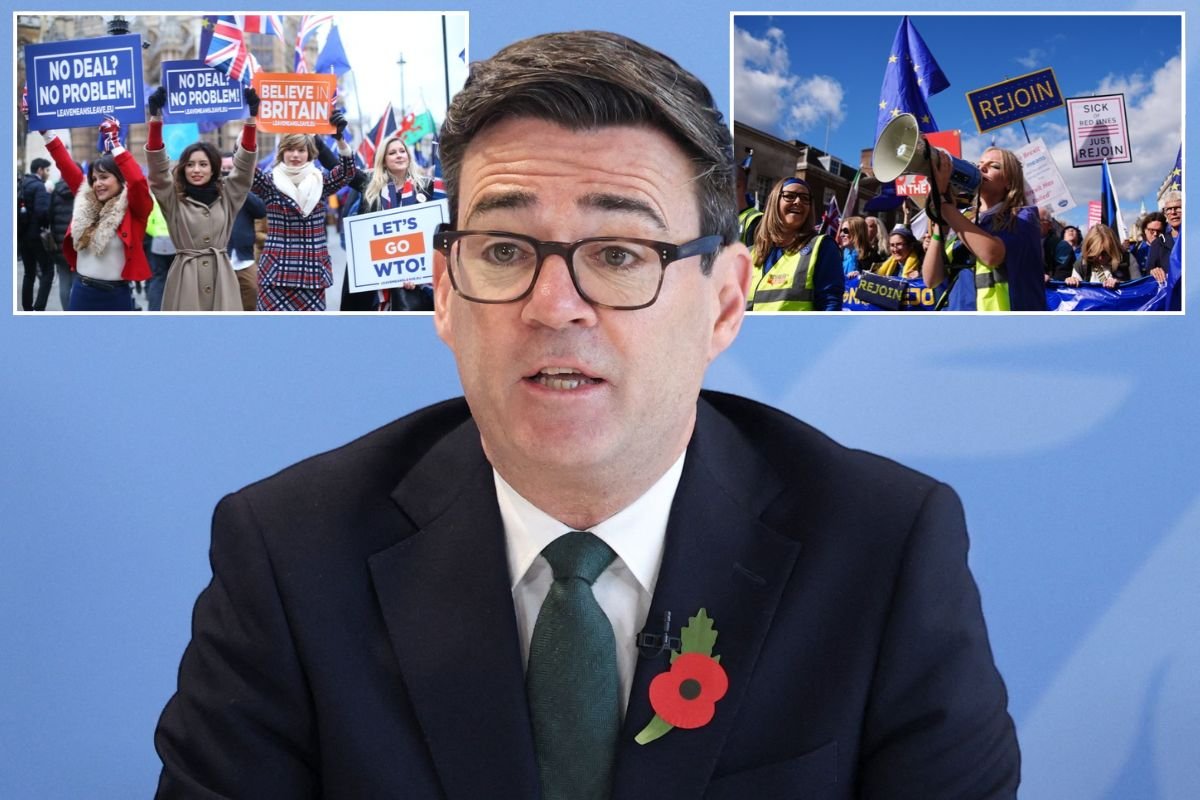

Reform UK Vows to Scrap Remaining EU Laws and Deliver Brexit Under Major Pre-Budget Policy Blitz
Reform UK has renewed its promise to reshape Britain’s relationship with Europe, pledging to scrap remaining European Union laws and push for a more extensive version of Brexit as the country approaches another crucial Budget period. The proposal places national sovereignty, economic regulation and immigration back at the centre of Britain’s political debate, with the party arguing that the country must take further steps to establish an independent direction after leaving the European Union.
The announcement forms part of a broader policy push designed to highlight Reform UK’s priorities on taxation, public spending, business regulation and government accountability. With households continuing to face financial pressures and businesses seeking greater certainty about the economic outlook, the party is attempting to present itself as an alternative to the established political parties.
For Reform UK, Brexit remains more than a historical referendum result. It is an ongoing political project that, in the party’s view, has not yet delivered all the changes promised to voters. Its proposals raise important questions about how much EU-derived legislation remains in force, what replacing those rules would involve and whether a more extensive regulatory departure would improve Britain’s economic performance.
However, scrapping legislation does not automatically produce economic growth. The practical consequences would depend on which rules were removed, what replaced them and how the changes affected British companies trading with European markets.
Reform UK Wants to Complete the Brexit Project
Britain formally left the European Union in January 2020 and completed its transition period at the end of that year. However, many laws originally derived from EU legislation remained part of the UK’s domestic legal framework.
This continuity was intended to avoid unnecessary disruption after withdrawal. Businesses, public authorities and individuals needed established rules governing areas such as employment, product standards, environmental protection and commercial activity.
Reform UK’s argument is that retaining substantial amounts of EU-derived legislation limits the benefits of leaving the bloc. The party wants the government to review these rules and remove provisions it considers unnecessary or damaging to British interests.
Supporters of this approach argue that an independent legal framework could give ministers greater flexibility to respond to domestic economic conditions. They believe Britain should be able to develop regulations suited to its own industries rather than maintaining rules originally designed for a wider European market.
Critics, however, warn that removing established protections without a carefully designed replacement could create uncertainty for businesses and consumers. They also point out that British companies exporting to the EU must still comply with relevant European requirements, regardless of whether equivalent rules remain in British law.
The central question is therefore not simply how many EU-derived laws can be removed. It is whether changing them would produce clear benefits that outweigh the costs of adjustment.
The Economic Case for Regulatory Reform
Regulation has become an important battleground in the debate about Britain’s post-Brexit economy.
Businesses frequently argue that complicated rules, overlapping reporting requirements and administrative costs can discourage investment. Smaller companies may find compliance particularly difficult because they have fewer resources to employ legal advisers or maintain specialist regulatory teams.
Reform UK wants to use greater legislative independence to reduce what it regards as unnecessary burdens. Depending on the policies eventually adopted, changes could affect business reporting, product approvals, agricultural rules and other areas of economic activity.
Supporters believe that a simpler regulatory environment could encourage entrepreneurs to establish companies, help existing businesses expand and make Britain more attractive to investors.
Yet regulation also serves practical purposes. Rules can protect workers, establish product safety standards, reduce environmental damage and give businesses confidence that competitors operate under comparable conditions.
Removing a requirement may lower costs for one company while creating new expenses or risks elsewhere. For example, a manufacturer selling products in Britain and the EU could face additional costs if the two markets adopted different technical standards.
Companies might then need separate production processes, documentation or testing arrangements.
A successful reform programme would therefore require detailed assessments of individual rules rather than a blanket assumption that all legislation originating in Brussels is harmful.
What Could Change for British Businesses?
The consequences of further Brexit-related reforms would vary significantly between industries.
Manufacturers, food producers, agricultural businesses and exporters may be particularly sensitive to changes in technical standards and border procedures. Companies that trade extensively with European partners need predictable rules because even small administrative changes can affect delivery schedules and operating costs.
Businesses focused primarily on the domestic market might benefit from simplified requirements if the government removed obligations that were costly but offered limited practical value.
However, firms selling into Europe would still need to satisfy the regulations applicable in their destination markets. Divergence could therefore produce a complicated situation in which companies follow one set of rules at home and another when exporting.
For larger businesses, managing different requirements may be relatively straightforward. Smaller exporters could find the additional paperwork and testing expenses more difficult to absorb.
There is also the question of investment. Companies making long-term decisions generally value regulatory stability. Frequent changes can create uncertainty about future costs and market access.
Reform UK would need to explain how its proposals would deliver measurable savings while avoiding unnecessary disruption.
If the party wants regulatory independence to become an economic advantage, it will need to identify specific reforms, publish credible impact assessments and demonstrate how businesses would benefit.
Immigration and National Sovereignty Remain Central
Reform UK’s wider Brexit programme is closely connected to its position on immigration and national sovereignty.
The party has argued for tighter immigration controls and greater domestic authority over who can enter and remain in Britain. It presents these policies as part of a broader effort to ensure that decisions affecting the country are made by British institutions.
For voters who supported Brexit because of concerns about immigration, this remains an important issue. They may believe that leaving the EU should have produced more visible changes to border management and the rules governing migration.
Other voters place greater emphasis on the economic contribution of migration, particularly in sectors facing recruitment difficulties. Employers in healthcare, hospitality, agriculture and other industries have raised concerns about labour availability when immigration rules change.
These competing considerations make immigration policy difficult to separate from the wider economic debate.
A stricter system could alter recruitment patterns and reduce migration in some categories, but its consequences would depend on the rules introduced, enforcement arrangements and the availability of domestic workers.
Reform UK’s challenge is to demonstrate how its proposals would meet its objectives while accounting for labour-market requirements, public-service pressures and Britain’s international obligations.
The Pre-Budget Battle Over Taxation and Spending
The timing of the policy announcement is also politically significant because Budget debates place government spending, taxation and economic priorities under intense scrutiny.
Households want to know whether their disposable income will improve, while businesses seek clarity about the costs of employing staff, investing and expanding operations.
Reform UK’s broader economic message has focused on reducing what it sees as unnecessary government expenditure, lowering certain tax burdens and challenging established approaches to economic management.
The party is likely to argue that regulatory reform should form part of a wider effort to improve productivity and reduce costs. However, changes to EU-derived laws would not automatically generate enough savings to finance substantial tax reductions.
The financial effects would depend on the specific measures adopted, the cost of implementing replacements and the wider response from businesses and consumers.
Any proposed tax cuts would also need to be assessed alongside the cost of public services, defence, infrastructure and social support.
For voters, the key question is whether a party’s promises can be delivered without creating other financial difficulties.
A credible economic programme must explain not only what the government intends to change but also how those changes would be financed and what evidence supports the expected benefits.
Labour and the Conservatives Face Difficult Questions
Reform UK’s renewed focus on Brexit places pressure on both Labour and the Conservatives to explain their own approaches to Britain’s relationship with Europe.
Labour has generally emphasised improving practical cooperation with the EU while ruling out a return to membership of the single market, the customs union and freedom of movement under its 2024 manifesto commitments.
The Conservatives, meanwhile, must balance their commitment to Brexit with questions about trade, economic performance and the effectiveness of the regulatory changes already introduced.
Reform UK can attempt to distinguish itself by arguing that neither established party has gone far enough in using Britain’s legal independence.
However, its opponents can challenge the party to demonstrate exactly which laws it would repeal and what would replace them.
The debate is likely to involve competing claims about sovereignty, business competitiveness and the costs of regulatory divergence.
Rather than relying solely on political slogans, voters will need clear information about the practical consequences of each approach.
Can Reform UK Turn Its Brexit Message Into Policy?
Delivering a major programme of legislative change would be a substantial undertaking.
The government would need to identify the laws affected, determine which could be repealed or amended and establish whether replacement legislation was necessary. Consultation with businesses, regulators, workers and other affected groups could also be required.
Some changes might be relatively straightforward, while others could involve complicated questions of legal certainty, international agreements and public protection.
Parliament would play a central role in scrutinising legislation and deciding whether individual proposals should become law.
There would also be a need to monitor the effects after implementation. A reform that initially appears to reduce business costs might have unintended consequences if it creates uncertainty or complicates access to overseas markets.
Reform UK would therefore need a detailed programme supported by legal expertise, economic analysis and realistic implementation plans.
Its ability to translate its promises into practical policy would depend on the clarity of its proposals and the resources available to carry them out.
Conclusion: Brexit Returns to the Centre of Britain’s Political Debate
Reform UK’s promise to scrap remaining EU-derived laws has placed Brexit back at the centre of the debate over Britain’s economic future.
The party argues that the UK should make fuller use of its legislative independence to reduce unnecessary regulation, strengthen national sovereignty and create better conditions for businesses.
Supporters see the proposal as an opportunity to revisit commitments that they believe have not been fully delivered. Critics question whether widespread regulatory divergence would produce sufficient benefits to justify the potential costs and disruption.
The outcome would depend on the specific laws targeted, the replacements introduced and the response of businesses operating in Britain and across Europe.
As Budget discussions intensify, Reform UK will need to demonstrate how its wider economic programme fits together, including its proposals on taxation, public spending and regulation.
Ultimately, the test will be whether further changes to Britain’s post-Brexit framework can deliver measurable improvements in productivity, investment and living standards. Removing legislation may be politically significant, but its success will be judged by what happens afterwards.
For British voters, the debate offers an opportunity to examine a fundamental question: how should the country use its independence to improve economic performance while maintaining the protections, stability and international relationships on which businesses and households depend?